Decals for Car Windshield: Custom Stickers & Placement Rules
For car windshield decals, low-profile vinyl is commonly recommended; keep them outside the driver’s sightline and, where local rules allow, place them low on the passenger side or in the high corners. Removable adhesive is typically used for short-term stickers, while permanent adhesive is often used for fleet graphics. Bad placement can block visibility, fail inspection, or leave adhesive damage that costs more to fix than the decal itself. This guide covers size, finish, adhesive choice, legal checks, and install steps that keep decals readable and legal.
Bottom line on windshield decals
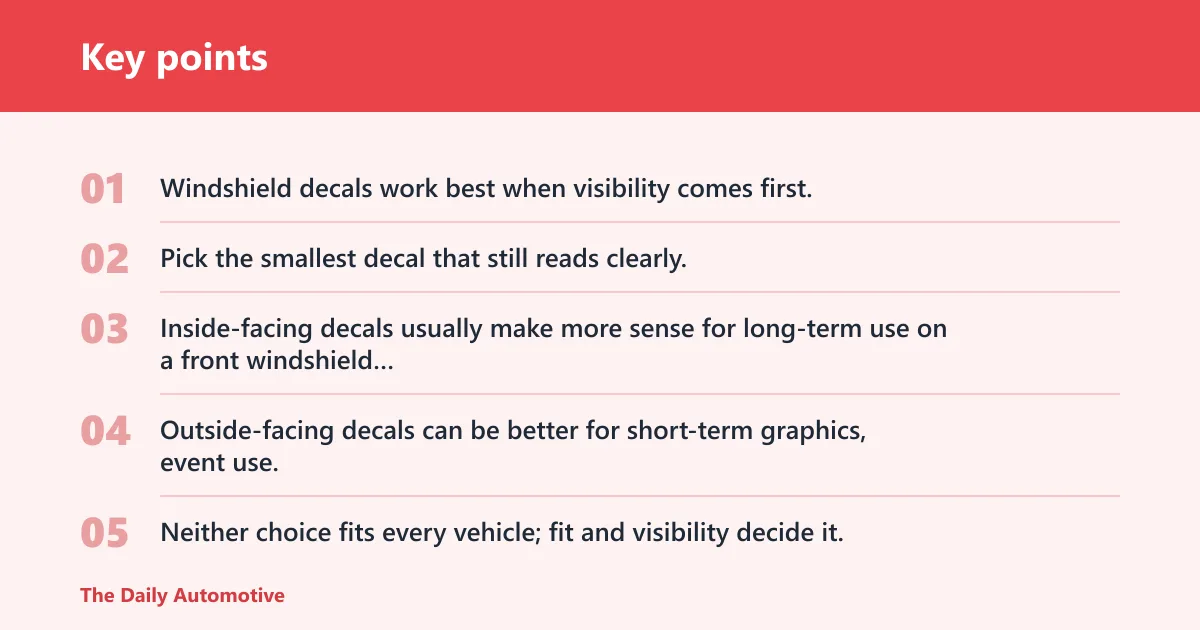


Windshield decals work best when visibility comes first. Pick the smallest decal that still reads clearly, keep it out of the driver’s direct view, and match the application method to the glass area, whether that means front windshield, rear window, or side glass.
Inside-facing decals usually make more sense for long-term use on a front windshield because they sit behind the glass and are less exposed to weather. Outside-facing decals can be better for short-term graphics, event use, or glass shapes that make inside application awkward. Neither choice fits every vehicle; fit and visibility decide it.
Best use cases by window location
A windshield banner is a text strip for the front windshield, usually near the top edge. A rear window decal gives you more room for text or logos, less risk of blocking the main road view, and a better fit for branding on personal vehicles or small-business fleets.
Side glass is the fallback when the front windshield is too crowded or curved. It often gives you a flatter surface and less risk of interfering with the driver’s line of sight. For compliance-sensitive graphics, side glass is usually easier to justify than the center of the windshield.
What makes a decal visibility-safe
Visibility-safe placement means the decal does not sit where the driver must scan traffic, signals, mirrors, or pedestrians. That usually means avoiding the center sweep of the windshield and avoiding any area that intersects the steering wheel view. Keep it small, keep it high or low, and check local rules before buying.
A clear or frosted vinyl can cut visual clutter, but it does not fix poor placement. The strongest rule is still placement. A well-made decal in the wrong spot is the wrong decal.
Quick verdict on inside vs outside placement
Inside-facing application is generally better for weather protection and longer wear on most front-windshield uses. Outside-facing application is better when you need easy removal, temporary signage, or a shape that the inside of the glass does not accept cleanly. If the decal must survive rain, wipers, and road film, outside placement needs tougher material and more attention to edges.
Pros and cons
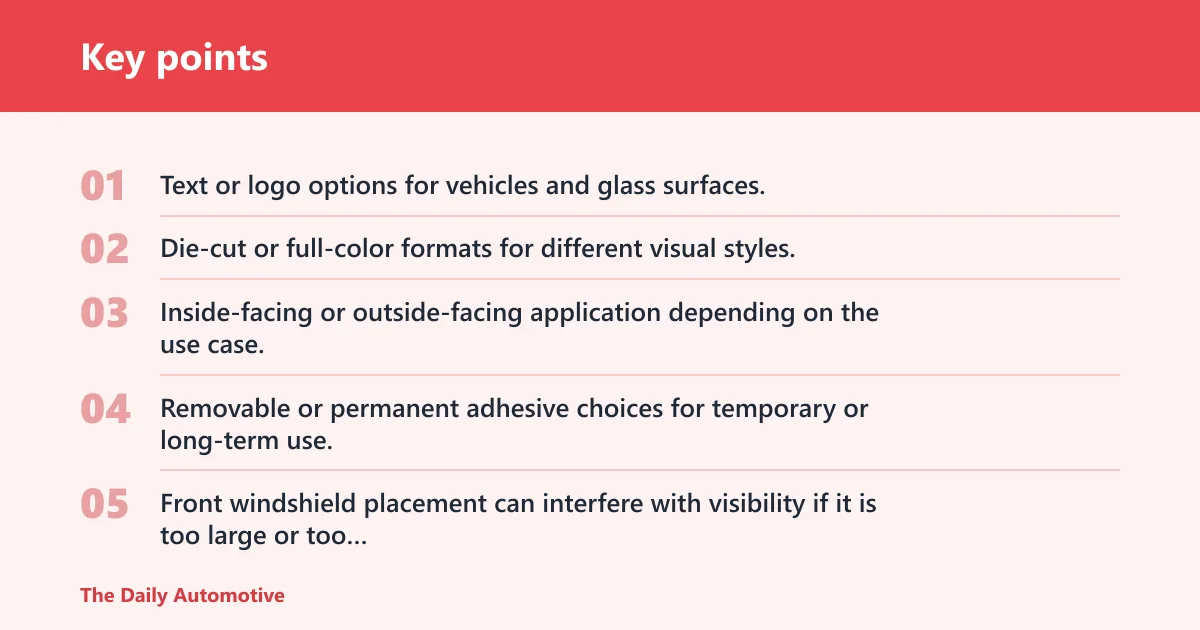
Windshield decals are useful because they can carry text, a company mark, or a short banner without taking up bodywork or cargo space. They also come in die-cut and full-color styles, with vinyl choices that can be weather-resistant, fade-resistant, glossy, matte, clear, opaque white, or frosted.
The tradeoff is that glass placement has stricter limits than a door panel or rear quarter window. A decal can glare, bubble, lift at the edges, or block sight lines if the size or spot is wrong.
Why buyers choose windshield decals
- Text or logo options for vehicles and glass surfaces.
- Die-cut or full-color formats for different visual styles.
- Inside-facing or outside-facing application depending on the use case.
- Removable or permanent adhesive choices for temporary or long-term use.
Where the tradeoffs show up
- Front windshield placement can interfere with visibility if it is too large or too central.
- Curved glass can make a flat decal wrinkle or trap bubbles.
- Glossy finishes can reflect light more than matte or frosted options.
- Permanent adhesive can be harder to remove from old or heated glass.
When another glass location is smarter
If the design is decorative rather than functional, rear window or side glass is often the better choice. A common first-timer mistake is ordering a 14-inch graphic for the center of the windshield because it looks fine on a mockup, then finding it crowds the driver’s view once it reaches the car. Rear glass usually tolerates larger text better.
Suppose a small-business owner wants a logo and phone number on a service van. A rear window decal may fit the branding goal without pulling attention away from the driver’s sightline. That same layout on the top half of the front windshield can become a visibility problem fast.
Who it’s for
This is a good fit for drivers who want a clean custom look, small-business owners who need branding on glass, and fleet buyers who must keep graphics readable without creating visibility issues. It also suits buyers who want a removable sticker for events or short campaigns.
It is not the right starting point for anyone who wants to cover a large section of the windshield without checking the vehicle manual and local rules first. Compliance-sensitive fleet or DOT-style glass use cases need more caution than decorative decals on a private car.
Personal vehicles and custom styling
Personal vehicles usually need the most restraint and the least coverage. A small text decal, a low-profile logo, or a narrow banner often works better than a wide graphic. Vinyl with a glossy or matte finish is common, but matte and frosted looks are easier to live with when reflections are a concern.
Small businesses and fleet branding
Fleet graphics should stay easy to read and easy to remove if the vehicle changes service. Permanent adhesive can make sense for long-running branding, while low-tack removable adhesive is better for temporary promos, seasonal campaigns, or leased vehicles.
When compliance-sensitive use cases need extra caution
Compliance-sensitive use cases should treat the windshield as a regulated safety surface, not a blank canvas. Keep any graphic out of the driver’s view, confirm placement against the vehicle manual, and check local law before ordering. Do not assume a front-windshield layout that works on one vehicle will work on another.
Where should a windshield decal go?
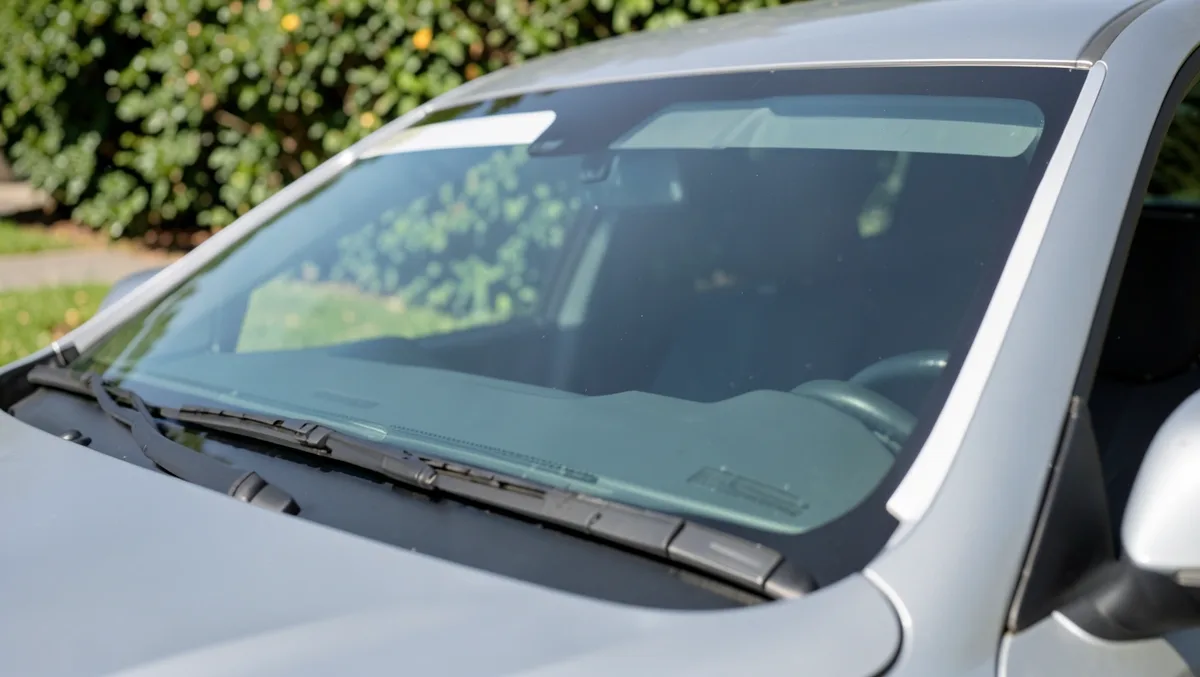
The best placement is the one that preserves the driver’s visibility and still leaves the decal readable. In practice, that usually means the upper edge, a low passenger-side corner, or a rear-window location if the design is larger. Front windshield placement is the strictest because the sightline matters most there.
Front windshield placement limits
Front windshield decals belong only where they do not interrupt the driver’s direct road view. The top edge is the usual banner zone, but even there the graphic should stay compact. Avoid the center area and any spot that overlaps with mirrors, wiper travel, or the normal driving scan.
Rear window placement use cases
Rear window decals suit larger text, logos, or brand marks because the back glass is usually less critical to forward visibility. A rear window decal can also be an easier fit for full-color designs, especially on vehicles where the front windshield has a steep curve or limited flat space.
Side glass as a fallback
Side glass works well when the front windshield is too sensitive and the rear window is already occupied by defroster lines, cargo shelving, or other equipment. It is often the cleanest option for a simple logo or compliance-aware fleet ID because it avoids the main forward sightline.
Windshield decal checklist
Use this checklist before you order or install anything. The goal is to match the decal type to the location and reduce the chance of glare, bubbles, or blocked sight lines.
| Decal type | Recommended location | Visibility risk | Adhesive choice | Install note |
|---|---|---|---|---|
| Windshield banner | Top edge of front windshield | Medium if too tall or too wide | Permanent for long-term use | Measure the top band first; keep clear of the driver’s sightline. |
| Custom text decal | Rear window or upper corner of windshield | Low to medium | Low-tack removable adhesive | Choose a smaller size if the glass is curved. |
| Logo decal | Side glass or rear window | Low | Removable or permanent, depending on duration | Align it to the flattest part of the glass. |
| Die-cut vinyl | Any glass area with clean edges | Low if placement is outside the sightline | Removable for short-term, permanent for fleet use | Press edges firmly to prevent lift. |
| Full-color graphic | Rear window or side glass | Medium if overused on front glass | Permanent for long-term branding | Use a squeegee to reduce trapped air. |
Adhesive choice and install note
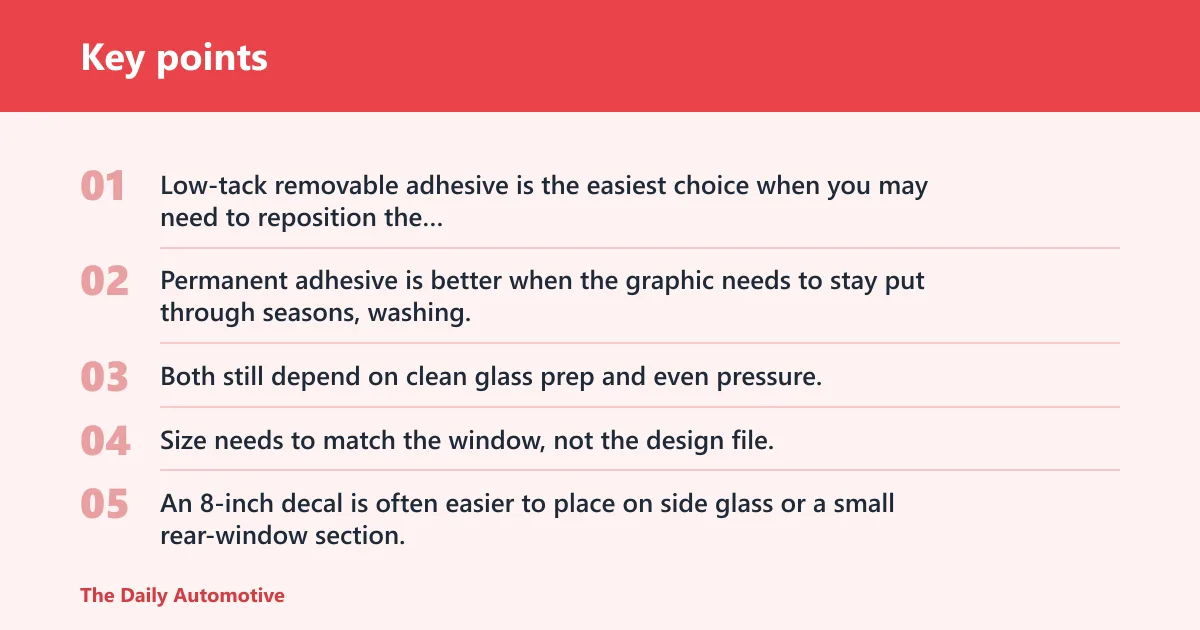
Low-tack removable adhesive is the easiest choice when you may need to reposition the decal during install or remove it later with less residue. Permanent adhesive is better when the graphic needs to stay put through seasons, washing, and routine use. Both still depend on clean glass prep and even pressure.
Simple size examples for different glass areas
Size needs to match the window, not the design file. An 8-inch decal is often easier to place on side glass or a small rear-window section. A 10-inch or 12-inch graphic can suit a rear window or a narrow banner band. A decal about 14 inches wide is more likely to fit rear glass than the front windshield unless the layout is very narrow.
What size and material work best?
Size and material work together. A large decal in a glossy finish on curved glass can be harder to place than a smaller matte graphic on the same vehicle. For windshield use, the best choice is usually the smallest size that still reads clearly from the intended viewing distance.
8-inch, 10-inch, 12-inch, and 14-inch sizing
An 8-inch custom text sticker is a practical starting point for compact placements and is listed by StickerNerd from $5.00. A 10-inch size often gives a little more breathing room for a logo or short phrase. A 12-inch or 14-inch decal usually belongs on rear glass or a banner strip where the shape is long and narrow.
Vinyl finish choices
Weather-resistant and fade-resistant vinyl are the baseline for outdoor vehicle use. Glossy finish makes color pop, but it can reflect light. Matte finish cuts shine. Clear vinyl can disappear against glass, while opaque white helps text read more clearly. Frosted and etched glass look options suit a softer, more subdued finish.
Weather resistance and fade resistance
Windshield and rear-window graphics spend time in sun, heat, cold, and moisture. That is why vinyl choice matters more than the marketing copy around it. Decal Junky offers specialty etched glass vinyl, and that type is useful when the goal is a refined glass look instead of a bright, reflective graphic. Decal Junky also says its decals are made in the USA.
Custom Stickers US says decals can apply to glass, acrylic, or mirrors, and it offers removable or permanent adhesives. That split matters because the same graphic may need a short-term adhesive on a leased vehicle and a more durable bond on a long-term fleet unit.
Can you apply it inside the glass?
Yes, many windshield decals can be applied inside the glass, but only if the product is made for that orientation. Inside-facing application protects the graphic from weather and wiper wear, while outside-facing application can be easier for temporary signs or exterior-only materials. The right choice depends on the decal and the window shape.
Inside-facing versus outside-facing application
Inside-facing decals are common for front windshield text because they sit behind the glass and are less exposed. Outside-facing decals make more sense when the material is intended for exterior use or when the shape is easier to align from the outside. Either way, the driver’s visibility still comes first.
Removable versus permanent adhesive
Removable adhesive is useful for short-term stickers, seasonal branding, and vehicles that may change graphics later. Permanent adhesive is generally better for long-term use where edge lift would be a concern. If repositioning during install is likely, a low-tack removable adhesive is the safer starting point.
Install steps that reduce bubbles and lift
- Clean the glass thoroughly and let it dry.
- Measure the placement before peeling the backing.
- Test the position from the driver’s seat and from outside the vehicle.
- Apply light even pressure with a squeegee.
- Work from the center outward to push air away.
- Check the edges for lift after the decal is in place.
A common first-timer mistake is rushing the placement on curved glass. The result is usually a small bubble line near one edge, then glare catches that edge every time the sun hits the windshield. Slower placement and a clean surface solve more than aggressive pressing does.
Frequently asked questions
What are the placement rules for windshield decals?
Placement rules are built around visibility first. Keep the decal outside the driver’s direct sightline, avoid the center of the windshield, and use the upper edge, lower passenger-side area, rear window, or side glass only if local rules allow. The vehicle manual and local law both matter here.
Can I put a sticker on the top of my windshield?
You can sometimes place a sticker at the top of the windshield, but only if it stays out of the driver’s view and complies with local rules. A windshield banner works best when it is narrow, readable, and positioned near the upper edge without covering traffic signals, mirrors, or the road ahead.
Are custom windshield stickers removable?
Yes, many custom windshield stickers are removable if they use low-tack removable adhesive. That choice is best for short-term graphics, seasonal use, or leased vehicles. Permanent adhesive is better for long-term branding, but it is harder to remove and may leave residue if you change the layout later.
What size should a car windshield decal be?
The right size depends on window shape and placement, but smaller is safer for the front windshield. An 8-inch decal often fits compact spots, while 10-inch and 12-inch sizes suit broader rear-window or banner layouts. A 14-inch decal is usually better for rear glass than for the windshield center.
What is the difference between windshield decals and rear window decals?
Windshield decals are more visibility-sensitive because they sit in the driver’s forward view. Rear window decals usually allow more room for branding and text without interfering with driving. That makes rear glass the better choice for larger graphics, while windshield decals need tighter placement and smaller sizing.
Can windshield decals be applied inside the glass?
Yes, many can be applied inside the glass, and that is often the better choice for long-term front-windshield use. Inside placement protects the decal from weather and wear, but it still has to be installed straight and kept out of the driver’s sightline. Not every material is meant for interior application.
Products related to this article
Sponsored / affiliate links. As an Amazon Associate I earn from qualifying purchases. I may earn additional commission from eligible campaigns.