Window Decals for Cars: Types, Legality, and How to Apply Them
Window decals for cars fall into three main types — cut vinyl, printed vinyl, and static cling — and the right pick depends on where you plan to put it and how long you want it to last.
A cut vinyl decal on a rear window can hold up for 3 to 5 years outdoors, while a static cling on a side window is meant to come off in seconds without leaving a mark. Over half of U.S. states also have windshield obstruction laws that limit exactly where a decal can legally go, so the type you choose and the spot you stick it both matter more than most buying guides let on. This guide covers the real differences between decal types, what’s actually legal on a windshield versus a rear window, how to apply one without trapping air bubbles, and what to look for before you buy.
What Are Window Decals for Cars?
A window decal is a thin graphic — usually cut or printed on vinyl — that sticks to the inside or outside of a car window. Unlike a bumper sticker, which is designed for painted metal or plastic, window decals are made to adhere to glass and, in most cases, be removed without leaving residue or peeling paint. They’re used for everything from family stickers and hobby graphics to business names, parking permits, and privacy or sun-blocking film.
There are three types you’ll run into when shopping:
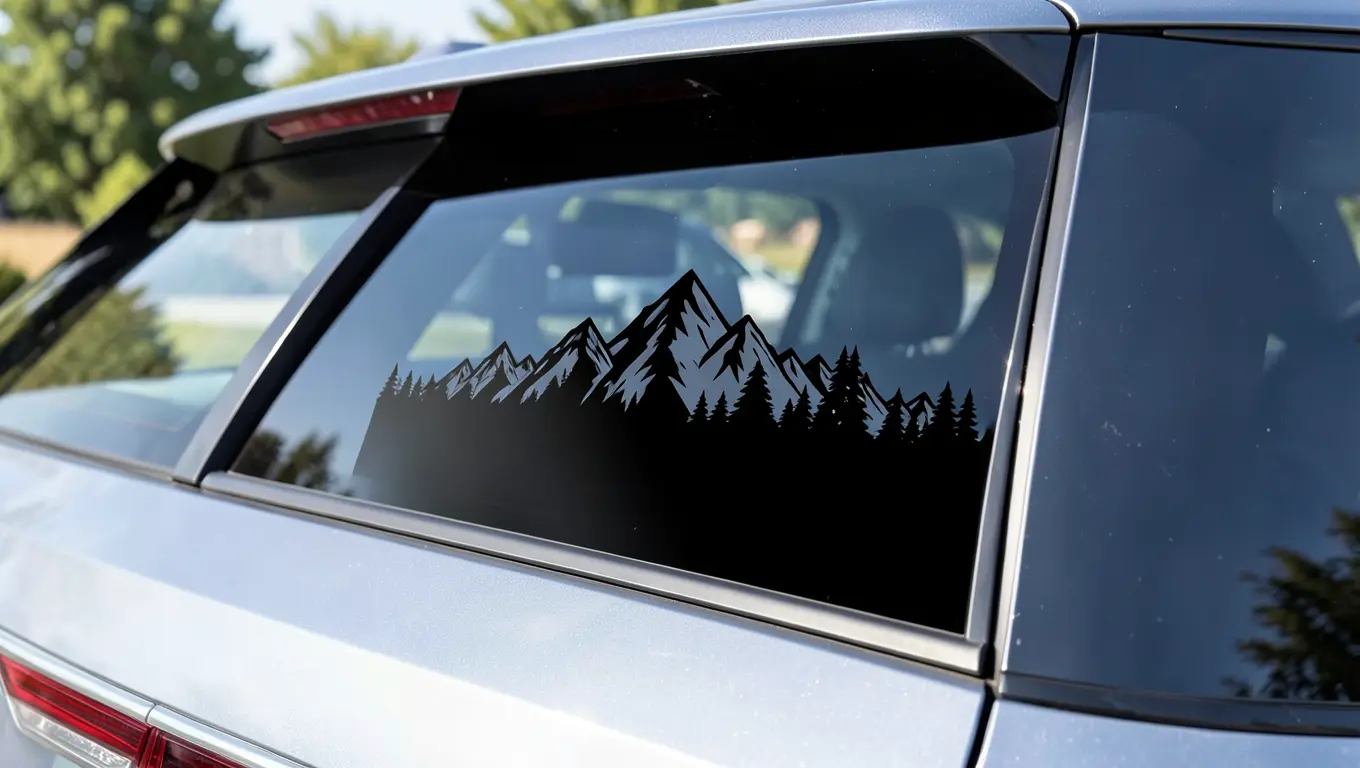
- Cut vinyl decals — a single color, die-cut into a shape or lettering, with no background. These are the classic “silhouette” style decal (mountain ranges, animal outlines, family stick figures) and the most durable option.
- Printed vinyl decals — full-color designs printed onto a clear or white vinyl backing, then usually laminated for UV protection. Good for photos, logos, or multi-color artwork that a single-color cut vinyl can’t reproduce.
- Static cling decals — no adhesive at all. They stay on glass through static electricity, so they lift off in seconds and are meant for temporary use (seasonal decorations, parking permits, event passes).
Best-Selling Side Window Decal
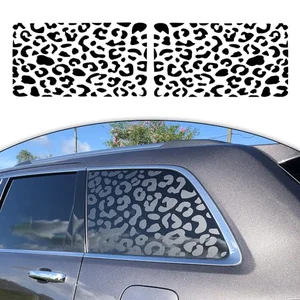 |
Zhizhong Side Window Decals (Pair) – $26.88 A pre-cut vinyl set built for the quarter windows on an SUV or truck, which is exactly the panel most car decal shoppers are trying to fill.
|
Vinyl vs. Printed vs. Static Cling: Which Type Should You Choose?
The right decal type depends mostly on how permanent you want it and how much detail the design needs.
| Type | Typical lifespan | Best for | Removal |
|---|---|---|---|
| Cut vinyl | 3–5 years outdoors | Single-color logos, silhouettes, lettering | Heat gun or hairdryer, then peel; may leave light adhesive residue |
| Printed vinyl | 2–4 years outdoors (laminated) | Full-color artwork, photos, business branding | Same as cut vinyl; unlaminated prints fade and crack faster |
| Static cling | Weeks to a few months | Parking permits, seasonal designs, rentals | Peels off instantly by hand, no adhesive left behind |
If you’re decorating a rear windshield you plan to keep the same look on for years, cut or printed vinyl is the better investment. If you’re putting a parking permit in a lower windshield corner that changes every semester or season, static cling saves you a scraping session every time.
Is It Legal to Put Decals on Your Car Windows?
This is the part most decal shopping guides skip, and it matters: more than half of U.S. states have windshield obstruction laws, and they don’t all draw the line in the same place.
- Front windshield — the strictest zone almost everywhere. Most states only allow small exceptions such as inspection or registration stickers, toll transponders, and parking permits, and usually only in the lower corners where they don’t block your view of the road. California, for example, permits small stickers in the lower corners but bans anything else that obstructs the driver’s line of sight.
- Rear windshield — rules vary far more by state. Some states treat it the same as the front windshield; others allow decorative decals as long as your side mirrors give you a clear view without relying on the rear window (which is standard on nearly every modern car).
- Side windows — generally the least regulated for decals specifically, though separate window tint laws apply if the decal is combined with tinted film.
Because these rules are set state by state and enforced at an officer’s discretion, the safest approach is simple: keep decorative decals off the front windshield entirely, stick to the lower corners for anything required by law, and check your state’s specific vehicle code before adding anything larger to a rear windshield.
How to Apply a Window Decal Without Bubbles
Most decal complaints trace back to one thing: applying it to a window that wasn’t fully clean and dry. Here’s the process that avoids that.
- Wash the window with glass cleaner, not soapy water, and dry it completely. Any leftover film, dust, or wax residue is what causes decals to bubble or lift at the edges.
- Work in the shade, between 50°F and 90°F. Direct sun makes the adhesive grab too fast to reposition, and cold glass keeps it from bonding properly.
- Peel back a corner of the transfer tape and line up that corner with your target spot before committing to the rest.
- Press from the center outward with a squeegee or old credit card, working air toward the edges rather than trapping it in the middle.
- Peel the transfer tape off at a low angle, not straight up, so the decal stays flat against the glass instead of lifting with the tape.
- Pop any small bubbles with a pin and press the air out through the pinhole — this works better than trying to lift and re-press a large bubble.
How to Remove a Window Decal Without Damage
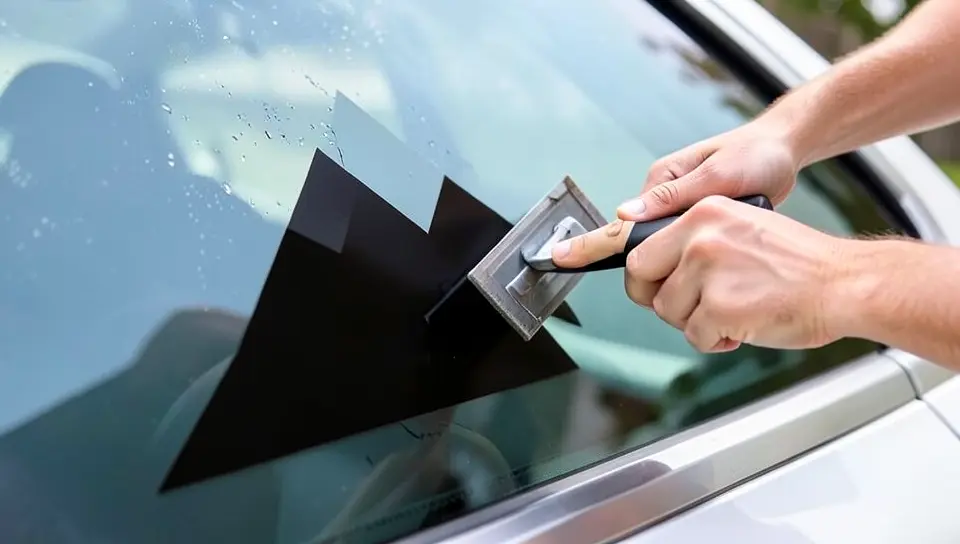
A quality vinyl decal is designed to come off glass cleanly, but heat and patience make the difference between a clean peel and a sticky residue mess. Warm the decal with a hairdryer or heat gun on low for 20-30 seconds to soften the adhesive, then peel slowly at a low angle starting from one corner. If any adhesive residue is left behind, a plastic scraper and a bit of rubbing alcohol will lift it without scratching the glass. For a full walkthrough with product recommendations, see our guide on how to remove car decals without damaging paint.
How Long Do Window Decals Last on a Car?
A quality cut or printed vinyl decal, applied correctly and left outdoors, typically lasts 3 to 5 years before the edges start to lift or the color visibly fades. Exterior decals face more UV exposure and temperature swings than interior ones, so an identical decal applied on the inside of the glass (facing out) will usually outlast one applied to the outside surface. Static cling decals are the exception — they’re built for weeks or months of use, not years, and will dry out and stop sticking well before any vinyl decal would fail.
What to Look for Before You Buy
- Measure your window first. Decals sold as “universal” still come in a fixed size — measure the glass area you’re covering before ordering, especially for quarter-window sets.
- Check whether it’s UV-resistant. Cheaper vinyl fades to a chalky color within a year in direct sun; look for listings that specifically mention UV-resistant or outdoor-rated vinyl.
- Confirm interior vs. exterior application in the listing. Some decals are designed to be applied from inside the glass (which protects the design from weather but means it reads backward from outside), and mixing this up ruins the decal.
- Look for included application tools. A squeegee card and transfer tape included with the decal save you a separate purchase and usually mean the seller expects a clean, bubble-free install.
- Read the return policy before buying a size or design you’re not fully sure will fit — most window decals can’t be returned once applied.
Frequently Asked Questions
How Do I Apply a Window Decal to My Car?
Clean the window with glass cleaner and dry it fully, then peel back a corner of the decal’s backing and line it up with your target spot. Press from the center outward with a squeegee or old credit card to push air toward the edges, then peel the transfer tape off at a low angle. Working in the shade at room temperature gives you the most time to reposition before the adhesive fully grabs.
Are Window Decals Safe for Car Paint?
Yes, when applied to glass rather than the painted body panels. Quality vinyl decals are designed to adhere to and release from glass cleanly, without damaging the surface underneath. If a decal is applied to painted plastic or metal instead, removal is more likely to affect the paint’s finish, especially on older or already-weathered clear coat.
Can Window Decals Be Reused After Removal?
Generally no. Vinyl decal adhesive is designed for a single application — once removed, the adhesive layer loses enough tack to hold securely again. Static cling decals are the exception, since they rely on static electricity rather than adhesive and can typically be repositioned or moved to a different window multiple times.
How Long Do Window Decals Last on Cars?
Quality vinyl window decals typically last 3 to 5 years outdoors before fading or edge-lifting becomes noticeable, with laminated printed decals often lasting slightly less than single-color cut vinyl. Static cling decals are meant for short-term use, usually weeks to a few months, and aren’t built for multi-year outdoor exposure.
Is It Legal to Put a Decal on My Front Windshield?
In most states, decorative decals are not allowed on the front windshield outside of the lower corners, and even there only for stickers required by law, such as registration, inspection, or toll transponders. Windshield obstruction laws exist in over half of U.S. states, and they specifically target anything that could block the driver’s view of the road, so it’s worth checking your state’s vehicle code before placing anything on the front glass.
What Is the Difference Between a Window Decal and a Bumper Sticker?
A window decal is made specifically to adhere to and release cleanly from glass, while a bumper sticker’s adhesive is formulated for painted plastic or metal bumpers. Using a bumper sticker on glass can leave it looking cloudy or leave residue that’s hard to remove, and using a window decal on a painted bumper may not hold as securely or for as long as a product actually designed for that surface.
Conclusion
Window decals for cars come down to three real choices: cut vinyl for durable single-color designs, printed vinyl for full-color artwork, and static cling for anything temporary. Match the type to how long you actually want the design to stay, keep decorative decals off the front windshield to stay on the right side of your state’s obstruction laws, and take the extra two minutes to clean and dry the glass before applying — that one step prevents most of the bubbling and peeling complaints people run into. Done right, a decal is one of the cheapest, most reversible ways to personalize a car without touching the paint.
Products related to this article
Sponsored / affiliate links. As an Amazon Associate I earn from qualifying purchases. I may earn additional commission from eligible campaigns.