Oil-Based Paint for Cars: Is It Still Legal? Best Picks
Oil-based paint for cars is still sold and legal to buy in 2026 — it’s now packaged as enamel spray paint, not the old-style toxic lacquer of decades past. Brands like Rust-Oleum and Dupli-Color sell ready-to-spray oil-based enamel in cans, and it’s a genuinely good option for touch-ups, calipers, trim, and small parts.
What it isn’t is a substitute for a professional full-body respray. Modern VOC (volatile organic compound) regulations pushed body shops toward water-based basecoat and catalyzed clearcoat systems years ago, so oil-based enamel today lives mostly in the DIY and restoration space. Below we cover a black base coat, a gloss enamel topcoat, and the degreaser you’ll want on hand before either one touches the car.
Is Oil-Based Paint Still Legal for Cars?
Yes. Oil-based (alkyd/enamel) automotive spray paint is still manufactured, sold, and legal to use in the United States — Home Depot, Lowe’s, and Amazon all carry it. What changed is the composition, not the legality: older oil-based paints used higher-VOC solvents that have been progressively restricted since the 1990s, so today’s oil-based enamels are reformulated to meet current air-quality rules while keeping the same basic oil/alkyd chemistry and application method.
The real distinction to know is DIY enamel vs. professional refinish. A collision shop repainting your whole car almost certainly sprays a water-based basecoat under a catalyzed urethane clearcoat, because that’s what current EPA and state VOC limits push commercial shops toward and it’s what most factory finishes are matched to. Oil-based enamel from a rattle can is the right tool for a wheel, a bumper trim piece, brake calipers, or touching up a chip — not for matching a modern factory clearcoat across an entire body panel.
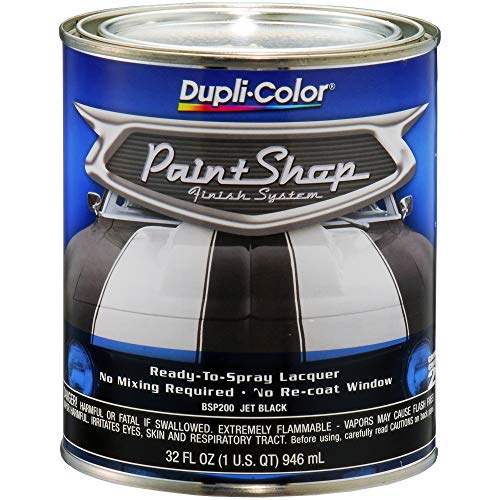
Dupli-color Bsp200 Paint Shop Finish System Base Coat – Jet Black
The Dupli-Color BSP200 Paint Shop Finish System Base Coat – Jet Black is a pre-reduced, ready-to-spray lacquer base coat aimed at DIY car owners who want a professional-looking jet black finish without renting a spray gun setup. It works well for full panel resprays and smaller touch-up jobs alike, as long as you follow it with a matching clear coat.
Pros:
- No mixing required — it comes pre-reduced and ready to spray straight from the can.
- Deep, uniform jet black finish that looks professional once cleared.
- Compatible with Dupli-Color’s own Paint Shop primers and clear coats, so you can build a matched system from the same product line.
- Works on both automotive and motorcycle bodywork.
Cons:
- A single 32 oz. (1 quart) can covers a panel or two, not a full-size vehicle — plan on multiple cans for a whole-car job.
- It’s a base coat only; without a clear coat over it, the finish won’t hold up to UV and washing for long.
Because it’s a lacquer-based system, this base coat dries fast between coats and doesn’t need thinning, which is the main reason it’s become a go-to for first-time painters. The trade-off is that lacquer base coats are less chip-resistant on their own than a full basecoat/clearcoat urethane system, so the clear coat step isn’t optional if you want the color to last.
It pairs directly with other products in Dupli-Color’s Paint Shop Finish System — primer and clear coat sold separately — which keeps the chemistry consistent from bare metal to final gloss instead of guessing whether a mixed-brand system will play nicely together.
To buy this product, click here.
Rust-Oleum Stops Rust Automotive Enamel Spray Paint
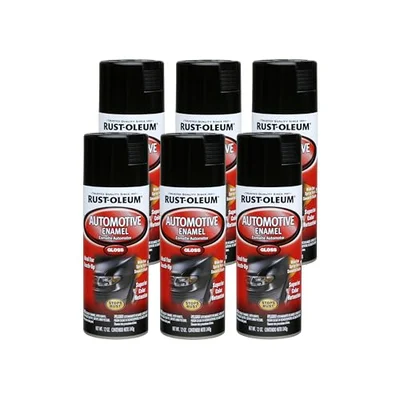
The Rust-Oleum Stops Rust Automotive Enamel Spray Paint is a straight oil-based gloss enamel — no base coat/clear coat split, just one product that sprays on and cures to a hard, glossy black finish. It’s built for the same DIY jobs as the Dupli-Color system above: calipers, trim, small panels, and rust-repair touch-ups, and it can go directly over bare or already-painted metal.
Pros:
- Rated for both interior and exterior automotive metal, with good resistance to nicks and scratches once fully cured.
- A 12 oz. can covers roughly 10 sq. ft., enough for a bumper, a set of calipers, or several small trim pieces.
- Gloss finish with strong gloss retention, and it’s dry to the touch in as little as 15 minutes.
- Genuinely oil-based enamel chemistry, which is what gives it that hard, durable shell rather than a soft acrylic finish.
Cons:
- It’s a single-stage enamel, not a modern urethane clearcoat system — over several years of sun exposure it won’t hold gloss quite as long as a factory-matched basecoat/clearcoat job.
- Full cure can take days even though it’s dry to the touch in minutes, so avoid heavy contact with the painted area right away.
There’s no separate primer in this product line — this is straight color-and-protect enamel. On bare or rusted metal, priming first with any automotive metal primer will noticeably improve adhesion and rust resistance; on a surface that’s already painted and sound, you can typically scuff, clean, and spray the enamel directly without a separate primer step.
To buy this product, click here.
3d Orange Degreaser
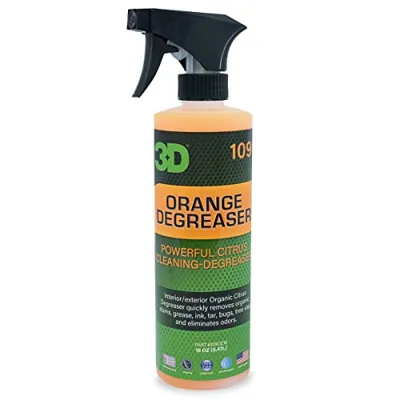
Before any oil-based paint or primer goes on, the surface needs to be free of oil, wax, and grime — paint won’t bond to a greasy panel no matter how good the product is. The 3D Orange Degreaser is a citrus-based, water-based cleaner made for exactly that prep step, and it’s mild enough to use on interior surfaces too.
Pros:
- Citrus-based formula cuts through oil, grease, road grime, and adhesive residue.
- Water-based and non-corrosive, so it’s safe on painted panels, plastic trim, and interior upholstery alike.
- Leaves surfaces genuinely clean rather than just visually clean, which matters for paint adhesion.
Cons:
- The 16 fl. oz. bottle won’t stretch far if you’re prepping an entire vehicle for paint.
- Heavier grease or old wax buildup may need a second pass or a bit of agitation with a rag.
Because it’s water-based rather than a harsh solvent degreaser, it won’t leave an oily residue behind that could interfere with paint adhesion — which is the one thing you don’t want from a pre-paint cleaner. It works equally well as a general oil-and-grime cleaner for engine bays, wheel wells, and interior surfaces once the paint job is done.
To buy this product, click here.
Frequently Asked Questions
Is Oil-Based Paint Still Legal for Cars in 2026?
Yes. Oil-based enamel automotive spray paint is still sold and legal to use — you’ll find it at Home Depot, Lowe’s, and Amazon. VOC regulations reformulated these products over the years to reduce emissions, but they didn’t ban the oil/alkyd chemistry itself. What has largely disappeared is professional shops using it for full-body refinishing, since most now spray water-based basecoat and catalyzed clearcoat systems to meet commercial VOC limits.
What Is the Best Oil-Based Car Paint?
For a full black respray, the Dupli-Color BSP200 Paint Shop Finish System is a solid pick — it’s a pre-reduced base coat that needs no mixing, paired with a matching clear coat. For a single-can job like calipers, trim, or a small panel, Rust-Oleum’s Stops Rust Automotive Enamel is simpler: one can, no base coat/clear coat split, dry to the touch in about 15 minutes.
How Do I Use Rust-Oleum Automotive Enamel Spray Paint?
Clean and degrease the surface first. If you’re working over old paint, scuff-sand it so the new coat has something to grip. Shake the can for a full minute, hold it 10-12 inches from the surface, and apply two to three light coats rather than one heavy coat, waiting a few minutes between passes. It’s dry to the touch in about 15 minutes, but let it cure for several days before scrubbing or waxing over it.
Can 3D Orange Degreaser Clean Car Interiors?
Yes. It’s citrus-based, water-based, and non-corrosive, which makes it safe on interior plastics and fabric as well as exterior panels. Use it to remove oil, grease, and grime before painting, or as a general interior/exterior degreaser once the paint job is finished.
Is Dupli-Color’s Paint Shop Finish System Suitable for Beginners?
Yes, it’s one of the more beginner-friendly base coats available. It comes pre-reduced, so there’s no mixing ratio to get wrong, and it sprays straight from the can. The main thing a beginner needs to get right is technique — light, even coats rather than one heavy pass — and following up with a matching clear coat for durability.
Do You Need Primer Before Using Oil-Based Enamel Car Paint?
It depends on the surface. On bare or rusted metal, priming first with an automotive metal primer significantly improves adhesion and helps prevent rust from bleeding back through the paint. On a panel that’s already painted, sound, and properly degreased and scuffed, you can usually skip primer and spray the enamel directly — priming there mainly helps if you’re changing color or covering a repair.
Conclusion
Oil-based paint for cars hasn’t disappeared — it’s just moved into a different lane than it used to occupy. It’s still legal, still sold by major brands, and still a genuinely durable option for calipers, trim, small panels, and touch-ups, but full-body professional refinishing has largely shifted to water-based basecoat and urethane clearcoat systems to meet current VOC rules.
For a black respray on a panel or two, the Dupli-Color BSP200 base coat paired with a matching clear coat gives you a professional-looking finish without a spray gun setup. If you just need one can for calipers or a bumper, Rust-Oleum’s Stops Rust Automotive Enamel is the simpler single-step option. Either way, start with a proper degreasing pass — the 3D Orange Degreaser handles that — since no paint holds up on a surface that still has oil or wax on it.
Match the product to the job: enamel for small parts and touch-ups, a professional water-based/urethane system for a full factory-matched respray, and proper prep either way.
Products related to this article
Sponsored / affiliate links. As an Amazon Associate I earn from qualifying purchases. I may earn additional commission from eligible campaigns.