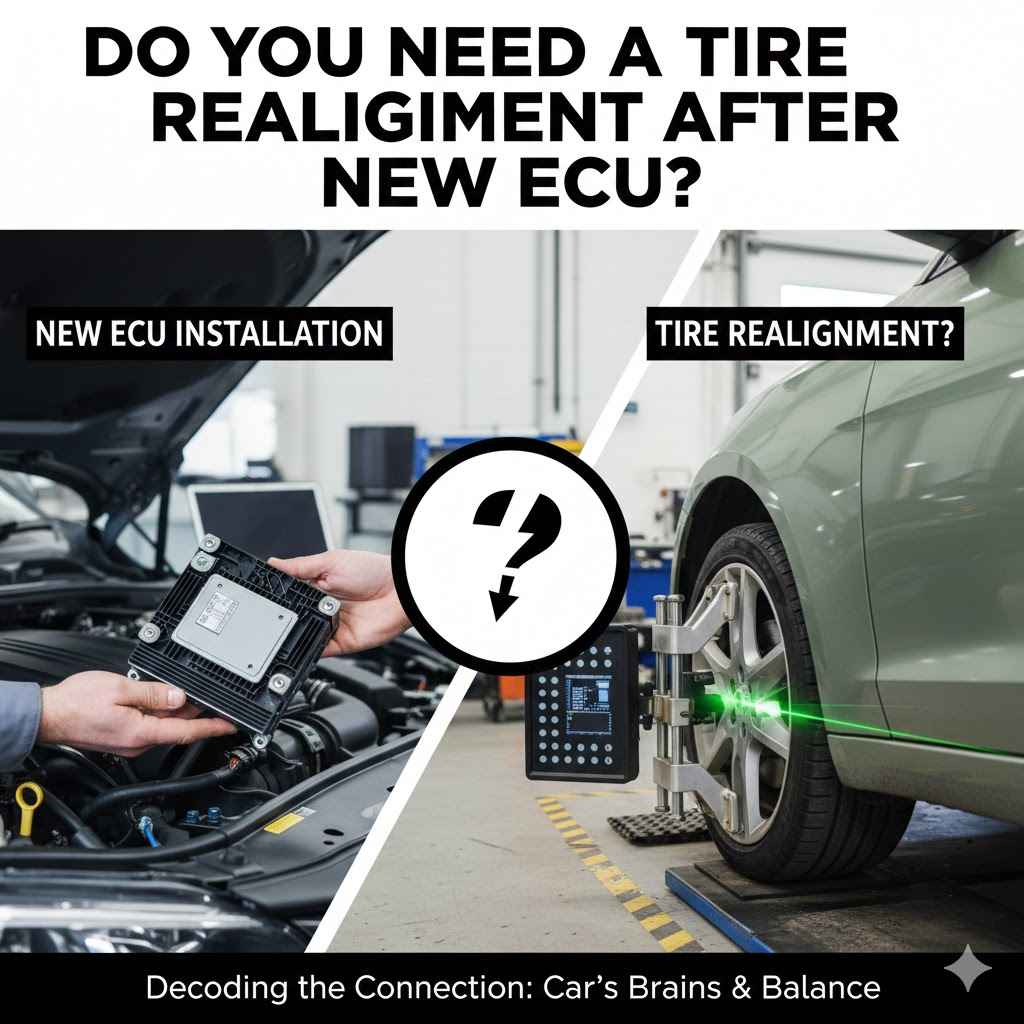
Do You Need A Tire Realignment After New ECU
It can be a bit confusing for folks new to car care when they wonder, Do You Need a Tire Realignment After a New ECU?. When you get a new Electronic Control Unit, or ECU, for your car, you might think it only affects how your engine runs. But sometimes, changes in your car’s brain can indirectly impact things you don’t expect, like your tires.
This guide makes it simple. We’ll break down exactly what you need to know, step-by-step, so you can drive with confidence. Let’s figure out if your car needs an alignment after its ECU update.
Understanding Your Car’s ECU And Tire Alignment
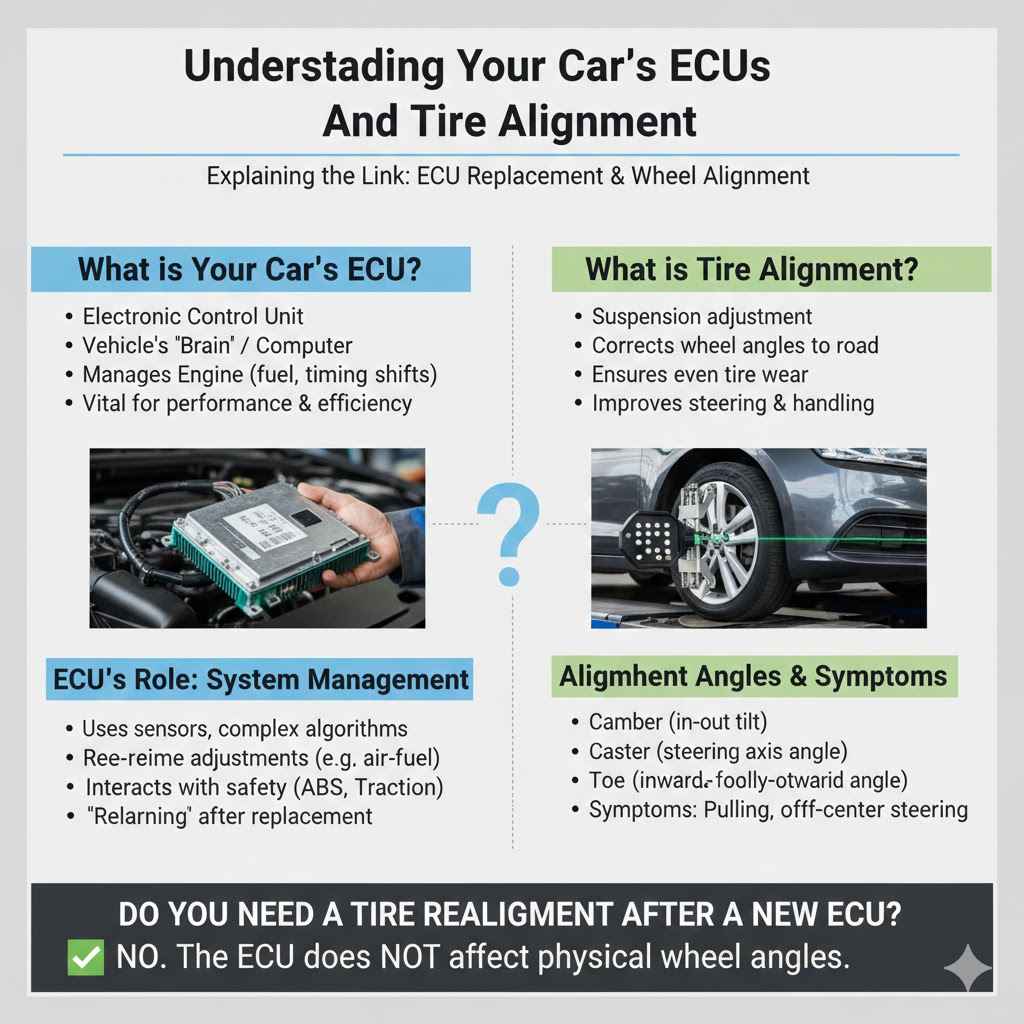
This section explains what an ECU is and why people ask if it affects tire alignment. We will discuss the ECU’s role and how it communicates with other car systems. You will learn why the question “Do You Need a Tire Realignment After a New ECU?” comes up for many car owners.
We aim to clear up any confusion and provide a clear path forward.
What is an Electronic Control Unit ECU
An Electronic Control Unit, or ECU, is basically a small computer in your car. It’s like the brain that controls many important functions. The ECU takes in information from various sensors throughout your vehicle.
Then, it uses that data to make decisions and send commands.
Think of it this way: the ECU monitors things like engine speed, fuel flow, ignition timing, and even how your transmission shifts gears. It constantly works to keep your car running smoothly and efficiently. If your ECU is faulty or needs an update, it can cause all sorts of performance issues.
This is why mechanics often replace or reprogram an ECU when problems arise. It’s a vital part of modern vehicle technology.
How the ECU Manages Vehicle Systems
The ECU is a sophisticated piece of technology. It uses complex algorithms and lookup tables to manage engine operations. For example, it can adjust the air-fuel mixture in real-time to optimize performance and reduce emissions.
It also plays a role in safety systems, like anti-lock brakes and traction control.
When a new ECU is installed, it often needs to “learn” the specific characteristics of your vehicle. This process is sometimes called “relearning” or “recalibration.” During this phase, the ECU gathers data from sensors and adjusts its parameters to match your car’s engine and driving style. This is a normal part of the replacement process.
What is Tire Alignment
Tire alignment is about adjusting your car’s suspension. The goal is to make sure your wheels are at the correct angles. These angles affect how your tires meet the road.
Proper alignment ensures your tires wear evenly. It also helps your car steer straight and handle well.
There are three main angles involved in alignment: camber, caster, and toe. Camber is the inward or outward tilt of the top of the tire. Caster is the angle of the steering axis.
Toe is the angle of the tires pointing inward or outward relative to each other. Even small changes in these angles can make a big difference.
When your alignment is off, you might notice several problems. Your car might pull to one side. The steering wheel might not be centered when you’re driving straight.
You could also hear uneven tire noise or see rapid wear on the edges of your tires. These are all signs that your suspension needs adjustment.
Do You Need a Tire Realignment After a New ECU
This section directly addresses the main question. We will explore the indirect relationship, if any, between a new ECU and tire alignment. You will discover why this question is a common concern and what the general consensus is among auto professionals.
We aim to provide a definitive answer and practical advice.
The Direct Impact of an ECU on Tire Angles
In most cases, a new ECU does not directly affect your tire alignment. The ECU controls engine, transmission, and some electronic systems. It does not have physical components that adjust your suspension.
Therefore, simply replacing an ECU should not alter the angles of your wheels.
Tire alignment is purely a mechanical adjustment of suspension components. These include things like tie rods, control arms, and struts. The ECU’s function is entirely electronic.
It sends electrical signals to manage how other parts operate. It doesn’t physically move or change the position of your tires.
So, if you’re asking, “Do You Need a Tire Realignment After a New ECU?”, the answer is typically no. The new computer doesn’t change how your tires are pointed on the road. The alignment is set by the physical setup of your car’s suspension.
Indirect Influences and Common Misconceptions
While the ECU doesn’t directly change alignment, there are indirect reasons why this question arises. Sometimes, a faulty ECU can cause drivability issues. These issues might lead a driver to think something is wrong with the steering or suspension.
For example, if the ECU causes erratic engine behavior, it might feel like the car is unstable.
Another possibility is related to how the car is serviced. If a new ECU is installed, the mechanic might perform other checks. During these checks, they could discover existing alignment issues.
They might then recommend an alignment as part of the overall service. This can create a perceived link between the ECU and the alignment.
It’s also possible that the symptoms a driver experiences are coincidentally occurring around the time of the ECU replacement. For instance, a car might already need an alignment, and then the ECU fails. When the ECU is fixed, the driver still needs the alignment.
This can lead to the mistaken belief that the ECU replacement caused the alignment problem.
When Alignment Might Be Necessary
There are specific situations where an alignment is recommended, regardless of ECU work. If you’ve had any work done on your suspension system, an alignment is usually a good idea. This includes replacing parts like shocks, struts, ball joints, or tie rods.
These are the very components that determine your tire angles.
Another reason to get an alignment is if you’ve hit a significant pothole or curb. Such impacts can knock your suspension out of whack. If your car starts pulling to one side, or if you notice uneven tire wear, it’s time for an alignment check.
These issues are independent of your car’s ECU.
If your car has been in an accident, especially one that affected the wheels or suspension, an alignment is almost always required. The forces involved in a collision can easily misalign your wheels. The ECU has no bearing on these mechanical adjustments.
Common Symptoms of Misaligned Tires
This section details the signs that your tires are not aligned correctly. Understanding these symptoms can help you identify a problem early. This is important for your safety and your car’s health.
We will cover how misaligned tires affect your driving experience.
Uneven Tire Wear
One of the most common signs of poor tire alignment is uneven wear. Your tires might show more wear on one side than the other. You might see feathering, which looks like small, rough edges on the tire tread.
This happens because the tires are not rolling straight.
For example, if your toe alignment is off, the tires will scrub sideways as you drive. This causes the edges of the tire tread to wear down quickly. If your camber is off, you might see wear on the inside or outside edge of the tire.
This kind of wear reduces the lifespan of your tires significantly.
According to a study by the National Highway Traffic Safety Administration (NHTSA), properly aligned tires can last up to 20% longer. This means you’ll buy new tires less often. This also translates to significant savings over time.
Ignoring tire wear can lead to more expensive problems down the road.
Car Pulling to One Side
If your car consistently pulls to the left or right when you’re driving on a flat, straight road, it’s a strong indicator of an alignment issue. This happens because the tire angles are not set correctly. One side of the car might be “pushing” or “dragging” more than the other.
Imagine your car is like a shopping cart. If the wheels aren’t pointed straight, the cart will naturally drift to one side. Your car’s steering system is designed to keep it going straight.
When alignment is off, the steering system has to work harder to counteract the pull.
This constant effort to correct the pull can make your steering feel heavy or unresponsive. It’s also dangerous because it can reduce your control over the vehicle, especially in emergency situations. Don’t ignore this symptom.
Steering Wheel Off-Center
When your tire alignment is correct, the steering wheel should be perfectly centered when you are driving in a straight line. If you find that you constantly have to hold the steering wheel at an angle to keep the car going straight, your alignment is likely off.
This might seem like a minor inconvenience, but it’s a symptom of a deeper problem. The steering wheel is connected to your car’s steering system. If the wheels are not aligned, the steering wheel position will be off.
This can also lead to quicker wear on the steering components.
It’s crucial to have this checked. A misaligned steering wheel can make it difficult to judge your car’s position on the road. It can also affect the performance of safety features like electronic stability control.
Vibrations and Noises
Misaligned tires can also cause unusual vibrations or noises. You might feel vibrations through the steering wheel or the floor of your car. Sometimes, you can hear a humming or grinding sound coming from the tires.
This is often due to the tires scrubbing against the road surface.
When tires are not rolling straight, they are essentially dragging sideways. This friction can create heat and vibration. It can also cause the tire tread to become noisy.
These sounds can change with speed.
These vibrations are not just annoying; they can be a sign of stress on your tires and suspension. Over time, this can lead to premature tire failure or damage to other car parts. A quick alignment check can prevent these issues.
Benefits Of Proper Tire Alignment
Getting your tire alignment done correctly offers several advantages. This section focuses on why it’s a smart move for any car owner. We will highlight how alignment helps with safety, cost savings, and overall driving experience.
Improved Fuel Efficiency
When your tires are properly aligned, they roll more freely. This means your engine doesn’t have to work as hard to move the car forward. Less effort from the engine translates directly into better fuel economy.
It’s like pushing a shopping cart with one wonky wheel; it takes a lot more energy.
Studies have shown that misaligned tires can increase your fuel consumption by as much as 5%. For a typical driver, this can add up to a significant amount of money spent on gas over a year. For example, if you spend $100 a month on gas, a 5% increase means an extra $5 each month, or $60 per year.
Consider a scenario: a driver with a car that pulls to the left due to poor alignment. To compensate, they constantly steer to the right. This creates drag.
The engine burns more fuel to overcome this resistance. A simple alignment fixes this and saves money at the pump.
Enhanced Safety And Handling
Proper tire alignment is crucial for safe driving. When your tires are aligned, your car will steer predictably. It will respond better to your commands, especially in emergencies.
This makes driving safer for you and others on the road.
Good alignment ensures your car stays straight when you want it to. It also means your car will track straight when you brake. This is vital for maintaining control.
For instance, if your car suddenly pulls during braking, it can be very dangerous.
A well-aligned vehicle handles curves better too. It reduces the risk of skidding or losing control. This leads to a more confident and secure driving experience.
Imagine driving on a slippery road; precise handling is paramount.
Extended Tire Lifespan
As mentioned earlier, one of the biggest benefits of proper alignment is longer-lasting tires. When tires wear evenly, they reach their full potential mileage. This means you won’t have to replace them as frequently.
Uneven wear, caused by misalignment, can damage tires in as little as 10,000 miles. A new set of tires can cost hundreds of dollars. By investing in regular alignment checks, you can significantly extend the life of your tires.
This saves you money and reduces the hassle of frequent replacements.
For example, a set of tires might be rated for 50,000 miles. If they wear unevenly due to misalignment, you might only get 30,000 miles out of them. That’s a 20,000-mile loss.
An alignment can help you get closer to that 50,000-mile mark.
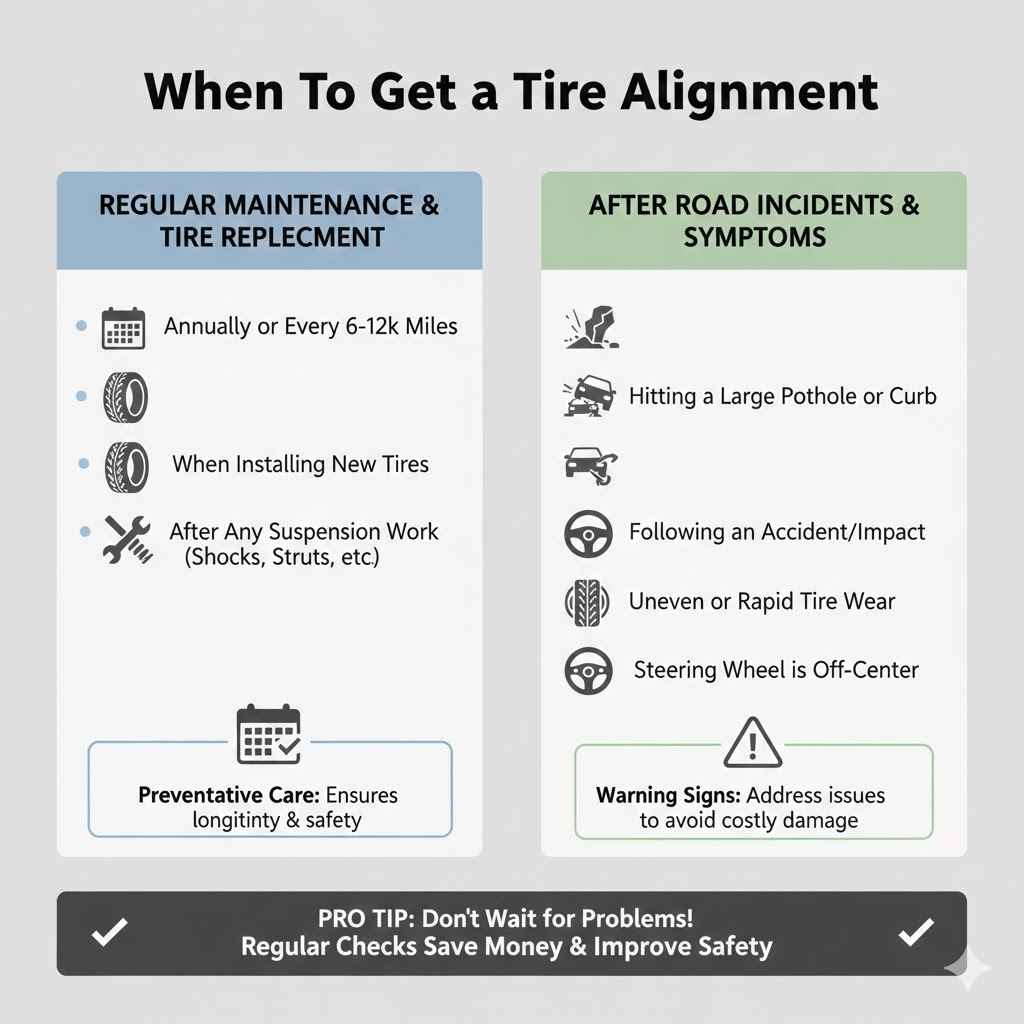
When To Get A Tire Alignment
This section provides clear guidance on when you should seek out a tire alignment. We will cover regular maintenance schedules and specific triggers. Knowing when to get an alignment can prevent problems and save you money.
Regular Maintenance Schedules
Most car manufacturers recommend having your wheel alignment checked at least once a year. Some suggest checking it every 6,000 to 12,000 miles, or whenever you get new tires. Following these recommendations is a good way to prevent issues before they become serious.
Think of it like visiting the dentist. You go for regular check-ups even if you don’t feel any pain. This is to catch problems early.
Tire alignment checks work the same way. They ensure everything is functioning as it should.
If you drive a lot or in rough conditions, you might need more frequent checks. A mechanic can advise you on the best schedule for your specific vehicle and driving habits. It’s a small investment for significant benefits.
After Suspension Work Or Tire Replacement
Any time work is done on your car’s suspension system, it’s essential to get an alignment. This includes replacing shocks, struts, ball joints, control arms, or any other related components. These parts directly affect your wheel angles.
When new tires are installed, it’s also a good time to get an alignment. New tires have precise tread patterns. Ensuring they are mounted with the correct alignment allows them to perform their best from day one.
This helps them last longer and prevents them from wearing unevenly right away.
For instance, after replacing worn-out struts, the suspension geometry can change. Without an alignment, the new struts won’t be able to work correctly with the other suspension parts. This can lead to poor handling and uneven tire wear on your brand new tires.
Following Road Incidents
If you’ve experienced any kind of road incident that could have affected your suspension, you should get an alignment check. This includes hitting a large pothole at speed, driving over a curb, or being involved in an accident. Even minor impacts can knock your alignment out of specification.
For example, hitting a deep pothole can jolt your car’s suspension system. This jolt can bend or loosen suspension components. Even if you don’t see obvious damage, the wheel angles might have changed.
If you notice any of the symptoms we discussed, like the car pulling to one side or uneven tire wear, it’s a clear sign to get an alignment. Don’t wait for the problem to worsen.
Frequently Asked Questions
Question: Can a new ECU directly cause tire alignment issues
Answer: No, a new ECU does not directly affect tire alignment. Tire alignment is a mechanical adjustment of suspension components, while the ECU is an electronic control unit managing other vehicle systems.
Question: What are the main signs of tire misalignment
Answer: Key signs include uneven tire wear, the car pulling to one side, a steering wheel that is off-center when driving straight, and unusual vibrations or noises.
Question: How often should I get my tire alignment checked
Answer: It is generally recommended to check your tire alignment at least once a year or every 6,000 to 12,000 miles, and also whenever you replace your tires.
Question: Do I need an alignment after hitting a pothole
Answer: Yes, if you hit a large pothole or experience any impact that could affect your suspension, it is wise to get your tire alignment checked.
Question: Does ECU replacement affect tire pressure
Answer: No, an ECU replacement does not directly affect tire pressure. Tire pressure is managed by individual tire sensors and is not controlled by the ECU itself.
Summary
In short, replacing your car’s ECU typically does not require a tire realignment. Tire alignment is a mechanical issue affecting suspension angles. It is not influenced by the electronic control unit.
Watch for signs like uneven tire wear or pulling to one side to know when an alignment is truly needed.