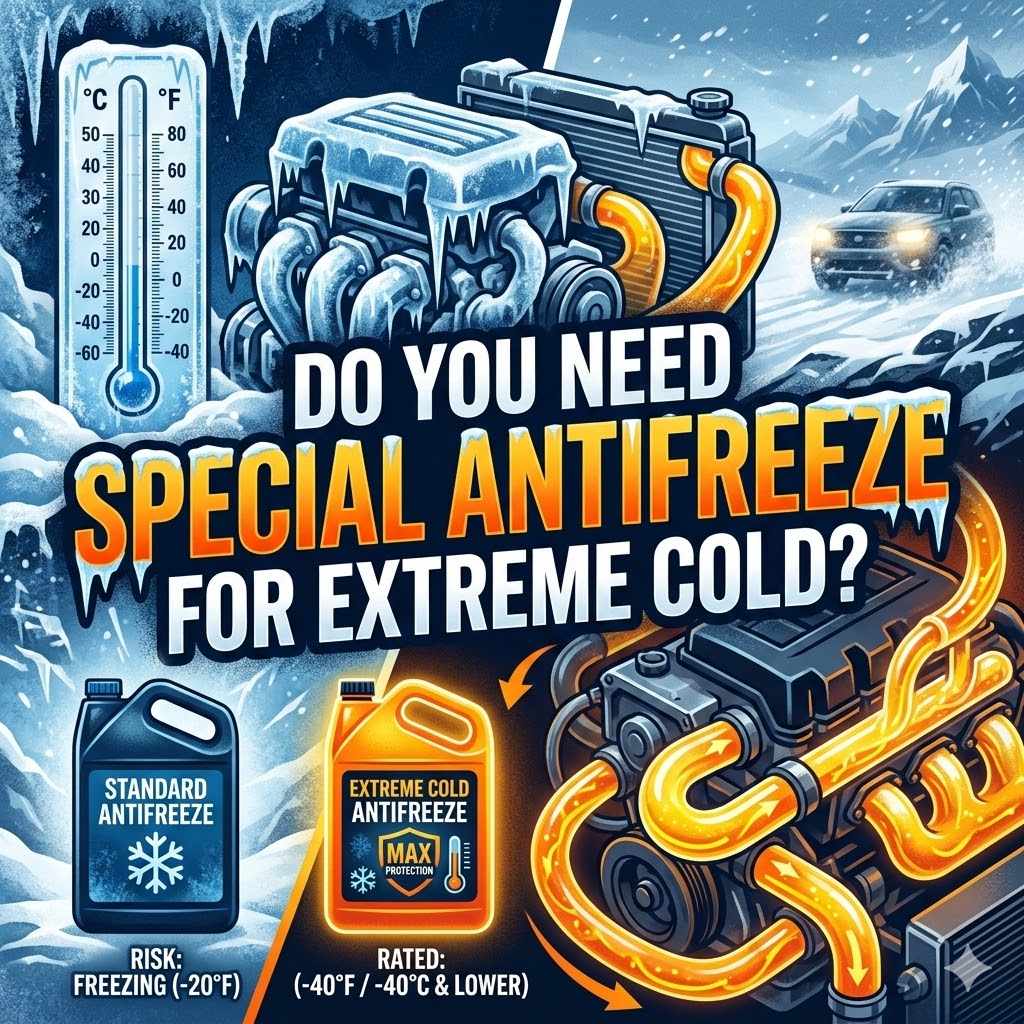
Do You Need Special Antifreeze for Extreme Cold?
Thinking about your car’s antifreeze can feel a bit confusing, especially when the weather gets really cold. Many people wonder, Do You Need Special Antifreeze for Extreme Cold? It’s a common question for folks who are new to car care. Don’t worry if it seems tricky!
We’ll break it down in a super simple way. We’ll go step-by-step so you know exactly what to do to keep your car’s engine safe this winter. Get ready to learn the easy way.
Choosing the Right Antifreeze for Cold Weather
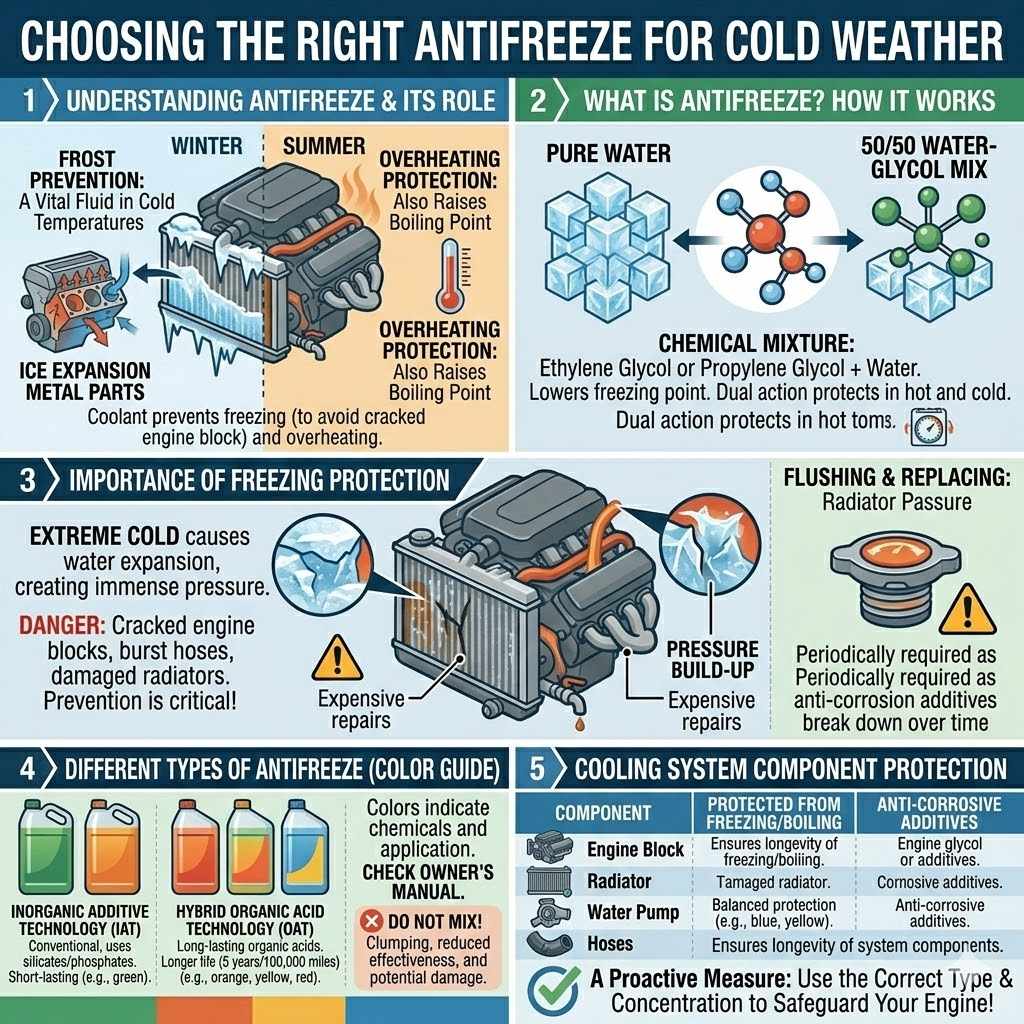
Understanding your car’s antifreeze is important for keeping it running smoothly, especially when temperatures drop. Antifreeze, also called coolant, does more than just stop your engine from overheating in the summer. It’s a vital fluid that also prevents your engine’s cooling system from freezing in the winter.
If your coolant freezes, it can cause serious damage, like cracking the engine block. This section will explain why the type of antifreeze matters and what to look for to protect your car from freezing.
What is Antifreeze and How Does It Work
Antifreeze is a chemical mixture, usually made of ethylene glycol or propylene glycol, mixed with water. Its main job is to lower the freezing point and raise the boiling point of the liquid in your car’s cooling system. This dual action protects your engine in both hot and cold weather.
In freezing temperatures, the antifreeze solution prevents water from turning into ice. Ice expands, and this expansion can crack engine parts.
The glycol molecules in antifreeze interfere with the water molecules, making it harder for them to arrange themselves into a solid ice structure. Think of it like adding salt to water to keep it from freezing. The more concentrated the antifreeze is, the lower the freezing point becomes.
However, you can’t just use pure antifreeze; it needs to be mixed with water, typically in a 50/50 ratio, for optimal protection.
Coolant also contains additives that prevent corrosion and rust within the cooling system. These additives are important for the longevity of your engine’s components, such as the radiator, water pump, and hoses. Over time, these additives can break down, which is why flushing and replacing your coolant periodically is recommended.
The Importance of Freezing Protection
When a car’s engine is exposed to extreme cold, the water in the cooling system can freeze. If this happens, the water expands. This expansion can create immense pressure inside the engine block and radiator.
This pressure can lead to serious and expensive damage, like cracked engine blocks, burst hoses, and damaged radiators.
A cracked engine block is one of the worst possible outcomes of a frozen cooling system. It means the metal of the engine has split, allowing coolant and oil to leak out and potentially causing catastrophic engine failure. Replacing an engine block is an extremely costly repair.
Preventing the coolant from freezing is therefore a primary function of antifreeze. It ensures that the liquid in your cooling system remains in a liquid state even at very low temperatures. This keeps the cooling system functioning as it should, even in the harshest winter conditions.
Different Types of Antifreeze
Antifreeze comes in different colors, and these colors often indicate the type of chemicals used and their intended application. It’s crucial to use the correct type for your vehicle. Mixing different types of antifreeze can lead to clumping, reduced effectiveness, and even damage to your cooling system.
For a long time, the most common type was inorganic additive technology (IAT), often referred to as conventional green antifreeze. This type uses silicates and phosphates to protect against corrosion. However, IAT doesn’t last as long as newer formulas.
Newer technologies include organic acid technology (OAT), which uses organic acids to protect metal surfaces. OAT antifreeze typically lasts much longer, often up to five years or 100,000 miles. It’s often orange, yellow, or red.
Hybrid organic acid technology (HOAT) combines IAT and OAT, offering a balance of protection and longevity. These can be blue, yellow, or a different color depending on the manufacturer.
Always check your car’s owner’s manual to know which type of antifreeze your vehicle requires. Using the wrong type can cause problems.
Do You Need Special Antifreeze for Extreme Cold
This is the core question for many car owners as winter approaches. The answer is, yes, you often need an antifreeze that is specifically rated for extreme cold, or at least one that provides adequate freeze protection for your local climate. While standard antifreeze mixtures offer some level of freeze protection, very low temperatures demand a higher concentration of antifreeze or a formula designed for exceptionally cold environments.
The term “special antifreeze” usually refers to a coolant with a lower freezing point. This is achieved by adjusting the ratio of antifreeze concentrate to water. A 50/50 mix is common, offering protection down to about -34 degrees Fahrenheit (-37 Celsius).
For areas experiencing much colder temperatures, a higher ratio, such as 60/40 or even 70/30 antifreeze to water, might be necessary. Always follow the manufacturer’s recommendations.
Furthermore, some advanced antifreeze formulations are designed not only for extreme cold but also for specific engine types or materials. These might offer enhanced protection against corrosion or be compatible with exotic metals used in newer engine designs. So, while you might not need a “special” antifreeze in the sense of a rare chemical, you do need an antifreeze that meets or exceeds the freezing point requirements of your region.
Understanding Freeze Protection Ratings
Every bottle of antifreeze will have a label that tells you its freeze protection capabilities. This is usually stated as a temperature, like “protects to -34°F” or “protects to -50°C.” This rating is crucial when deciding if your current antifreeze is sufficient for the winter ahead.
These ratings are based on the ratio of antifreeze concentrate to water. A common 50/50 mix provides protection down to around -34 degrees Fahrenheit (-37 degrees Celsius). If you live in an area where temperatures frequently drop below this, a 50/50 mix won’t be enough.
You would need to use a higher concentration of antifreeze.
For instance, a 60/40 mix of antifreeze to water can typically protect your engine down to about -60 degrees Fahrenheit (-51 degrees Celsius). Some manufacturers even offer concentrated antifreeze that can be mixed in higher ratios for extreme conditions, potentially offering protection down to -80 degrees Fahrenheit (-62 degrees Celsius) or lower. Always check the product label and your vehicle’s owner’s manual for the recommended ratio and freeze protection level.
Checking Your Current Antifreeze Level
It’s vital to know what’s already in your cooling system before adding more. You can check your current antifreeze’s freeze protection level using a simple tool called a hydrometer or a refractometer. These tools are inexpensive and readily available at auto parts stores.
A hydrometer measures the specific gravity of the coolant, which is related to its freezing point. You draw some coolant into the device and look at the floats inside. Each float corresponds to a different freeze protection level.
A refractometer is a bit more advanced and uses light refraction to measure the coolant’s freezing point and boiling point. You place a drop of coolant on the lens, look through the eyepiece, and read the scale. This is generally considered more accurate than a hydrometer.
Regularly checking your antifreeze is a good habit. It helps you catch any problems early and ensures your car is ready for any weather.
When to Consider a Higher Concentration
If your local weather forecast consistently predicts temperatures significantly below 0 degrees Fahrenheit (-18 degrees Celsius), especially if it drops to -20°F (-29°C) or colder, you should consider using a higher concentration of antifreeze. A 50/50 mix is usually sufficient for most moderately cold climates. However, for extreme cold regions, a 60/40 or even a 70/30 antifreeze-to-water ratio is recommended.
It’s important not to use pure antifreeze. Water is essential for the coolant to effectively transfer heat. Without enough water, the coolant won’t absorb heat from the engine as well, which can lead to overheating in warmer conditions or even when the engine is running normally.
When increasing the antifreeze concentration, always consult your vehicle’s owner’s manual. Some engines and cooling systems are designed for specific ratios. Using too high a concentration might not offer the best heat transfer and could even cause corrosion in certain systems.
A statistics report from the National Highway Traffic Safety Administration (NHTSA) indicates that engine cooling system failures are a common cause of vehicle breakdowns, with freezing being a significant factor in colder months. Proper antifreeze concentration can prevent many of these issues.
Making the Right Antifreeze Choice for Your Vehicle
Choosing the correct antifreeze is not just about color or brand; it’s about compatibility and performance. Modern vehicles have sophisticated cooling systems, and using the wrong type of coolant can lead to costly damage. This section will guide you through identifying the right antifreeze for your car and understanding the implications of choosing incorrectly.
Consulting Your Owner’s Manual
The most reliable source of information for your vehicle’s antifreeze needs is always the owner’s manual. Car manufacturers specify the exact type and color of antifreeze that should be used in their vehicles. This information is usually found in the maintenance section.
The manual will tell you whether your car requires IAT, OAT, HOAT, or a more specialized type of coolant. It will also often specify the correct mixing ratio with water for optimal performance and freeze protection. For example, some manuals might state a 70/30 ratio for very cold climates.
If you’ve lost your owner’s manual or can’t find the information, you can usually find it online on the manufacturer’s website or by contacting a dealership. Getting this information right is the first and most important step in protecting your engine.
Compatibility Issues and Risks
Mixing different types of antifreeze is a common mistake that can cause significant problems. For instance, mixing a traditional green IAT antifreeze with a modern orange OAT antifreeze can cause the additives in both to react. This reaction can create a sludge-like substance that can clog the radiator and heater core.
This sludge buildup reduces the efficiency of your cooling system, making it harder for the engine to regulate its temperature. In extreme cold, a clogged system is more likely to freeze and fail. In hot weather, it can lead to overheating.
Using the wrong type of antifreeze can also lead to corrosion. OAT coolants, for example, are designed to protect specific metals and alloys used in newer engines. Using a conventional IAT coolant in a vehicle designed for OAT might not provide adequate protection against corrosion, leading to premature wear and damage to internal engine components.
A study by the Automotive Maintenance and Repair Association found that nearly 30% of vehicle cooling system failures are due to improper coolant use or neglect. This highlights the importance of using the correct, compatible antifreeze.
Pre-mixed vs. Concentrate Antifreeze
Antifreeze is available in two main forms: pre-mixed and concentrate. Pre-mixed antifreeze is already diluted with distilled water, typically in a 50/50 ratio. This is convenient as it’s ready to use straight from the bottle.
Concentrate antifreeze is pure antifreeze that needs to be mixed with water by the user. This gives you more control over the final mixture ratio, which is essential for achieving specific freeze protection levels. For example, if you need a 60/40 or 70/30 mix for extreme cold, you’ll need to start with concentrate.
When using concentrate, it’s important to use distilled water. Tap water contains minerals that can cause corrosion and build-up in the cooling system, counteracting the benefits of the antifreeze. Always follow the mixing instructions on the concentrate bottle.
Here’s a simple comparison of pre-mixed and concentrate:
| Feature | Pre-mixed Antifreeze | Concentrate Antifreeze |
|---|---|---|
| Convenience | High (ready to use) | Lower (requires mixing) |
| Ratio Control | Limited (usually 50/50) | High (user determines ratio) |
| Cost | Generally higher per gallon of active ingredient | Generally lower per gallon of active ingredient |
| Best For | Quick top-offs or standard maintenance | Specific ratio needs, extreme cold, or large systems |
Long-Life Coolants Explained
Long-life coolants, often referred to as extended-life coolants (ELCs) or platinum coolants, are formulated to last significantly longer than traditional antifreeze. They typically use organic acid technology (OAT) or hybrid organic acid technology (HOAT). These coolants can last for five years or 100,000 to 150,000 miles, and sometimes even longer, compared to the two-year or 30,000-mile lifespan of conventional coolants.
The extended lifespan is due to the advanced additive packages that break down much more slowly. These additives provide superior corrosion protection and prevent the degradation of the coolant. This means fewer coolant changes over the life of the vehicle, saving time and money.
However, it’s still essential to use the correct type of long-life coolant specified by your vehicle manufacturer. Not all long-life coolants are interchangeable. For example, some European manufacturers use different OAT formulations than American or Asian manufacturers.
Always verify compatibility.
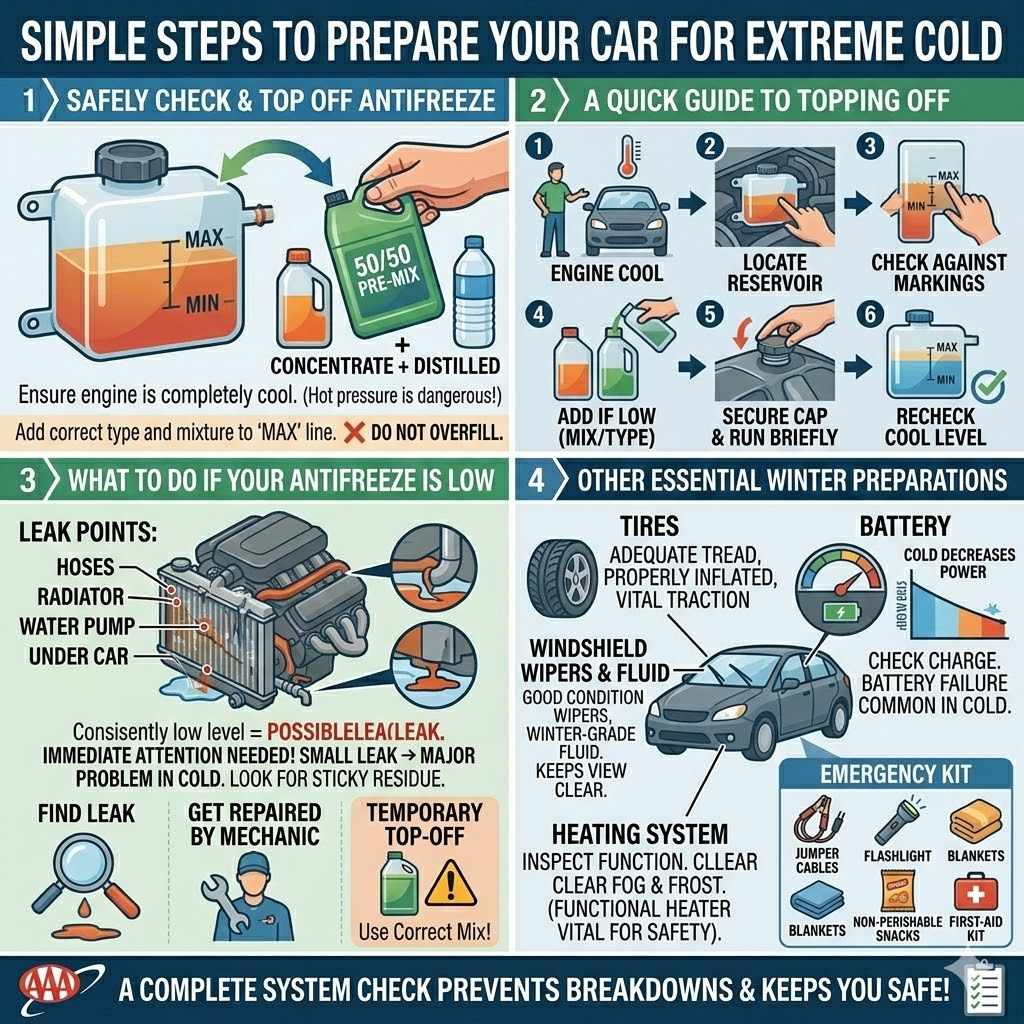
Simple Steps to Prepare Your Car for Extreme Cold
Ensuring your car is ready for extreme cold involves more than just checking the antifreeze. It’s about a complete system check to prevent breakdowns when you need your car the most. This section provides straightforward steps to get your vehicle winter-ready, focusing on the cooling system and other essential components.
How to Safely Check and Top Off Antifreeze
Checking and topping off your antifreeze is a straightforward maintenance task. The most important rule is to never open the radiator cap or expansion tank cap when the engine is hot. The cooling system is under pressure, and hot coolant can spray out, causing severe burns.
First, ensure the engine is completely cool. Locate the coolant reservoir, which is usually a translucent plastic tank connected to the radiator. It will have “Min” and “Max” or “Low” and “Full” lines marked on it.
If the coolant level is below the “Min” line, you need to add more. Use the correct type of antifreeze (pre-mixed or concentrate mixed with distilled water) as recommended in your owner’s manual. Slowly add the coolant to the reservoir until it reaches the “Max” line.
Do not overfill.
After adding,
Here’s a quick guide:
- Ensure the engine is cold.
- Locate the coolant reservoir.
- Check the coolant level against the markings.
- If low, add the correct antifreeze type and mix.
- Do not overfill.
- Secure the cap and run the engine briefly.
- Recheck the level when cool.
What to Do If Your Antifreeze is Low
If you discover your antifreeze level is consistently low, it might indicate a leak in the cooling system. This requires immediate attention. A small leak can quickly become a major problem, especially in extreme cold.
Look for any signs of coolant leaks around hoses, the radiator, the water pump, or under the car. Coolant often leaves a colorful, sticky residue.
If you find a leak, you should have it repaired by a qualified mechanic as soon as possible. Driving with a leaking cooling system can lead to overheating, which can cause severe engine damage.
If you only need to top off a small amount and can’t get to a mechanic immediately, use the correct type of antifreeze and a 50/50 mix. However, consider this a temporary fix. You still need to get the leak repaired.
Other Winter Car Preparations
Besides antifreeze, several other checks are essential for winter driving. Ensure your tires have adequate tread and are properly inflated, as good traction is vital on snow and ice. Check your battery; cold weather significantly reduces a battery’s power.
Make sure your windshield wipers are in good condition and that you have plenty of winter-grade windshield washer fluid.
Inspect your car’s heating system to ensure it’s working effectively. A functional heater is not just for comfort; it also helps keep your windshield clear of fog and frost.
It’s also a good idea to have an emergency kit in your car, including jumper cables, a flashlight, blankets, non-perishable snacks, and a first-aid kit.
A study by the AAA found that cold weather is a major contributor to vehicle breakdowns, with battery failure being the most common cause, followed by tire issues and engine starting problems. Regular maintenance helps prevent these.
Frequently Asked Questions
Question: Can I use water instead of antifreeze in my car
Answer: No, you should never use plain water in your car’s cooling system, especially during cold weather. Water will freeze and expand, which can crack your engine block and radiator. Antifreeze contains chemicals that lower the freezing point and prevent this damage.
Question: How often should I change my antifreeze
Answer: This depends on the type of antifreeze. Conventional green antifreeze usually needs changing every two to three years or about 30,000 miles. Long-life coolants can last five years or up to 100,000 to 150,000 miles.
Always check your owner’s manual for the specific recommendation for your vehicle.
Question: What happens if I mix different colored antifreeze
Answer: Mixing different types or colors of antifreeze can cause chemical reactions between their additives. This can create sludge, clog your cooling system, reduce its effectiveness, and lead to corrosion or overheating. It’s best to stick to the type recommended by your car manufacturer.
Question: My car’s heater isn’t working well, is it related to antifreeze
Answer: It can be. A low antifreeze level or a blockage in the cooling system, potentially caused by old or incompatible antifreeze, can affect your heater’s performance. The heater core is part of the cooling system, and if coolant isn’t circulating properly through it, you won’t get much heat.
Question: How do I know if my antifreeze is still good
Answer: You can check the freeze protection level using a hydrometer or refractometer. Also, look at the coolant’s condition. If it looks rusty, cloudy, or has particles floating in it, it’s likely time to change it, even if it’s not yet due by mileage or time.
Conclusion
When asking, Do You Need Special Antifreeze for Extreme Cold? the answer is yes, you need antifreeze rated for your local climate’s lowest temperatures. Always check your owner’s manual for the correct type and mix. Using the right coolant prevents freezing damage and keeps your engine safe.
Regularly check your levels and condition for peace of mind all winter long.