AC Coolant for Cars: R134a vs R1234yf Refrigerant Guide
AC coolant for a car is refrigerant, not the antifreeze in your radiator. Most cars built before 2017 use R-134a; 2017-and-newer models use R-1234yf, and the two aren’t interchangeable. Using the wrong type won’t cool the cabin and can damage the compressor, voiding your warranty. This guide covers how to identify your refrigerant, how AC coolant differs from engine coolant, low-coolant warning signs, and real recharge costs.
Quick Answer
“AC coolant” is industry shorthand for refrigerant — R-134a on most cars made before 2017, R-1234yf on 2017-and-newer models (mandatory since 2021). Check the sticker under your hood to confirm which one your car needs. A professional recharge runs $100–$250 for R-134a or $200–$500 for R-1234yf, since the newer refrigerant requires certified equipment to handle.
AC Coolant vs. Engine Coolant: Are They the Same?
No — despite the shared word “coolant,” these are two unrelated fluids in two unrelated systems. AC coolant is refrigerant that cycles between liquid and gas inside a sealed loop to pull heat out of your cabin air. Engine coolant is antifreeze, a glycol-based liquid that stays liquid and circulates through your radiator to keep the engine block from overheating. Topping off one does nothing for the other, and they’re never combined.

| Attribute | AC Coolant (Refrigerant) | Engine Coolant (Antifreeze) |
|---|---|---|
| System it serves | Air conditioning loop | Radiator / engine cooling system |
| What it does | Cools cabin air | Cools the engine block |
| Physical state | Cycles between gas and liquid | Stays liquid the whole time |
| Common types | R-134a, R-1234yf | Green, orange, or pink glycol-based antifreeze |
| Check interval | Every 2 years, or at the first sign of weak cooling | Every 2–5 years, per your owner’s manual |
What Type of AC Refrigerant Does Your Car Use? R-134a vs. R-1234yf
Model year is the fastest clue, but it’s not a guarantee. Most vehicles from 2013 or earlier use R-134a. Vehicles from 2021 onward are required by the EPA to use R-1234yf. Anything built between 2014 and 2020 is a genuine toss-up — several manufacturers, including BMW, Mercedes-Benz, and Audi, switched to R-1234yf as early as 2013–2015, well ahead of the federal mandate. For a full year-by-year identification method, including where to find the under-hood sticker and how the service port fittings differ, see our guide to identifying which refrigerant your car takes.
| Refrigerant | Vehicle Years | GWP (Environmental Impact) | Best For |
|---|---|---|---|
| R-134a | Most vehicles before 2017 | 1,430 | Older vehicles; DIY-legal top-offs |
| R-1234yf | 2017+ (mandatory on all new U.S. vehicles since 2021) | 4 | Newer vehicles; certified professional service |
📊 R-1234yf has a global warming potential of just 4, compared to 1,430 for R-134a — a 99.7% reduction. That gap is why the EPA phased R-1234yf into all new U.S. light-duty vehicles by 2021. Source: U.S. EPA, Acceptable Refrigerants and Their Impacts
How to Check Which AC Refrigerant Your Car Needs
- Open the hood and find the A/C sticker: Look on the radiator support, the strut tower, or directly on the compressor for a printed label listing the refrigerant type and fill capacity.
- Check the service port fitting size: R-134a service ports use larger quick-connect fittings; R-1234yf ports are smaller and keyed differently, so an R-134a can physically won’t attach to an R-1234yf port.
- Cross-check the model year: 2021-and-newer is R-1234yf by federal mandate; 2013-and-older is almost always R-134a. Anything in between needs the sticker to confirm.
- Call your dealer’s parts department if the sticker is missing: They can pull the exact refrigerant spec for your VIN in under a minute.
Best AC Refrigerant Recharge Kits
Once you’ve confirmed your refrigerant type, a recharge kit gets your AC blowing cold again in under 15 minutes for most R-134a systems. For a full side-by-side comparison of dedicated R-134a recharge kits, see our best car AC refrigerant recharge kits guide. The picks below cover the three most common situations: a complete single-refrigerant kit, a dual-refrigerant option, and a reusable gauge for drivers who already have refrigerant cans on hand.
Best AC Refrigerant Recharge Kit Pick
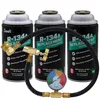
ZeroR AC Recharge Kit R134a Replacement
An all-in-one R-134a top-off with a 24-inch charge hose included, so there’s nothing extra to buy for a single recharge.
- Best for: R-134a vehicles needing a complete, ready-to-use recharge in one box
- Why we picked it: Includes the hose and refrigerant together — no separate parts to source
- Main drawback: R-134a only — won’t work on 2021+ vehicles that require R-1234yf
Compare more AC refrigerant recharge options
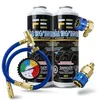 Option 1 FMSI Edelmann R-1234yf & R-134a Recharge Kit
|
 Option 2 A/C Pro Arctic Freeze Reusable Gauge & Hose
|
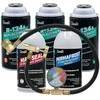 Option 3 ZeroR Premium Repair & Recharge Kit (Max Seal)
|
As an Amazon Associate we earn from qualifying purchases.
“Section 608 of the Clean Air Act prohibits the intentional release (venting) of any refrigerant when maintaining, servicing, repairing, or disposing of air conditioning or refrigeration equipment, including MVAC systems.”
This is the exact rule behind why R-1234yf can’t be legally self-serviced with a basic can and hose: recovering, evacuating, and recharging it requires EPA Section 609–certified equipment that captures the refrigerant instead of venting it. For the full step-by-step process on systems where DIY is legal, see our guide to recharging your car’s AC refrigerant yourself.
Check for AC Leaks Before You Add Refrigerant
Topping off refrigerant in a system that’s leaking just delays the same problem — the new charge escapes the same way the old one did. A UV dye leak detector kit lets you find the exact leak point before you recharge, which saves you from buying refrigerant twice. These three kits are worth using alongside a recharge:



1. Vansky Air Conditioner Leak Detection: 100 LED Car AC UV Dye Leak Detector Kit …
- Brand: Vansky
- Manufacturer: Vansky
The Vansky Air Conditioner Leak Detection: 100 LED Car AC UV Dye Leak Detector Kit … is a solid pick in this category, offering quality construction designed for everyday use. It’s built for straightforward use and fits the needs most drivers are looking for here.
Advantages
- Straightforward to install and use.
- Designed for everyday automotive use.
- A practical option in this category.
Our Recommendations
Based on its listing details, the Vansky Air Conditioner Leak Detection: 100 LED Car AC UV Dye Leak Detector Kit … stands out for solid build quality and straightforward operation. It’s a reasonable option if you want a straightforward, well-reviewed product in this category without overspending.
2. Vansky Air Conditioner Leak Detector: Professional Car Tool Automotive AC UV Dye Leak Detection Kit with Protective Glasses
- Brand: Vansky
- Manufacturer: Vansky
Discover leaks in your car’s air conditioner easily with the Vansky Air Conditioner Leak Detector. This professional tool includes UV dye and protective glasses for safe use. Quickly find and fix leaks to keep your AC running smoothly. Ideal for both beginners and experts in automotive maintenance.
Advantages
- Easily detect car AC leaks with UV dye kit.
- Includes protective glasses for safe use.
- Professional-grade tool ensures precise leak detection.
- Save money by fixing leaks yourself.
- Simple to use, even for beginners.
Our Recommendations
Vansky Air Conditioner Leak Detector found leaks quickly with clear UV dye. Protective glasses included are comfortable, with no eye strain during inspection. Instructions are easy to follow, even for beginners. Durable build with quality materials ensures long-term use. Highly recommend for anyone needing to find car AC leaks.
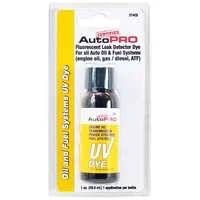
3. A/C PRO Certified Oil and Fuel System UV Dye, Leak Detector for Cars, 1 …
- Brand: See listing
- Manufacturer: See listing
- Dimensions: See the Amazon listing for exact dimensions and specs.
The A/C PRO Certified Oil and Fuel System UV Dye, Leak Detector for Cars, 1 … is a solid pick in this category, offering quality construction designed for everyday use. It’s built for straightforward use and fits the needs most drivers are looking for here.
Advantages
- Straightforward to install and use.
- Designed for everyday automotive use.
- A practical option in this category.
Our Recommendations
Based on its listing details, the A/C PRO Certified Oil and Fuel System UV Dye, Leak Detector for Cars, 1 … stands out for solid build quality and straightforward operation. It’s a reasonable option if you want a straightforward, well-reviewed product in this category without overspending.
Buying Guide: How to Choose AC Coolant for Your Car
- Confirm your refrigerant type first. R-134a and R-1234yf are not interchangeable — check your under-hood sticker before buying anything.
- Match the can size to your system’s capacity. Most cars hold 1.5–2.5 lbs of refrigerant total, so one larger kit is often cheaper per ounce than several small cans.
- Look for a built-in gauge. Recharge kits with a pressure gauge help you avoid overcharging, which can blow a seal or damage the compressor.
- Choose a self-sealing valve. Cans with a self-sealing tap let you disconnect and reconnect without losing pressure or venting refrigerant into the air.
- Avoid “stop leak” additive blends unless you need one. Sealant additives can clog expansion valves and orifice tubes in newer systems — use them only as a last resort on older vehicles.
- Read reviews from your specific vehicle type. A kit that works well on a sedan may struggle to fully charge a truck or SUV’s larger AC system.
- Compare price per ounce, not just the sticker price. A $50 kit with 20 oz of refrigerant often costs less per ounce than a $25 can with only 12 oz.
- Buy from a seller with a return policy. Auto parts retailers and Amazon both generally allow returns on unopened cans if you discover you need the other refrigerant type.
- Consider UV dye or lubricant additives only if useful. They’re worth it for diagnostics or on older systems, but redundant on a system serviced within the past year.
- For R-1234yf systems, buy a certified kit or use a professional. DIY-style R-1234yf cans exist but require EPA-compliant self-sealing equipment — when in doubt, a certified shop is the safer call.
Frequently Asked Questions
What Is Car Air Conditioning Coolant?
Car air conditioning coolant is the refrigerant inside your AC system — R-134a or R-1234yf, depending on your car’s age — not the antifreeze in your radiator. It absorbs heat from the cabin air and releases it outside as it cycles between liquid and gas.
How Often Should Coolant Be Replaced?
AC refrigerant isn’t a wear item like oil. A sealed system holds its charge for years, so have it checked every 2 years or as soon as you notice weak or warm airflow, since any drop in level almost always means a leak somewhere in the system.
Can I Use Any Coolant For My Car?
No. Always use the exact refrigerant type listed on your under-hood A/C sticker. R-134a and R-1234yf are not interchangeable, and mixing them can damage the compressor and contaminate the entire system.
What Are Signs Of Low Coolant?
Warm air from the vents even on max cold, a compressor clutch that won’t engage, hissing or bubbling near the AC lines, and oily residue at fittings are all signs of low refrigerant, usually caused by a leak.
Is AC Coolant the Same as Engine Coolant?
No. AC coolant is the refrigerant (R-134a or R-1234yf) that cools cabin air in a sealed loop, while engine coolant is antifreeze that circulates through the radiator to regulate engine temperature. They’re different fluids in different systems and are never interchangeable.
How Much Does It Cost to Recharge Car AC Coolant?
A professional R-134a recharge typically runs $100–$250; R-1234yf systems cost $200–$500 because the refrigerant and certified equipment cost more. A DIY R-134a top-off kit runs $30–$70, but R-1234yf can’t legally be self-recharged without EPA-certified equipment.
Can I Recharge My Own Car’s AC With R-1234yf?
Not legally without certification. R-1234yf requires EPA Section 609–certified equipment and training to service, unlike R-134a, which is sold in DIY-friendly cans. Attempting to recharge R-1234yf yourself risks violating federal handling rules and damaging the system.
Not sure if your vent temperature is actually low? Compare your readings against our car AC temperature chart to see what’s normal for your outside air temperature. And if your recharge cost estimate seems high, our freon cost guide breaks down pricing by refrigerant type and region.
Conclusion
Air conditioning coolant is refrigerant, not antifreeze — confirm whether your car takes R-134a or R-1234yf before buying anything, since the two aren’t interchangeable and using the wrong one can damage your compressor. Check for leaks with a UV dye kit before you recharge, and when it comes to R-1234yf service, EPA certification rules mean a professional shop is usually the safer call.
Products related to this article
Sponsored / affiliate links. As an Amazon Associate I earn from qualifying purchases. I may earn additional commission from eligible campaigns.