Does AC Run on Gas in a Car? The Honest Answer Here
Does AC run on gas in a car? Yes, your car’s air conditioning system indirectly consumes fuel because the engine must work harder to power the AC compressor. This post explains exactly how the AC system draws power from your engine, how much extra gas you can expect to burn, and whether using the AC is more fuel-efficient than rolling down the windows.
Simply put, your car’s AC does not run directly on gasoline, but it is powered by the engine, which burns gas to generate the energy needed. The AC compressor is driven by a belt connected to the engine crank-shaft, so anytime the AC is on, the engine works slightly harder and uses more fuel.
Key Takeaways
- Your car’s AC runs on engine power, not directly on gas, but the engine burns extra fuel to supply that power.
- Using the AC can increase fuel consumption by 5–20% depending on driving conditions, vehicle type, and outside temperature.
- At highway speeds, AC is more efficient than open windows, which create aerodynamic drag that also wastes fuel.
- Modern AC systems are more efficient than older models, but they still draw noticeable power from the engine.
- Regular AC maintenance helps keep fuel consumption from the AC system at a minimum.
How Does a Car AC System Actually Work?
A car’s air conditioning system works on the same principle as a household refrigerator. It uses a refrigerant that cycles through a closed loop of components to absorb heat from inside the cabin and release it outside.
The key components include the compressor, condenser, expansion valve, evaporator, and a blower fan. The compressor is the heart of the system—it compresses the refrigerant gas, raising its temperature and pressure, then pushes it through the condenser where it cools and turns into a liquid.
- Compressor: Pressurizes and circulates the refrigerant. This is the main component that draws power from the engine.
- Condenser: Located at the front of the car, it releases heat from the refrigerant to the outside air.
- Expansion valve: Drops the pressure of the refrigerant, causing it to cool rapidly before entering the evaporator.
- Evaporator: Inside the cabin, the cold refrigerant absorbs heat from the air blown over it by the fan.
- Blower fan: Moves air across the evaporator and into the cabin.
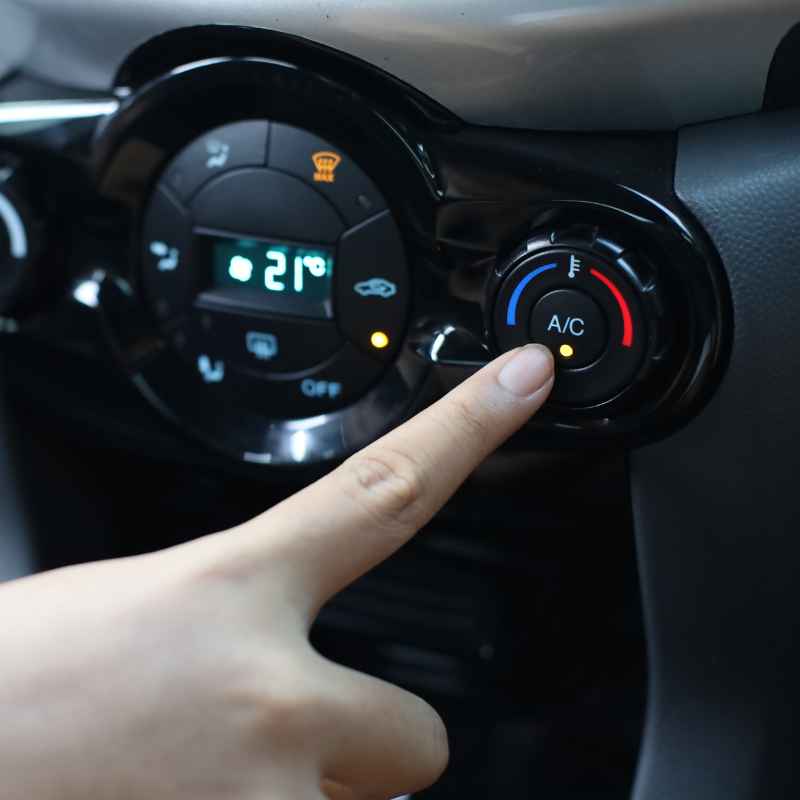
The entire process requires mechanical energy to turn the compressor. That energy comes from the engine’s crankshaft via a serpentine belt. When you turn on the AC, an electromagnetic clutch engages the compressor pulley, linking it to the belt and forcing the engine to supply rotational power.
Tip: If you hear a clicking sound when you turn on the AC, that’s the clutch engaging the compressor. A sudden drop in engine RPM is also normal.
What Powers the AC Compressor in a Car?
The AC compressor is powered mechanically by the engine, not by an electric motor (except in electric and hybrid vehicles). The serpentine belt, which also drives the alternator, power steering pump, and water pump, runs over a pulley on the compressor.
When the AC is off, the pulley spins freely without engaging the compressor. When you turn the AC on, a clutch mechanism locks the pulley to the compressor shaft, forcing it to rotate. This creates additional load on the engine.
| Component | Power Source | Fuel Impact |
|---|---|---|
| AC Compressor | Engine belt drive | High – directly loads the engine |
| Blower Fan | Electric (alternator) | Low – alternator drag |
| Condenser Fan | Electric (alternator) | Low – alternator drag |
| Control Electronics | Battery/alternator | Negligible |
The belt-driven compressor is the reason why your car’s engine has to work harder when the AC is on. This extra work directly translates to higher fuel consumption.
Important: In electric and hybrid vehicles, the AC compressor is usually powered by an electric motor running off the high-voltage battery, so the fuel impact is different. This post focuses on conventional gasoline cars.
Does Running the AC Waste Gas?
Yes, running the AC causes your engine to burn more gas than it would with the AC off. The amount depends on several factors, but the general answer is clear: the AC system creates a parasitic load on the engine, and that load must be overcome by burning more fuel.
The US Department of Energy estimates that using the AC can reduce your fuel economy by 5–25% depending on the vehicle and driving conditions. The EPA also notes that AC use is the largest contributor to the difference between city and highway fuel economy ratings.
- City driving: AC can reduce fuel economy by up to 25% because the engine is already under lower load, so the AC load is more noticeable.
- Highway driving: AC reduces fuel economy by about 5–10% because the engine is already working harder to maintain speed, so the extra load is smaller proportionally.
- Extreme heat: The harder the AC has to work to cool the cabin, the more fuel it consumes. On a 100°F day, expect higher fuel use than on a 75°F day.
- Vehicle size: Smaller engines feel the AC load more than larger engines. A compact car may see a bigger percentage drop than a V8 truck.
So while the AC doesn’t “run on gas” in the sense that a fuel line feeds it, the cause-and-effect chain is direct: AC on → compressor loads engine → engine burns more fuel to maintain power → fuel consumption increases.
How Much Extra Fuel Does the AC Use?
The amount of extra fuel your car burns when the AC is running varies widely, but research and testing provide some typical numbers. In a 2018 study by the Society of Automotive Engineers, AC use increased fuel consumption by 8–15% on average across a range of vehicles.
Here is a breakdown based on driving conditions and vehicle type:
| Condition | Extra Fuel Used (MPG Drop) | Percentage Increase |
|---|---|---|
| City driving (stop-and-go) | 2–4 MPG drop | 15–25% |
| Highway driving (steady speed) | 1–2 MPG drop | 5–10% |
| Small car (1.5L engine) | 3–5 MPG drop | 15–25% |
| Large SUV/Truck (V8 engine) | 1–2 MPG drop | 3–8% |
| Extreme heat (100°F+) | Additional 2–3 MPG drop | +5–10% |
To put this in real-world terms: if your car normally gets 30 MPG on the highway, running the AC could drop that to 27–28 MPG. Over a 300-mile trip, that means burning about 1 extra gallon of gas.
Warning: Don’t assume your car’s fuel economy display is accurate when the AC is on. Many dash displays don’t fully account for AC load. Track your actual fill-ups for real numbers.
Does AC Use Gas More Than Open Windows?
This is one of the most debated questions in automotive fuel efficiency. The short answer is: it depends on your speed.
At low speeds (under 45 mph), rolling down the windows creates minimal aerodynamic drag, so it is more fuel-efficient than running the AC. At higher speeds, open windows create significant drag that forces the engine to work harder, often consuming more fuel than the AC would.
- Under 45 mph: Open windows are usually more efficient than AC. The drag penalty is small, and the AC compressor load is relatively high.
- 45–65 mph: The two options are roughly equal. Some studies show AC is slightly better, others show windows are slightly better.
- Over 65 mph: AC is almost always more fuel-efficient than open windows. The aerodynamic drag from open windows can reduce fuel economy by 10–15%.
The Society of Automotive Engineers tested this exact question and found that at 65 mph, open windows reduced fuel economy by about 8%, while AC reduced it by about 5%. At 80 mph, open windows caused a 12% drop while AC caused just a 6% drop.
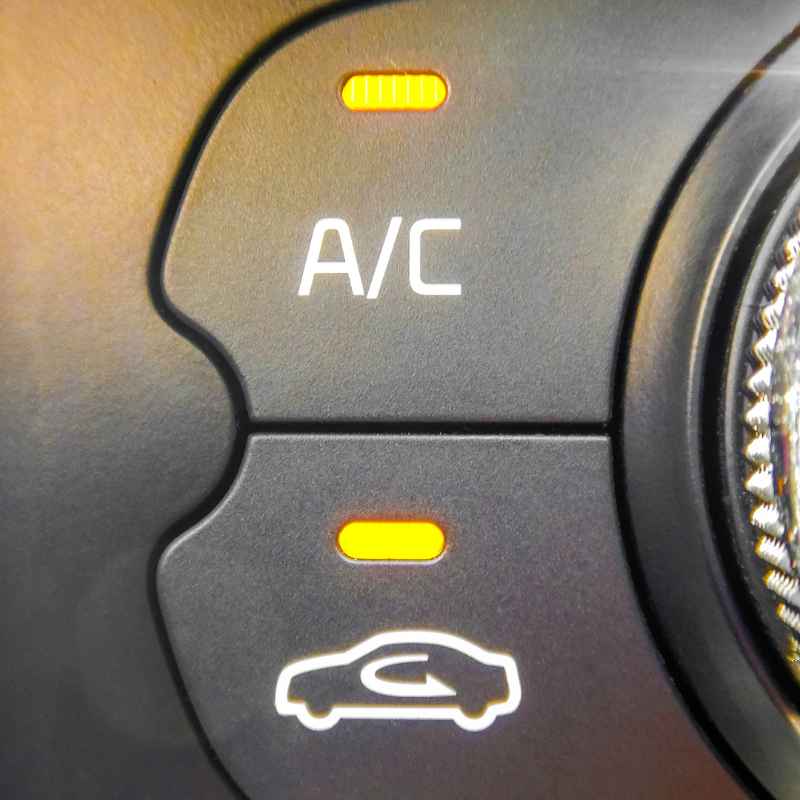
Tip: On the highway, use the AC with the recirculation setting on. This cools already-chilled air instead of hot outside air, reducing the compressor workload and saving fuel.
Common Myths About Car AC and Fuel Consumption
There are plenty of misconceptions about how car AC affects fuel use. Let’s clear up the most common ones with facts.
- Myth: Turning the AC on and off saves fuel. Actually, constantly cycling the compressor on and off can cause the system to work harder each time it re-engages. It’s better to set the temperature and leave it on.
- Myth: The AC uses more fuel in city driving than on the highway. This is actually true, but not because the AC works differently. In city driving, the engine is under lower load, so the AC load is proportionally larger.
- Myth: Running the AC with the windows down saves fuel. No. This creates a massive aerodynamic penalty plus the AC load. Pick one or the other.
- Myth: Using the defroster doesn’t use extra fuel. The defroster often runs the AC compressor to remove humidity, so yes, it does use extra fuel.
- Myth: Newer cars have AC systems that don’t affect fuel economy. They are more efficient than old systems, but they still draw power from the engine and increase fuel consumption.
Understanding these myths helps you make smarter decisions about when and how to use your AC.
Important: Your car’s AC system also serves a maintenance purpose. Running it periodically (even in winter) keeps the seals lubricated and prevents refrigerant leaks. A completely unused AC system can fail prematurely.
Tips to Reduce AC Fuel Consumption
If you want to stay cool without burning too much extra gas, follow these practical tips. They can help reduce the fuel impact of your AC by 30–50%.
- Use recirculation mode. This recycles cabin air instead of pulling in hot outside air, reducing the cooling load on the AC system. It can save 10–20% on AC fuel use.
- Park in the shade. A cabin that starts cooler requires less AC energy to cool down. Use a sunshade on your windshield for even better results.
- Vent the car before using AC. Roll down the windows for a minute or two to let hot air escape before turning on the AC. This reduces the initial cooling load.
- Set the temperature wisely. Don’t set the AC to max cold and then wear a jacket. Set it to a comfortable temperature (72–75°F) and let the system maintain it.
- Keep the AC system maintained. A low refrigerant level, dirty condenser, or worn belt forces the compressor to work harder. Annual AC checkups help maintain efficiency.
- Clean or replace the cabin air filter. A clogged filter restricts airflow, making the blower fan work harder and reducing cooling efficiency.
- Don’t precool the car. Running the AC with the engine idling before you drive wastes fuel. Start driving and let the AC cool as you go.
These tips won’t eliminate the fuel cost of running the AC, but they can noticeably reduce it. The US Department of Energy estimates that proper AC maintenance and smart usage can save up to 10% on your overall fuel bill during summer months.
Frequently Asked Questions
Does the AC run on gas or electricity in a car?
The AC compressor in most gasoline cars is driven by a belt connected to the engine, so it runs on mechanical power from the engine. The blower fan and controls run on electricity from the alternator, which also comes from the engine. In both cases, the energy ultimately comes from burning gas.
Does running the AC drain the battery?
Only indirectly. The AC compressor is belt-driven, not battery-powered. However, the blower fan and condenser fan draw electricity from the alternator, which can place a small additional load on the battery if the alternator can’t keep up at idle.
Is it bad to run the AC while driving?
No, it is perfectly safe. Modern AC systems are designed for continuous operation. Running the AC while driving is normal and does not damage the engine or other components.
In fact, running the AC periodically helps keep the system seals lubricated.
Does turning off the AC save gas?
Yes, turning off the AC removes the load from the compressor, which reduces engine load and saves fuel. The exact amount depends on driving conditions, but you can expect a 5–25% improvement in fuel economy with the AC off.
Does the AC use more gas on high fan speed?
The fan speed itself has a very small impact on fuel consumption because the blower motor is electric and draws minimal power. However, a higher fan speed can make the evaporator work harder if the system struggles to maintain the set temperature, indirectly increasing compressor load slightly.
Final Thoughts
Your car’s AC does not run on gas directly, but it does cause your engine to burn more fuel by placing additional load on it. The extra fuel consumption ranges from 5% to 25% depending on your driving conditions and vehicle type. At highway speeds, using the AC is actually more efficient than rolling down the windows, but at low speeds, open windows are better.
By using recirculation mode, maintaining your AC system, and parking in the shade, you can keep your cabin cool without wasting too much gas.
Products related to this article
Sponsored / affiliate links. As an Amazon Associate I earn from qualifying purchases. I may earn additional commission from eligible campaigns.