Is Purple Power Safe on Car Paint? What You Need to Know
Purple Power is not a routine cleaner for car paint. Use it only on stubborn grease or oil, heavily diluted, with a quick spot test and an immediate rinse. Skip it on fresh paint, repainted panels, or damaged clear coat. Used straight or left to dry, it can dull gloss, stain trim, and etch clear coat, turning a shortcut into a repair bill. This guide explains when Purple Power is worth the risk, how to dilute and apply it, and the safer alternatives that protect paint.
What you’ll need
- Purple Power
- Clean water for dilution and rinsing
- Two clean microfiber towels
- A soft bristle brush for textured areas only
- Gloves
- Eye protection
- Access to shade or a cool panel
- A small hidden section for a spot test
Is Purple Power safe on car paint?
No, not as a routine paint cleaner. Purple Power is a strong degreaser commonly used for grease, oil, dirt, engines, and concrete, and its alkaline compounds can strip wax and may damage clear coat if it sits too long or dries on the panel. It is a last-resort cleaner, not a wash soap.
What makes a panel more vulnerable
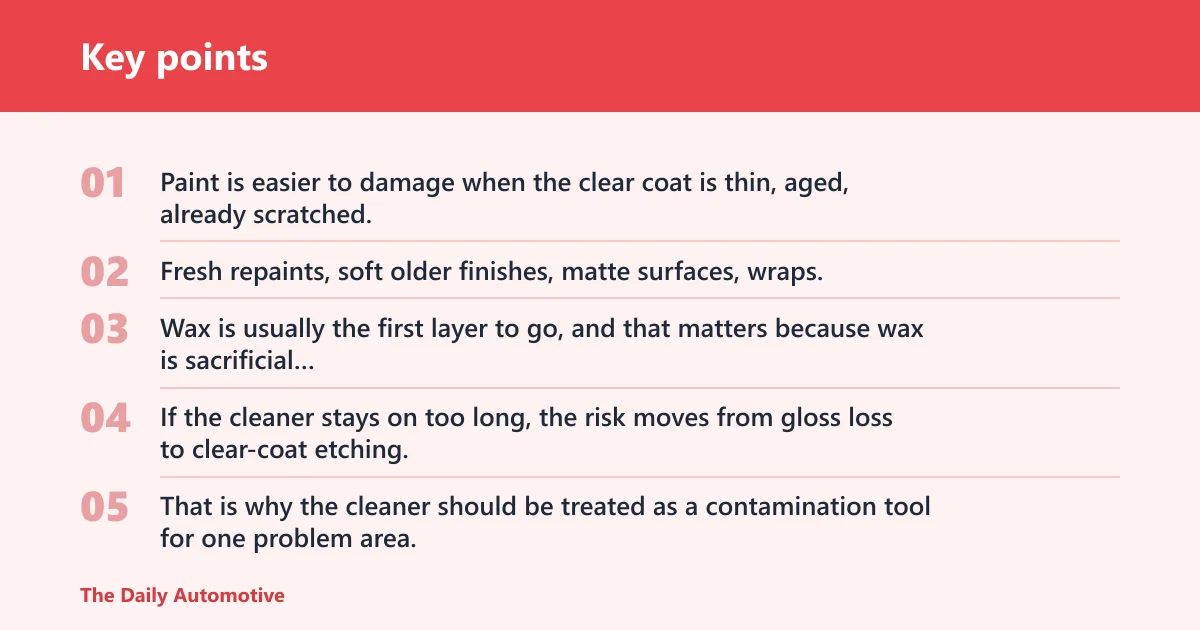
Paint is easier to damage when the clear coat is thin, aged, already scratched, or freshly polished. Fresh repaints, soft older finishes, matte surfaces, wraps, and unknown coatings all deserve extra caution because strong alkaline cleaners can leave residue, change gloss, or mark the surface faster than they would on a healthy, well-cured finish.
What Purple Power can damage
Wax is usually the first layer to go, and that matters because wax is sacrificial protection. If the cleaner stays on too long, the risk moves from gloss loss to clear-coat etching. That is why the cleaner should be treated as a contamination tool for one problem area, not a whole-panel solution.
Use Purple Power or skip it?
| Check | Yes | No |
|---|---|---|
| Is the contamination heavy grease, oil, tar-like road film, or engine grime? | Continue | Skip it |
| Is the panel paint clear coat, not fresh paint, matte finish, or a wrap? | Continue | Skip it |
| Is the paint older than a fresh repaint and free of obvious damage? | Continue | Skip it |
| Are you willing to lose wax or sealant on the treated spot? | Continue | Skip it |
| Is the car parked in shade on a cool surface? | Continue | Skip it |
| Will you dilute to about 1 part Purple Power to 10 parts water? | Continue | Skip it |
| Can you test a hidden section first? | Continue | Skip it |
| Can you keep dwell time to 1–2 minutes max? | Continue | Skip it |
| Can you rinse with water right away and dry immediately? | Continue | Skip it |
| Do you already have a safer car-specific cleaner that could handle the job? | Use that instead | Go ahead only if the risk is worth it |
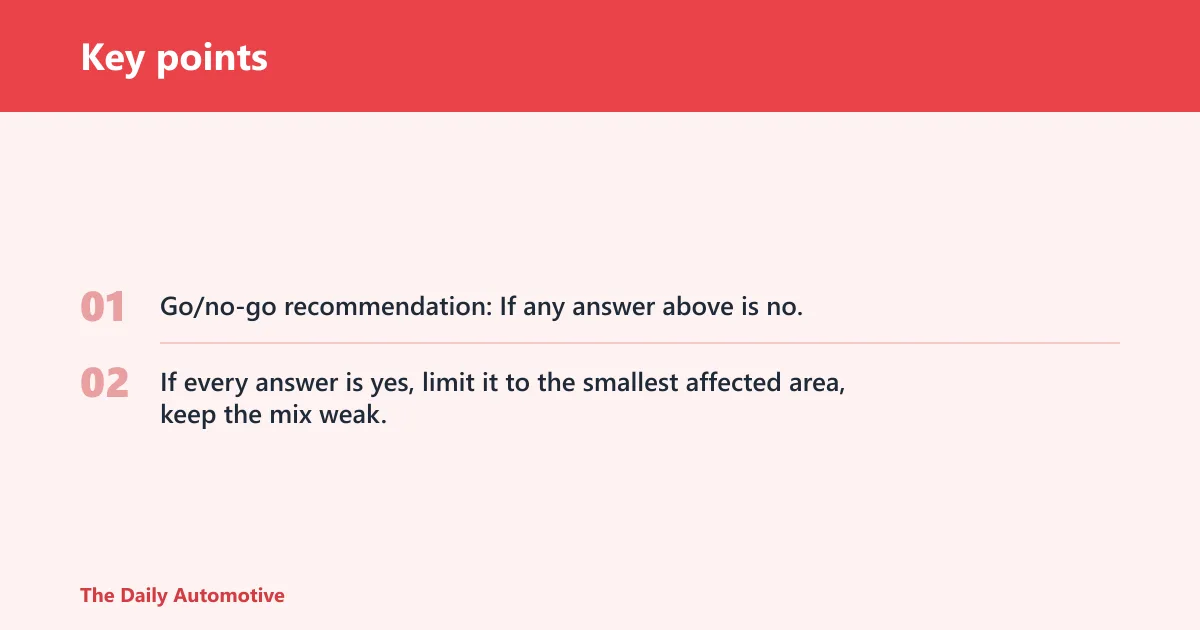
Go/no-go recommendation: If any answer above is no, skip Purple Power and use a dedicated car cleaner. If every answer is yes, limit it to the smallest affected area, keep the mix weak, and rinse immediately after a brief dwell.
How do you dilute Purple Power for car paint?
For paint use, a safer starting point is about 1 part Purple Power to 10 parts water. Test that mix on a hidden section first, because different finishes react differently. If the spot dulls, streaks, or beads oddly, do not move to the visible panel.
Start with a hidden-spot test
Pick a low-visibility area such as the lower rocker or inside edge of a jamb. Apply the diluted mix, wait briefly, rinse, and dry. If the finish changes, stop there. A clean-looking panel can still be vulnerable, especially if it already has old wax, fresh polish, or a thin clear coat.
How long it can sit on the panel?
Keep application time to 1–2 minutes max. Do not let the product dry on the paint. If the panel warms up, the dwell time drops even further because heat speeds evaporation and leaves residue behind. Shade buys you time and reduces streaking.
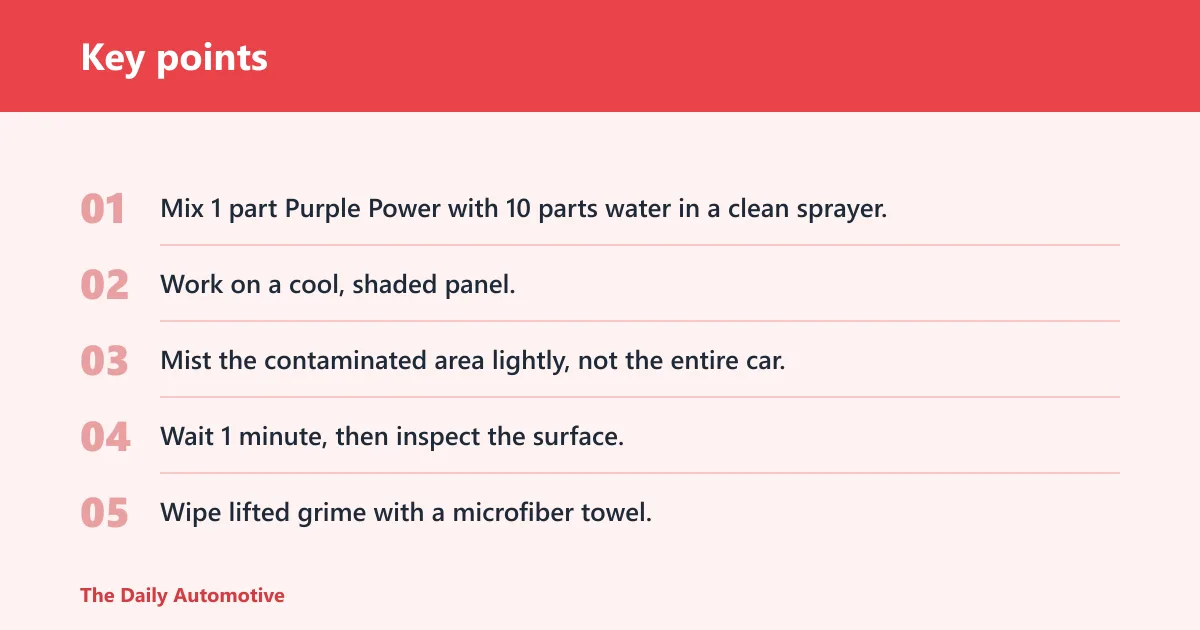
- Mix 1 part Purple Power with 10 parts water in a clean sprayer.
- Work on a cool, shaded panel.
- Mist the contaminated area lightly, not the entire car.
- Wait 1 minute, then inspect the surface.
- Wipe lifted grime with a microfiber towel.
- Rinse the area with water right away.
- Dry immediately with a clean microfiber towel.
Can Purple Power strip wax or clear coat?
Yes. Purple Power can remove wax quickly, and on the wrong surface or with too much dwell it can also attack clear coat. That makes the finish look flatter, less glossy, or uneven. On older or delicate paint, the damage can show faster than on modern, healthy clear coat.
What wax loss looks like
Wax removal usually shows up as reduced gloss, faster water sheeting, and less protection in the treated area. The panel may still look clean, but it loses the sacrificial layer that helps water and grime slide off. That is why one aggressive cleaning can create a second job: re-waxing or re-protecting the spot.
Why rinse and dry timing matters
Alkaline cleaner left behind on the panel keeps working after the grime is gone. Rinse with water as soon as the contamination lifts, then dry immediately to stop spotting. If residue dries, it can leave streaks or faint marks that are harder to remove than the original dirt.
Should I use Purple Power in full sun?
No. Use shade or a cool surface instead. Direct sun can make Purple Power dry too quickly, which raises streaking risk and shortens the safe dwell window. Hot panels also make it harder to judge whether the product has already started to etch or residue has begun to set.
Real-world weather examples
Say your black hood is warm after sitting in the driveway at noon. A diluted degreaser can flash off before you finish wiping, so the better move is to wait for shade or wash the panel with a car-specific cleaner.
Suppose the same grime is on a cool lower door panel in the evening. The risk drops, but the same rules still apply: dilute, spot test, watch the clock, and rinse immediately.
What should you use instead of Purple Power on car paint?
For paint, a dedicated car wash soap is the safer first choice. Use Purple Power only when the contamination is greasy enough that a regular wash cannot touch it. Bird droppings and tree sap are better handled with car-safe cleaners or quick detailers made for painted surfaces, because they are less likely to strip protection.
Safer options for bird droppings and tree sap
For fresh bird droppings, soak the spot with water and use a dedicated paint-safe cleaner or wash soap. For sap, a car-specific bug and tar remover is usually the better fit. Those products are designed for paint contact and are less likely to cut through wax or disturb a ceramic coating.
What to use on grease without risking paint
For greasy door handles, lower rockers, or road film, start with a pH-neutral car shampoo and microfiber towels. On textured plastic or engine-adjacent parts, a soft bristle brush can help lift grime. Save Purple Power for the spots where the grease is stubborn enough to justify the risk.
Must-have
 As an Amazon Associate we earn from qualifying purchases. Prices and availability are accurate as of the date shown and are subject to change
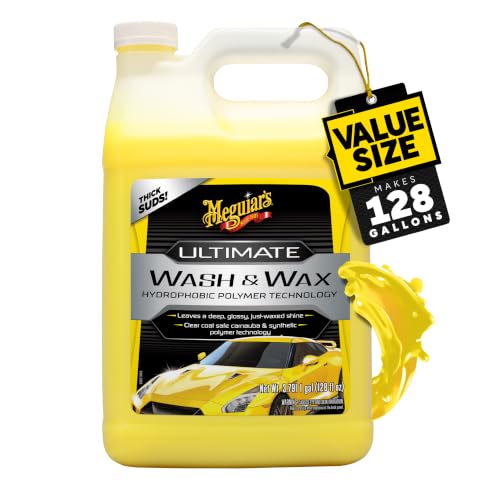
Meguiar’s Ultimate Wash and Wax is the safer default when you want paint cleaning with built-in protection. Based on the listed details, it combines carnauba wax and synthetic polymers, and it is meant to clean gently while leaving a shine. The drawback is that it is a wash soap, so it is not the right tool for baked-on grease or engine grime.
Nice-to-have
As an Amazon Associate we earn from qualifying purchases. Prices and availability are accurate as of the date shown and are subject to change

3D Pink Car Wash Soap is a pH-neutral shampoo that fits routine paint washing better than a degreaser. The listed pros say it uses rich foam to encapsulate dirt and rinse clean with zero film or streaks. The drawback is the obvious one: it is gentle, so it is not built for the kind of heavy contamination that tempts people toward Purple Power.
Budget setups
| Setup | What to buy | Approx. price | Best for | Drawback |
|---|---|---|---|---|
| Starter | 3D Pink Car Wash Soap | $35.74 | Regular paint washing and routine maintenance | No degreasing strength for heavy contamination |
| Mid | Meguiar’s Ultimate Wash and Wax | $30.46 | Routine washing with some added protection | Not a substitute for a true degreaser on stubborn grease |
| Serious | Meguiar’s Ultimate Wash and Wax + 3D Pink Car Wash Soap | $66.20 | Rotating between protection-focused washes and gentle cleaning | Still safer than Purple Power, but neither product is meant for industrial grime |
Common mistakes
The biggest mistake is using Purple Power full strength on paint. Another is spraying too much and letting it sit while you fetch towels, which invites drying and residue. A third is treating wax loss as harmless, then wondering why the panel looks dull and feels less protected.
Protective gear matters too. Wear gloves and eye protection, because alkaline cleaner can irritate skin and eyes. Work where air moves, keep the nozzle aimed only where needed, and avoid aggressive scrubbing with anything abrasive. A soft bristle brush belongs on textured trim, not on paint.
Another common first-timer mistake is thinking one quick pass is enough on a hot panel. Picture a white sedan with dried road film on the lower doors. If the cleaner flashes off before you rinse, the remaining film can become harder to remove, not easier.
Frequently asked questions
Will Purple Power strip wax off my car?
Yes. Wax is one of the first things a strong alkaline cleaner can remove, especially if the mix is strong or the dwell time runs long. Expect reduced gloss and less short-term protection in the treated area, which is why a re-wax or re-protect step may be needed afterward.
Can Purple Power damage clear coat?
Yes. Clear coat is the protective top layer, and strong alkaline cleaners can etch it if they sit too long or dry on the panel. The risk is higher on older finishes, fresh repaints, and already-damaged surfaces, so quick rinse and dry timing matters.
How long can Purple Power sit on paint?
Keep it to 1–2 minutes max, and less if the panel is warm. Do not wait for the product to dry. If you cannot rinse and dry within that window, do not spray it on the paint in the first place.
How often can I use Purple Power on a car?
There is no good schedule for routine use on paint. Reserve it for isolated grease or oil contamination only, and use a car-safe soap for normal washing. If the same area needs repeated degreasing, the problem is probably better handled with a dedicated auto cleaner.
What happens if Purple Power dries on paint?
Dry residue can leave spots, streaks, and a dull patch where the cleaner kept working after the grime was gone. Rinse with water immediately, then dry with a clean microfiber towel. If spotting remains, stop and reassess before using any stronger correction method.
Is Purple Power safe for bird droppings or tree sap?
Usually no, not as the first choice. Those spots are better handled with a paint-safe cleaner or dedicated sap remover because Purple Power is much more aggressive than the job usually needs. Save it for stubborn grease where a gentler product cannot cut through the contamination.
Products related to this article
Sponsored / affiliate links. As an Amazon Associate I earn from qualifying purchases. I may earn additional commission from eligible campaigns.