Does Cracking Car Windows Help With Heat? Tips Inside
Cracking car windows to reduce heat is a common trick many drivers try on hot days. This post explains whether it actually works, how much it helps, and what you should do instead.
Simply put, cracking windows does help lower interior temperature by allowing hot air to escape, but the effect is modest. Without proper ventilation or a fan, the car still heats up dangerously fast. In most cases, a sunshade or reflective cover works better.
Key Takeaways
- Cracking car windows lets hot air escape but the cooling effect is limited.
- On a 95°F day, cracking windows can reduce peak temperature by 10–15°F compared to windows closed.
- Cracking windows alone is not enough to prevent heat stroke or damage to electronics.
- Combining cracked windows with a sunshade maximizes cooling.
- For parked cars, a battery-powered fan or remote start system works far better.
How Does Cracking Windows Reduce Car Heat?
When you crack a window, you create a small opening for hot air to escape. As the interior air heats up, it rises and exits through the gap. Cooler outside air can then enter, creating a natural convection loop.
According to the California Air Resources Board, a car parked in direct sun can reach interior temperatures of 150°F in under an hour. Cracking windows slightly reduces the rate of temperature rise. A 2012 study by San Francisco State University found that cracking windows lowered peak interior temperature by about 10°F compared to windows fully closed.
However, the effect depends heavily on outside conditions. On a calm, windless day, natural convection is weak. A gentle breeze pushes cooler air in through one crack and hot air out through another – but most drivers only crack one window, limiting the exchange.
- Single cracked window: minimal exchange, less than 5°F difference.
- Two opposite windows cracked: better cross‑flow, 10–15°F drop possible.
- All windows cracked slightly: maximum natural ventilation, but security risk.
- Sunroof tilted: similar effect, but less efficient than side windows.
- Crack size matters: 1–2 inches is optimal; too small restricts flow, too large invites theft.
| Window Configuration | Average Temperature Reduction | Security Risk |
|---|---|---|
| All windows closed | 0°F (baseline) | Low |
| One window cracked 1″ | 3–5°F | Medium |
| Two opposite windows cracked 1″ | 10–15°F | Medium |
| All windows cracked 2″ | 15–20°F | High |
The table shows that cracking two opposite windows provides a decent balance of cooling and security. If you must park in the sun, that configuration is your best bet. But even then, interior temperatures can still exceed 120°F on a hot day.
Warning: Cracking windows does not make a car safe for children or pets. Interior temperatures can still become lethal within 15 minutes. Never leave a child or animal unattended in a parked car, even with windows cracked or a window fan running — in most states, it’s actually illegal.
What Factors Affect How Well Cracking Windows Works?
Several variables influence the effectiveness of cracking car windows to combat heat. Understanding these helps you decide when it’s worth doing.
The most important factor is ambient wind speed. On a breezy day, the pressure difference across the car forces hot air out. On a still day, convection is nearly nonexistent, and cracked windows barely help.
Car color also plays a role. A dark car absorbs more solar energy, heating up faster. Cracking windows in a black car may reduce temperature by a smaller percentage than in a white car, because the dark body radiates more heat into the interior.
- Wind speed: Above 5 mph, cross‑flow becomes effective.
- Outside temperature: The hotter it is, the smaller the relative benefit.
- Window crack size: 1–2 inches is ideal; smaller cracks do little.
- Number of open windows: Two opposite windows are best.
- Sunlight angle: Direct overhead sun heats the dashboard and seats more.
- Interior materials: Leather seats absorb and retain more heat than cloth.
- Car model: Hatchbacks with large rear glass trap heat differently than sedans.
A study by the Automobile Association of America found that on a 95°F day with no wind, cracking two windows lowered interior temperature by only 8°F after one hour. With a 10 mph breeze, the drop was 18°F. Wind is the biggest wildcard.
When Is Cracking Windows Most Effective?
Cracking windows works best in specific scenarios. If you know these, you can use the technique wisely instead of expecting a miracle.
First, it works well when you park for short periods – under 30 minutes. The car hasn’t fully heated up yet, so even a small vent helps keep the steering wheel and seats from becoming unbearable.
Second, if you can crack two windows opposite each other (driver and passenger rear, or both front windows), the cross‑breeze is much stronger. Many people only crack one window, which is far less effective.
Tip: If you park in a garage, cracking windows does almost nothing. The garage is already shaded and much cooler than outside. Focus on keeping the car clean to reduce dust instead.
Third, cracked windows help when combined with a sunshade. The sunshade reflects infrared radiation from the dashboard, while the window crack lets any residual hot air escape. Together they can reduce cabin temperature by 20–30°F.
| Scenario | Temperature Reduction | Practicality |
|---|---|---|
| Short errand (15 min), 2 windows cracked | 10–15°F | Good |
| All-day parking, single window cracked | 3–5°F | Poor |
| Combined with sunshade, 2 windows | 20–30°F | Excellent |
| Garage parking, windows cracked | 1–2°F | Unnecessary |
In summary, cracking windows is best for quick stops in sunny weather when you plan to return soon. For long‑term parking, invest in a reflective cover or a solar‑powered fan.
Does Cracking Windows Help With Extreme Heat (100°F+)?
When temperatures hit triple digits, the effectiveness of cracking car windows drops sharply. The reason is simple physics: the difference between inside and outside temperature is smaller. On a 110°F day, the interior might reach 150°F with windows closed.
Cracking windows might bring it down to 140°F – still dangerous for any living thing or sensitive electronics.
The National Highway Traffic Safety Administration warns that on a 100°F day, the inside of a car can reach 140°F in just 20 minutes. Cracking windows only reduces that by a few degrees. The risk of heatstroke remains high.
If you must park in extreme heat, focus on preventing initial heating rather than relying on ventilation. Use a reflective windshield cover, tint your windows with high‑quality ceramic film, and park in the shade whenever possible.
- Reflective windshield covers block up to 90% of infrared heat.
- Ceramic window tint can reject up to 60% of solar energy.
- Parking under a tree or in a garage reduces peak interior temperature by 30–40°F.
- Battery‑powered clip‑on fans can circulate air inside when windows are cracked.
- Remote starters let you cool the car with AC before you enter, but use fuel.
In extreme heat, cracking windows is more about psychological comfort than actual cooling. You may feel a slight breeze, but the metal surfaces remain scorching.
What Are the Best Alternatives to Cracking Windows?
If you want to keep your car cooler while parked, there are several better options than simply cracking windows. Some are cheap, others are more expensive, but all outperform a cracked window alone.
The most effective alternative is a high‑quality sunshade for the windshield. According to the U.S. Department of Energy, a sunshade can reduce cabin temperature by 30–40°F.
Reflective foil shades work best because they reflect sunlight rather than absorbing it.
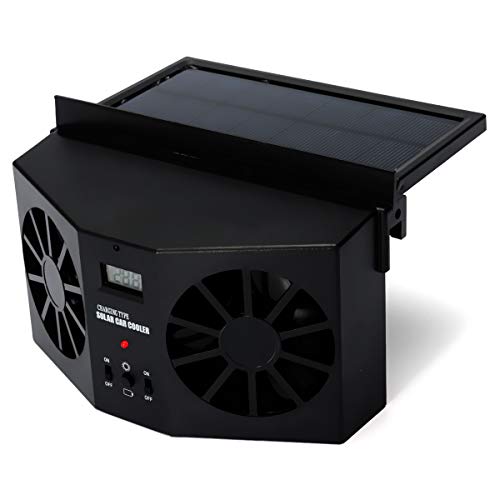
Another option is solar‑powered car fans that sit in the window gap. These harvest sunlight to run a small fan that actively pushes hot air out. They cost $20–$50 and can lower temperature by an additional 10°F compared to passive cracking.
- Reflective sunshade – blocks solar radiation, reduces peak temp by 30°F+.
- Solar‑powered fan – actively vents hot air, adds 10°F drop.
- Ceramic window tint – permanent, blocks UV and infrared.
- Remote start with AC – expensive but instant cooling.
- Parking in shade – always the first choice, costs nothing.
Many drivers combine a sunshade with two cracked windows. This combo gives you the best of both worlds: blocked radiation and some ventilation. If you want the ultimate solution, install a remote starter and run the AC for five minutes before you get in.
Important: Never rely solely on cracking windows to protect electronics like phone chargers or dash cams. Heat damage can occur even at 120°F. Store devices in a cooler bag or take them with you.
What Does the Science Say About Ventilation and Heat?
To understand why cracking windows has limits, you need to know a bit about heat transfer. A car heats up primarily through solar radiation passing through the glass. The dashboard, seats, and carpet absorb this radiation and re‑emit it as infrared heat.
That trapped infrared is what makes the cabin so hot.
Natural ventilation only helps if the outside air is cooler than the inside air. On a 100°F day, the outside air is already hot. Even if you exchange all the air, the car will still heat up because the metal body and glass act as a greenhouse.
A study published in Applied Thermal Engineering measured car interior temperatures under different ventilation conditions. With windows closed, the interior reached 140°F in 30 minutes. With two windows cracked, it hit 130°F.
The difference narrowed over time, showing that ventilation’s benefit diminishes as the car reaches equilibrium.
Key scientific principles in play:
- Greenhouse effect: Glass lets sunlight in but traps infrared heat inside.
- Convection: Hot air rises and exits through cracks, but only if cooler air can enter.
- Thermal mass: Seats and dashboard store heat and release it slowly.
- Reflection vs. absorption: Light‑colored interiors reflect more heat.
The bottom line: cracking windows helps a little, but it cannot overcome the fundamental greenhouse effect. Only blocking the sunlight at the glass level can prevent the temperature rise in the first place.
Common Myths About Cracking Windows and Heat
There are many misconceptions about whether cracking car windows is effective. Let’s clear up the most common ones.
Myth 1: Cracking windows prevents heat stroke in children. False. Even with windows cracked, a child’s body temperature can reach deadly levels within 15 minutes. The American Academy of Pediatrics strongly warns against leaving children in a parked car with windows cracked.
Myth 2: The more you crack the window, the cooler it gets. Not exactly. Cracking more than 2 inches doesn’t help further because the air exchange becomes limited by the car’s shape. Once the gap is large enough, adding more width just increases security risk.
Myth 3: Cracking the sunroof is better than side windows. Actually, a tilted sunroof creates a smaller opening than a side window. Side windows provide better cross‑flow if you open two.
Myth 4: Electric cars need windows cracked more than gas cars. No difference. Heat buildup is the same regardless of engine type. However, electric cars can use battery power to run the AC while parked, which is more efficient than cracking windows.
Myth 5: Cracking windows prevents dashboards from cracking. UV rays, not heat, cause dashboard cracking. Cracking windows doesn’t block UV. Use a sunshade or UV‑blocking film instead.
| Myth | Reality |
|---|---|
| Prevents heat stroke | No, still deadly in minutes |
| Bigger crack = more cooling | Diminishing returns after 2″ |
| Sunroof better than side windows | Side windows allow cross-flow |
| Prevents dashboard cracks | UV protection needed, not ventilation |
How to Properly Crack Windows for Maximum Cooling
If you decide to crack your windows, do it right to get the most benefit without compromising safety. Follow these steps.
First, park with the car’s rear facing the sun if possible. This reduces direct sunlight on the dashboard. Then crack the two rear windows about an inch each.
This creates a cross‑flow without making it obvious that your front windows are closed, which can deter theft.
Second, use a sunshade on the windshield and rear window if you have one. This combination can drop interior temperature by 25–30°F versus windows closed with no shade.
Third, check the weather. If it’s windy, cracking windows is more effective. If it’s calm, consider a solar fan instead.
- Park in the shade first – it’s the number one cooling strategy.
- Roll down two opposite windows 1–1.5 inches.
- Place a reflective sunshade on the windshield.
- Consider adding window vents (rain guards) so you can crack windows overnight without letting rain in.
- Never leave valuables visible – a cracked window is an invitation.
Tip: If you have a sedan, roll down the rear windows only. This keeps airflow through the cabin without exposing the front seats to break‑ins.

Frequently Asked Questions
Does cracking car windows help with heat in summer?
Yes, but only modestly. Cracking two windows opposite each other can lower interior temperature by 10–15°F on a breezy day. However, it won’t make the car safe for pets or children, nor will it prevent electronics from overheating.
How much does cracking windows lower car temperature?
On average, cracking two windows 1–2 inches reduces peak interior temperature by 10–20°F depending on wind. Combined with a sunshade, the drop can be 25–30°F. Without wind, the benefit is minimal.
Is it safer to crack windows or use a sunshade?
A sunshade is safer and more effective. It blocks solar energy directly, while cracking windows only helps ventilate a small amount of hot air. Always use a sunshade first, then crack windows if you want extra ventilation.
Can cracking windows prevent heat damage to car batteries or electronics?
Not really. Car batteries are under the hood and unaffected by cabin temperature. Electronics left in the car, like phones or GPS units, can reach dangerous temperatures even with windows cracked.
Take them with you or store them in a cooler.
What is the best way to cool a parked car in extreme heat?
Park in the shade, use a reflective sunshade on the windshield, crack two opposite windows, and consider a solar‑powered fan. If possible, use a remote starter with AC for a few minutes before getting in. Never leave life inside.
Final Thoughts
Cracking car windows does help with heat, but the effect is modest and highly dependent on wind. For a truly cool car, combine window cracks with a sunshade and park in the shade. Remember that no amount of ventilation makes a parked car safe for children or pets.
Use common sense and invest in proper heat‑reduction tools for the best results.
Products related to this article
Sponsored / affiliate links. As an Amazon Associate I earn from qualifying purchases. I may earn additional commission from eligible campaigns.