Wire Rims for Cars: Sizes, Spokes & Bolt Patterns Explained
Wire rims generally fit properly only when diameter, width, bolt pattern, offset, and hub clearance match the car; spoke count and lace pattern mainly change style, not fitment. Get one dimension wrong and you can end up with wheels that rub, will not mount, or demand costly adapters. This guide explains sizes, spoke counts, lace patterns, and bolt patterns so you can buy the right wire wheels for a classic, lowrider, or older modified car.
What wire rims actually


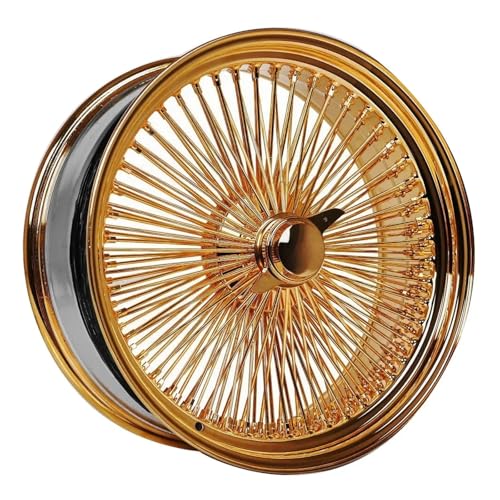
Wire wheels use tensioned spokes to connect the rim to the hub. That layout is common on classic cars, lowriders, and custom builds, but the fit decision still comes down to measurable hardware: diameter, width, bolt pattern, center bore, offset, and backspacing.
Finish choices such as chrome, gold, and powder coat matter too, but they come after fit. A wheel that clashes with calipers or the hub is the wrong wheel.
Spokes, rim, and hub
The spokes do more than create the look. They hold the rim to the hub and set the visual density people associate with wire wheels. Higher spoke counts make the face look fuller. Lower counts leave more open space.
That visual density is a style decision, not a shortcut around fitment. A 204-spoke wheel still has to clear the car and match the mounting hardware.
Where wire wheels fit in classic and custom builds
Wire wheels are common on older cars because they suit factory-era styling. They are also popular on lowriders and custom builds where the wheel face is part of the design. The fitment rules stay the same across all three uses.
Older vehicles often work better with 15- or 16-inch wire wheels. Lowriders often prefer 17– or 18-inch wire wheels. Those are starting points, not guarantees.
What size wire rims fit your car?
Wire-wheel fit starts with diameter and width, then moves to tire clearance and brake clearance. Classic cars typically use wire wheel diameters from 15 to 18 inches. Width still matters because it affects tire choice and space around suspension parts.
Common diameter ranges for classic cars
If you are fitting a stock or near-stock classic, 15- or 16-inch wheels are a common first check. Many lowrider and custom setups move up to 17 or 18 inches for a larger visual footprint. Bigger is not automatically better. It only works if the tire, fender, and suspension all have room.
How width affects tire choice and clearance
Width changes the tire options you can mount and the room the wheel needs inside the arch. A wider wire wheel can touch a caliper, inner fender, tie rod, or shock even when the diameter seems correct. The fitment checklist should include wheel width, offset, and backspacing together.
When lowering or suspension mods change the answer
Lowering changes where the wheel sits relative to the arch and suspension hardware. A wheel that cleared before a drop may rub at steering lock or under compression after the car is lowered. Modified suspensions can also reduce the room you thought you had on paper.
Say your sedan clears a 15-inch wheel at stock height, but a drop brings the tire shoulder into the fender lip on full lock. The diameter did not change. The usable space did.
How do you read bolt pattern and hub fit?
Bolt pattern must match the vehicle exactly. If the lug pattern is wrong, the wheel will not mount safely. Hub fit matters too: the center bore has to match the axle hub size. If the bore is larger than the hub, a center ring may help the wheel center properly only when the wheel already has the correct bolt pattern, offset, and hub-centric design for that application.
Bolt pattern and PCD: what must match exactly
Bolt pattern is also called PCD, or bolt circle diameter. It is the pattern of the lug holes. The fitment guide is blunt on this point: the wheel must match the vehicle’s lug pattern and hub clearance.
Do not assume two vehicles from the same brand share the same hub dimensions. That mistake is common on older cars and swaps. The lug count alone is not enough.
Center bore, hub bore, and adapter rings
The center bore is the hole that centers the wheel on the hub. If the bore is too small, the wheel will not go on. If it is too large, center rings may help on hub-centric setups, but many older cars and wire-wheel applications center differently at the lugs, so rings are not a universal fix.
Mismatched offsets or hub bore sizes can cause vibration or clearance issues. Adapter rings do not fix a bad offset, and they do not solve a wrong bolt pattern.
Why mismatch can create vibration or unsafe fitment
A wheel that is not centered on the hub can sit slightly off-axis. That can create vibration, even when the lugs are tight. A wheel with the wrong mounting pattern is worse. It simply should not be installed.
A common first-timer mistake is choosing wire rims from a catalog image without checking the wheel diameter, spoke count, or bolt pattern. The wheel looks right in a listing and still fails the car because the center bore, offset, or PCD is wrong.
Wire wheel fitment decision table
Use this table as a buying filter, not as a style chart. The spoke-count band affects appearance more than fitment, but the diameter, offset caution, and clearance checks decide whether the wheel can go on and stay out of trouble.
| Vehicle type | Typical diameter range | Recommended spoke-count band | Lace pattern | Offset caution | Top three fitment checks before purchase |
|---|---|---|---|---|---|
| Stock classic coupe or sedan | 15 to 16 in. | 72 to 100 | Straight lace | Watch inner clearance near calipers and tie rods | Bolt pattern, center bore, wheel width and backspacing |
| Driver-grade classic cruiser | 15 to 17 in. | 100 to 150 | Straight lace or light cross lace | Standard offset is often the safest starting point | Bolt pattern, brake clearance at ride height, tire size plan |
| Lowrider build | 17 to 18 in. | 150 to 204 | Cross lace | Check outer lip clearance after lowering or air suspension changes | Bolt pattern, hub bore, steering-lock clearance |
| Show car | 18 in. and up, if the body allows it | 180 to 204 | Cross lace | Reverse or FWD styles can change stance and arch coverage | Bolt pattern, caliper clearance, full lock and bump travel |
| Older modified car | 15 to 18 in. | 72 to 150 | Straight lace | Aftermarket brakes and lowered suspension can shrink the safe window | Bolt pattern, hub bore, tie-rod and shock clearance |
What do spoke count and lace pattern change?
Spoke count and lace pattern mainly change how the wheel looks. Wire rims can use spoke counts from about 72 to 204, and commonly reported counts include 72, 80, 100, 150, 180, 200, and 204. Higher counts create a denser visual pattern.
Common spoke counts and what they look like
Lower counts read as lighter and more open. Higher counts fill the face and make the wheel look more detailed. That is why show cars often lean toward higher counts, while simpler cruiser builds may stay with fewer spokes.
For fitment, the count itself is not the key issue. The wheel still has to clear the car and match the hub hardware.
Straight lace versus cross lace
Straight lace places the spokes in a more direct visual line from hub to rim. Cross lace creates a more layered pattern as the spokes intersect in the view from the side. Both are wire-wheel layouts, but they send a different visual message.
Use straight lace if you want a cleaner, simpler look. Use cross lace if you want a denser, more ornate face. Neither one fixes a sizing mistake.
How density affects style more than fit
Many buyers chase spoke count first and fit second. That order causes problems. A 100-spoke wheel that matches the car is a better purchase than a 204-spoke wheel that hits the caliper or sits wrong in the arch.
Picture a lowrider owner comparing two 17-inch options. One has 72 spokes and a straight lace pattern. The other has 180 spokes and a cross lace pattern. If both match the lug pattern and clear the brakes, the decision is about the look and upkeep, not the mount.
Standard, reverse, or FWD offset?
Standard, reverse, and FWD are offset types that change how far the wheel sits inward or outward. They do not change the bolt pattern. They do change where the wheel lands in the arch, which can help or hurt clearance depending on the car.
How each offset changes wheel position
Standard offset is the most familiar starting point. Reverse offset pushes the face in a different direction for a deeper or more aggressive look. FWD wire wheels are another packaging choice that changes stance and fit, especially on cars with limited arch space.
These are fitment choices with tradeoffs, not upgrades by default. A deeper-looking wheel can also move the mounting face into a problem area.
Backspacing and arch clearance
Backspacing is the distance that helps determine how far inward the wheel sits. It works with offset, not against it. A wheel can look right from the outside and still sit too close to a caliper, tie rod, or inner fender.
That is why the checklist should include wheel width, offset, and backspacing together. The three numbers tell you where the wheel will actually sit.
Choosing the right setup for your build
Bolt-on wire wheels are a common choice for many street-driven vehicles because the mounting is familiar and predictable. Knock-on systems may suit some period builds, but the mount type should match the car and the intended use.
For a daily driver, the most conservative choice is usually the one that keeps the wheel centered, clears the brakes, and avoids unusual adapter stacks.
What should you check for brake and suspension clearance before ordering wire rims?
Brake and suspension clearance should be checked at ride height and through steering lock. The wheel has to clear calipers, control arms, tie rods, shocks, and springs. Lowered cars and modified suspensions deserve extra attention because the available space changes fast.
Clearance points that cause trouble
The usual problem spots are the caliper face, the inner barrel, the tie rod end, the control arm, and the shock or spring seat. Any one of those can turn a correct-looking wheel into a rubbing problem.
If the car has larger brakes than stock, that risk goes up. Do not assume a wheel that fit factory brakes will fit upgraded hardware.
How to check before you buy
- Confirm the bolt pattern and center bore against the hub.
- Match wheel diameter and width to the tire size you plan to run.
- Compare offset and backspacing to the brake package and inner clearance.
- Check room at ride height and through full steering lock.
- Review any lowering, air suspension, or brake upgrade that changes available space.
That workflow matters because wheel size alone does not determine overall tire diameter. Two wheels with the same diameter can sit very differently once width, offset, and tire selection are added.
Finish and upkeep
Chrome, gold, and powder coat are common finish choices. They change appearance and maintenance burden. Chrome and gold finishes usually need more regular cleaning to stay presentable, while powder coat can be easier to live with on a driver if the owner wants less frequent polishing.
Finish choice should match how the car is used. A show car can justify more upkeep. A daily driver may not.
Frequently asked questions
What size wire rims fit my car?
The right size depends on diameter, width, brake clearance, and how the car sits at ride height. Classic cars typically use wire wheel diameters from 15 to 18 inches, but the correct choice still comes down to the lug pattern, hub bore, offset, and the space around the suspension.
How do I read a wire wheel bolt pattern?
Read it as the vehicle’s lug pattern, or PCD, and match it exactly. If the pattern is wrong, the wheel should not be installed. Also check the center bore, because the wheel still has to center on the hub without creating vibration or fitment trouble. If the pattern or offset is unknown, measure the bolt circle against the center of the hub, then verify the wheel’s offset or backspacing from the wheel itself before ordering.
What do straight lace and cross lace mean on wire wheels?
Straight lace uses a more direct spoke arrangement from hub to rim. Cross lace creates a denser visual pattern by crossing the spokes in the view from the side. The difference is mostly visual, so choose it for style after the mounting dimensions are confirmed.
Should I choose bolt-on or knock-on wire wheels?
Bolt-on wire wheels are described as a common choice for many street-driven vehicles. They suit many classic and custom applications because the mounting is more familiar. Knock-on wheels may suit certain period builds, but the choice should follow the car’s hardware and intended use.
How do offset and backspacing affect wire wheel fitment?
Offset and backspacing control where the wheel sits in the arch. They affect inner clearance near calipers, tie rods, and suspension parts, and they can also change outer fender coverage. Standard, reverse, and FWD are packaging choices, so verify the exact dimensions before ordering.
Products related to this article
Sponsored / affiliate links. As an Amazon Associate I earn from qualifying purchases. I may earn additional commission from eligible campaigns.