Trailer Hitch Ball Sizes: 1-7/8, 2 & 2-5/16 Inch Guide
Match the hitch ball to the trailer coupler first: 1-7/8, 2, and 2-5/16 inches are not interchangeable, and the shank size plus ball rating must also match the hitch and trailer. A wrong fit can let the coupler jump the ball, wear fast, or fail under load. This guide covers coupler fit, shank fit, and rating fit, plus the common mismatch failures to avoid.
Trailer hitch ball sizes overview


The three standard trailer ball diameters are 1-7/8, 2, and 2-5/16 inches. The coupler must match the ball diameter exactly. Size alone is not the full check. You still need the shank to fit the mount and the rating to cover the load.
2 inch is the most common trailer ball size. It shows up on many utility trailers, boat trailers, cargo trailers, and campers. 1-7/8 inch is common on lighter trailers, while 2-5/16 inch is used on heavier RV, equipment, and horse trailers.
Why 2 inch is the most common
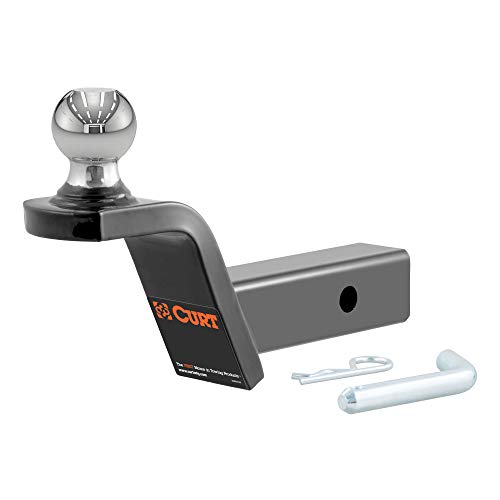
The 2 inch ball sits in the middle of the common towing range and covers a wide spread of trailer types. CURT lists it as the most common trailer ball size, and many standard trailers are built around that diameter. That makes it the first size to check on a mixed-use tow rig.
Do not treat common as universal. A trailer can look like a 2 inch setup from a distance and still require a different coupler size. The right answer is printed on the coupler or confirmed by the trailer documentation or a proper fit check.
Where 3 inch gooseneck balls fit
CURT lists 3 inch as a standard ball size for gooseneck towing. It belongs in a different use case than the standard bumper-pull coupler sizes above. If your trailer uses a gooseneck coupler, do not compare it to a standard 2 inch or 2-5/16 inch trailer coupler.
A gooseneck setup also brings different hardware and load paths. The size on the ball still has to match the coupler, but the hitch system itself is not the same as a ball mount in a receiver.
How do you match a trailer ball to the coupler?
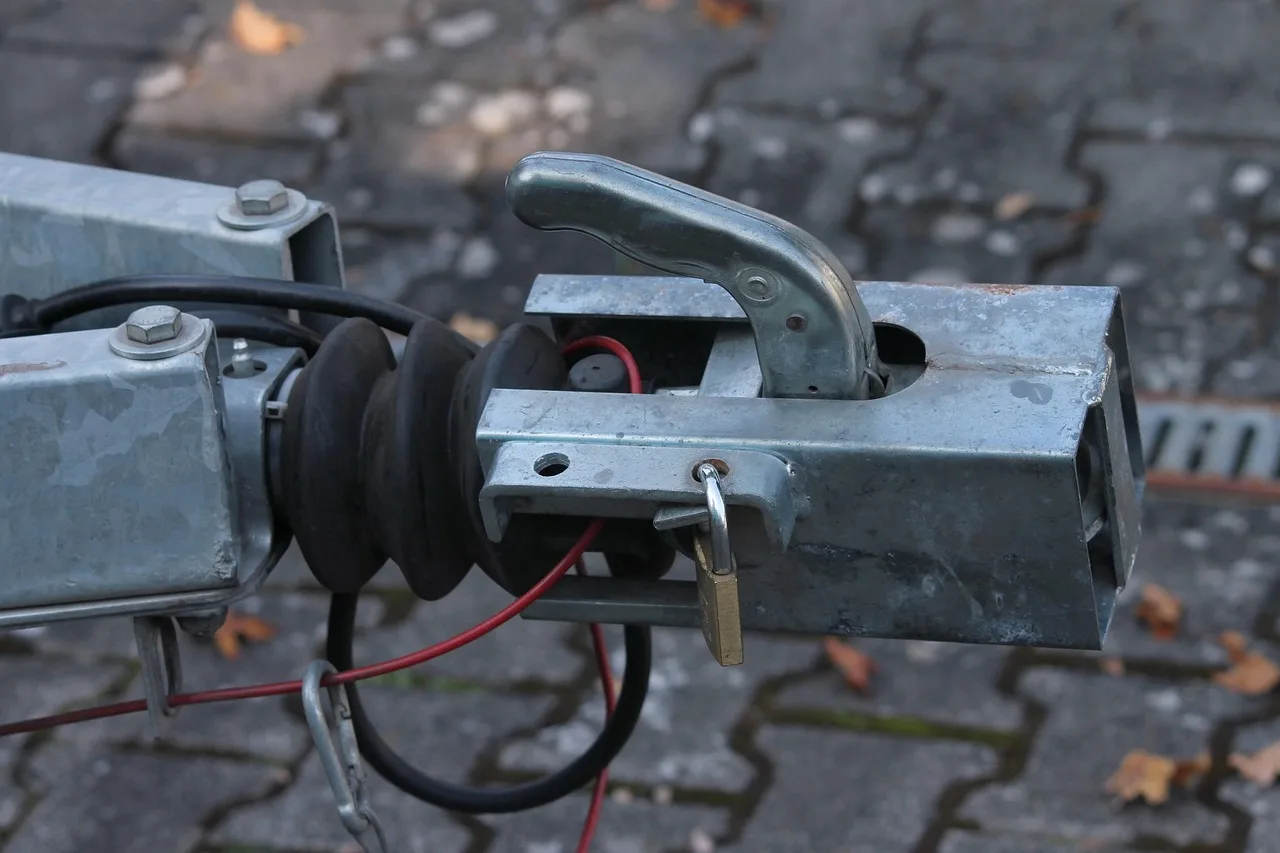
Read the coupler stamp or label first. If the marking is missing, painted over, or unreadable, use the trailer documentation or have the coupler and hardware inspected before towing. The ball diameter must match the coupler exactly. A ball that looks close can still leave slack or fail to latch correctly.
Read the coupler stamp or label
Many couplers are stamped with the required ball size, often near the latch or on the top plate. Start there. If the coupler says 2 inch, use a 2 inch ball. If it says 2-5/16 inch, a 2 inch ball is the wrong diameter, even if the latch seems to close.
Use the stamp as the first check, not the only one. Paint, corrosion, and wear can hide it. Bent hardware can also distort how the coupler sits on the ball.
Measure the coupler opening when markings are missing
If the marking is missing or unclear, do not rely on a simple opening-to-ball comparison by itself. Wear, paint, corrosion, and deformation can make that check unreliable. Use the trailer documentation or have the coupler inspected before choosing a ball.
For a quick visual check, the mismatch is often obvious at the seat. A coupler that is too large can rock on the ball, leaving noticeable slack. A coupler that is too small will not seat fully or will fight the latch.
What a wrong-size fit looks like
Say your trailer has a 2-5/16 inch coupler, but the mount holds a 2 inch ball. The coupler may appear to drop over the ball at a glance, yet it will not fit correctly. That size error leaves unsafe slack and can let the coupler move under load.
A coupler that is the wrong size does not just “fit poorly.” It can sit high on the ball, fail to close fully, or wear the latch and socket faster than normal. Any of those is a no-go.
What does shank size mean?
Shank diameter is the size of the threaded stem that passes through the ball mount. It must fit the ball mount hole. Shank size does not determine ball diameter, and it does not by itself tell you towing capacity. Those are separate checks.
Shank diameter versus ball diameter
The ball diameter is the part that contacts the coupler. The shank is the part that secures the ball to the mount. A larger shank does not make the ball “bigger” in coupler size, and a smaller shank does not mean the ball is light-duty by definition.
That is where many setups go wrong. People assume the threaded stem tells the whole story. It does not.
Ball mount hole fit
The ball mount hole must match the shank diameter. If the shank is too small for the hole, the ball will not secure correctly. If the shank is too large, it will not pass through the mount.
Common shank sizes are often reported in broad ranges, but those figures are not standardized across every manufacturer and exact part. 1-7/8 inch balls are often reported to use shanks of about 3/4 inch to 1 inch. 2 inch balls commonly use 3/4 inch to 1-1/4 inch shanks. 2-5/16 inch balls are commonly reported to use shanks of about 1 inch to 2 inches.
Why larger shanks usually pair with higher-rated balls
Larger shanks are usually used with higher-rated balls because the hardware has to carry more load. That is a pattern, not a rule that determines the ball size. You still need the coupler diameter and the rating to match separately.
Picture a 2 inch ball with the right diameter but the wrong shank for the mount hole. It may be the correct ball for the trailer, yet it cannot be installed safely. The setup fails at the mount, not at the coupler.
Ball ratings, GTW, and tongue weight
Ball diameter and ball rating are not the same thing. GTW is the total loaded trailer weight. Tongue weight is the downward force on the ball. Your usable limit is the lowest-rated component in the chain: vehicle, receiver, ball mount, shank, coupler, and ball.
GTW is total loaded trailer weight
The ball rating is usually stated in GTW, so use the trailer’s fully loaded weight, not just the empty trailer weight. The ball must be rated for at least that load, and the receiver plus mount must also be within their limits.
For reference, CURT lists the 1-7/8 inch ball at up to about 2,000-3,500 lb GTW. CURT lists the 2 inch ball at about 3,500-12,000 lb GTW. CURT lists the 2-5/16 inch ball at about 6,000-30,000 lb GTW.
Tongue weight is the downward load on the ball
Tongue weight is not the same number as GTW. It is the downward force that presses on the hitch ball, and it typically lands around 10-15% of GTW. The receiver, vehicle, and ball mount must all handle that downward load.
Do not read a ball rating and assume it covers everything. A ball can be rated for the trailer weight while the mount or receiver is still too light for the tongue weight. That is a mismatch, even if the diameter is right.
Use the lowest-rated component as the limit
The safe limit is the weakest listed rating in the setup. If the trailer, coupler, ball, mount, receiver, or vehicle is lower-rated than the others, that lower number controls the setup. Never exceed the vehicle’s tow rating or the hitch system rating in the owner’s manual.
A common first-timer mistake is choosing a ball by trailer size alone and ignoring the receiver class. The setup may look correct, but the real limit comes from the lowest-rated part.
Ball size and trailer type
The ball size often points to the trailer type, but it does not replace the coupler marking. 1-7/8 inch is common on light-duty trailers. 2 inch is the most common across utility, boat, cargo, and camper use. 2-5/16 inch is common on heavier towables. 3 inch belongs in gooseneck towing.
1-7/8 inch for light-duty trailers
Use 1-7/8 inch for small utility trailers, small boats, and jet skis when the coupler calls for that size. That range fits light-duty towing, not heavier campers or equipment trailers.
2 inch for utility, boat, cargo, and campers
Use 2 inch on many boat trailers, cargo trailers, and campers. Travel trailers are often towed with 2 inch or 2-5/16 inch balls, depending on the coupler and weight.
2-5/16 inch for heavier RV, equipment, and horse trailers
Use 2-5/16 inch for larger RVs, equipment trailers, and horse trailers when the coupler is marked for it. A 2 inch ball is not a substitute here.
3 inch for gooseneck towing
Use 3 inch only when the gooseneck coupler and hitch system call for it. It is not part of the standard bumper-pull set. If the trailer is built for a gooseneck ball, the coupler and hitch hardware need to match that design.
Trailer hitch compatibility checklist
Use this checklist in under 2 minutes. If any one item fails, do not tow until the mismatch is fixed. The final decision is go only when every line passes.
| Check item | What to verify | Pass/fail |
|---|---|---|
| Coupler stamped size | 1-7/8, 2, 2-5/16, or 3 inch marked on the coupler | Pass if the stamp is present and matches the ball |
| Measured coupler opening | Opening matches the stamped size if the mark is missing or unclear | Pass if measurement agrees with the ball diameter |
| Ball diameter | Ball matches the coupler exactly | Pass if exact match |
| Ball shank diameter | Shank fits the ball mount hole | Pass if the shank fits the mount hole correctly |
| Ball mount hole diameter | Hole size matches the shank | Pass if the mount accepts the shank without forcing |
| Ball GTW rating | Ball rating meets or exceeds trailer GTW | Pass if ball rating is at or above loaded trailer weight |
| Receiver class | Class I-V and receiver opening size match the vehicle setup | Pass if the receiver class supports the load |
| Tongue weight limit | Tongue weight stays within hitch and ball mount limits | Pass if tongue weight is within the lowest-rated limit |
| Final decision | All items above checked | Go only if every line passes |
Receiver class and vehicle limits
Class III and Class IV hitches are shown with a 2 inch receiver opening. Receiver opening size is not the whole story, though. Capacity still depends on the class and the vehicle, and Class V plus heavy-duty setups do not map cleanly to a single opening size or load range. Class I through Class V covers a range of receiver sizes and load limits.
Do not assume every 2 inch ball setup works with every 2 inch receiver. The receiver, ball mount, and vehicle tow rating still have to line up. Follow the vehicle and product manual.
Why does my trailer coupler not fit the ball?
Paint, wear, corrosion, bent hardware, and the wrong ball size are the usual reasons. A painted-over or worn coupler can hide the real size. A worn latch can also make a correct-size ball feel wrong because the coupler no longer seats tightly.
Paint, wear, and corrosion
Heavy paint buildup can shrink the effective opening. Rust and corrosion can do the same. If the coupler is stamped for one size but will not seat properly, inspect the opening, the latch, and the inner contact surfaces before towing.
Bent or worn hardware
If the coupler or latch is bent, the ball may not sit in the pocket correctly. That can create a gap even when the ball is the right diameter. Replace worn parts instead of forcing the latch closed.
Mixed ratings or the wrong ball in the mount
Sometimes the ball size is right, but the mount or rating is not. A 2 inch ball on a 2 inch coupler can still be a bad setup if the ball mount hole does not fit the shank or the rating is too low for the loaded trailer. The chain must pass every check.
Suppose a trailer calls for a 2 inch coupler, but the tow vehicle has a 2 inch ball on a light-duty mount with a lower tongue weight rating. The coupler may latch cleanly, yet the setup still fails the rating check. Exact fit does not cancel an overloaded mount.
Frequently asked questions
What size hitch ball do I need for my trailer?
Use the size stamped on the trailer coupler or confirmed by the trailer documentation: 1-7/8, 2, or 2-5/16 inch for standard trailer couplers, or 3 inch for gooseneck use. The ball must match the coupler exactly, then the shank, mount, and rating must also check out.
Can I use a 2 inch ball on a 2-5/16 coupler?
No. The ball diameter must match the coupler exactly. A 2 inch ball in a 2-5/16 coupler is undersized, which can leave slack, poor seating, and an unsafe latch condition. Use the exact 2-5/16 inch ball the coupler calls for.
How do I tell if my trailer needs 1-7/8, 2, or 2-5/16 inch?
Check the coupler stamp first. If it is missing or unclear, use the trailer documentation or have the coupler inspected rather than relying on a simple opening measurement alone. Light-duty small utility trailers often use 1-7/8 inch, many utility and camper trailers use 2 inch, and heavier trailers often use 2-5/16 inch.
What does the shank size on a hitch ball mean?
The shank size is the threaded stem diameter that fits through the ball mount hole. It does not tell you the ball diameter or the towing capacity by itself. A larger shank is often used on higher-rated balls, but the shank and ball size are separate checks.
How much weight can a 2 inch hitch ball tow?
That is the ball rating range, not a promise for every setup. The actual limit is the lowest-rated part in the chain, including the receiver, ball mount, shank, and vehicle tow rating.
What is the difference between GTW and tongue weight?
GTW is the total loaded trailer weight. Tongue weight is the downward force on the ball, usually about 10-15% of GTW. You need both numbers because the ball rating is usually stated in GTW, while the receiver and mount must also handle tongue weight.
Products related to this article
Sponsored / affiliate links. As an Amazon Associate I earn from qualifying purchases. I may earn additional commission from eligible campaigns.