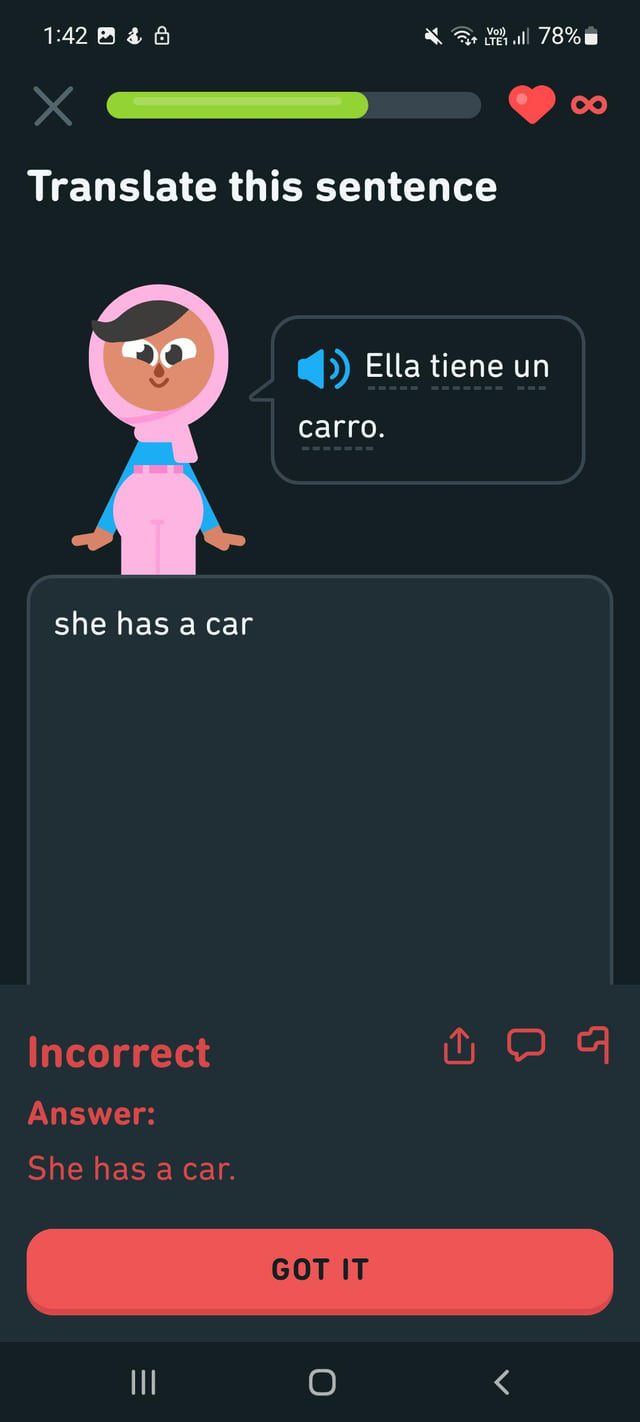
Does He Need a Car in Spanish Duolingo? The Real Answer, Explained
You’re drilling through a Duolingo lesson and a sentence pops up: “Does he need a car?” You type “¿Necesita él un coche?” and get it wrong. The app wanted “¿Él necesita un coche?” Or maybe you saw the reverse and wondered why the word order flipped. It’s a small moment, but it trips up a lot of learners because Spanish word order is more flexible than English, and Duolingo’s accepted answers don’t always make that obvious.
This guide walks through what that phrase actually means, how to build it correctly, and why Duolingo might mark a perfectly valid answer as wrong. You’ll also see how this pattern shows up in other common sentences, plus a few tips for handling the app’s quirks without getting frustrated.

And if you’re learning Spanish while commuting, a good supplementary resource can fill in the gaps Duolingo leaves. Spanish Short Stories for Beginners Book 1 offers over 100 dialogues and daily phrases designed for listening practice in the car. It won’t replace the app, but it helps with real-world phrasing and comprehension.
What “Does He Need a Car” Means in Spanish
The direct translation is ¿Él necesita un coche? The word order here is simple: subject (él) + verb (necesita) + object (un coche). In Spanish, you can also invert it to ¿Necesita él un coche? — both are grammatically correct, and both mean the same thing.
The difference is emphasis. Putting él first stresses the subject: “Does he need a car?” (as opposed to someone else). Starting with the verb feels more neutral, like a plain yes/no question. Duolingo usually accepts both, but not always — the app has a set list of accepted answers, and sometimes the inverted form isn’t on it.
The verb necesitar is a regular -ar verb, so it follows the standard conjugation pattern. For él, ella, or usted, it’s always necesita. No stem changes, no irregular forms. That makes it a useful model for other similar verbs like comprar (to buy) or usar (to use).
Why Duolingo Rejects Some Correct Answers
Duolingo’s sentence database is built from crowdsourced translations. The app accepts a handful of common variants, but it’s not exhaustive. If you type ¿Necesita él un coche? and the app marks it wrong, it’s not because your Spanish is bad — it’s because that specific phrasing wasn’t added to the accepted list.
Here’s what usually happens: Duolingo teaches the pattern question word + verb + subject for questions like ¿Dónde vive ella? (Where does she live?). For yes/no questions, the app tends to stick with subject + verb, so ¿Él necesita un coche? becomes the “default” answer. The inverted form is correct, but the app’s algorithm doesn’t always recognize it.
You can report it using the flag icon. Duolingo does review those reports, and accepted answers get updated over time. It’s not instant, but it helps. In the meantime, if you want to avoid the red X, stick to the subject-first order when answering. Save the inversion for real conversations where you have more flexibility.
The Grammar Pattern Behind the Sentence
Spanish questions don’t require a helper verb like English “do” or “does.” In English, you say “Does he need…” — the does carries the tense. In Spanish, the verb ending does that work. Necesita already tells you the subject is third-person singular, so the pronoun él is optional.
That’s why you’ll often see ¿Necesita un coche? without any subject at all. It still means “Does he need a car?” — the context tells you who you’re talking about. Adding él is for clarity or emphasis, not grammar.
Here’s a quick breakdown of how to form yes/no questions in Spanish:
- Subject + verb + object: ¿Él necesita un coche? (neutral, common in Duolingo)
- Verb + subject + object: ¿Necesita él un coche? (slightly more formal or emphatic)
- Verb + object only: ¿Necesita un coche? (implied subject, most natural in speech)
All three are correct. The one you choose depends on context and what you want to emphasize.
How This Applies to Other Duolingo Sentences
The same pattern shows up with other verbs. Once you see it once, you’ll spot it everywhere. Consider these examples:
- ¿Ella quiere agua? (Does she want water?) — or ¿Quiere ella agua?
- ¿Tú hablas inglés? (Do you speak English?) — or ¿Hablas tú inglés?
- ¿Usted tiene un perro? (Do you have a dog?) — or ¿Tiene usted un perro?
In everyday conversation, native speakers usually drop the subject pronoun entirely. ¿Quiere agua? sounds more natural than either version with ella. Duolingo includes the pronoun to teach you the vocabulary, but real Spanish relies on verb endings to carry the meaning.
One thing to watch: the word for “car” varies by region. Coche is common in Spain and much of Latin America. Carro is used in Mexico, Central America, and parts of South America. Auto shows up in Argentina and Chile. Duolingo typically teaches coche, but you’ll hear all three in the wild. If you’re planning to travel, it’s worth learning the local term. For more on vehicle-related questions, this car battery guide covers a different kind of “does it need” question.
Common Mistakes and How to Avoid Them
The biggest mistake learners make is translating word-for-word from English. You might write ¿Él necesita un coche? and then second-guess yourself because English uses “does” as a helper. Spanish doesn’t. There’s no equivalent of ¿Hace él necesita? — that’s wrong. The verb necesita already includes the question meaning through intonation.
Another error: forgetting the accent on qué when it’s a question word. But for yes/no questions, there’s no question word at all — just the intonation. In writing, the upside-down question mark at the start signals it’s a question, so you don’t need anything else.
Finally, don’t stress about the pronoun. If you’re unsure whether to include él, leave it out. ¿Necesita un coche? is correct, clear, and more natural in most contexts. Including it isn’t wrong, but it can sound like you’re emphasizing the person unnecessarily.
Comparing Duolingo’s Approach to Real-World Spanish
| Feature | Duolingo’s Method | Real Conversation |
|---|---|---|
| Subject pronoun | Always included | Often dropped |
| Word order | Subject + verb + object | Flexible; verb-first common |
| Vocabulary | Standard (coche) | Regional (carro, auto) |
| Feedback | Right/wrong with limited variants | Contextual, forgiving |
| Pace | Structured lessons | Natural speed, slang |
Duolingo gives you a solid foundation, but it’s a simplified version of the language. The app teaches one way to say things, not all the ways. That’s fine for building habits, but it can make you rigid. Supplementing with listening practice — like the Spanish short stories book mentioned earlier — exposes you to natural phrasing and regional differences.
Frequently Asked Questions
Is “¿Necesita él un coche?” grammatically correct?
Yes, it’s perfectly correct. Spanish allows subject-verb inversion in questions. The meaning is identical to ¿Él necesita un coche? — the only difference is emphasis. Duolingo might not always accept it, but a native speaker would understand you without hesitation.
Why does Duolingo use “coche” instead of “carro”?
Duolingo’s default Spanish is often described as neutral or Spain-leaning. Coche is widely understood across the Spanish-speaking world, so it’s a safe choice for a global audience. That said, you’ll encounter carro and auto in specific regions. Neither is wrong.
Do I need to include the pronoun “él” in Spanish questions?
No. Spanish verb endings indicate the subject, so ¿Necesita un coche? is complete and correct. Adding él clarifies who you mean or adds emphasis, but it’s not required. In everyday speech, most people drop it.
How do I know when to invert word order in Spanish questions?
For yes/no questions, both orders work. Use subject-first when you want to emphasize who is doing the action. Use verb-first for a neutral question. For open questions with question words like qué or dónde, the question word comes first, followed by the verb: ¿Qué necesita él?
What should I do when Duolingo marks my correct answer wrong?
Tap the flag icon and select “My answer should be accepted.” Duolingo reviews these reports and updates its database over time. In the meantime, try matching the app’s expected format — subject + verb + object — to avoid losing hearts. Your Spanish isn’t wrong; the app’s list is just limited.
What to Remember Next Time You See This Sentence
- Both ¿Él necesita un coche? and ¿Necesita él un coche? are correct — pick one and move on.
- Drop the pronoun when you can. ¿Necesita un coche? sounds more natural in conversation.
- Spanish doesn’t use “do” or “does” in questions — the verb ending handles it.
- Duolingo’s accepted answers aren’t exhaustive. A red X doesn’t mean you’re wrong.
- Learn regional vocabulary for “car” if you plan to travel. Coche, carro, and auto are all valid.
- Practice with real listening material to hear how native speakers phrase questions naturally.
- Report valid answers you know are correct — it improves the app for everyone.
If you’re drilling this sentence and want more context, check out this car maintenance article for a completely different kind of “need” — it’s a fun way to see the word used outside Duolingo’s lessons.
Products related to this article
Sponsored / affiliate links. As an Amazon Associate I earn from qualifying purchases. I may earn additional commission from eligible campaigns.