Does Heat Affect Car Batteries? Hot vs Cold Explained
Yes, heat affects car batteries more than cold does. High temperatures speed up the chemical reactions inside a battery, which evaporates its electrolyte fluid faster and corrodes the internal lead plates. That damage is permanent and adds up every summer, while cold weather only slows a battery down temporarily and it recovers once things warm back up.
Quick Answer
Heat causes lasting, permanent damage to a car battery (water loss and corrosion), while cold only causes a temporary drop in cranking power. A closed garage does not drain a battery’s charge — it actually helps by blocking direct sun, so parking there in summer is usually a protective step, not a risk.
How Heat Damages a Car Battery (The Real Chemistry)
HEAT PROTECTION PICK
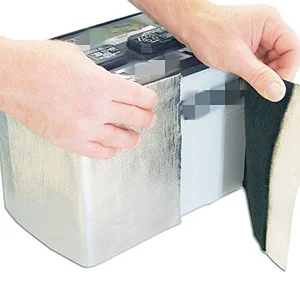 |
BSTFLEX Battery Insulation Heat Shield Kit – $16.99 This wrap blocks radiant engine-bay heat from reaching the case, the exact kind of exposure that drives the water loss and corrosion described below.
|
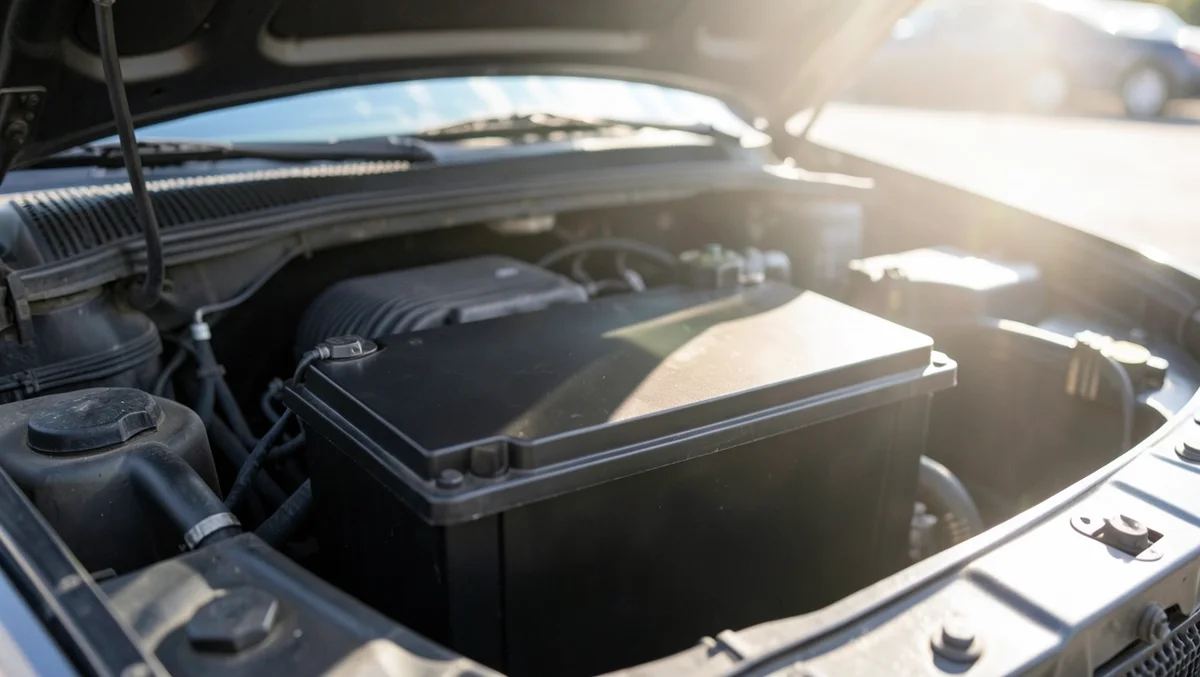
Under the hood, a conventional car battery is a set of lead plates sitting in a liquid electrolyte (a mix of sulfuric acid and water). Heat speeds up every chemical reaction happening inside that case, and that is not a good thing for a part that is supposed to last years. Two things happen at once:
- Water loss: higher temperatures make the water in the electrolyte evaporate faster. If the fluid drops below the top of the plates on a flooded (non-sealed) battery, the exposed section sulfates and stops holding a charge. See our full breakdown of what liquid is inside a car battery for how to check and top this off safely.
- Faster corrosion: the lead grids inside the plates corrode more quickly when hot, which eats away the structure that lets the battery deliver current. This is a different mechanism from the external terminal corrosion covered in our guide on why car battery terminals keep corroding, though both get worse in the heat.
Cold weather does the opposite: it slows those same chemical reactions down, which is why a battery struggles to deliver full cranking power on a freezing morning. But that slowdown is temporary. A healthy battery that seems weak at 10°F will crank normally again once the weather warms up. Heat does not offer that kind of recovery, because water that has evaporated and plates that have corroded do not come back.
Does Heat Affect Car Battery Voltage and Cranking Power?
Not in the obvious way cold does. A battery baking at 100°F under the hood will usually still show a normal resting voltage (around 12.4V to 12.7V) and crank the engine just fine that same afternoon. Heat’s damage is quieter than cold’s: instead of an immediate voltage drop you can feel at the key, it is a slow loss of capacity from water evaporation and plate corrosion that only shows up weeks or months later, often on the first mild morning after a heat wave ends. That delayed failure is exactly why so many drivers are surprised when a battery that survived July suddenly won’t start in September.
Practically, that means a hot day is not a reliable warning sign on its own. Checking a battery’s actual health (its resting voltage, and ideally a load test) is a better way to catch heat damage than watching for a slow crank, since by the time the crank feels weak the plates have usually already lost a meaningful amount of surface area.
Heat vs Cold: Which Is Actually Worse for a Car Battery?
Most drivers assume winter is the hard season for a battery, and in the short term that is true. But over the life of the battery, heat usually does more damage. Here is how the two compare.
Cold Weather: A Temporary Power Problem
Cold thickens engine oil and slows the chemical reaction inside the battery at the same time, so the battery has to work harder to crank an engine that is also harder to turn over. This is why a marginal battery often fails its first cold snap of the year. But the battery itself is not being damaged by the cold the way it would be by heat; a fully charged, structurally sound battery will recover its full cranking power once temperatures rise again.
Heat: A Permanent Capacity Problem
Heat does not just make a battery sluggish for a day, it wears the battery out. Industry testing generally shows that for roughly every 15°F an engine bay runs above the battery’s ideal operating temperature of about 77°F, its useful service life is cut significantly, sometimes by close to half. Since engine bays routinely reach 140°F or more in direct summer sun, batteries in hot climates commonly last only 3 to 4 years instead of the 5 to 6 years typical in milder regions. That is one reason AGM (sealed) batteries, which lose less water to evaporation, tend to hold up longer in consistently hot climates than standard flooded ones — our guide to AGM car batteries covers that trade-off in more depth.
Does Parking in a Hot, Closed Garage Drain Your Car Battery?

No, not directly. A closed garage does not drain a battery’s charge the way a dome light left on overnight does. Heat works on a battery’s long-term capacity, not its stored charge, so a closed garage in summer is not the danger it might seem. If anything, it usually helps: even a garage with no air conditioning blocks direct sunlight and radiant heat coming off the driveway, both of which push an engine bay far hotter than the surrounding air. A battery parked in the shade of a closed garage typically stays closer to that 77°F ideal than the same battery baking in direct sun on a driveway.
The one exception is an attached garage that traps engine heat right after a drive, with no airflow at all for hours in extreme regional heat. Even then, the effect is a matter of degree, not a sudden drain. As a rule, a closed garage is one of the better places to park a car in hot weather, not one of the worse ones.
Signs Your Car Battery Has Heat Damage
A slow crank is the symptom most people wait for, but it is usually one of the last signs, not the first. Watch for these earlier warnings, especially as summer wears on:
- Corrosion at the terminals: a blue-green or white crusty buildup, which forms faster in the heat.
- A swollen or bulging case: pressure building up inside from heat and gas is a sign to replace the battery, not just clean it.
- A sulfur or rotten-egg smell: a sign the battery is venting gas from overcharging or internal failure.
- Dim headlights or flickering electronics at idle: the battery struggling to hold a stable voltage.
- Frequent low fluid levels: on a flooded battery, needing to top off distilled water more than once a month in summer means the heat is cooking off the electrolyte faster than normal.
How to Protect Your Car Battery From Heat
- Park in shade or a garage whenever it is realistic to do so; it is the single biggest lever you have, as covered above.
- Keep the battery tray and hold-down clamp tight. A loose battery vibrates, and a hot, softened case handles vibration much worse than a cool one.
- Clean the terminals and check the fluid level on flooded batteries monthly in summer, topping off with distilled water only, never tap water.
- Add an insulation wrap like the one above; it will not make a battery run cooler than the air around it, but it blocks radiant heat from the engine and reflects some of it away from the case.
- Have an older battery load-tested before summer, not after it fails. A battery more than three years old in a hot climate is living on borrowed time.
For a deeper dive into the exact chemistry, a step-by-step DIY multimeter test, and a full AGM-versus-flooded comparison built specifically for scorching climates, see our companion guide on why summer heat destroys car batteries (and how to stop it).
Frequently Asked Questions
Does Heat Affect Car Batteries?
Yes. Heat is generally more damaging to a car battery over the long run than cold. High temperatures speed up the internal chemical reactions, which evaporates the battery’s electrolyte fluid faster and corrodes the internal lead plates. That damage is permanent, so a battery that spends a summer baking under the hood typically has a shorter overall lifespan than one kept cool, even if it still starts the car normally on any given day.
Does a Hot, Closed Garage Drain a Car Battery?
No, not directly. Heat does not drain a battery’s charge the way a forgotten interior light does; it slowly reduces the battery’s long-term capacity instead. A closed garage is usually one of the better places to park in hot weather, even without air conditioning, because it blocks direct sunlight and radiant heat from the pavement. A battery parked in a shaded garage typically fares better over a season than the same battery parked in direct sun on a driveway.
Is Car Battery Voltage Lower in Extreme Heat?
Not necessarily on any single hot day. Heat does not weaken a battery’s voltage output the way cold does; cold slows the chemical reaction and can drop cranking power immediately. Heat’s damage is more of a silent, cumulative process: a battery can measure a normal resting voltage on a 100-degree afternoon while quietly losing capacity from water loss and corrosion that shows up as a weak start weeks or months later.
How Do You Protect a Car Battery From Heat?
Park in shade or a garage whenever you can, keep the battery tray tight and the terminals clean, and check the electrolyte level on a flooded (non-sealed) battery monthly during summer, topping it off with distilled water only. A battery insulation sleeve also helps by blocking radiant heat from the engine bay. If your battery is more than three years old and you live somewhere hot, have it load-tested before summer rather than waiting for it to fail.
Is Heat or Cold Worse for a Car Battery?
Heat causes more lasting damage. Cold weather makes a battery harder to crank because low temperatures slow the chemical reaction inside it, but that effect is temporary; a healthy battery regains its full power once it warms back up. Heat’s effects, water loss and plate corrosion, are permanent and add up every summer, which is why hot climates typically wear out car batteries years faster than cold ones do.
Can a Car Battery Recover After Heat Damage?
Only partially, and only in some cases. A smart charger can sometimes reverse mild sulfation on a battery that has simply been run down, but heat-related damage to the internal plates and case is not reversible. If the case is bulging or cracked, or the battery will not hold a stable charge after a full recharge, replacement is the only safe option.
Conclusion
Heat is the tougher season for a car battery, even though cold gets the reputation. The good news is that most of the damage is preventable: park in shade or a closed garage when you can, keep the terminals clean and the tray tight, and check an older battery before summer instead of after it strands you. A little attention in June saves a tow truck call in August.
Products related to this article
Sponsored / affiliate links. As an Amazon Associate I earn from qualifying purchases. I may earn additional commission from eligible campaigns.