Does The Price Shown For Costco Rental Cars Include Full Coverage Insurance
Costco rental car prices generally do not include full coverage insurance. While Costco Travel often negotiates good base rates and may include some protections, comprehensive insurance like Collision Damage Waiver (CDW) or Loss Damage Waiver (LDW) is typically an optional add-on purchased separately from the rental company at the counter. Always verify the specific terms of your rental agreement.
Understanding Rental Car Insurance
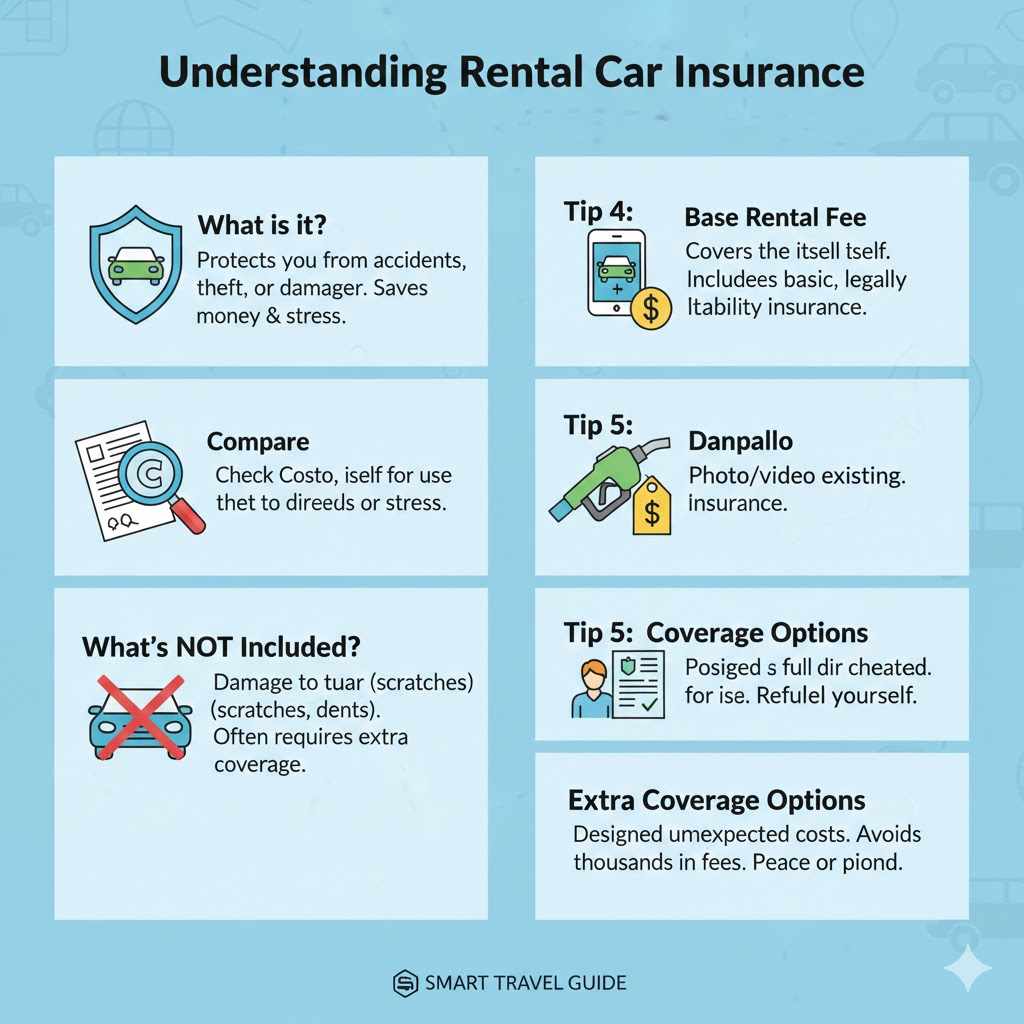
When you rent a car, insurance is a big deal. It protects you if something goes wrong. This could be an accident, theft, or damage to the car.
Rental companies offer different types of coverage. It’s important to know what each one means. This helps you make smart choices for your trip.
It also saves you money and stress.
Think of it like buying a new phone. You get the phone itself. But you might also buy an extended warranty or insurance for it.
Rental car insurance works in a similar way. The base rental fee covers the car itself. It lets you use it for your trip.
But it doesn’t automatically cover every possible bad thing that could happen.
Many people believe that the price they see is the price they pay. This is a common misunderstanding with car rentals. The rental agency is legally required to provide a car that is safe to drive.
They must have basic liability insurance on it. But what happens if you scratch the car? Or if it gets stolen?
That’s where the extra insurance options come in. These are designed to cover those unexpected costs. Without them, you could be on the hook for thousands of dollars.
This is a scary thought when you’re far from home. It’s good to be prepared. Knowing the options helps you avoid surprises.
Costco Rental Cars: What’s Usually Included?
Costco Travel is known for getting great deals. They partner with major rental companies. This includes brands like Avis, Budget, Enterprise, and Alamo.
When you book through Costco, you often get a lower base rate. This is a big plus. Sometimes, these rates might include things that other bookings don’t.
For instance, Costco often includes a free additional driver. This is a perk not always found elsewhere. It can save you money if you’re traveling with someone who also wants to drive.
They also tend to include taxes and fees in their advertised price more often than others. This makes the initial quote closer to what you’ll actually pay. It’s less confusing.
However, when it comes to full insurance coverage, the story changes. The core rental rate you get through Costco is for the car itself. It covers the basic use of the vehicle.
It does not automatically include protection against damage you might cause or theft. This is a key point that many travelers miss.
Think about it from the rental company’s side. They are renting you an asset. They need to be sure that if that asset is damaged or lost, they will be compensated.
The base rental fee doesn’t account for these risks. That’s why they offer optional insurance products. Costco’s program, while excellent for savings, doesn’t override these standard industry practices for insurance.
Perks You Might Get Through Costco
Let’s talk about the real benefits of booking with Costco Travel for car rentals. They often secure rates that are very competitive. You can usually save a good chunk of money compared to booking directly.
This is because they book in such high volume. Rental companies want that business.
A common benefit is a free additional driver. This is huge. Many rental companies charge $10-$15 per day for an extra driver.
If you have a partner or friend who wants to share the driving, this saves you that fee. It’s a simple but valuable perk. It makes long drives much easier.
Costco also sometimes includes waivers for things like airport concession fees. These are charges that airports add to rental car prices. They can add up quickly.
Having them waived or included means a lower out-the-door price. It’s one less thing to worry about when you get to the counter.
The booking process itself is often streamlined. Costco Travel aims for clarity. They show you the total estimated cost upfront.
This means fewer surprise fees tacked on at the end. This transparency is greatly appreciated by travelers. It builds trust.
But remember, these are value-added benefits. They are not substitutes for comprehensive insurance. It’s like getting a free coffee with your meal.
It’s a nice bonus, but it doesn’t mean the meal itself is now covered by a coffee-buying guarantee.
The Optional Insurance Add-Ons
When you arrive at the rental counter, you’ll likely be offered insurance. These are the optional add-ons. They have specific names.
You need to understand what they cover. This is where people often feel pressured or confused. The rental agent is trained to sell these products.
The most common one is the Collision Damage Waiver (CDW). Or sometimes it’s called the Loss Damage Waiver (LDW). This is crucial.
It waives your responsibility for damage to the rental car. This includes things like dents, scratches, or even if the car is stolen. Without CDW/LDW, you could be liable for the full repair costs or the car’s value.
Another important one is Supplemental Liability Insurance (SLI). This covers damage or injury you might cause to other people or their property. This is usually covered to some extent by your personal car insurance.
But rental companies often push their own policies. They might offer higher limits than your personal policy.
Personal Accident Insurance (PAI) is also offered. This covers medical expenses for you and your passengers in case of an accident. It’s like a travel medical plan for a car crash.
Again, your personal health insurance might cover this, but it’s an option.
Then there’s Personal Effects Coverage (PEC). This covers your belongings if they are stolen from the rental car. This is often covered by homeowners or renters insurance.
But if you don’t have that, or if your limits are low, it’s something to consider.
It’s essential to know what you already have before you agree to buy these. Many people already have coverage through their own car insurance or credit cards. Buying duplicate coverage is a waste of money.
But you need to be sure.
Key Rental Insurance Terms Explained
- CDW/LDW: Covers damage to the rental car itself.
- SLI: Covers damage/injury to others.
- PAI: Covers medical costs for you/passengers.
- PEC: Covers your belongings if stolen.
Does Your Personal Car Insurance Cover Rentals?
This is the first place you should look. Most personal auto insurance policies extend to rental cars. This coverage usually mirrors what your policy provides for your own vehicle.
This means it typically includes liability, collision, and comprehensive coverage.
So, if you have full coverage on your car, you probably have it on a rental too. This can save you a lot of money. You can often decline the rental company’s CDW/LDW.
You would still be responsible for your deductible, though. That’s the amount you pay out of pocket before your insurance kicks in.
However, there are exceptions. Some policies have exclusions for rental cars. This is especially true for certain types of vehicles.
For example, if you rent a luxury car or a large RV, your personal policy might not cover it. Always check the fine print of your policy. Call your insurance agent if you’re not sure.
Another thing to consider is your deductible. If your deductible is high, say $1,000, and you damage the rental car, you’ll have to pay that $1,000. In that case, paying for the rental company’s CDW/LDW might seem appealing.
It might cost you $20-$40 per day, but it eliminates your risk of a huge repair bill. It’s a trade-off.
Also, using your personal insurance for a rental car claim can potentially raise your premiums. This is something to weigh. If the rental company’s CDW/LDW is relatively inexpensive for your trip duration, it might be worth it for peace of mind.
This avoids any impact on your auto insurance record.
Credit Card Benefits: A Hidden Gem
Many credit cards offer rental car insurance as a perk. This is often overlooked. It’s a valuable benefit.
It can save you from buying the rental company’s insurance. There are typically two types of coverage credit cards offer:
Primary Coverage: This acts like your own insurance. It pays out before your personal auto insurance does. It’s the best kind of coverage.
It won’t affect your premiums. Most premium travel cards offer this.
Secondary Coverage: This coverage kicks in only after your personal auto insurance has paid out. It covers what your personal insurance doesn’t. This includes your deductible and any costs your insurance doesn’t cover.
It’s still useful, but primary is better.
To get this benefit, you usually have to meet certain conditions. You must use that specific credit card to pay for the entire rental. You also need to decline the rental company’s CDW/LDW.
If you accept the rental company’s insurance, your credit card coverage is voided. This is a critical detail.
The types of vehicles covered can also vary. Some cards exclude luxury cars, antiques, or exotic vehicles. They also might not cover rentals outside your country of residence.
Always check your credit card’s guide to benefits. It’s a document you can usually find online or by calling the number on the back of your card.
I once rented a car in Denver. I had a great rate through Costco. I was about to accept the CDW at the counter.
Then I remembered my travel rewards credit card. I quickly checked its benefits online. It offered primary CDW coverage!
I declined the rental company’s insurance and saved about $300 for my week-long trip. It was a huge relief.
Credit Card Rental Insurance Checklist
Before you rent, check:
- Type of coverage: Primary or Secondary?
- What vehicles are covered? (No exotic cars, etc.)
- Geographic limits: Does it cover international rentals?
- Conditions: Must use card to book, decline rental company insurance.
When It Makes Sense to Buy Rental Insurance
Even with personal insurance and credit card benefits, there are times when buying the rental company’s insurance makes sense. This is especially true if you don’t have robust coverage elsewhere.
Scenario 1: No Personal Auto Insurance. If you don’t own a car and don’t have your own insurance policy, you absolutely need to buy the CDW/LDW. Your credit card might offer primary coverage, which is great. But if it doesn’t, you’re exposed.
Scenario 2: High Deductible. As mentioned, if your personal auto insurance deductible is very high, it might be cheaper to buy the rental company’s waiver than to risk paying your deductible. For a $500+ deductible, a $30/day waiver can be a good deal if you’re concerned about damage.
Scenario 3: Unfamiliar Territory or Risky Driving Conditions. Renting a car in a busy, unfamiliar city or driving in bad weather can increase risk. If you’re not a confident driver in those conditions, the peace of mind from full coverage can be worth the extra cost. This is especially true if you’re on a tight schedule and can’t afford downtime due to an accident.
Scenario 4: Renting Specific Vehicle Types. If you’re renting a vehicle not typically covered by your personal insurance or credit card (like a van for a large family trip, or a specialized vehicle), you might need to purchase the rental company’s insurance.
Scenario 5: Peace of Mind. Sometimes, the simplest reason is the best. If you know that a damaged rental car would cause significant financial hardship or extreme stress, paying a little extra for comprehensive coverage from the rental company can be a worthwhile investment in your peace of mind. This is especially true when you’re on vacation and want to relax, not worry.
Navigating the Rental Counter
Arriving at the rental counter can be overwhelming. The agents are often under pressure to upsell. Here’s how to navigate it smoothly:
1. Be Prepared. Know what coverage you already have before you get there. Have your personal auto insurance card and your credit card handy.
Know the terms of your credit card’s rental insurance. You can even print out the guide to benefits.
2. Be Polite but Firm. Greet the agent warmly. When they ask about insurance, calmly state your situation.
For example, “I have primary rental car coverage through my Visa Infinite card, so I’ll be declining the CDW/LDW. I also have coverage through my personal auto insurance.”
3. Ask Specific Questions. Don’t just say “no” to everything. If they offer something like roadside assistance, you might ask if that’s included in your other coverage.
Understand what you are declining. “So, this CDW waives any damage to the vehicle, correct?”
4. Read Everything. Before you sign anything, read the rental agreement carefully. Pay close attention to the section detailing insurance coverage and charges.
Make sure what you agreed to verbally is reflected in writing. Ensure there are no unexpected insurance fees added.
5. Keep Records. Take a photo of the signed rental agreement. Keep a copy of your rental receipt.
This is your proof of what you agreed to and what you paid.
I remember one time, an agent insisted I needed their insurance. He painted a scary picture of what could happen without it. I stood my ground.
I showed him my credit card’s benefit guide. He checked it himself. He then shrugged and processed my rental.
It was a small victory that saved me a lot of money.
Rental Counter Survival Tips
- Do your homework: Know your existing coverage.
- Be clear: State your insurance choices upfront.
- Ask about specific coverages: Understand what you’re declining.
- Read the contract: Always check the final paperwork.
- Keep documentation: Save your rental agreement and receipt.
Real-World Scenarios
Let’s look at a couple of typical situations to make this clearer.
Scenario A: The Road Trip Warrior. Sarah is planning a cross-country road trip. She books her car through Costco. Her personal auto insurance has a $500 deductible.
Her credit card offers secondary rental car insurance. She drives a lot, and sometimes gets distracted. She decides the risk of a minor fender bender in a new state is too high.
She opts for the rental company’s CDW/LDW for $30 per day. This gives her peace of mind for the 10-day trip, costing her $300. She knows if anything happens, she’s covered without touching her personal insurance or paying her deductible.
Scenario B: The City Slicker. Mark is renting a car for a weekend in his own city for a specific errand. He rarely drives, and his personal car insurance expired last year because he sold his car. His travel credit card offers primary rental car insurance.
He uses his credit card to book the car and declines all insurance at the counter. He’s confident that if anything happens, his credit card will cover it. He avoids paying the daily insurance fees.
He knows to confirm his card’s coverage details. He avoids potential costs.
In Sarah’s case, the extra cost provided a buffer against potential high expenses. For Mark, leveraging existing credit card benefits saved him money. Both scenarios highlight how understanding your current coverage is key to making the right decision for your specific needs and risk tolerance.
Common Myths vs. Realities
There are many misunderstandings about rental car insurance. Let’s clear up a few.
Rental Insurance Myth vs. Reality
| Myth | Reality |
|---|---|
| The rental price always includes full insurance. | No, the base price is for the car. Insurance is usually extra. |
| My credit card automatically covers everything. | It often offers coverage, but check if it’s primary and what it excludes. You MUST use the card to book. |
| If I don’t have my own car insurance, I’m out of luck. | Not necessarily. Credit cards can provide primary coverage. If not, you must buy the rental company’s insurance. |
| Declining the rental company’s insurance is always cheaper. | Not always. If your deductible is high, or you have no other coverage, it might be more expensive to risk damage. |
One of the biggest myths is that if you don’t own a car, you have no insurance options. This is not true. Your personal health insurance covers medical issues.
And as we’ve seen, credit cards can provide primary collision coverage. It’s crucial to know these alternatives exist.
Another common belief is that the rental company’s insurance is a scam. While they are a business and aim to profit, their products are legitimate. The issue is not the product itself, but whether you need it.
If you already have sufficient coverage, then buying more is unnecessary. If you don’t, it can be essential protection.
It’s also a myth that personal auto insurance automatically covers all rentals without question. There can be limitations. For example, if you rent a car in a foreign country, your U.S.
policy might not apply. Or, it might not cover certain types of vehicles. Always verify.
What This Means for Your Costco Rental
When you book a rental car through Costco Travel, you’re getting a great rate on the car itself. This is fantastic. The price you see is often closer to the final price than with other booking sites, due to fewer hidden fees.
But it’s vital to remember that this rate does not magically include full insurance coverage.
Here’s the practical takeaway:
1. Understand Your Quote. Review your Costco rental confirmation carefully. It will show the base rate, taxes, and fees.
It will NOT list “full coverage insurance” as a included item unless it’s explicitly stated by the rental partner, which is rare.
2. Check Your Existing Coverage. Before your trip, do this critical step:
- Call your auto insurance provider. Ask if your policy covers rental cars and what the limits are. Note your deductible.
- Contact your credit card companies. Ask about their rental car insurance benefits. Confirm if it’s primary or secondary, and what vehicles and locations are covered. Get the details in writing if possible.
3. Make an Informed Decision. Based on what you find, decide if you need to purchase insurance at the counter. For most people with good personal insurance or primary credit card coverage, the answer is no.
For others, it might be a wise investment.
I often see people book through Costco, get a great price, and then feel blindsided at the counter when insurance is pushed. It’s not that Costco is hiding anything. It’s just that rental car insurance is a separate product category.
It’s almost always an option, not a standard inclusion.
When to Worry (and When Not To)
Knowing when to be concerned about rental car insurance is key.
Worry If:
- You don’t own a car and have no personal auto insurance.
- Your personal auto insurance policy has many exclusions for rentals or a very high deductible.
- Your credit card offers only secondary coverage and your personal insurance has significant gaps.
- You are renting in a foreign country where your U.S. policies may not apply.
- You are renting a vehicle that is not typically covered by your personal insurance or credit card (e.g., luxury, exotic, large van).
- You are not comfortable with the risk of paying for potential damage to the rental car.
Don’t Worry If:
- Your personal auto insurance provides primary, full coverage for rentals, and you’re comfortable with your deductible.
- Your credit card offers primary rental car insurance, and it covers the type of vehicle and location you’re renting in.
- You have another form of robust protection that you’ve verified.
- The cost of the rental company’s insurance is prohibitively expensive for your budget, and you’ve accepted the risk.
The goal is to be aware. Awareness prevents you from overpaying for coverage you don’t need, and from being underinsured when you really do. It’s about matching your protection level to your personal risk tolerance and existing policies.
Quick Tips for Smart Rental Booking
Here are some quick things to keep in mind:
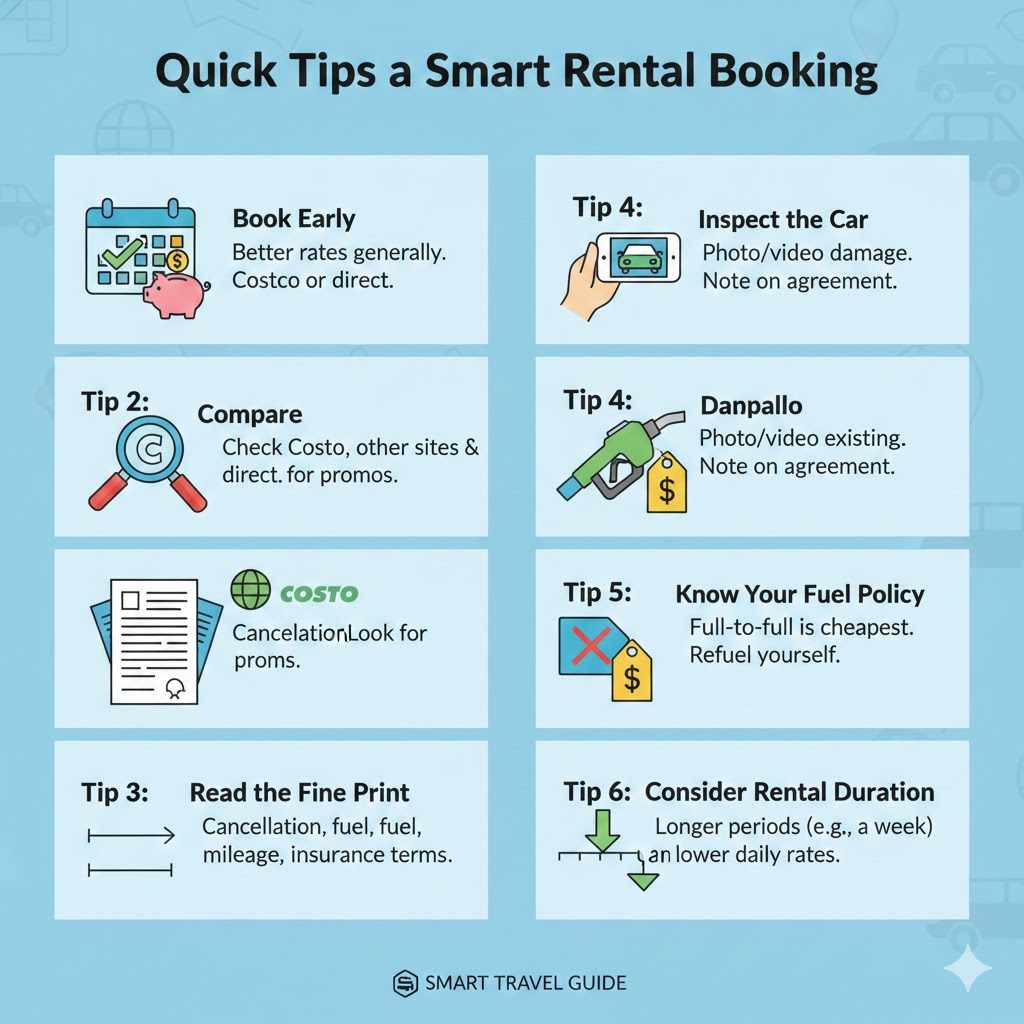
Tip 1: Book Early. The earlier you book your rental car, the better the rates generally are. This applies whether you book through Costco or directly.
Tip 2: Compare. Even though Costco offers great deals, it never hurts to do a quick comparison with other booking sites or directly with the rental companies for your specific dates and location. Sometimes, a direct booking might have a special promotion.
Tip 3: Read the Fine Print. This is crucial for any booking, especially car rentals. Understand the cancellation policy, fuel policy, mileage limits, and insurance terms.
Tip 4: Inspect the Car. Before you drive off the lot, thoroughly inspect the rental car for any existing damage. Use your phone to take pictures or a video of any scratches, dents, or interior issues. Point them out to the agent and ensure they are noted on your rental agreement.
Tip 5: Know Your Fuel Policy. Most companies offer a full-to-full policy. This means you pick up the car with a full tank and must return it with a full tank. If you don’t, they’ll charge you a very high price per gallon to refuel it.
It’s almost always cheaper to fill it up yourself just before returning it.
Tip 6: Consider Rental Duration. Sometimes, renting for a longer period (like a week) can result in a lower daily rate than renting for just a few days. If your trip is flexible, check the rates for slightly longer rental periods.
Smart Rental Car Checklist
- Book Ahead: Get the best rates.
- Compare Prices: Verify savings.
- Read Agreement: Understand all terms.
- Inspect Car: Document existing damage.
- Check Fuel Policy: Refuel before returning.
Frequently Asked Questions
Does my personal car insurance cover rental cars booked through Costco?
Typically, yes. Most personal auto insurance policies extend coverage to rental vehicles. However, it’s crucial to verify the specifics with your insurance provider, including your deductible and any limitations.
Will the price shown on Costco Travel include all insurance costs?
No, the price shown on Costco Travel generally reflects the base rental rate, taxes, and common fees. It does not typically include optional insurance coverages like Collision Damage Waiver (CDW) or Supplemental Liability Insurance (SLI). These are usually purchased separately at the rental counter.
Can I rely on my credit card for rental car insurance when booking through Costco?
Many credit cards offer rental car insurance benefits. However, you must use that specific credit card to pay for the entire rental and usually decline the rental company’s insurance for the benefit to apply. Check your card’s specific terms and conditions to understand if coverage is primary or secondary and what it covers.
What is CDW and why is it important?
CDW stands for Collision Damage Waiver (or Loss Damage Waiver, LDW). It’s not technically insurance, but a waiver offered by the rental company. If you purchase it, the rental company agrees to waive its right to charge you for damage to the rental vehicle, up to its full value, that occurs during the rental period. It protects you from potentially very high repair costs.
What happens if I decline insurance and damage the rental car?
If you decline insurance and don’t have other valid coverage, you will be responsible for the full cost of any damage to the rental car, including loss of use (when the car is being repaired and cannot be rented), administrative fees, and diminished value. This can amount to thousands of dollars.
How do I know if my credit card’s rental insurance is primary?
You need to check your credit card’s Guide to Benefits. This document outlines all the perks associated with your card. Look for rental car insurance terms. It will clearly state whether the coverage is primary (pays first) or secondary (pays after your personal insurance). If you can’t find it online, call the customer service number on the back of your card.
Conclusion
Booking your rental car through Costco Travel is a smart move for saving money. Just remember that the price shown is for the car itself. It doesn’t automatically bundle comprehensive insurance.
Your best approach is always to know your existing coverage. This way, you can confidently decide if you need to purchase extra protection at the counter. Happy travels!