Does Warming Up Your Car Too Long Cause Damage?
Many drivers wonder about warming up their car. It’s a common question, especially for those new to driving or taking care of their vehicle. You might have heard different ideas about it, and it can feel confusing to know what’s right. This guide will make it simple. We’ll break down whether letting your car run for too long actually hurts it. Stick with us, and you’ll get clear answers and easy tips on this topic.
Understanding Engine Warm-Up Time
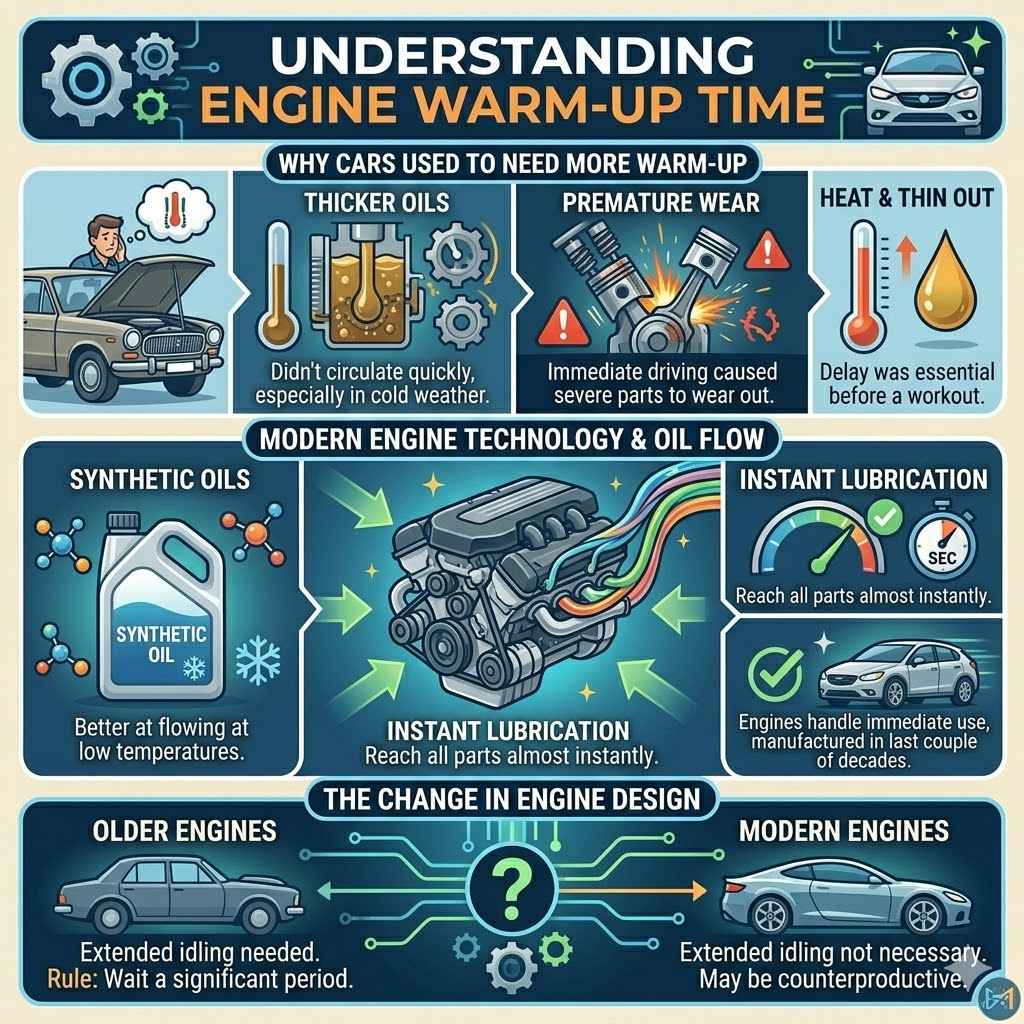
The idea of warming up your car comes from a time when engines were very different. Older cars needed more time to get their oil flowing properly. This oil is like the blood for your engine. Without it, parts rub together and wear out faster. Today’s cars are built with better technology. They don’t need as much idle time to get oil everywhere it needs to go. Modern engines can start moving sooner and still be safe. So, the old rules might not apply to your newer car.
Why Cars Used to Need More Warm-Up
In the past, engine oils were thicker and didn’t circulate as quickly, especially in cold weather. This meant that immediately driving a car when it was cold could cause parts to wear down. The oil needed time to heat up and thin out so it could lubricate all the moving engine components effectively.
This delay was essential to prevent premature wear and tear on the engine. It was a protective measure to ensure the longevity of the vehicle. Think of it like getting your body ready for a workout; you need to stretch first.
Modern Engine Technology and Oil Flow
Modern vehicles use synthetic or semi-synthetic oils that are much better at flowing at low temperatures. These oils are designed to reach all the engine parts almost instantly, even when it’s very cold outside.
This advanced oil technology means that the main reason for long warm-up periods is no longer a significant concern for most cars manufactured in the last couple of decades. The engines are engineered to handle immediate use.
This change in engine design and oil composition has led many experts to suggest that extended idling is no longer necessary and can even be counterproductive.
Does Warming Up Your Car Too Long Cause Damage?
This is the core question many people have. The simple answer is that yes, warming up your car for excessively long periods can indeed cause damage, though it’s not always the dramatic kind of destruction some might imagine. It’s more about inefficiency and minor issues that can add up over time. Modern cars are quite resilient, but even the best machines can suffer from being used improperly. Let’s explore how this happens.
Fuel Waste and Emissions
One of the most immediate effects of prolonged idling is wasted fuel. Your engine consumes gasoline even when the car is not moving. This is like leaving the water running while you brush your teeth.
It’s simply unnecessary consumption that costs you money at the pump.
Furthermore, when an engine idles for too long, especially when it’s not fully warmed up, it can lead to incomplete combustion. This means that not all the fuel is burned efficiently, resulting in increased emissions of harmful pollutants into the air.
These extra emissions contribute to air pollution and can be worse for the environment than driving the car. Many cities even have laws against excessive idling for this reason.
Statistics show that idling can burn up to a gallon of fuel every hour, depending on the vehicle. For a typical commuter, this could mean several gallons a month wasted. This adds up financially and environmentally.
Engine Deposits and Fouling
When an engine idles for extended periods, particularly in cold conditions, it doesn’t reach its optimal operating temperature. This incomplete combustion can lead to the formation of carbon deposits inside the engine. These deposits can accumulate on engine parts like spark plugs, valves, and pistons.
Over time, these deposits can cause various problems. They might lead to rough idling, decreased fuel efficiency, and even misfires. In severe cases, excessive carbon buildup can necessitate costly engine cleaning or repair.
Spark plugs, which are vital for igniting the fuel-air mixture, are particularly susceptible to fouling from idling. When spark plugs are fouled, they don’t create a strong enough spark, leading to poor engine performance and reduced power.
Wear on Catalytic Converter
The catalytic converter is a critical part of your car’s exhaust system. Its job is to reduce harmful emissions. It works best when it’s hot.
If your car idles for too long, especially when the engine is cold, unburned fuel can pass into the catalytic converter.
This unburned fuel can overheat and damage the catalytic converter. This is an expensive part to replace. The increased heat can melt the internal honeycomb structure of the converter, rendering it useless.
This can also lead to backpressure issues in the exhaust system.
A damaged catalytic converter not only means higher emissions but can also cause your check engine light to come on. It’s a component designed to work with a fully operational engine that reaches its proper temperature.
Oil Dilution and Contamination
In very cold weather, a long idle time can cause fuel to seep into the engine oil. This process is known as fuel dilution. When fuel mixes with your engine oil, it reduces the oil’s ability to lubricate engine parts properly.
This can lead to increased wear.
Also, during short trips or extended idling, water vapor can form inside the engine. This moisture doesn’t have a chance to evaporate because the engine doesn’t get hot enough. This water can mix with the oil, creating a sludgy substance that doesn’t provide adequate lubrication and can even cause corrosion.
Regular oil changes are designed to remove contaminants, but excessive fuel dilution and moisture buildup can overwhelm the oil’s protective properties between scheduled maintenance. This is a subtle but significant way that too much idling can harm your engine’s health.
How Long Should You Really Warm Up Your Car?
The consensus among automotive experts is that modern cars don’t need much warm-up time at all. The goal is to get the engine to its normal operating temperature as efficiently as possible. For most vehicles, this means driving gently for the first few minutes. This is often referred to as “driving warm-up.”
The Driving Warm-Up Method
Instead of letting your car idle, the best approach is to start the engine and wait for about 30 seconds to a minute. This brief period allows the oil to circulate throughout the engine. Then, simply start driving, but do so gently.
Avoid hard acceleration, high speeds, or heavy loads during these first few minutes of driving. This allows the engine, transmission, and other components to reach their optimal operating temperatures gradually and safely.
This method is not only better for your car but also more fuel-efficient. You’re already moving and getting somewhere, rather than just burning fuel while stationary.
When Extended Idling Might Be Necessary
There are a few situations where a bit more idling might be unavoidable or even beneficial. These are typically related to extreme weather conditions or specific vehicle functions.
For example, if you live in an area with extremely cold temperatures (well below freezing), a slightly longer idle time might be considered to ensure comfort and clear ice or snow from windows. However, even in these cases, 5-10 minutes is usually more than enough.
Another situation could be if your car has a specific system that requires a warm engine to function, like some diesel particulate filters that might need a longer run time for regeneration. However, these are specific system needs and not a general rule for all cars.
Cold Weather Considerations
In frigid temperatures, the engine oil becomes thicker, and various fluids can slow down. While modern cars are designed to handle this, it’s still a good idea to be a little more gentle with the engine in the initial minutes of driving.
Some drivers in very cold climates feel more comfortable letting the car idle for a few minutes to ensure the cabin heater starts working effectively and to clear visibility. If you choose to do this, aim for no more than 2-5 minutes. After that, driving gently is still the recommended practice.
Modern cars have advanced heating systems that often warm up quite quickly while you drive. Focusing on getting the engine to its operating temperature through gentle driving is key.
How Does Warming Up Your Car Too Long Cause Damage? A Deeper Look
Let’s dive deeper into the specific ways that excessive idling can lead to problems. It’s not just about a single event but a cumulative effect that can shorten your car’s lifespan and increase your maintenance costs. Understanding these points will help you make informed decisions about your car’s care.
Impact on Engine Lubrication
Engine oil is the lifeblood of your engine. Its primary job is to reduce friction between moving parts. When an engine is cold and idling, the oil doesn’t flow as freely.
This means certain parts might not receive adequate lubrication for the first few minutes.
While modern engines are designed to tolerate this for short periods, prolonged idling means these parts remain under-lubricated for longer. This increased friction can cause microscopic wear on cylinder walls, piston rings, and bearings.
Over years of excessive idling, this minor wear can accumulate, leading to increased oil consumption, loss of compression, and eventually, more significant engine problems. It’s a slow degradation that might not be noticeable initially but contributes to premature engine failure.
A study published by the U.S. Environmental Protection Agency (EPA) highlighted that excessive idling can contribute to increased wear on engine components due to inadequate lubrication, especially during the initial minutes when the oil is still cold and thick.
Carbon Buildup and Performance Issues
As mentioned, incomplete combustion during extended idling leads to carbon deposits. These deposits can affect how your engine performs in several ways. They can coat the tips of spark plugs, reducing their effectiveness and leading to misfires.
Carbon can also build up on the intake valves and piston tops. This can increase the compression ratio in an undesirable way, leading to knocking or pinging sounds from the engine. It can also reduce the efficiency of the combustion process, meaning you get less power from the same amount of fuel.
Imagine a coffee filter that’s been used too many times; it starts to clog and doesn’t let the coffee flow through properly. Carbon deposits do something similar inside your engine, hindering its ability to breathe and burn fuel cleanly and efficiently.
Increased Maintenance Costs
The cumulative effects of excessive idling can translate directly into higher maintenance and repair bills. Frequent spark plug fouling means more frequent replacements. Damage to the catalytic converter can be a very expensive fix.
Increased wear on engine components might lead to needing more frequent oil changes or even major engine overhauls sooner than expected. Even issues like contaminated oil require more frequent changes to try and keep the engine healthy.
Essentially, by trying to “baby” your car with extended idling, you might inadvertently be accelerating its wear and tear, leading to costs that far outweigh any perceived benefits. It’s a classic case of spending more in the long run.
Environmental Impact
Beyond the direct damage to your car, prolonged idling has a significant negative environmental impact. Burning fuel unnecessarily releases greenhouse gases and other pollutants into the atmosphere. This contributes to climate change and can worsen air quality in urban areas.
Consider this: if every driver idled their car for just five minutes longer each day than necessary, the collective impact in terms of wasted fuel and increased emissions would be enormous. Many cities and states have anti-idling laws to combat this issue.
For instance, California has strict anti-idling laws for commercial vehicles, but the principle applies to all vehicles. Reducing unnecessary idling is a simple yet effective way for individuals to contribute to a cleaner environment.
Data from the EPA suggests that Americans waste millions of gallons of fuel each year due to unnecessary idling, contributing significantly to air pollution.
Real-Life Examples and Scenarios
To illustrate the points made, let’s look at some practical examples. These scenarios highlight how different approaches to warming up a car can lead to different outcomes.
Case Study 1: The Long-Idler vs. The Gentle Driver
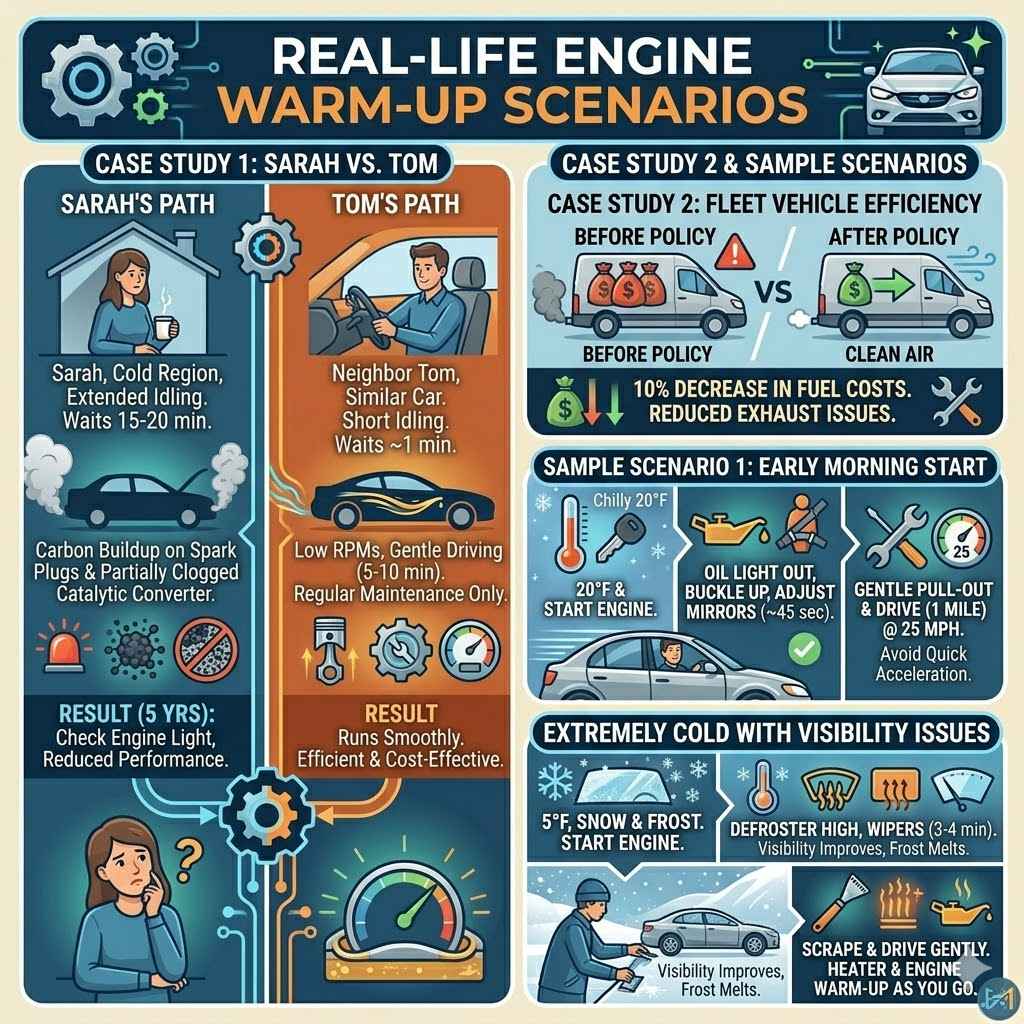
Sarah lives in a region that gets very cold in the winter. For years, she would start her car, let it run for 15-20 minutes while she got ready inside, and then drive off. She believed this was essential for protecting her car.
Meanwhile, her neighbor, Tom, drives a similar car. He starts his car, waits about a minute, and then drives gently for the first 5-10 minutes of his commute. He focuses on keeping his RPMs low and avoiding sudden acceleration.
After five years, Sarah’s car started having issues. The check engine light came on, and her mechanic noted significant carbon buildup on the spark plugs and a partially clogged catalytic converter. Tom’s car, on the other hand, ran smoothly with no major issues, aside from regular maintenance like oil changes and tire rotations.
This difference wasn’t due to a faulty car for Sarah, but rather her extended idling habit, which led to the problems Tom avoided by driving gently after a short initial warm-up.
Case Study 2: Fleet Vehicle Efficiency
A local delivery company noticed that some of its drivers were letting their vans idle for extended periods during breaks or while waiting for pickups. This was leading to higher fuel bills than expected.
The company implemented a new policy: drivers were instructed to turn off their engines if they would be stopped for more than two minutes. They also educated drivers on the benefits of a brief warm-up followed by gentle driving.
Within six months, the company reported a 10% decrease in fuel costs across its fleet. They also saw a reduction in unscheduled maintenance related to exhaust system issues and spark plug problems, indicating that the change in habit was beneficial for the vehicles as well.
Sample Scenario 1: Early Morning Start
It’s a chilly 20-degree Fahrenheit morning. You get into your car. You turn the key and the engine starts.
The oil pressure light goes out. You wait for about 45 seconds. During this time, you buckle your seatbelt and adjust your mirrors.
Then, you put the car in drive and slowly pull out of your driveway. You drive down your street at about 25 mph for the first mile, making sure not to accelerate too quickly. After that first mile, you feel comfortable driving normally.
Sample Scenario 2: Extremely Cold Weather with Visibility Issues
It’s 5 degrees Fahrenheit and snowing heavily. Frost is thick on the windshield, and there’s accumulated snow on the car. You get in and start the engine.
You turn on the defroster to high and the rear defogger. You use your wipers to clear some snow from the windshield. You wait for about 3-4 minutes until the frost starts to melt and visibility improves.
You then carefully scrape any remaining ice and snow, and drive off gently, allowing the heater and engine to fully warm up as you go.
Frequently Asked Questions
Question: Is it bad to let your car idle for more than 10 minutes?
Answer: Yes, letting your car idle for more than 10 minutes, especially when it’s not extremely cold or you don’t need to clear visibility, is generally considered excessive and can lead to fuel waste, increased emissions, and potential engine wear from incomplete combustion and oil dilution.
Question: Can warming up my car damage the engine?
Answer: While not usually catastrophic damage, prolonged idling can cause wear on engine components, lead to carbon buildup, foul spark plugs, and potentially harm the catalytic converter over time. It’s more about inefficiency and accelerated wear than immediate destruction.
Question: Should I warm up my car in the summer?
Answer: No, warming up your car in the summer for an extended period is almost never necessary. Modern cars are designed to be driven immediately after starting. A brief idle of 30 seconds to a minute is sufficient before driving gently.
Question: How do I know if my car’s engine is properly warmed up?
Answer: Your car’s engine is properly warmed up when the temperature gauge on your dashboard reaches its normal operating position, usually somewhere in the middle of the gauge. This typically happens within 5-15 minutes of driving, depending on the weather and driving conditions.
Question: Does warming up my car save gas?
Answer: No, warming up your car by idling for a long time wastes gas. Driving the car gently for a few minutes is a much more efficient way to get it to its operating temperature and get you to your destination.
Summary
The old advice about warming up cars for a long time doesn’t really apply to most modern vehicles. Letting your car run for too long when it’s not moving can waste fuel, increase pollution, and cause subtle damage like carbon buildup and wear. The best approach is to start your car, wait a minute, and then drive gently until the engine is warm. This saves fuel, is better for your car, and is good for the environment. Your car will thank you for it.