Dog Decals for Cars: Waterproof Vinyl Picks Compared
Choose a waterproof vinyl dog decal by placement first: rear glass, side window, or bumper, because visibility and local tint laws matter more than the artwork. Pick the wrong adhesive or finish, and the decal can peel, fade, block sightlines, or create a ticket risk. This guide compares waterproof vinyl dog decals by placement, visibility, legality, and durability so you can choose the right one for your car.
Waterproof dog decal comparison


The main trade-off is simple: the decal has to fit the surface you want and stay visible without creating a driving problem. Opaque graphics read clearly on glass or paint, transparent signs suit lighter surfaces, reflective PET helps on dark vehicles, perforated cling preserves some outward visibility, and novelty moving-tail decals lean into motion instead of signal value.
| Decal type | Best placement | Visibility risk | Expected durability signal | Owner fit | Do not buy if |
|---|---|---|---|---|---|
| Opaque die-cut vinyl | Glass, painted bumper, tailgate | Moderate on rear glass; lower on paint | Outdoor vinyl with fade and edge-lift resistance | You want a clean graphic and can pick a visible location carefully | You need a see-through window solution or want the graphic to blend into dark glass |
| Transparent sign decal | Light-colored car body or clear glass | Higher on dark paint or dark tinted glass | Waterproof sign vinyl with standard outdoor use | You want a lighter visual read and a sign-style message | Your car is dark and you want the message to stand out strongly |
| Reflective PET decal | Dark bumper or tailgate | Lower in low light; can still be limited in full sun glare | Reflective PET film built for visibility | You care about being seen more than decorative styling | You want an understated look or a purely decorative sticker |
| Perforated rear-window cling | Rear window, especially side-oriented placement | Moderate; see-through effect is the point, but not full clarity | Window cling with outdoor use and placement flexibility | You need to keep some outward view through the glass | You have a rear wiper or need maximum rear visibility |
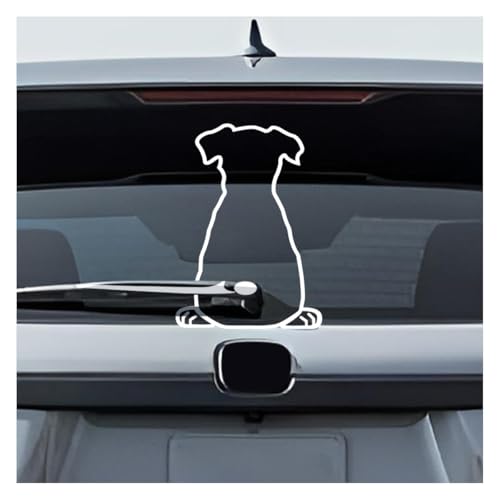
| Novelty moving-tail decal | Rear window, where the wiper can move the tail | Moderate to high depending on window shape and wiper path | Waterproof novelty design with exposed moving parts | You want a playful look and accept a wiper-dependent design | Your rear wiper does not cross the graphic or you need a quiet, fixed sign |
This table does not decide the legal side for you. It narrows the field by placement, visibility, and surface compatibility. You still need to check the vehicle manual and local rules before putting anything on glass that could affect sightlines or tint compliance.
How to choose the right vinyl
Waterproof vinyl should mean resistance to rain, repeated outdoor exposure, and UV fade, not immunity to wear. In listings, the practical failure signs are edge lift, color fade, and peeling at corners, especially on textured surfaces, hot rear glass, or curved panels.
Opaque die-cut vinyl for bold graphics
Oracal 651 is the clearest example here. One listing names it as calendered vinyl and describes outdoor use, fade resistance, and edge-lift resistance. That makes it a straightforward option when you want a dog graphic on glass or paint.
Transparent sign decals for glass or light paint
MAKTEM is the transparent option in this group. It is described as a dog-on-board sign with black print, which makes it better for light-colored cars or glass where the contrast stays readable without a heavy block of vinyl.
Reflective PET for dark bumpers and tailgates
Surosha is the only reflective decal in the comparison, and the listing says it uses PET film. That is the strongest fit when a dark bumper or tailgate needs visibility rather than decoration alone, especially if the goal is to catch attention in dimmer conditions.
Perforated rear-window cling for see-through needs
The perforated rear-window cling is listed at about 13 inches. The see-through effect is the point, but that also means a visibility trade-off. If the driver needs a clear rearward view, this type deserves extra caution.
Novelty moving-tail decals when motion matters more than quiet signaling
Dreothy is the novelty choice. The body measures 8.85 x 10.63 inches, and the tail measures 1.18 x 9.44 inches. The listing ties it to the rear wiper, so it works best when the wiper path actually moves the tail and the owner wants the motion effect more than a formal sign.
Say your hatchback has dark tinted rear glass and a rear wiper that sweeps the full lower pane. A reflective PET decal on the tailgate may fit better than a transparent sign, because the dark surface swallows plain black print and the wiper can interfere with a rear-window design.
Suppose your compact car has a light-colored rear quarter glass and you want a calm, simple message. A transparent sign can read cleanly there, while the same decal on dark tint may disappear at a glance and do little for visibility.
Which decal fits your car?
The right decal depends on the surface, the glass, and whether you need visibility or just decoration. Dark paint, rear wipers, and narrow windows rule out some choices even when the product photo looks good. Placement drives the decision more than the dog graphic itself.
Dark car or dark glass
Dark cars usually need contrast. Reflective PET is the strongest match when visibility matters, while DECALBUNNY is the better decorative choice if the goal is a more traditional paw print on rear glass. The listing says DECALBUNNY has a six-year lifespan claim and uses a standard 4 by 6 size.
Rear wiper or curved rear window
A rear wiper can help or hurt depending on the decal type. It is useful for the Dreothy moving-tail design because the tail depends on that motion, but it can also snag edges or interfere with a larger cling. Curved glass raises the risk of lifting at corners and uneven contact.
Bumper, tailgate, or side window placement
Bumpers and tailgates suit opaque or reflective options better than clear window designs. Side-window placement favors perforated cling when the owner wants some see-through effect, but that trade-off should be deliberate. If the surface is textured, expect weaker adhesion than on smooth paint or flat glass.
Low-visibility driving and sightline concerns
If the decal sits where it affects the driver’s rear view, the safest choice is the one that interferes least with visibility. That makes transparent or perforated options more relevant than dense vinyl in some cases, but the vehicle manual and local laws still control what is acceptable.
- Decide whether the decal is decorative or meant to signal pet presence.
- Pick the surface first: bumper, tailgate, rear glass, or side window.
- Check whether a rear wiper crosses that area.
- Match the surface color to the decal type.
- Confirm local visibility and tint rules before applying it.
Dog decal size and placement
Dog car decals are commonly reported in a practical range of about 4 to 13 inches. That spread matters because a 4 by 6 sticker reads differently from a 13-inch cling, and the same design can be too small on a tailgate yet too large for a side window.
Why 4 to 13 inches is a practical range
DECALBUNNY’s 4 by 6 size is compact enough for smaller glass areas and rear-window corners. At the other end, the 13-inch perforated cling covers much more area and works better where the owner needs a more visible message. Bigger is not automatically better if the glass space is limited.
When centimeter listings matter more than title photos
Some products list inches, others mix centimeters into the size note. That matters because the same image can look larger online than it feels on a car. A centimeter listing is the safer check when a bumper lip, wiper sweep, or narrow window frame leaves little room.
How size changes visibility on bumper, glass, or window
On bumper paint, a larger decal can read clearly from a distance. On rear glass, too much size can compete with mirrors and tint. On a side window, a smaller decal often gives better balance because it avoids crowding the window frame and reduces the risk of blocking the driver’s line of sight.
Dog decal materials and durability
Outdoor durability starts with the vinyl grade and the way the listing describes weather resistance. The best signal is not only “waterproof,” but waterproof plus UV resistance, plus a lifespan claim, plus mention of fade or edge-lift resistance.
Oracal 651 vinyl and what its 5+ year rated life signals
One listing names Oracal 651 and says it is rated for five years or more. Because it is calendered vinyl, it fits the usual outdoor-decal role rather than a short-lived paper-style sticker. The extra signal here is resistance to fading and edge lift, which are common failure points outside.
What waterproof and UV-resistant claims should mean in listings
Waterproof should mean the decal can handle rain and washing without immediate damage. UV-resistant should mean the color and adhesive are less likely to break down in sun exposure. Cardoggy describes waterproof vinyl as resistant to UV rays and scratches, while Dogcaress says the Life Is Better decal has UV protection, water resistance, and scratch durability.
Common failure signs: edge lift, fading, and peeling
Edge lift usually starts at corners or over seams. Fading shows up as washed-out color after sun exposure. Peeling is the final failure stage, often made worse by heat, poor prep, or a surface the adhesive was never meant to hold. A textured bumper is harder than smooth glass.
Dog car decal decision table
This table turns the listing details into a placement decision. It is not a style ranking. It tells you where each decal type makes the most sense, what visibility trade-off comes with it, and when a different surface or product type is the safer pick.
| Product or type | Best placement | Visibility risk | Durability signal | Owner fit | Do not buy if |
|---|---|---|---|---|---|
| Oracal 651 vinyl | Rear glass, tailgate, smooth paint | Moderate if the color is too close to the vehicle finish | Calendered vinyl, rated for five years or more, outdoor use, fade and edge-lift resistance | You want the most straightforward long-life vinyl option | You need a see-through cling or a reflective message |
| Dreothy moving-tail rear window decal | Rear window with wiper contact | Moderate; motion draws attention, but placement matters | Waterproof novelty design | You want a playful rear-window feature and have a compatible wiper path | Your rear wiper does not cross the decal or you want a static sign |
| DECALBUNNY paw prints decal | Rear window, compact glass areas | Lower to moderate depending on tint | Six-year lifespan claim and the longest rated life on the shelf | You want a compact decorative paw print that still holds up outdoors | You need a very large graphic or a reflective option |
| MAKTEM paws on board car vinyl sticker | Light-colored car or glass | Moderate to high on dark paint or dark tint | Transparent sign with black print | You want a clear dog-on-board message, not a decorative badge | You need strong contrast on a dark vehicle |
| Surosha heart with dog paw reflective decal | Dark bumper or tailgate | Lower in dim light; more noticeable than plain black vinyl | Reflective PET film | You want visibility on a dark vehicle and can accept a more signal-oriented look | You want a subtle decorative decal |
Choose opaque die-cut vs reflective PET
Choose opaque die-cut vinyl if you want a simple graphic on glass or paint, especially when the vehicle color gives enough contrast already. Choose reflective PET if visibility matters more, particularly on a dark bumper or tailgate. Choose transparent sign vinyl when the surface and color call for a lighter visual read.
Choose opaque die-cut vinyl if you want a simple graphic on glass or paint
Opaque vinyl works best when the decal is decorative first and informational second. It is the cleanest option for a neat paw print or silhouette on a smooth surface, and it usually gives the most predictable outdoor wear when the listing mentions fade resistance and edge-lift resistance.
Choose reflective PET if you need stronger visibility on a dark vehicle
Reflective PET matters when the vehicle finish eats contrast. Surosha fits that use case because it is the only reflective decal in the comparison and uses PET film. The trade-off is style: the message becomes more functional and less like a casual sticker.
Choose transparent sign vinyl if the surface and color call for a lighter visual read
Transparent sign vinyl is better when the decal should look lighter and less blocky. MAKTEM fits that role because it is transparent with black print and is positioned as a dog-on-board sign. That makes it the stronger choice when communication matters more than decoration.
Frequently asked questions
What is the best waterproof vinyl dog decal for cars?
The best waterproof vinyl dog decal depends on where you plan to place it. For simple long-life vinyl, Oracal 651 is a strong option in the set. For visibility on a dark vehicle, Surosha’s reflective PET is the better fit. For a signal-style message, MAKTEM fits better than a decorative graphic.
Which dog car decal lasts the longest outdoors?
DECALBUNNY is listed with a six-year lifespan claim. Oracal 651 also stands out because one listing says it is rated for five years or more and mentions fade and edge-lift resistance. Either is a stronger durability signal than a generic “waterproof” claim alone.
What size dog decal is best for a car window?
There is no single best size, but 4 to 13 inches is the practical range. A 4 by 6 decal suits compact glass areas and less crowded windows. A 13-inch cling is better when the goal is more visible placement, though it needs enough glass space and should not block the driver’s view.
Are reflective dog car decals worth it?
They can be worth it if the car is dark or the placement area needs more visibility. Reflective PET is the most useful choice when a plain black decal would disappear on the surface. It is less about decoration and more about being noticed, especially on a tailgate or dark bumper.
What vinyl material should I look for in a dog car decal?
Look for outdoor vinyl with a real lifespan claim, plus UV and fade resistance. Oracal 651 is the clearest example because it is calendered vinyl and is rated for five years or more. If the listing only says “waterproof” without anything else, that is a weaker signal for outdoor use.
Will a dog decal stick to a dark car or glass?
Usually yes, but visibility changes a lot. Dark cars can hide transparent or low-contrast decals, so reflective PET or a lighter sign style is safer. On glass, the main issue is not sticking alone; it is whether the decal blocks sightlines or clashes with tint and rear-wiper movement.
Are rear window dog decals legal on car windows?
Sometimes, but not always. Legal use depends on local rules, tint laws, and whether the decal affects the driver’s rear view. Check the vehicle manual and local law before putting anything on the rear window, especially if it is large, reflective, or placed where a wiper or mirror view could be affected.
How do I choose between a decorative decal and a paws-on-board sign?
Choose a decorative decal when you want style first. Choose a paws-on-board sign when the goal is to communicate that a dog is in the vehicle. MAKTEM is the clearest signal-style example in this comparison, while Oracal 651, DECALBUNNY, and Dreothy lean more decorative or novelty-driven.
Products related to this article
Sponsored / affiliate links. As an Amazon Associate I earn from qualifying purchases. I may earn additional commission from eligible campaigns.