Purple Decals for Cars: Style Picks and Buying
Purple decals for cars look best when you match finish to paint and use case: gloss for dark colors, matte for busy body lines, and high-tack vinyl only where you want a long-term hold. Pick the wrong film, and you get bubbles, edge lift, faded color, or residue that makes removal expensive. This guide covers finish choice, placement, weather durability, and the easiest removal options for clean results.
Best purple decals for cars
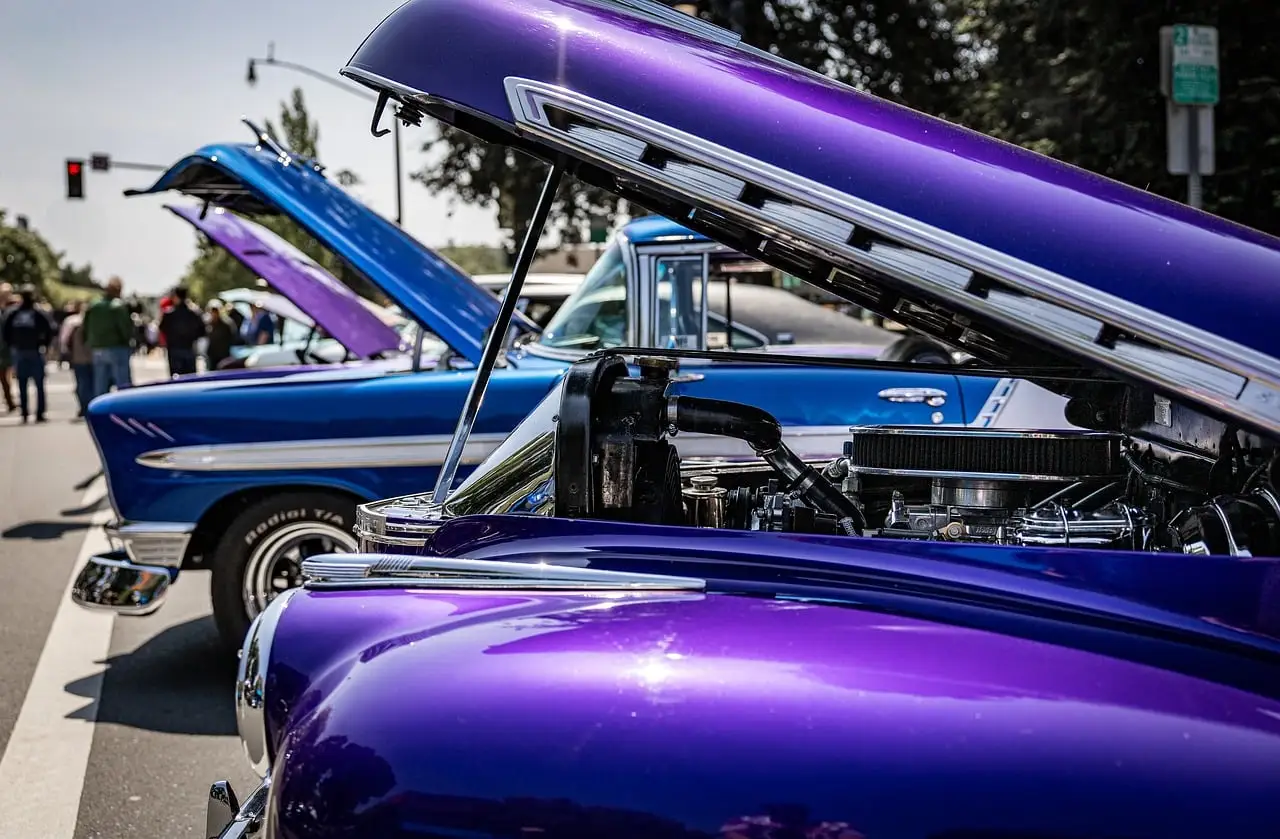


The best purple decals are the ones that match your paint color, mounting surface, and removal goal. A smooth vinyl decal with outdoor adhesive rated for UV and weather exposure is the safest default for doors, glass, mirror housings, and other clean exterior panels. For a cleaner edge, choose die-cut or transfer styles instead of a full background sticker.
Quick picks by need
- Best low-key accent: matte or lavender vinyl on white, silver, or gray paint.
- Best high visibility: glossy deep royal or reflective purple on black paint or rear glass.
- Best for easier removal: self-adhesive vinyl with moderate tack on smooth paint or glass.
- Best for outdoor durability: UV-resistant vinyl or PVC made for exterior use.
What makes a decal worth buying
Start with weather-resistant or UV-resistant vinyl. That matters more than the graphic itself. Purple can shift fast in bright sun if the film is weak, especially on rear windows, hood edges, and mirror caps that take direct exposure.
Also check the application style. Self-adhesive decals are simpler, while transfer decals use transfer tape and reward careful alignment with a cleaner finished look. If you want sharp edges and no visible background, a die-cut decal is the better choice.
Purple decal finish matrix
| Car color | Desired visibility | Best purple finish | Risk level |
|---|---|---|---|
| Black | High contrast | Glossy or reflective deep royal | Medium; avoid if the panel is curved or frequently machine-washed |
| White | Soft contrast | Matte or lavender solid color | Low; avoid if you want the graphic to disappear into the paint |
| Silver | Balanced contrast | Metallic purple | Medium; avoid if you need the safest possible removal later |
| Gray | Moderate contrast | Watercolor purple | Medium; avoid if the body line is busy or the panel gets heavy sun |
| Dark paint with small accent zone | Clean outline | Die-cut purple graphic | Low to medium; avoid if the surface has wax build-up or edge contamination |
| Rear glass or mirror housing | High visibility from a distance | Reflective purple | Medium to high; avoid if you want subtle daytime appearance |
Use matte when the vehicle has strong body lines and you want the decal to read as part of the surface, not as a shiny sticker. Use gloss when you want a deeper, wet look. Metallic purple works well when you want the finish to change under sunlight. Watercolor looks softer and more decorative, but it tends to suit calmer placement zones rather than sharp edges.
Which purple finish fits your car?
The best purple tone depends on both paint color and the amount of attention you want the decal to pull. Deep royal purple reads darker and more formal. Lavender reads lighter and can look cleaner on white, silver, or gray cars. Reflective styles stand out most at night, while metallic and watercolor finishes change more with daylight angle.
Deep royal versus lavender
Deep royal purple usually gives stronger contrast on black and gray vehicles, especially on a hood stripe, quarter panel graphic, or rear glass accent. Lavender is better when the goal is a lighter, more visible accent on white or silver paint. On very dark paint, lavender can look brighter and more obvious from a distance.
If the car already has sharp trim lines, deep royal usually looks more controlled. If the car has a softer shape or a lighter body color, lavender can keep the decal from reading too heavy.
Solid, metallic, watercolor, or reflective
Solid purple is the simplest option and the easiest to judge before buying. Metallic purple adds sparkle in sunlight and can help a decal stay visible against silver or gray paint. Watercolor designs spread color more softly, which works well on larger panels when you want less hard contrast.
Reflective purple is the strongest visibility choice, but it can look more technical than decorative. That makes it useful on rear glass, mirror housings, or other zones where daylight visibility matters more than a subtle appearance.
How paint color changes the look
Black paint often makes purple finishes read stronger. White paint can soften the effect unless the decal is glossy or metallic. Silver paint can mute low-sheen purple, so metallic or reflective finishes often work better. Gray sits in the middle and accepts both solid and watercolor styles without a harsh jump.
Say your car is silver and you want a 4 x 2.3 inch accent on the quarter panel. A matte lavender decal can look understated in bright sun, while a metallic purple version will hold its shape better at a distance. The same graphic on black paint will read more sharply even before you choose a finish.
Where should you place it?
Place purple decals on smooth panels where the viewing angle fits the finish you choose. Doors and quarter panels suit larger graphics. Hood areas work best for simple shapes and measured coverage. Windows and mirror housings suit smaller pieces, especially when you want quick recognition without covering too much of the vehicle.
Doors and quarter panels
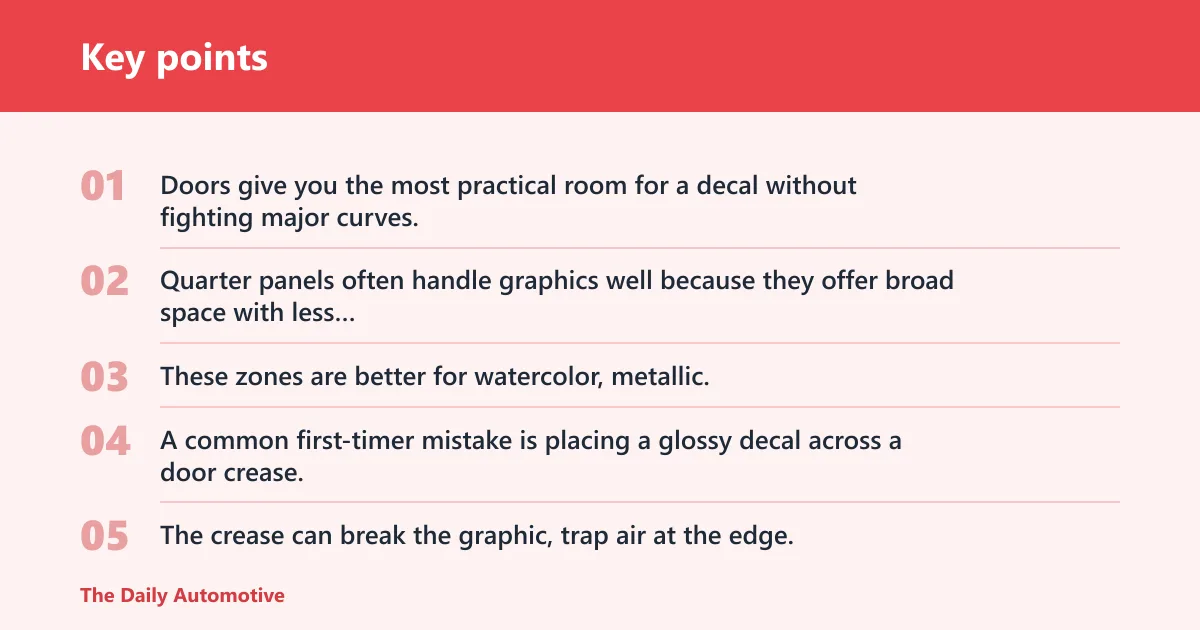
Doors give you the most practical room for a decal without fighting major curves. Quarter panels often handle graphics well because they offer broad space with less clutter than the front end. These zones are better for watercolor, metallic, and larger die-cut designs because the eye can take in the whole shape at once.
A common first-timer mistake is placing a glossy decal across a door crease. The crease can break the graphic, trap air at the edge, and make the film lift earlier during washing.
Hood and roof areas
Hood and roof placement creates the most visible overhead impact, but those panels also take more heat. That means the adhesive has to hold through temperature swings and direct sun. If you choose these areas, favor UV-resistant vinyl and keep the design simple enough that edge lift is easy to notice before it spreads.
Short accent decals work better than broad coverage on curved hoods. A wide graphic can fail at the corners first, especially after repeated summer heat.
Windows and mirror housings
Rear windows, side windows, and mirror housings suit small, high-visibility decals. The mirror zone is especially useful for compact graphics because the surface is usually smooth and easy to inspect. The purple wave stickers described for rearview mirrors and windshields fit this use case well, and the set comes in a two-pack.
One example is the Unique Purple Butterfly Vinyl Transfer Sticker. It measures 4 x 2.3 inches, uses UV-resistant vinyl, is described as a no-background design, and is made in the USA. That kind of size works well on glass or a mirror housing when you want a clean outline rather than a block of color.
Small accents versus larger coverage
Small accent sizes are safer when you want easy application and later removal. Larger coverage can look better on doors or quarter panels, but it raises the risk of trapped air, edge lift, and residue if the adhesive has a strong hold. Measure the target area before buying so the decal does not crowd trim or body seams.
For example, the KTTNUOEG butterfly and floral decal measures 5.12 x 4.13 inches, which is in the small accent range. That size is easier to position on a mirror housing or a small window corner than on a wide door panel.
How do you choose the right decal type?
Vinyl decal choice starts with surface compatibility. These decals rely on a self-adhesive backing or a transfer application, and they stick best to smooth exterior surfaces such as paint, glass, mirror housings, and windshields. Rough plastic, dirty paint, and wax-heavy panels create weak bond points.
Die-cut versus printed
Die-cut decals have no background, so the vehicle color shows through around the graphic and the edges read sharper. Printed decals carry a full printed field and can be easier to spot as stickers. If you want a cleaner result on dark paint or glass, die-cut usually wins.
Printed decals can be useful when the art itself needs a full color field, but they often look heavier on the vehicle. Die-cut is usually the better choice for a graphic that should blend into the panel shape.
Transfer decal versus self-adhesive
Transfer decals use transfer tape, which helps line up thin shapes and keeps the pieces in place during installation. That makes them useful for detailed butterflies, waves, and lettering. The tradeoff is alignment sensitivity. Once the tape lands, repositioning is harder.
Self-adhesive decals are simpler and more forgiving. They are a better first choice when you want a fast install on a door or window and do not want to manage multiple small pieces.
PVC and UV-resistant vinyl
PVC decals are a common durable option for exterior use, especially when you want a material that handles weather and gives easier day-to-day application and removal. For long sun exposure, UV-resistant vinyl is the safer pick because it helps limit fade and color shift over time.
Use PVC when you want a practical outdoor decal for a truck bed window, bike fairing, or laptop skin. Use UV-resistant vinyl when the decal will sit on the outside of a car in direct sunlight for long periods.
Removal, residue, and failure cases
Removal depends on adhesive strength, heat exposure, and how long the decal has cured on the surface. Stronger adhesives can leave residue, and older decals can crack during removal. Edge lift usually starts at corners, wash damage often begins where brushes catch the film, and heat can soften weak films enough to distort them.
Suppose a decal goes on a black hood and gets washed weekly with aggressive brushes. The edges may begin to peel first, then dirt collects under the lifted film, and the graphic starts to fail from the corners inward. That is one reason smooth placement and moderate exposure matter more than the art itself.
How to apply a vinyl decal on a car without bubbles
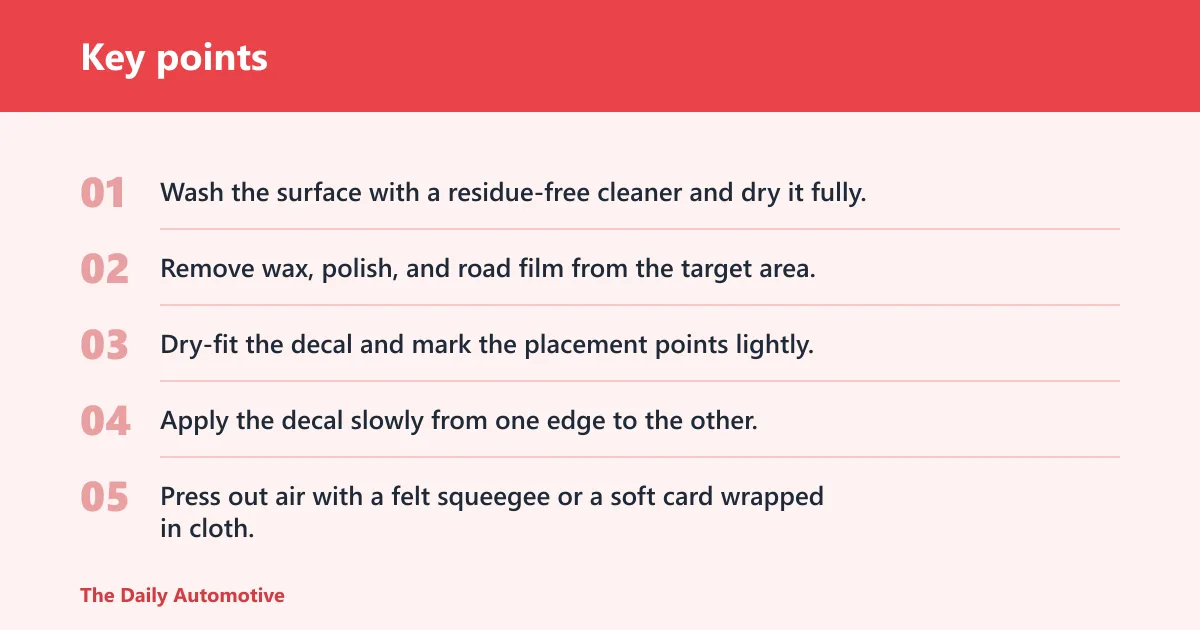
- Wash the surface with a residue-free cleaner and dry it fully.
- Remove wax, polish, and road film from the target area.
- Dry-fit the decal and mark the placement points lightly.
- Apply the decal slowly from one edge to the other.
- Press out air with a felt squeegee or a soft card wrapped in cloth.
- Let the decal cure before heavy washing or high heat exposure.
Clean prep matters as much as the decal itself. If the surface is oily, the film can trap bubbles or lift early. If you rush the alignment, transfer decals can stick before the graphic is square.
Purple decal placement and finish matrix
| Car color | Desired visibility | Best purple finish | Risk level |
|---|---|---|---|
| Black paint | Strong daytime contrast | Glossy or deep royal die-cut | Medium; avoid if the panel gets constant brush washing |
| White paint | Clean accent with moderate pop | Matte lavender | Low; avoid if you want the decal to disappear into the body color |
| Silver paint | Visible but not harsh | Metallic purple | Medium; avoid if you expect repeated removal and reapplication |
| Gray paint | Balanced outdoor visibility | Watercolor purple | Medium; avoid if the design crosses multiple body seams |
| Rear glass | High visibility from behind | Reflective purple | Medium to high; avoid if you want a subdued daytime look |
| Mirror housings | Small, crisp accent | Die-cut glossy purple | Low to medium; avoid if the housing has textured plastic |
Frequently asked questions
What are the best purple decals for cars?
The best purple decals are UV-resistant vinyl or weather-resistant PVC designs that match your paint color and placement zone. For a cleaner look, choose die-cut or transfer decals. For more visible contrast, use glossy, metallic, or reflective purple on smooth surfaces such as paint, glass, mirror housings, or windows.
Will purple car decals fade in the sun?
They can, especially if the film is not UV-resistant or if the decal sits in direct sunlight for long periods. Purple can shift lighter or duller over time. UV-resistant vinyl helps slow that change, and reflective or metallic finishes usually hold their appearance better than lower-grade printed films.
Can car decals be removed without damaging paint?
Often yes, if the paint is in good condition and the decal has not baked on for years. Removal is safer on cured paint and smoother surfaces. Heat, strong adhesive, and residue increase risk, so expect more difficulty on hood edges, older paint, or decals that have been exposed to heavy sun.
What size purple decal should I put on my car?
Start with the area you want to cover, then choose a size that leaves room around trim and seams. Small accent decals work best for mirrors, windows, and tight door spaces. Larger pieces suit doors and quarter panels, but they need more careful alignment and a cleaner surface.
Are purple decals safe for car paint and windows?
They are generally safe on smooth paint and glass when the product is meant for exterior use. That said, surface condition matters. Fresh paint, textured plastic, dirty glass, and waxed panels can cause adhesion problems. Always match the decal to the exact surface and follow the cure time before washing.
What is the difference between die-cut and printed decals?
Die-cut decals have no background, so only the shape is visible and the vehicle color shows through around it. Printed decals carry a full graphic field, which can look fuller but also more like a sticker. For a cleaner exterior finish, die-cut is usually the better fit.
Products related to this article
Sponsored / affiliate links. As an Amazon Associate I earn from qualifying purchases. I may earn additional commission from eligible campaigns.