Best Car Hitch Locks for Towing (2026): Based on Specs and Reviews
A common everyday option for towing is the Master Lock 378AT if your receiver and pin size line up, since it offers simple daily use with a chrome-plated steel build and a weather cap. If theft risk is higher, the AMPLOCK U-BR250 brings a tougher 3/4-inch pin and a drill-resistant core. For wet or salty storage, the Reese Towpower 7015600 is the weather-first pick.
Quick comparison
| Product | Badge | Best for | Price | ||
|---|---|---|---|---|---|
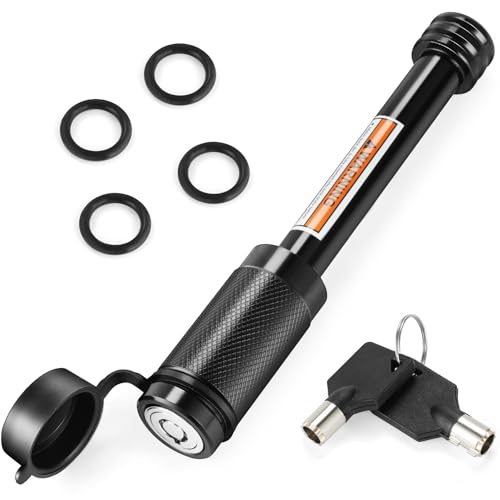 |
JUSTTOP Trailer Hitch Receiver Pin Lock,5/8" Dia 3-1/2"JUSTTOP | Our pick | 5/8" dia · 3-1/2" long · 4 O-rings | $8.99
Price as of 19 Oct 2026
|
View |
 |
Rhino USA 2in Trailer Hitch Pin – Patented Locking ReceiverRhino USA | Also great | 2in x 2in · Solid steel · Weatherproof | $25.90
Price as of 19 Oct 2026
|
View |
The main trade-off is simple: easier daily use usually means less lock body mass and quicker install, while higher security usually means a larger pin, a tighter head, and more resistance to drilling or prying. Climate changes the answer too, because corrosion can beat an otherwise strong lock.
Do not compare these to a coupler lock as if they are the same product. A hitch pin lock secures the receiver connection at the tow vehicle. A coupler lock secures the trailer tongue and coupler at the trailer itself.
How we chose
We compared these locks on four things that decide whether they work for you: receiver fit, attack resistance, corrosion protection, and install style. Fit comes first. A lock that does not match the receiver hole or leaves no clearance around hitch hardware is the wrong buy, no matter how strong the marketing sounds.
We also looked at likely attack methods. Most theft attempts are not cinematic. They are usually tools, time, and annoyance: a pry bar, a cutting tool, a drill, or a frozen cylinder that gets forced instead of turned.
Finally, we separated convenience from security. A push-to-lock design can be fast. That does not automatically make it more secure than a key-turn lock.
Master Lock 378AT: best for everyday towing
The Master Lock 378AT is the best everyday towing choice when you want a straightforward 5/8-inch receiver lock with simple daily handling. It uses a 5/8-inch pin, chrome-plated steel, and a one-push install, and it is presented as a universal fit lock for daily towing.
That one-push format matters when you are coupling and uncoupling often. It cuts the hassle, and the weather cap helps keep debris out of the keyway. For regular towing in moderate weather, that is the sort of practical detail that keeps a lock in service instead of left in a glove box.
The tradeoff is that universal fit language should not be read as permission to skip measurement. A 5/8-inch pin still has to match the receiver hole and leave enough clearance around hitch hardware or extenders. If the receiver hardware is sloppy or the hole is smaller, this is not the right lock.
Chrome plating helps with routine weather exposure, but it is not the same as stainless steel. If your trailer lives near road salt, winter slush, or a coastal dock, move to a more corrosion-focused option.
AMPLOCK U-BR250: best for high-risk parking
The AMPLOCK U-BR250 is the stronger security choice here because it uses a 3/4-inch pin, case-hardened steel, and a 7-pin drill-resistant core. It is built for maximum security, which makes sense for trailers parked in unsecured lots, on the street, or in places where a thief has time to work.
The larger pin matters because it gives you more material to defeat than a smaller straight pin. The 7-pin core also raises the bar against simple picking and drilling attempts, especially when paired with a body shape that does not leave much to grab with tools.
Fit is more limited than with a 5/8-inch option. The U-BR250 is aimed at 2.5-inch span receivers, so you need to verify receiver width and hole clearance before buying. A stronger lock that does not fit cleanly is still the wrong lock.
This is not the casual daily-use pick for every trailer owner. It is a better match when theft risk is the main concern and you can accept a heavier, more security-focused lock body.
Reese Towpower 7015600: best for salt and winter
The Reese Towpower 7015600 is the weather-first choice because it uses stainless steel and is positioned for saltwater and winter towing. For trailers that live in road salt, wet storage, or coastal air, corrosion resistance matters as much as brute strength because seized hardware becomes a failure point fast.
Stainless steel is the key detail here. It gives you better corrosion resistance than chrome plating alone, especially where salt spray, slush, and standing moisture are routine. That does not make it maintenance-free, but it does make it the best fit for harsh exposure among these three types.
The likely drawback is security depth. A corrosion-first lock is not automatically the hardest lock to attack. If your trailer is parked in a high-theft area, weather resistance should be paired with a higher-security strategy, not treated as a substitute for it.
Frozen weather can still affect any lock. A cap or protected cylinder helps, but you should still check the keyway regularly and keep the receiver clean so road grit does not turn a cold morning into a stuck lock.
Hitch lock matrix
This decision matrix separates trailer value and risk from the lock type you actually need. It also lists the exact specs to verify before buying, including pin diameter, receiver class, material, weather exposure, and install style.
| Trailer value or risk level | Recommended lock type | Specs to verify before buying |
|---|---|---|
| Daily utility towing | 5/8-inch straight-pin receiver lock with quick install | Pin diameter: 5/8-inch; receiver class: Class III or Class IV with a 2-inch receiver; material: chrome-plated steel or similar; weather exposure: light to moderate rain; install style: one-push or push-to-lock |
| Saltwater or winter storage | Stainless-steel receiver lock | Pin diameter: 5/8-inch unless the receiver calls for more; receiver class: the exact class stamped on the hitch; material: stainless steel; weather exposure: road salt, slush, coastal air; install style: protected keyway or capped cylinder |
| High-value unsecured parking | Heavier security lock with drill-resistant core | Pin diameter: 3/4-inch where the receiver accepts it; receiver class: confirm clear fit on the tow vehicle and any extender; material: case-hardened steel; weather exposure: outdoor lots or overnight storage; install style: keyed lock with tamper-resistant core |
Say your utility trailer gets hooked up every weekday and parked in a home driveway at night. A 5/8-inch lock with a simple install is usually the sensible call, because speed matters and the theft exposure is lower than on a street-parked equipment trailer.
Suppose a boat trailer sits near salt spray for days at a time. Stainless steel becomes the first filter, because a lock that corrodes can fail long before its pin is ever cut or drilled.
Do you need a 5/8-inch or 3/4-inch hitch lock pin?
You need the pin diameter that matches the receiver hole and the hitch hardware clearance, not the biggest pin you can find. A 5/8-inch pin is commonly used on many Class III and Class IV setups, while a 3/4-inch pin is used when the receiver and lock are built for that larger size. Fit first, then security.
Start by checking the receiver class stamped on the hitch and measuring the hole if the documentation is unclear. Also check any aftermarket hitch extender, anti-rattle device, or rack adapter, because added hardware can change pin length and side clearance. A lock can look right and still bind against the wrong accessory.
The right pin size also depends on how often the lock will be removed. If you swap trailers often, a 5/8-inch option is often more practical. If parking risk is high and the receiver accepts it cleanly, the 3/4-inch AMPLOCK-style approach adds more resistance.
Which one should you buy?
Choose the Master Lock 378AT if you tow often, want a fast daily install, and need a 5/8-inch lock for routine receiver use. It is the best fit for straightforward towing where convenience matters and the trailer is not left in a high-theft spot for long periods.
Choose the AMPLOCK U-BR250 if theft risk is the main concern. Its 3/4-inch pin and 7-pin drill-resistant core make more sense for unsecured parking, especially where a thief may bring tools and time.
Choose the Reese Towpower 7015600 if corrosion is the main concern. Stainless steel is the better call for saltwater, winter road salt, and wet storage.
A spare lock can make sense if you own more than one trailer or switch between a daily-use utility trailer and a higher-value trailer. A budget backup such as the Trimax UMAX50 is positioned for towing on a tighter budget, and the CZC Auto Locking Hitch Pin is aimed at quick installs, but both still need the same fit checks before you trust them. That means pin diameter, receiver class, and clearance first.
Do not buy by brand name alone. Buy by risk. A low-value utility trailer in a private yard does not need the same lock as a high-value trailer parked in a public lot overnight.
Frequently asked questions
What is the best car trailer hitch lock for everyday towing?
The best everyday towing choice is usually a 5/8-inch receiver lock with a simple install, and the Master Lock 378AT fits that role well. It balances convenience, weather protection from its cap, and a chrome-plated steel body. You still need to confirm receiver hole size and clearance before buying.
Which trailer hitch lock is hardest to cut or drill?
The AMPLOCK U-BR250 is the toughest of these three against drilling because of its 7-pin drill-resistant core and case-hardened steel construction. It is the better pick when a thief may use tools. No lock is immune to every attack method, so fit and parking location still matter.
What hitch lock works best in saltwater or winter weather?
The Reese Towpower 7015600 is the weather-first choice because it uses stainless steel. That material resists road salt and wet storage better than chrome plating alone. If the trailer lives outdoors through winter or near saltwater, corrosion resistance should outrank convenience.
Are push-to-lock hitch pins better than key-turn locks?
Push-to-lock pins are faster, which helps when you hitch and unhitch often. They are not automatically more secure than key-turn locks. Security comes from the pin diameter, core quality, material, and how well the lock fits the receiver, not from the install motion alone.
What is the difference between a hitch pin lock and a coupler lock?
A hitch pin lock secures the tow vehicle’s receiver connection. A coupler lock secures the trailer tongue by blocking the coupler itself. They protect different parts of the towing setup, and many owners need both if the trailer is stored separately from the tow vehicle.
Which trailer hitch lock fits 1-7/8, 2-inch, and 2-5/16-inch couplers?
That question is about coupler locks, not receiver hitch locks. Coupler locks are sized to the coupler opening, so you need the exact coupler size in 1-7/8, 2-inch, or 2-5/16-inch form. A receiver pin lock will not substitute for that fit.
Products related to this article
Sponsored / affiliate links. As an Amazon Associate I earn from qualifying purchases. I may earn additional commission from eligible campaigns.