Electric Car Efficiency vs. Gas: MPGe & Real Cost Per Mile
Electric motors convert 80–91% of energy into motion, while gasoline engines waste most fuel as heat, converting only 16–36% — making EVs fundamentally more efficient, per EPA data. That gap is why charging typically costs about half as much per mile as gas at today’s prices ($4.10/gallon vs. 17.3 cents/kWh). This guide covers MPGe, why gas engines lose so much energy, real cost-per-mile math, and the well-to-wheel exception that actually matters.
Quick Answer
EVs are more efficient than gas cars: EPA/DOE data shows electric motors convert about 80–91% of energy into motion versus just 16–36% for gasoline engines, which lose most of their energy as heat. Today an EV typically costs roughly 4–6 cents per mile to run versus 14–16 cents per mile for a gas car — but true environmental efficiency also depends on how your local electricity is generated.
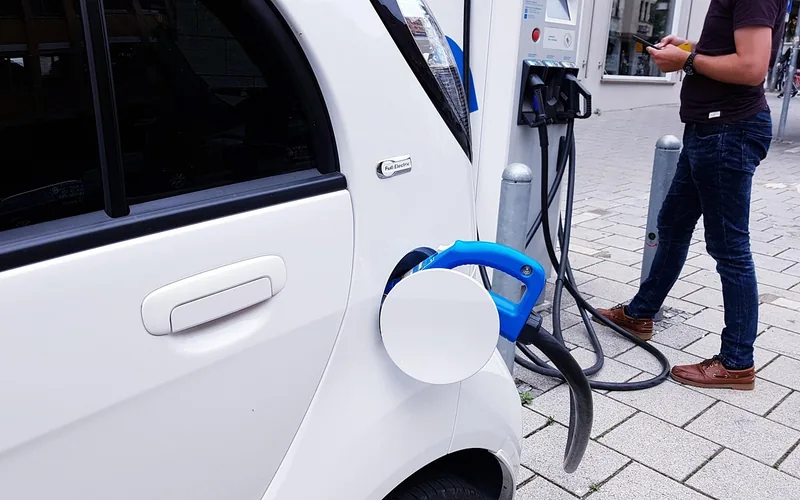
What Is MPGe? How the EPA Compares Electric and Gas Car Efficiency
MPGe (miles per gallon gasoline equivalent) is the EPA’s standard unit for comparing how far an electric vehicle can travel on the same amount of energy contained in one gallon of gasoline. The EPA set that equivalence at 33.7 kWh of electricity = 1 gallon of gasoline in terms of raw energy content, then measures how many miles an EV actually travels on that much electricity, including charging losses.
For example, an EV rated at 100 MPGe travels as far on 33.7 kWh of electricity as a gas car would on one gallon of gas. Because electric drivetrains waste far less energy, most EVs post MPGe numbers that would be impossible for a gasoline engine to match.
| Metric (Model Year 2024, EPA data) | Electric Vehicles | Gas-Powered Vehicles |
|---|---|---|
| Efficiency rating range | 53–140 MPGe | 9–57 MPG (incl. hybrids) |
| Energy converted to motion | ~80–91% | ~16–36% |
| Typical electricity/fuel use | ~24–33 kWh per 100 miles | 25–30 MPG is common |
| Cost per mile (Aug. 2026 U.S. avg.) | ~4–6 cents | ~14–16 cents |
Source: U.S. Department of Energy, FOTW #1373, “Efficiency of EVs for Model Year 2024 Ranges from 53 to 140 MPGe” (Dec. 2024). MPGe conversion of 33.7 kWh per gallon is the EPA/DOE standard used on every window sticker and at fueleconomy.gov.
Cost of Fuel: What an EV Actually Costs Per Mile vs. a Gas Car
Electric cars run on electricity, which is typically cheaper per mile than gasoline — especially when charged at home overnight, when many utilities offer lower off-peak rates. Gas prices swing with the market and are currently elevated: as of August 2, 2026, AAA’s national average for regular gasoline is $4.096 per gallon, while the U.S. average residential electricity rate was 17.30 cents per kWh in 2025 (the most recent full-year EIA figure).
Running the math on today’s prices: a gas car averaging 25–30 MPG costs roughly 14–16 cents per mile to fuel. An EV averaging 3–4 miles per kWh (a typical range for current models) costs roughly 4–6 cents per mile to charge. At today’s gas prices, that puts EV fuel costs at roughly a third of a comparable gas car — an even bigger gap than the “about half” figure often quoted from lower 2023–2024 gas prices.
📊 EPA/DOE data: EVs convert roughly 80–91% of energy into motion versus 16–36% for gasoline engines — the core reason EVs cost less to run per mile even before factoring in electricity being cheaper than gasoline. Source: fueleconomy.gov, “Where the Energy Goes: Electric Cars” (EPA/DOE)
Energy Consumption: Why Electric Motors Beat Gas Engines
Electric cars measure efficiency in miles per kilowatt-hour (kWh). Depending on the model, EVs typically use about 24–33 kWh per 100 miles (roughly 3–4 miles per kWh), with DOE data showing a wider real-world range of 1.49 to 4.17 mi/kWh across all MY2024 EVs. Gas cars measure efficiency in miles per gallon (MPG), with most mainstream models landing near 25–30 MPG.
The reason for the gap is mechanical, not just a marketing number. An electric motor sends power almost directly to the wheels, so very little energy is lost along the way. A gasoline engine has to first burn fuel to create heat, then convert that heat into mechanical motion — a process bound by thermodynamics that wastes 64–75% of the fuel’s energy as heat, friction, and exhaust before it ever reaches the wheels, according to fueleconomy.gov. That’s also why a gas engine keeps burning fuel while idling at a red light; an EV motor draws essentially no power when the car is stopped.
Best Home Energy Monitor Pick
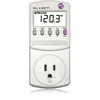
P3 P4400 Kill A Watt Electricity Usage Monitor
Plug it between an outlet and your EV charger (or any appliance) to see exactly how many kWh you actually use — the only way to know your real cost per mile instead of relying on estimates.
- Best for: Verifying real kWh usage of a Level 1/Level 2 home EV charger
- Why we picked it: The industry-standard, most widely used plug-in usage meter, simple and accurate
- Main drawback: Single-outlet only — can’t monitor multiple devices at once
Compare more energy-monitoring options
 Option 1 briidea 4-Outlet Electricity Usage Monitor
|
 Option 2 P3 International P4460 Kill A Watt EZ Monitor
|
 Option 3 Emporia Vue 3 Home Energy Monitor – Smart Home Automation Module and Real Time Electricity Usage Mon
|
As an Amazon Associate we earn from qualifying purchases.
Does an EV’s Real Efficiency Depend on Your Electricity Source? (The Well-to-Wheel Caveat)
The efficiency numbers above measure energy conversion inside the vehicle — not where that energy originally came from. An EV plugged into a grid powered heavily by coal isn’t as clean as one charged on a grid powered mostly by wind, solar, or nuclear. This full accounting, from energy source to wheels, is called well-to-wheel efficiency, and it’s the one honest caveat most efficiency comparisons skip.
The good news: even on today’s still fossil-fuel-heavy U.S. grid mix, government and independent research consistently find EVs come out ahead. The EPA states plainly that “total greenhouse gas emissions associated with manufacturing, charging, and driving an EV are typically lower than the total GHGs associated with a gasoline car,” even after accounting for the extra emissions from battery production. You can check exactly what that looks like where you live — because your local grid mix matters — using the EPA/DOE’s free Beyond Tailpipe Emissions Calculator (available at fueleconomy.gov), which factors in your ZIP code’s specific power sources.
“Total greenhouse gas emissions associated with manufacturing, charging, and driving an EV are typically lower than the total GHGs associated with a gasoline car.”
Maintenance Expenses
Electric cars have far fewer moving parts, which makes them easier and cheaper to maintain. There’s no engine oil to change. Brake wear is also reduced because regenerative braking does much of the slowing down instead of the brake pads. Battery health checks matter but are infrequent, and many manufacturers can push software updates remotely, cutting down on service center visits.
Gas cars need more routine upkeep: oil changes on a schedule, spark plugs and filters that wear out, brake pads that wear faster without regenerative assist, and periodic fluid checks. Overall engine maintenance tends to be costlier and more frequent than EV upkeep, though EV owners should budget for eventual tire replacement more often — EVs are heavier and their instant torque wears tires down faster.
Environmental Impact
Electric cars produce zero tailpipe emissions, while gas cars burn fuel and release CO2 directly from the vehicle. But the full picture is more nuanced than “EVs are clean, gas cars aren’t.” Battery production, including lithium and other mineral mining, carries its own real environmental footprint — it isn’t emissions-free. Gasoline, meanwhile, comes from a non-renewable resource whose extraction and refining also carry significant environmental costs.
When researchers add up the full lifecycle — manufacturing, charging or fueling, and driving — EVs still typically come out with lower total greenhouse gas emissions than comparable gas cars, even on today’s grid. EV batteries are also increasingly recyclable, which helps offset some of that upfront manufacturing impact over the vehicle’s life.
Long-Term Savings (Including What Most Guides Get Wrong About Resale Value)
Fuel and maintenance savings are real and add up over the years an EV is driven regularly. But one common claim — that EVs hold their value better than gas cars — is currently backwards. According to iSeeCars’ 2026 depreciation study of over 950,000 used vehicles, EVs lost an average of 57.2% of their value over 5 years, compared with a 41.8% overall market average and just 35.4% for hybrids — making EVs the fastest-depreciating powertrain category, not the slowest.
Three things drive this: buyers worry about battery-replacement costs on older EVs, EV range and features improve quickly enough to make last year’s model feel dated, and the now-expired federal tax credit (see below) had propped up used-EV values by keeping new-EV prices artificially low. Fuel and maintenance savings can still make an EV cheaper to own overall — just don’t count on it holding its resale value better than a comparable gas car or hybrid.
Government Incentives (2026 Update: The Federal Credit Has Ended)
Many older guides still describe federal EV tax credits as available — that’s now out of date. Under the One Big Beautiful Bill Act signed July 4, 2025, the federal $7,500 new clean vehicle credit and $4,000 used clean vehicle credit both ended for vehicles acquired after September 30, 2025, according to the IRS. Those credits had originally been scheduled to run through 2032 under the 2022 Inflation Reduction Act before being cut short.
What’s left: state, utility, and local incentives still vary widely and many remain active — things like state rebates, discounted off-peak electricity rates for EV charging, and HOV lane access. Check your state energy office and utility provider directly, since federal-level savings on a new EV purchase are no longer part of the equation.
Future of Transportation
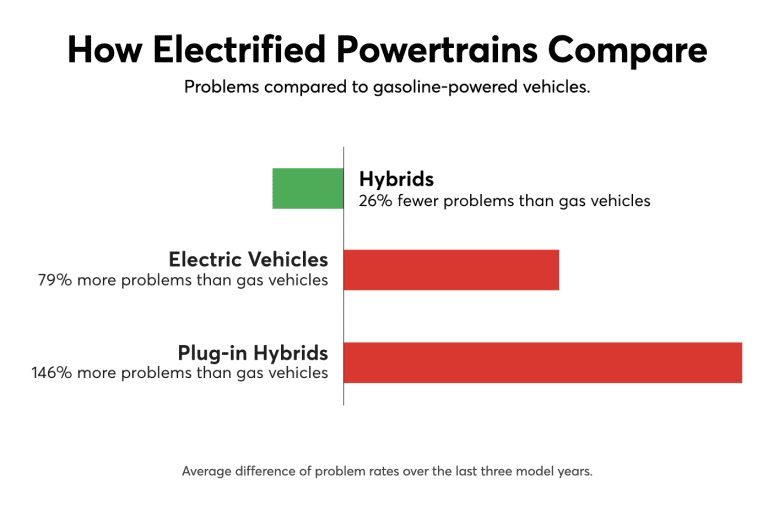
EV efficiency keeps improving as battery chemistry and motor design advance, and charging infrastructure has expanded significantly, making longer trips more practical than a few years ago. Electric motors already have fewer moving parts than gas engines and tend to break down less often, which supports long-term reliability even as the technology matures.
More automakers are expanding their electric lineups, giving buyers far more model choices than in the past. With the federal purchase credit gone, the case for an EV now rests more directly on its actual running-cost and efficiency advantage rather than a subsidized sticker price — which is exactly why understanding the real numbers, not assumptions, matters more in 2026 than it did a few years ago.
Frequently Asked Questions
What Is MPGe and How Is It Calculated?
MPGe (miles per gallon gasoline equivalent) is the EPA’s standard for comparing electric vehicle efficiency to gasoline vehicles. The EPA defines 33.7 kWh of electricity as energy-equivalent to one gallon of gasoline, then measures how far an EV travels on that amount of electricity, including charging losses.
What Is the Efficiency of Electric Cars Compared to Gas Cars?
According to EPA and DOE data, electric motors convert roughly 80–91% of energy into movement, while gasoline engines convert only about 16–36% of the energy in fuel into movement — the rest is lost mostly as heat. This makes electric cars substantially more energy-efficient.
How Do Electric Cars Save Energy?
Electric cars use regenerative braking to recover energy that would otherwise be lost as heat in the brakes. That recovered energy is stored back in the battery and reused, which is a major reason EV efficiency rises further in stop-and-go city driving.
How Much Does It Cost Per Mile to Drive an Electric Car vs. a Gas Car?
At current U.S. averages ($4.096/gallon gas per AAA, 17.30 cents/kWh electricity per EIA), a typical EV costs roughly 4–6 cents per mile to charge, while a typical gas car costs roughly 14–16 cents per mile to fuel — putting EV fuel costs at about a third of a comparable gas car at today’s prices.
Are Electric Cars Cheaper to Run Than Gas Cars?
Yes, on fuel and maintenance costs. Electricity generally costs less per mile than gasoline, and EVs require less routine maintenance since they have fewer moving parts. Resale value is the exception — EVs have recently depreciated faster than gas cars and hybrids, which can offset some of those running-cost savings.
Does an Electric Car’s True Efficiency Depend on How the Electricity Is Made?
Yes — this is called well-to-wheel efficiency. An EV charged on a coal-heavy grid has a larger environmental footprint than one charged on a renewable-heavy grid. Even so, EPA research finds EVs typically produce lower total lifecycle greenhouse gas emissions than gas cars on nearly every U.S. grid mix, including today’s.
Do Electric Cars Emit Less Pollution?
Yes, electric cars produce zero tailpipe emissions, which significantly reduces local air pollution. When you factor in how the electricity is generated (well-to-wheel), EVs still typically produce fewer total greenhouse gas emissions than gasoline cars, even accounting for battery manufacturing.
Conclusion
Electric cars are meaningfully more energy-efficient than gas cars — EPA and DOE data put the gap at roughly 80–91% versus 16–36% energy converted into motion, which is why EVs typically cost a third to half as much to drive per mile at today’s prices. That advantage holds up even on today’s electricity grid, though it’s not the whole story: the federal purchase credit has ended, and EVs currently depreciate faster than gas cars. Weigh the real running-cost savings against those two factors, not just the efficiency numbers alone.
For more on how EV technology compares to gas vehicles, see our guides on whether Tesla makes any gas-powered cars, how electric car batteries are actually made, and when gas cars may eventually be phased out.
Products related to this article
Sponsored / affiliate links. As an Amazon Associate I earn from qualifying purchases. I may earn additional commission from eligible campaigns.
 RVS Technology G6 Engine oil Treatment; For Gasoline Engines with a Motor oil capacity up to 6 quarts; Save fuel, Boost Power and Safely Restore and protect your Car, Truck, and all other engines
 4G GPS Tracker Car Anti-Theft Long Battery Life 20000mAh Real Time GPS Tracking Device Magnet No Geographic Restriction Car Tracker with Alerts, Geo Fence, History Playback TK905C