Does Tesla Make Gas Cars? No — Here’s Their Full EV Lineup
Tesla does not make gas cars — every vehicle in the lineup (Model 3, Model Y, Model S, and Cybertruck) is a fully battery-electric vehicle with no internal combustion engine, no fuel tank, and no hybrid option, and Tesla has no plans to build one. Putting gas in a Tesla would damage the vehicle and void the warranty.
Do Teslas Use Gas?
No — Teslas do not use gas. Every Tesla is a battery-electric vehicle (BEV) powered entirely by a lithium-ion battery pack and electric motors. There is no fuel tank, no combustion engine, and no exhaust pipe on any Tesla model. To “refuel,” you plug the vehicle into a Tesla Supercharger or a standard Level 2 home charger.
The 2026 Tesla lineup covers a wide range of use cases: the Model 3 offers up to 363 miles of range, the Model Y up to 357 miles, the Model S up to 410 miles, and the Cybertruck up to 340 miles — all on a single charge with zero gasoline involved. If you’re wondering how often electric cars need to be charged, it depends on your daily mileage, but most owners charge overnight at home.
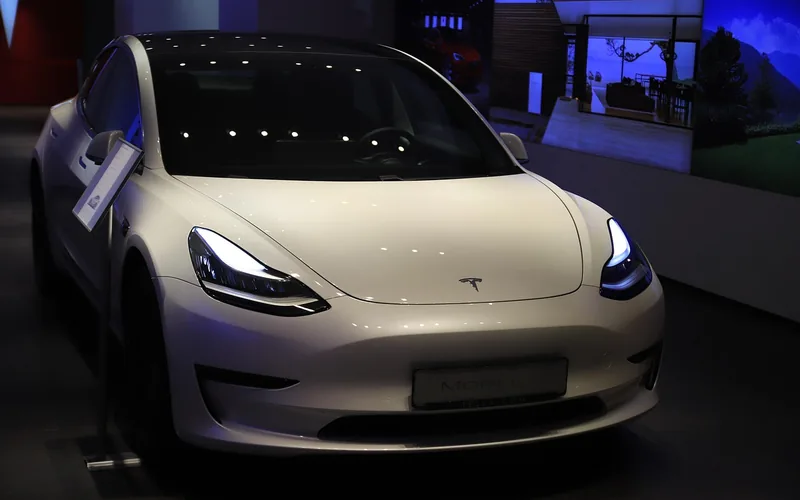
Tesla’s Core Philosophy
Tesla was founded in 2003 with a single mission: accelerate the world’s transition to sustainable energy. That means no gasoline vehicles — ever. Every product decision the company makes, from the affordable Model 3 to the stainless-steel Cybertruck, is built around eliminating the internal combustion engine.
Tesla’s commitment to all-electric vehicles extends beyond cars. The company also manufactures the Tesla Semi (a Class 8 electric truck), the Powerwall (home battery storage), and solar energy products — all designed to reduce dependence on fossil fuels.
The Evolution Of Tesla Models
Tesla started with the Roadster in 2008 — the first highway-legal all-electric production sports car. It proved that electric vehicles could be fast, capable, and desirable. Every model that followed built on that foundation.
The Model S (launched 2012) brought luxury-sedan range and performance to the mass market, now achieving up to 410 miles per charge. The Model X added falcon-wing doors and SUV practicality. The Model 3 (2017) became one of the best-selling cars in the world — electric or otherwise — by hitting an accessible price point without sacrificing range. The Model Y compact SUV extended that formula to family buyers, and the Cybertruck (2023) brought the all-electric formula to the pickup segment with up to 340 miles of range and 11,000 lb towing capacity.
| Model | Type | Range (2026) | Gas Engine? |
|---|---|---|---|
| Model 3 | Sedan (BEV) | Up to 363 mi | No |
| Model Y | Compact SUV (BEV) | Up to 357 mi | No |
| Model S | Luxury Sedan (BEV) | Up to 410 mi | No |
| Model X | Full-size SUV (BEV) | Up to 335 mi | No |
| Cybertruck | Pickup Truck (BEV) | Up to 340 mi | No |
Common Misconceptions About Tesla
Many people believe that Tesla makes gas cars. This is not true — Tesla has never produced a gasoline or diesel vehicle. Others assume Tesla will eventually introduce hybrid models as the technology matures. Tesla has explicitly ruled this out. The company’s entire architecture, from its battery management systems to its over-the-air software updates, is built for pure electric operation — there is no engineering path toward adding a combustion engine.
Does Tesla Have a Hybrid Car?
No. Tesla does not make a hybrid car and has never offered one. A hybrid vehicle combines a gasoline engine with an electric motor — Tesla’s entire philosophy rejects the internal combustion engine entirely. Every Tesla is a pure battery-electric vehicle (BEV). Tesla has no announced plans to produce a hybrid or plug-in hybrid (PHEV). The company was founded in 2003 specifically to replace combustion-based vehicles, not supplement them.
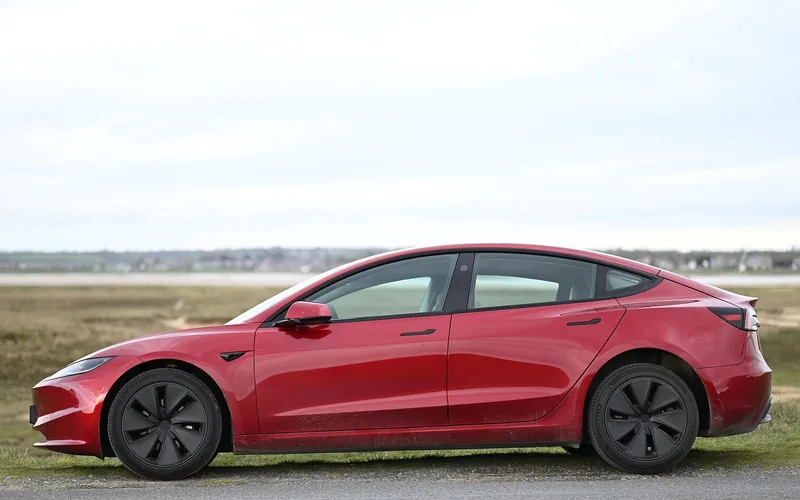
What Happens If You Put Gas in a Tesla?
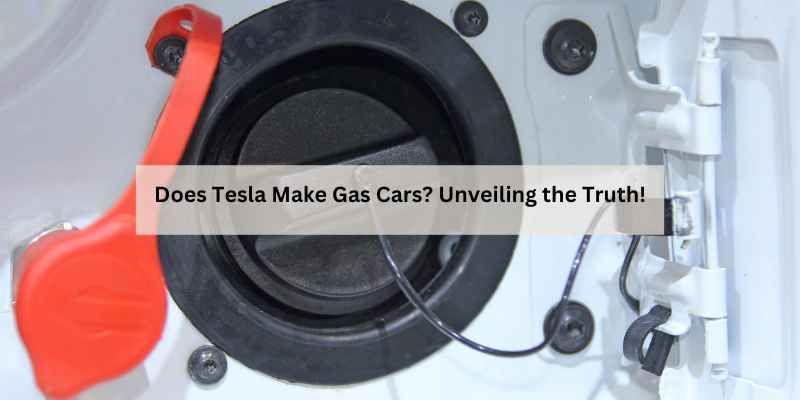
Nothing good. Tesla vehicles have no fuel tank or gas inlet — there is physically nowhere to insert a gas pump nozzle. If someone introduced gasoline into a Tesla’s charge port or cabin, the consequences would be serious: gasoline exposure can corrode electrical wiring, battery components, and relays, potentially causing short circuits or fire. Damage from this type of misuse is not covered under Tesla’s warranty, and repair bills can run into thousands of dollars.
If you ever accidentally introduce gasoline near a Tesla: stop immediately, do not start or attempt to charge the vehicle, and contact Tesla support or roadside assistance right away.
Tesla’s Energy Solutions Beyond Cars
Tesla’s ambitions extend well beyond vehicles. The Tesla Powerwall is a home battery system that stores solar energy for use when the sun isn’t shining, reducing reliance on the power grid. Tesla’s solar roof tiles integrate photovoltaic panels directly into standard roofing materials. Together, these products form an ecosystem where a Tesla owner can generate electricity at home, store it, and drive on it — completely eliminating gas from the equation.
The Tesla Supercharger network now has over 50,000 charging stalls globally, making long-distance travel in a Tesla practical. Non-Tesla EVs can also use many Supercharger stations. For more detail on cross-brand charging, see whether non-Tesla cars can use Superchargers.
Comparing Tesla With Traditional Automakers
Tesla is the only major automaker with a 100% electric lineup. Traditional manufacturers — Ford, GM, Toyota, Volkswagen — still sell the majority of their vehicles with gasoline or diesel engines, even as they expand their EV offerings. This distinction matters: when you buy a Tesla, there is no gas variant, no hybrid trim level, and no combustion option. Every Tesla from the factory is electric.
The practical advantages for owners include lower per-mile energy costs (electricity vs. gasoline), fewer moving parts requiring maintenance (no oil changes, no timing belts, no exhaust systems), and zero tailpipe emissions. As more states and countries move toward gas car bans in the coming decades, Tesla’s all-electric lineup already meets those future standards.
The Truth About Tesla And Gas Cars
Tesla does not make gas cars — and never has. The company’s position is not just a product decision but a foundational principle. Every vehicle, every factory, and every technology investment Tesla has made since 2003 has been oriented toward battery-electric transportation. Gas-powered or hybrid vehicles are not part of Tesla’s product roadmap at any point in the foreseeable future.
Impact Of Tesla On The Automotive Market
Tesla’s all-electric commitment has reshaped the entire auto industry. When Tesla launched the Model S in 2012, most major automakers dismissed EVs as niche products with limited range. By 2026, virtually every major manufacturer has launched or committed to a significant electric vehicle lineup — in large part because Tesla demonstrated that consumers would choose electric over gas given compelling range, performance, and technology.
According to the International Energy Agency, global EV sales exceeded 17 million units in 2024 — up from fewer than 1 million in 2015. Tesla has been the top-selling EV brand for most of that period, consistently accounting for around 20% of global battery-electric vehicle sales.
Frequently Asked Questions
Does Tesla Produce Any Gas-powered Vehicles?
No. Tesla does not produce gas-powered vehicles. The company focuses exclusively on electric vehicles (EVs). Tesla’s mission is to accelerate the world’s transition to sustainable energy. They offer a range of electric models, including sedans, SUVs, and trucks, all powered by electric batteries.
Are Tesla Cars Fully Electric?
Yes, all Tesla cars are fully electric. They use high-capacity lithium-ion battery packs that power electric motors for propulsion. There is no gasoline engine, no fuel tank, and no exhaust system on any Tesla model. Tesla vehicles produce zero tailpipe emissions.
What Types Of Cars Does Tesla Make?
Tesla’s current 2026 lineup includes the Model 3 (sedan), Model Y (compact SUV), Model S (luxury sedan), Model X (full-size SUV), and Cybertruck (pickup truck). The Tesla Semi is a Class 8 electric truck available for commercial use. Every model is fully electric — no gas or hybrid variants exist.
How Does Tesla’s Electric Technology Work?
Tesla’s electric technology relies on high-capacity lithium-ion battery packs mounted in the vehicle’s floor. These batteries power one or more electric motors that drive the wheels. Regenerative braking captures kinetic energy when slowing down and converts it back into electricity, extending range. The system is managed by Tesla’s proprietary battery management software and can be updated over-the-air.
Does Tesla plan to make a gas car in the future?
No. Tesla’s stated mission is to accelerate the world’s transition to sustainable energy, which fundamentally excludes gasoline vehicles. Tesla’s leadership has repeatedly ruled out hybrid or gas-powered models. The company’s entire product roadmap — including the upcoming Tesla Roadster and Tesla Semi — remains 100% electric.
Conclusion
Tesla does not manufacture gas cars — not now, not ever by design. Every Tesla sold since the original Roadster in 2008 has been a fully electric vehicle. With a 2026 lineup spanning sedans, SUVs, and trucks with ranges up to 410 miles per charge, Tesla has made the all-electric choice practical for nearly every driver. If you’re considering an EV, Tesla’s lineup is the benchmark — and gas is simply not part of the equation.
Products related to this article
Sponsored / affiliate links. As an Amazon Associate I earn from qualifying purchases. I may earn additional commission from eligible campaigns.