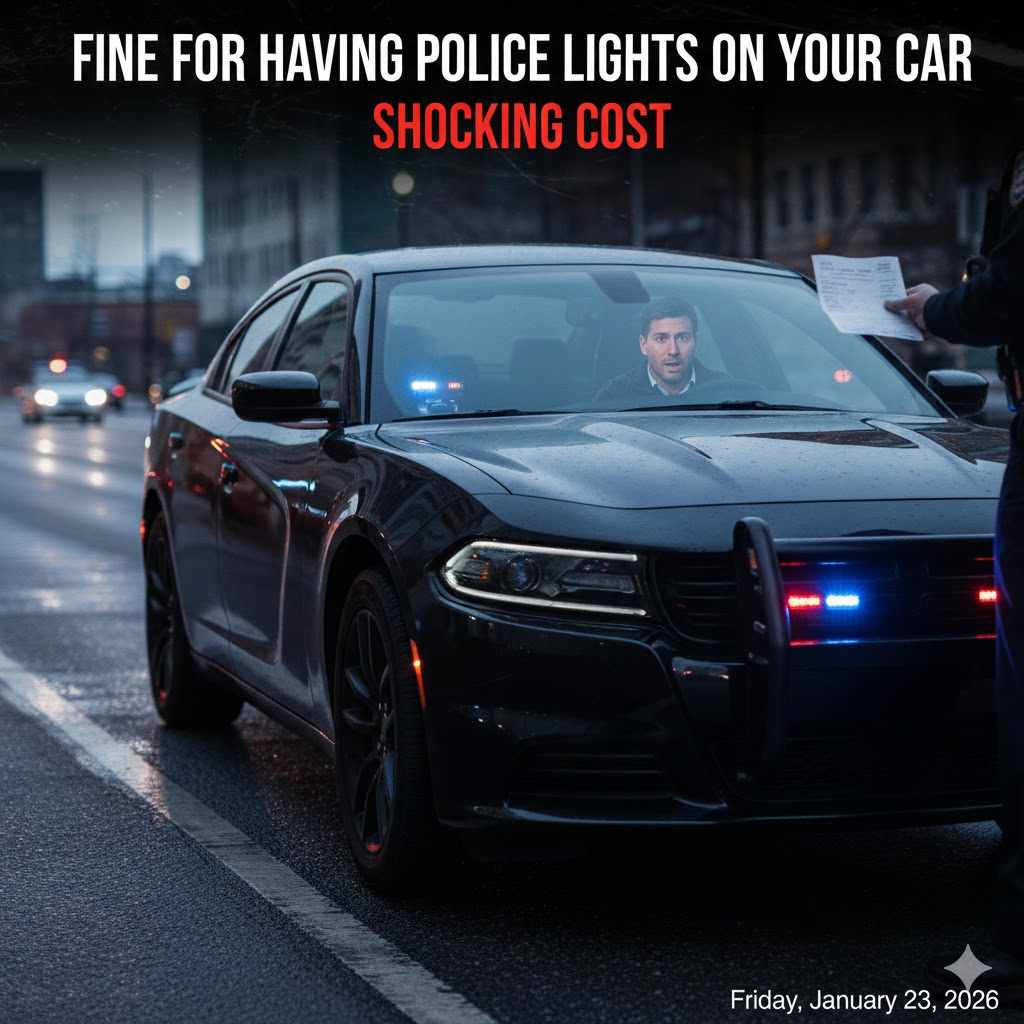
Fine For Having Police Lights On Your Car: Shocking Cost
The fine for having police lights on your car can range from a few hundred to several thousand dollars. More importantly, it often leads to serious criminal charges like a misdemeanor or even a felony for impersonating an officer, potential jail time, vehicle impoundment, and a permanent criminal record that impacts your future.
Hello, I’m Md Meraj, your friendly guide to all things automotive. Today, we’re tackling a topic that might seem cool or harmless at first glance but can land you in a world of trouble: putting police-style lights on your personal car. You might have seen them for sale online and thought they’d look neat, or maybe you’re just curious. Whatever the reason, I’m here to steer you in the right direction and save you from a massive headache.
It’s easy to get confused about what’s allowed and what’s not. The rules can feel complicated, and the consequences are often much more severe than people realize. Don’t worry, though. We’re going to break it all down together, step-by-step. By the end of this guide, you’ll understand exactly why this is a bad idea and what the true costs are—and they go far beyond just a simple ticket. Let’s get started and keep you and your car on the right side of the law.
What Exactly Counts as “Police Lights”?
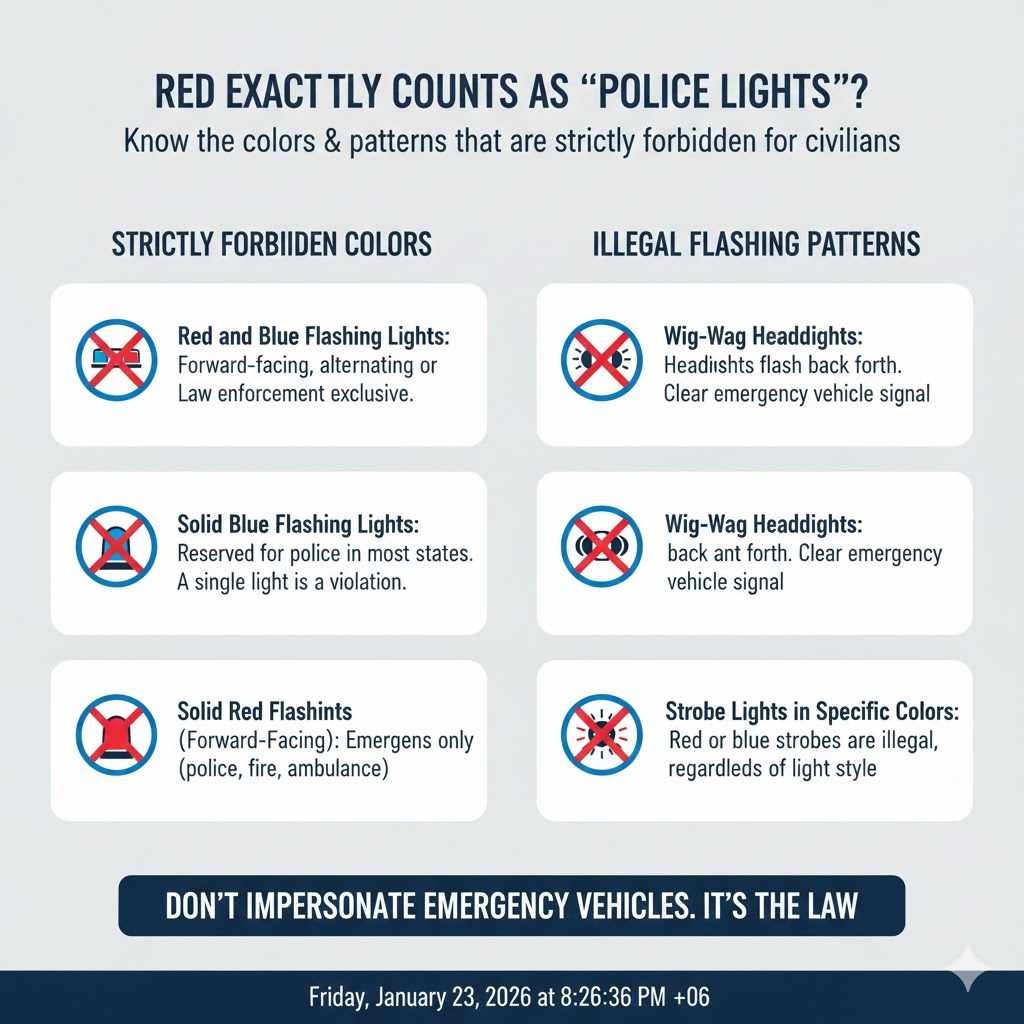
When we talk about “police lights,” we’re not just talking about the big light bar on the roof of a patrol car. The law is very specific about certain colors and flashing patterns because they are reserved for emergency and official vehicles. Getting this wrong is the first step toward a hefty fine. Generally, the lights that will get you into trouble are:
- Red and Blue Flashing Lights: This is the most recognized combination for law enforcement. Any forward-facing red and blue lights, whether flashing together or alternating, are strictly forbidden for civilian use in every state.
- Solid Blue Flashing Lights: In most places, blue lights are exclusively for police vehicles. Even a single flashing blue light is a major violation.
- Solid Red Flashing Lights (Forward-Facing): Flashing red lights are reserved for emergency vehicles like police cars, fire trucks, and ambulances. Having these on the front of your car is illegal for civilians.
- Wig-Wag Headlights: This is when your headlights flash back and forth. This pattern is a clear signal of an emergency vehicle and is illegal for you to install or use.
- Strobe Lights in Specific Colors: While some colors like amber or white might be permissible for certain vehicles (like tow trucks or construction vehicles), using red or blue strobes will be treated the same as a traditional light bar.
The key takeaway is that any lighting combination that makes your car look like a police or emergency vehicle is against the law. It’s not about the style of the light itself, but the color and function it performs.
Why Are These Lights So Strictly Illegal for Civilians?
You might be thinking, “What’s the big deal? I’m not going to pull anyone over.” The reasoning behind these laws is all about public safety and trust. When drivers see red and blue flashing lights, they are trained to react in a specific way: pull over and yield the right-of-way. This is crucial for allowing first responders to get to emergencies quickly and safely.
If regular cars start using these lights, it creates massive confusion and danger on the road.
- It Causes Confusion and Panic: Other drivers won’t know if it’s a real emergency or not. This can lead to unpredictable driving behavior, hesitation, or even accidents as people try to figure out what to do.
- It Erodes Public Trust: The system relies on people immediately trusting that flashing red and blue lights belong to a legitimate authority figure. If anyone can have them, that trust disappears. People might hesitate to pull over for a real officer, putting everyone at risk.
- It Enables Criminal Activity: The most serious risk is that someone could use these lights to impersonate a police officer. This is a felony in most states. Criminals can use fake police cars to pull people over for robbery, assault, or other terrible crimes. For this reason, the law takes an extremely firm stance on even possessing these lights.
Because the potential for danger is so high, the penalties are designed to be a powerful deterrent. The law doesn’t care about your intent; it cares about the risk you create by having the lights on your car.
The Shocking Cost: Breaking Down the Fines and Penalties
This is where the reality of the situation hits home. The “fine for having police lights on your car” is rarely just a simple ticket. It’s often the start of a cascade of legal and financial problems. The exact penalties vary significantly from state to state, but they are never minor.
Let’s look at some examples to see how drastically different the consequences can be. Remember, these are just estimates, and the final penalty depends on the specific circumstances, the judge, and whether you actually used the lights to try and pull someone over.
State-by-State Penalty Examples
The table below shows potential penalties in a few different states to illustrate the range. This is not legal advice, but a general guide to the seriousness of the offense.
| State | Potential Fine | Criminal Charge | Potential Jail Time | Other Penalties |
|---|---|---|---|---|
| California | Up to $1,000 | Misdemeanor | Up to 6 months in county jail | Vehicle impoundment, license points |
| Texas | $200 – $10,000+ | Misdemeanor or State Jail Felony (if used to impersonate) | Up to 1 year in jail (misdemeanor) or 2 years in state jail (felony) | Driver’s license suspension |
| Florida | $500 – $5,000 | Misdemeanor (for having lights) to 3rd Degree Felony (for impersonation) | Up to 60 days (misdemeanor) or up to 5 years in prison (felony) | Probation, community service |
| New York | Up to $1,000 | Traffic Infraction to Misdemeanor | Up to 1 year in jail | Vehicle confiscation, significant license points |
As you can see, this is far more than a parking ticket. In Texas, for example, the Texas Transportation Code is very clear about lighting equipment violations. If you use the lights to make someone think you are an officer, you quickly move from a traffic violation to a felony charge.
It’s Not Just a Fine: Other Punishments
The dollar amount on the ticket is often the smallest part of your problem. Here are the other consequences you’ll likely face:
- Criminal Charges: In most cases, this isn’t just a traffic ticket. You’ll be charged with a misdemeanor. If you actually used the lights to influence another driver, it will almost certainly be a felony charge for impersonating a law enforcement officer.
- Jail or Prison Time: As the table shows, even a misdemeanor can come with jail time. A felony conviction can mean years in prison.
- Vehicle Impoundment: The police will not let you drive away. Your car will be towed and impounded at your expense. Getting it back will involve hundreds of dollars in towing and storage fees, on top of your fines.
- Driver’s License Suspension: A conviction will often lead to the suspension or revocation of your driver’s license, making it impossible to get to work or school legally.
- Probation: You may be placed on probation for a year or more, which involves regular check-ins with a probation officer, fees, and strict rules you must follow to stay out of jail.
Beyond the Law: The Hidden Consequences You Haven’t Considered
Even after you’ve paid the fines and dealt with the courts, the fallout from this decision can follow you for years. These “hidden” costs can be even more damaging than the initial legal penalties.
A Permanent Criminal Record
A misdemeanor or felony conviction doesn’t go away. It becomes a permanent part of your background check, which can seriously impact your life in several ways:
- Employment: Many employers will not hire someone with a criminal record, especially for a charge related to impersonation or dishonesty.
- Housing: Landlords often run background checks. A criminal record can make it very difficult to rent an apartment.
- Education: Some colleges and student loan programs may deny applications based on a criminal record.
- Professional Licenses: If you’re in or planning to enter a field that requires a state license (like nursing, real estate, or teaching), a conviction could prevent you from getting or keeping it.
Sky-High Car Insurance Premiums
Your insurance company will see a conviction for illegal vehicle modification or reckless driving as a massive red flag. They view you as a high-risk driver. You can expect your insurance premiums to skyrocket, potentially costing you thousands of extra dollars over several years. In some cases, your insurer may drop your coverage altogether, making it very difficult and expensive to find new insurance.
The Risk of Civil Lawsuits
What if you flash your illegal lights and cause another driver to panic and crash? Even if you didn’t hit them, you could be held responsible for the accident. The victims could file a civil lawsuit against you for damages, medical bills, and pain and suffering. This could lead to a judgment against you worth tens or even hundreds of thousands of dollars—an amount far beyond any court fine.
“But I Bought It Online!” – The Legal Trap of Aftermarket Lights
This is a common point of confusion. You can go online right now and find hundreds of listings for red and blue flashing lights, grille strobes, and dash lights. It’s easy to assume that if they’re for sale, they must be legal. This is a dangerous mistake.
The sale of these items is largely unregulated. They are sold with the understanding that they will be used for legal purposes, such as:
- On private property for security vehicles.
- By authorized emergency personnel for their personal vehicles (with proper permits).
- For off-road vehicles that are never driven on public streets.
- For use in parades or car shows (with specific event permits).
The seller has no responsibility to ensure you use them legally. Once you install them on a car that you drive on a public road, you are the one breaking the law. The phrase “for off-road use only” is a common warning on these products, and it’s one you should take very seriously.
How to Safely Remove Illegal Lights from a Used Car
Perhaps you bought a used car, like a retired police cruiser, and it still has some of the emergency lighting equipment. You must remove it immediately. It is your responsibility as the new owner. Here is a safe, step-by-step guide to get it done.
Safety First: Before you begin, park your car on a flat, level surface and make sure the engine is off. Always wear safety glasses.
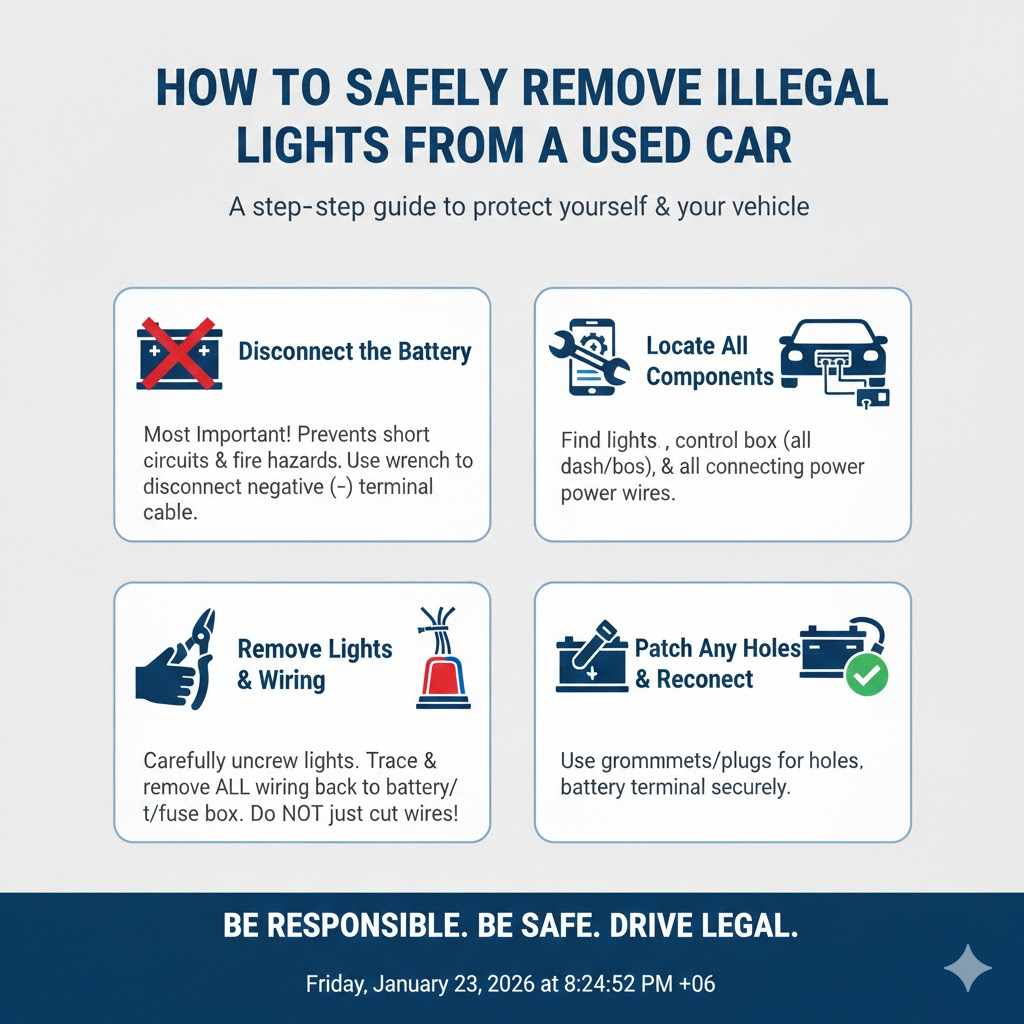
- Disconnect the Battery: This is the most important step. You’ll be working with electrical wiring, and you must prevent any chance of a short circuit, which could damage your car’s electrical system or cause a fire. Use a wrench to loosen the nut on the negative (-) terminal of your battery and slide the cable off.
- Locate All the Components: The system isn’t just the lights themselves. You need to find the control box (often under the dash or seat), the power wires running from the battery, and the wiring that connects everything.
- Carefully Remove the Lights: Unscrew or unbolt the lights from wherever they are mounted (grille, dashboard, rear window, etc.). Be gentle to avoid scratching your car’s paint or damaging the trim.
- Trace and Remove All Wiring: This is the most tedious part. Start from where the lights were and trace the wires back to the control box. Unplug them. Then, trace the main power wire from the control box back to the battery or fuse box. Remove all of it. Do not just cut the wires and leave them hanging. This is a fire hazard and looks unprofessional. Use zip-tie cutters or pliers to snip any fasteners holding the wires in place.
- Patch Any Holes: If the lights were drilled into your car’s body or dashboard, you’ll be left with holes. You can use rubber grommets or plastic plugs to seal them and prevent water from getting in. For a cleaner look, you may need to visit a body shop.
- Reconnect the Battery: Once you are certain all the illegal components and wiring have been removed, you can reconnect the negative battery terminal. Tighten the nut, and you’re done!
Frequently Asked Questions (FAQ)
1. Can I have red or blue lights inside my car if they don’t flash?
Generally, no. Most state laws prohibit any forward-facing blue or red light, whether it’s flashing or solid. This includes underglow, interior decorative lights, or “demon eye” headlight modifications. The goal is to prevent any color combination that could be mistaken for an emergency vehicle.
2. What about white or amber flashing lights? Are they illegal too?
This is more complicated. Amber (yellow) and white flashing lights are often permitted for specific non-emergency vehicles like tow trucks, construction vehicles, and snowplows to warn other drivers of a hazard. However, there are strict rules about who can use them and when. Using them on your personal car without proper authorization is still illegal and can result in a fine.
3. I bought a used police car. Do I really have to remove the lights?
Yes, absolutely. When a police department sells a decommissioned vehicle to the public, it is the new owner’s legal responsibility to remove all official equipment, including lights, sirens, and police decals. Driving with them is illegal, even if they are turned off.
4. Is it okay to use police lights for a parade or car show?
This is one of the very few exceptions, but it requires permission. You typically need to get a permit from the event organizers or the local municipality. The lights can only be used during the event itself and must be covered or disabled when driving to and from the location on public roads.
5. What light colors are actually legal for me to add to my car?
This varies by state, but generally, you should stick to standard colors. Headlights must be white, and taillights must be red. Turn signals and hazard lights are amber. Any other color, especially on the front or back of the vehicle, is likely restricted. Always check your state’s specific vehicle code. For a good overview of federal standards that influence state laws, you can look at resources from the U.S. General Services Administration.
6. So who can legally have red and blue lights?
These lights are strictly reserved for sworn law enforcement officers and other designated emergency response vehicles, such as fire trucks and ambulances, while they are performing their official duties. There are no exceptions for civilians, security guards (in most cases), or volunteer personnel without specific state-issued permits.
7. What should I do if I see a car that looks like an unmarked police car trying to pull me over?
This is a serious safety concern. If you feel unsure, slow down, turn on your hazard lights to acknowledge them, and call 911. Tell the dispatcher your location and that you are being pulled over by a car you believe is unmarked. They can verify if it is a legitimate officer. You can also drive slowly to a well-lit, populated area like a gas station or police station before stopping.
Conclusion: Drive Smart, Drive Safe
The allure of making your car stand out is understandable, but equipping it with police-style lights is a modification that crosses a serious legal line. It’s not a harmless joke or a cool accessory; it’s a public safety hazard that comes with severe consequences.
The fine for having police lights on your car is just the beginning. You’re facing potential criminal charges, jail time, the loss of your license, a permanent criminal record, and financial costs that can follow you for years. When you weigh the momentary thrill against a lifetime of negative impacts, the choice becomes clear.
Your car is a tool for freedom and fun, but that freedom comes with responsibility. Make smart choices, keep your modifications legal and safe, and focus on enjoying your ride without putting yourself and others at risk. Drive safe, and I’ll see you on the road!