Who Makes Audi Cars? Owner, Factories & Models (2026)
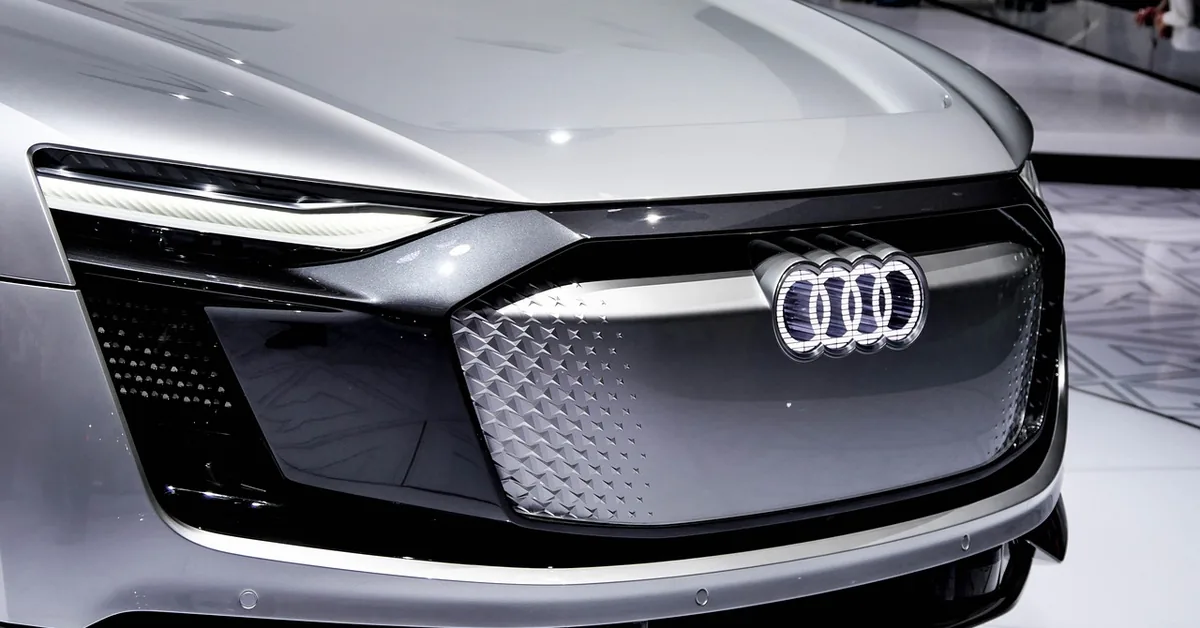
Audi cars are made by AUDI AG, headquartered in Ingolstadt, Germany, and wholly owned by Volkswagen AG since a 2020 squeeze-out of the last minority shareholders. The badge and the factory are not always the same company, though: Audi builds the Q7 and Q8 inside a Volkswagen Group plant in Bratislava. Below: the owner, a dated ownership timeline, every plant Audi names today and what it builds, and how to check where your own car was built.
Who Makes Audi Cars?
Audi vehicles are developed, built and sold by AUDI AG. Per Audi, the company employed more than 88,000 people in 2025 and delivered 1,624,275 Audi-brand cars that year. Audi sits in the Volkswagen Group alongside Bentley, Lamborghini and Ducati: Audi describes those four brands together as operating 21 locations in 12 countries, and says Audi and its partners are present in more than 100 markets.
“Who makes Audi” can mean three different things, and most pages blur them. The brand owner is Volkswagen AG. The manufacturer of record is AUDI AG in Ingolstadt. The plant operator varies: Audi runs its own factories in Ingolstadt, Neckarsulm, Győr and San José Chiapa, but the Bratislava plant belongs to Volkswagen Group, and Audi builds its SUVs there as one of several brands.
Best Audi History Read Pick

|
Audi (Sutton’s Photographic History of Transport) by Paul Harris, $15.71 The ownership timeline below runs from Auto Union to today’s AUDI AG. This book tells the Audi marque story through period photographs.
As an Amazon Associate we earn from qualifying purchases. Price and availability change; check the listing. |
Who Owns Audi? A Dated Ownership Timeline
Audi has changed hands more than once. The dates below come from Audi and Volkswagen Group history pages and Audi press releases.
| Year | Owner or event | What happened |
|---|---|---|
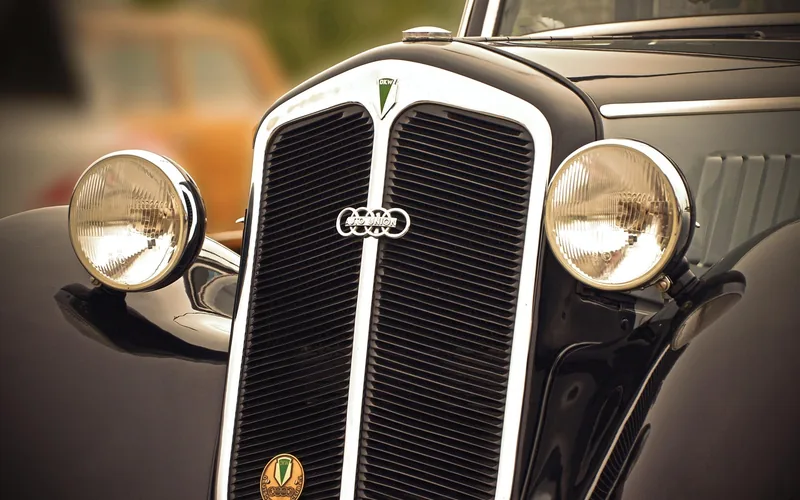
| 1932 | Auto Union AG formed | Audi, DKW, Horch and Wanderer combined; the four rings stand for the four founding companies. |
| 1949 | Auto Union GmbH, Ingolstadt | A successor company was set up in Ingolstadt after the original Auto Union was expropriated and its plants dismantled. |
| 1958-1959 | Daimler-Benz | Daimler-Benz took over 88 per cent in April 1958 and made the company a wholly owned subsidiary the following year. |
| 1965-1966 | Volkswagenwerk AG | Volkswagen took a 50.3 percent stake on January 1, 1965 and owned Auto Union outright from 1966. |
| 1969 | Audi NSU Auto Union AG | Auto Union merged with NSU Motorenwerke. |
| 1985 | AUDI AG | The company renamed itself AUDI AG so company and brand names matched; headquarters returned to Ingolstadt. |
| 2020 | 100 percent Volkswagen AG | Volkswagen already held 99.64 percent. It requested the transfer of the remaining shares on February 28, 2020 and set the cash settlement at €1,551.53 per share on June 16, 2020. The transfer was entered in the commercial register on November 16, 2020. |
Two details trip up older articles. First, Volkswagen’s purchase was staged: the 1965 stake was a majority, not the whole company. Second, the 2020 squeeze-out did not make Volkswagen the owner. It removed the last 0.36 percent of public shareholders from a company Volkswagen already controlled.
For how Volkswagen compares with other multi-brand groups, see who owns the most car companies and what car brands own what. For another premium brand with a parent company behind it, who makes Genesis follows the Hyundai chain the same way.
Where Are Audi Cars Made?
Audi’s own production-sites page names plants in Germany, Hungary, Mexico, Slovakia, Brazil, India and China, plus sister-brand sites in the UK and Italy. The table lists the sites that matter for Audi-badged cars and what Audi’s own pages say each one builds as of October 2026.
| Site | Builds (per Audi) | Worth knowing |
|---|---|---|
| Ingolstadt, Germany | A3, A6 e-tron, Q6 e-tron; Q3 from mid-2026; A2 e-tron planned for 2026 | Headquarters. Around 40,000 people work in Ingolstadt (December 31, 2025). Q2 production ended in April 2026. |
| Neckarsulm, Germany | A5 and A6 families, RS 5 | Audi Sport GmbH is based here. The Boellinger Hoefe facility builds derivatives of the e-tron GT family, and a fully electric sports model is planned there from 2027. |
| Győr, Hungary | Q3 bodies; engines | Audi Hungaria was founded in 1993. By May 2025 it had built more than 45 million engines and two million vehicles. |
| San José Chiapa, Mexico | Q5 SUV and Q5 Sportback | The one-millionth Q5 was built there in May 2023, ten years after production began. |
| Bratislava, Slovakia | Q7 (since 2005), Q8 (since 2018) | A Volkswagen Group plant. It also builds the Touareg, Cayenne, Passat and Superb, and marked 20 years of Audi production in 2025. |
| Zwickau, Germany | Q4 e-tron | Listed on Audi’s production-sites page. |
| Chhatrapati Sambhajinagar (Aurangabad), India | A4 | Audi’s page lists the A4 line here. |
| Changchun and Shanghai (Anting), China | Electric models; E5 Sportback | The Changchun plant is Audi FAW NEV. The E5 Sportback began production at a dedicated facility on the SAIC Volkswagen plant on August 18, 2025. |
| Martorell, Spain | A1 (winding down) | Audi said in April 2026 that A1 production is winding down. |
| Brussels, Belgium | Nothing: closed | Car production ended on February 28, 2025. Audi’s social plan covered about 3,000 employees. |
One number in that table is worth a second look. Győr built more than 45 million engines and two million vehicles over its life, which works out to roughly 22 engines for every vehicle assembled there (our arithmetic from Audi’s two figures). It is mainly an engine plant that also assembles cars, which is why “where is Audi made” and “where are Audi engines made” have different answers.
The Q5 has a similar story in reverse: one million cars in ten years is roughly 100,000 a year from a single Mexican plant that Audi describes as building the Q5 and Q5 Sportback.
Are Audi Cars Made in the USA?
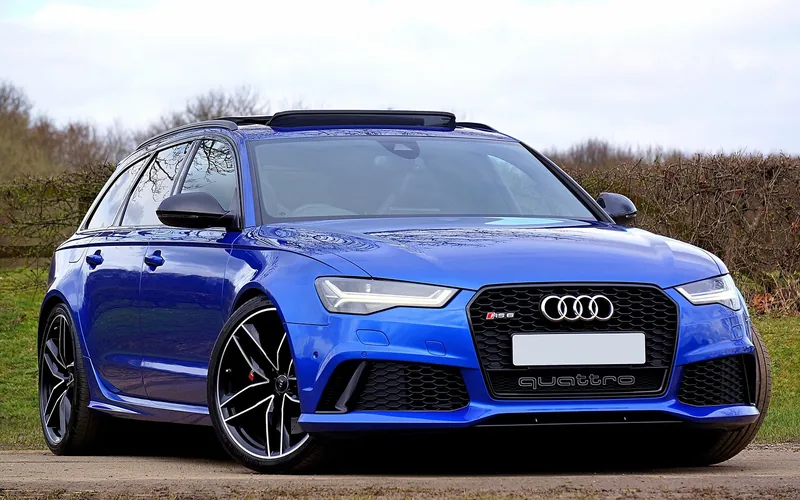
None of the plants named on Audi’s production-sites page is in the United States, so Audi-badged cars sold here are imports. The popular Q5 comes from San José Chiapa, Mexico, and models such as the Q7 and Q8 come from Slovakia. Which plant built a particular car depends on model, year and body style, so check the car rather than assume.
How to Find Where Your Own Audi Was Built
The quickest check is the VIN. NHTSA’s free VIN decoder returns the plant city and country for vehicles it can decode. Do not guess the plant from the first three VIN characters: those identify the manufacturer, not the factory, and several plants can share one prefix.
- Find the 17-character VIN on the driver-side dash corner, the driver door jamb or your registration.
- Enter it into the NHTSA decoder and read the plant city and plant country fields.
- Cross-check the model year against the table above, because plants change models over time (Q2 and Q3 are current examples).
Plant of origin does not change how a recall works. Any recall on your VIN can be looked up through NHTSA’s recall search, whichever country built the car.
What Older Articles Get Wrong About Audi Production
Audi’s production map has moved quickly, so many pages still describe a network that no longer exists. Our own earlier version of this article did too. The corrections below are checked against Audi’s pages.
| Common claim | Current picture |
|---|---|
| Brussels still builds Audi electric SUVs | Brussels car production ended on February 28, 2025 and the plant closed. |
| Audi has exactly seven plants | Audi gives no such count. It describes 21 locations in 12 countries for four brands combined. |
| The Q2 is still built in Ingolstadt | Audi said Q2 production would end in April 2026, after 887,231 deliveries since 2016. |
| The Q3 is a Győr car | Bodies for the new Q3 come from Győr, with painting and assembly in Ingolstadt from mid-2026. |
| Audi became 100 percent Volkswagen in the 1960s | Volkswagen owned Auto Union outright from 1966, but today’s AUDI AG only became 100 percent Volkswagen-owned through the 2020 squeeze-out. |
If you are mainly asking about nationality rather than manufacturing, our Is Audi a German car? guide covers the brand’s origin, and the broader where are cars made guide shows how other brands compare.
FAQ
Who owns Audi?
Volkswagen AG owns 100 percent of AUDI AG. Volkswagen held 99.64 percent before it squeezed out the remaining minority shareholders in 2020, paying €1,551.53 per share, and Audi describes itself as part of the Volkswagen Group.
Are all Audi cars made in Germany?
No. Germany builds the A3, A5, A6 and the Q6 e-tron, but the Q5 comes from Mexico, the Q7 and Q8 from Slovakia, the A4 line is listed in India, and some electric models are built in China.
Does Audi make its own engines?
Audi builds engines at Audi Hungaria in Győr, which had made more than 45 million engines since 1993 as of May 2025. Audi’s own pages do not say that every Audi engine comes from there, so check the specific model.
Are Audis built in the USA?
No plant on Audi’s production-sites page is in the United States. Audis sold in the US are imports, with the Q5 coming from Mexico and the Q7 and Q8 from Slovakia.
Is Audi a German company?
Yes. AUDI AG is headquartered in Ingolstadt, Germany, and its parent Volkswagen AG is also German. Where a specific car is assembled can still be another country.
Products related to this article
Sponsored / affiliate links. As an Amazon Associate I earn from qualifying purchases. I may earn additional commission from eligible campaigns.