What Happens When a Car Runs Out of Oil? (Signs & What to Do)
When a car runs out of oil, the thin film that keeps metal parts from touching is gone, and wear and heat build from the moment the engine keeps running. The manuals quoted here give no safe running time: Mazda’s manual says not to run the engine when oil pressure is low, and Nissan’s says to stop the engine immediately. Below: what happens inside the engine, what the oil light does and does not tell you, the roadside steps in the order the manuals give them, and when adding oil is enough versus when the car needs a tow.
What Happens When Your Car Runs Out of Oil
Bearings, pistons, rings and cylinder walls slide past each other on a thin film of oil. Engine-parts maker MAHLE describes bearing damage from inadequate lubrication as a sequence: very shiny marks first, then the bearing turns blue and black, and in extreme cases the lining melts and the bearing welds to the crankshaft pin.
Best Top-Up Oil Pick (5W-30)
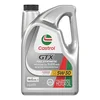 |
Castrol GTX Full Synthetic 5W-30 Motor Oil, 5 Quarts Best for: Keeping a spare jug on hand to top up a leaking or oil-consuming engine, if your owner’s manual specifies SAE 5W-30. Why we picked it: The listing shows API SQ/SP/SN PLUS/SN and ILSAC GF-7 ratings plus GM dexos1 Gen 3 approval, and a 5-quart jug covers several top-ups. Main drawback: Only right for engines whose manual calls for 5W-30. Some engines specify a different grade, such as SAE 0W-20 in the US Mazda3 manual for the 2.5L engine, so check yours first. |
As an Amazon Associate we earn from qualifying purchases. Spec-based pick from the listing, not a hands-on test.
The stages of oil-starvation damage
| Stage | What a teardown shows | Where |
|---|---|---|
| 1 | Very shiny marks on the running surface, the first indication | Crankshaft and rod bearings |
| 2-3 | Bearing turns blue, then black, during continued running with inadequate lubrication | Bearings |
| 4 | Lining layer melts and the bearing welds to the pin (extreme cases) | Bearings and crankshaft pins |
| 5 | Seizure marks on the piston skirt, burn marks on the rings, scoring in the cylinder bore | Pistons, rings, cylinder wall |
MAHLE lists a low oil level among the reasons a cylinder wall can be inadequately lubricated. Most of this damage is invisible from outside, which is why an engine that ran dry needs a real inspection, not just a new dipstick reading.
One damaged bearing or all of them?
If one bearing shows seizure, MAHLE points to a local cause such as a blocked or misaligned oil feed hole. If every bearing shows it, the engine as a whole was short of oil, and the causes it lists are a defective or leaky oil pump, a pressure limiting valve fault, a leak in the oil lines, an insufficient oil level, or an excessive slanting position of the vehicle. Running out of oil is not always an empty sump.
How long can an engine run with no oil?
Many pages quote minutes until seizure. Those figures depend on the engine, load, temperature and how much oil was left, and none of the manuals or engine-maker documents used here give one. What they give is an instruction: Mazda says low oil pressure risks extensive engine damage, and Nissan says running with the warning light on could cause serious damage. There is no safe amount of time. Related: 10 seconds without oil and how long a car will run without oil.
How Symptoms Show Up Before You Run Out
Oil Pressure Warning Light
The light comes on with the ignition and goes out after the engine starts. If it comes on or blinks while running, oil pressure may be low. The detail many drivers miss, from Nissan’s manual: the light is not designed to indicate a low oil level, so check the level with the dipstick. A car can be low before the light appears, and the light can appear with a normal level. MAHLE lists a worn oil pump, dirty filter, defective relief valve or diluted oil as causes of low pressure. See what the oil light means and oil pressure in a car.
Strange Engine Noises
Owner’s manuals describe the warning light, not particular sounds, so treat a new knock or tick together with a warning or low dipstick reading as a stop-and-check signal rather than something to diagnose by ear while driving.
Overheating Engine
MAHLE lists oil alongside coolant, thermostat and fan among the things that keep an engine cooled. If the temperature gauge climbs and the oil is low, stop and shut the engine off. See how hot car oil gets and whether low oil causes overheating.
Low Reading on the Dipstick
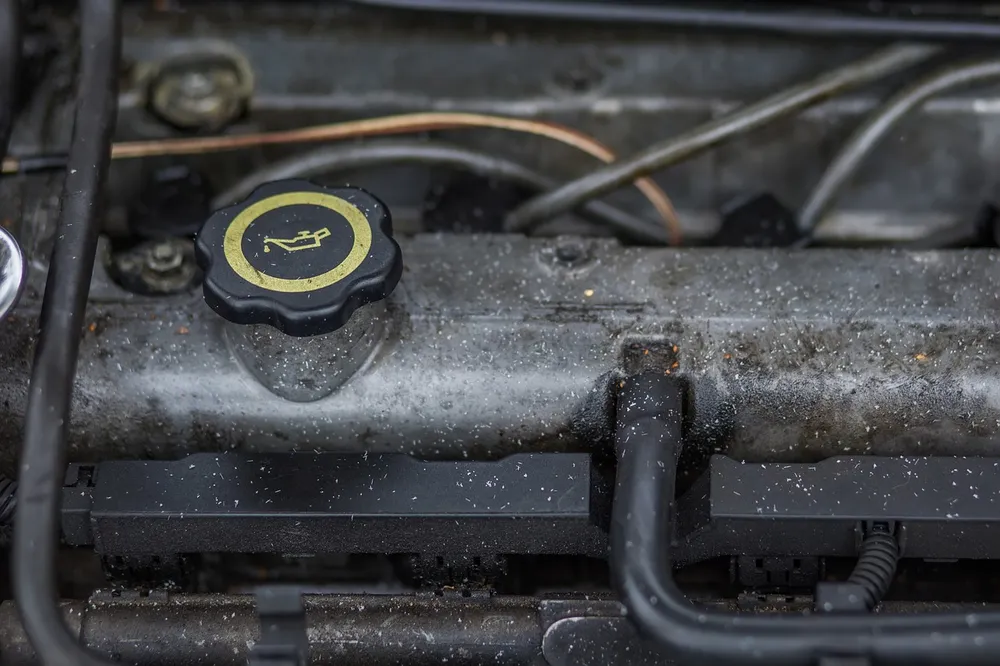
The dependable early warning is the dipstick: near or below MIN in Mazda’s procedure, below L in Kia’s. More signs: how to tell if your car is low on oil.
What to Do If Your Car Runs Low on Oil
These steps follow Mazda’s manual for an oil warning while driving, with Nissan and Kia differences noted. Your own manual takes priority.
- Pull off the road and park off the right-of-way on level ground (Mazda).
- Turn the engine off. Mazda and Nissan both say to stop the engine; Nissan says immediately.
- Wait for the oil to drain back: 5 minutes in Mazda’s manual, 15 minutes in Kia’s check procedure.
- Check the dipstick. Kia warns the radiator hose can be hot enough to burn you, so keep clear of it.
- If low, add the specified oil a little at a time. Do not overfill; Mazda says it may cause engine damage.
- Restart and watch the light (Mazda). If it stays on with a normal level or after adding oil, stop the engine immediately and have the vehicle towed to an expert repairer.
- When in doubt, do not restart. Nissan says to stop the engine and call a dealer or qualified workshop. If a new noise, power loss or rising temperature came with the light, arrange a tow.
| Manual | What it says the warning means | Next step |
|---|---|---|
| Mazda (Mazda3, CX-5) | Low engine oil pressure | Level ground, engine off, wait 5 minutes, check level, add oil if low, restart. Light still on: stop and tow. |
| Nissan (Juke) | Oil pressure may be low; not a level indicator | Stop safely, stop the engine immediately, call a dealer or qualified workshop. |
| Kia (level check) | Routine check, not a warning | Warm engine, wait 15 minutes, read F and L lines, add to F if below L. |
Can You Just Add Oil After It Runs Dry and Keep Driving?
Adding oil restores the supply going forward. It does not reverse bearing, ring or cylinder wall damage, and it does not show whether any occurred. The only test in the manuals is Mazda’s: add oil if low, restart, and see whether the light goes out. If it stays on, stop the engine and tow. If the light stays on with a normal level, that points to a pressure problem such as the pump or relief valve MAHLE lists.
If the engine ran with no oil, or with the light on, for an unknown distance, do not treat a refill as the repair: have a shop inspect it, including an oil pressure check. If you are topping up to reach a mechanic, add only to the MAX or F mark (see how much oil is too much), and tow the car if oil is leaking out as fast as it goes in. More: what happens if your engine runs out of oil, can a car run without oil and how to fix a car that is out of oil.
Why Does a Car Run Out of Oil?
MAHLE separates oil consumption, where the engine uses more than the manufacturer’s recommended level, from oil loss such as a leak. Kia’s manual adds that some consumption while driving is normal, which is why regular checks matter.
Oil Leaks
A leaky oil pump or a leak in the oil lines can starve every bearing, per MAHLE. Oil that vanishes from the dipstick without smoke, or a damp spot under the car, are the clues: is my car leaking oil.
Burning Oil
MAHLE’s causes of high consumption include turbocharger leaks or a clogged turbo oil return pipe, broken or wedged piston rings, and blow-by from worn pistons and bores pushing oil mist into the combustion chamber through the crankcase ventilation. Kia says consumption rises during break-in, settling after about 4,000 miles, and varies with driving habits, climate, traffic and oil quality. See how to know if your car is burning oil and why some cars burn oil fast.
Old Oil and Skipped Changes
MAHLE notes old oil loses load-bearing ability, and irregular change intervals can clog the filter paper so unfiltered oil circulates. Follow your manual’s interval; when to change oil on a new car covers the first changes.
How to Check Your Car’s Oil Level
This combines the Mazda and Kia manual steps for engines with a dipstick. If your car reports oil level on a display, use your manual’s method.
- Park on level ground and warm the engine to normal operating temperature, then turn it off.
- Wait for the oil to return to the pan: at least 5 minutes (Mazda) or 15 minutes (Kia).
- Pull the dipstick, wipe it with a clean cloth (Kia: debris can cause engine damage) and push it fully back in, with the O-ring seated (Mazda).
- Pull it again. The level is normal between MIN and MAX (Mazda) or the L and F lines (Kia).
- If near or below the low mark, add the specified oil up to the full mark through a funnel, without overfilling.
Grade matters: the US Mazda3 manual specifies SAE 0W-20 for its 2.5L engine and SAE 5W-30 for the turbocharged 2.5T, both API ‘Certified For Gasoline Engines’. Use the grade in your own manual. See checking oil hot or cold and how often to check oil.
How to Prevent Running Out of Oil
- Check regularly. Kia says to check and refill within the maintenance schedule; MAHLE calls regular level checks imperative.
- Check more often on a new engine (break-in) and when climate, traffic or driving habits change, per Kia.
- Use only the specified oil and change oil and filter per the manufacturer’s specifications (MAHLE).
- Fix leaks early and keep a top-up quart of the right grade in the car.
What This Guide Does Not Cover
- Repair prices: damage varies widely, so ask a shop for a written estimate.
- Diesel, dipstick-free or hybrid engines: follow your owner’s manual.
FAQs
What’s the first sign my car is low on oil?
A low dipstick reading. The oil light is a pressure warning, and Nissan’s manual says it is not designed to indicate low oil level. If it comes on or blinks while driving, stop safely.
Can I drive if my car is low on oil?
Not until the level is corrected. Mazda says not to run the engine with low oil. Stop, check the dipstick, add the specified oil, and if the light stays on, have the car towed.
How often should I check my car’s oil?
Regularly, within your maintenance schedule, per Kia’s manual, and more often during break-in or when driving conditions change. Your manual sets the interval.
What causes a car to run out of oil?
Leaks, consumption beyond the manufacturer’s figure, old oil, and oil pump or pressure valve faults. MAHLE separates consumption from oil loss.
How much does it cost to fix an engine that ran out of oil?
There is no fixed price. It depends on what an inspection finds, from no damage to worn bearings or scored cylinders. Ask a shop for a written estimate.
Can I just add oil after my car runs out and keep driving?
Adding oil restores supply but does not undo damage. Mazda’s procedure: add oil, restart, check the light; if it stays on, stop and tow. If the engine ran dry, have it inspected.
How long can an engine run with no oil before it’s damaged?
No safe time is given in the manuals used here. Mazda says not to run with low oil pressure and Nissan says to stop the engine immediately.
Products related to this article
Sponsored / affiliate links. As an Amazon Associate I earn from qualifying purchases. I may earn additional commission from eligible campaigns.