Flood Protection for Car: How to Prevent and Handle Water Damage
The single best way to protect a car from flood damage is to move it to higher ground before water rises – no cover, bag, or sandbag setup fully replaces that. When relocating is not possible, a sealed waterproof cover and a ring of sandbags around the tires can keep a few inches of standing water out of the cabin and engine long enough for the water to recede.
What Actually Damages a Car in a Flood
FULLY-ENCLOSED FLOOD COVER
 |
FBXBGH Universal Plastic Car Cover – $119.99 A fully sealed, reusable PE cover you can zip a parked car into before water rises – one of the few flood-specific covers (rather than a rain cover) sold on Amazon.
|
Floodwater does not have to fully submerge a car to total it. Once water reaches the door sills it can soak the carpet, seat foam, and the wiring harnesses that run under the floor, which is where corrosion and electrical faults usually start weeks later. If water gets pulled into a running engine through the air intake, it causes hydrolock: because water does not compress the way air does, a piston can slam into it hard enough to bend a connecting rod or crack the engine block on the very next stroke. That is why the first rule after any flood is simple – do not start the engine until a mechanic has checked it.
Interior mold is the other slow-moving problem. Carpet and seat padding that stay damp for more than a day or two will start growing mold inside the cabin, which is a common reason flood-damaged cars get resold cheaply instead of fully dried out and repaired.
If you drive an electric vehicle, the risk profile is different – EV battery packs are sealed and tested for water exposure, but submersion still calls for a professional inspection before charging or driving again. See our guide to protecting electric cars in floods for the EV-specific steps.
How to Protect a Parked Car Before Floodwater Rises
Once a flood watch or warning is issued for your area, work through these steps in order:
- Move the car to the highest ground you can reach – a parking garage upper level, a hill, or a street that historically does not flood. This is the single most effective step and takes priority over any cover or sandbag.
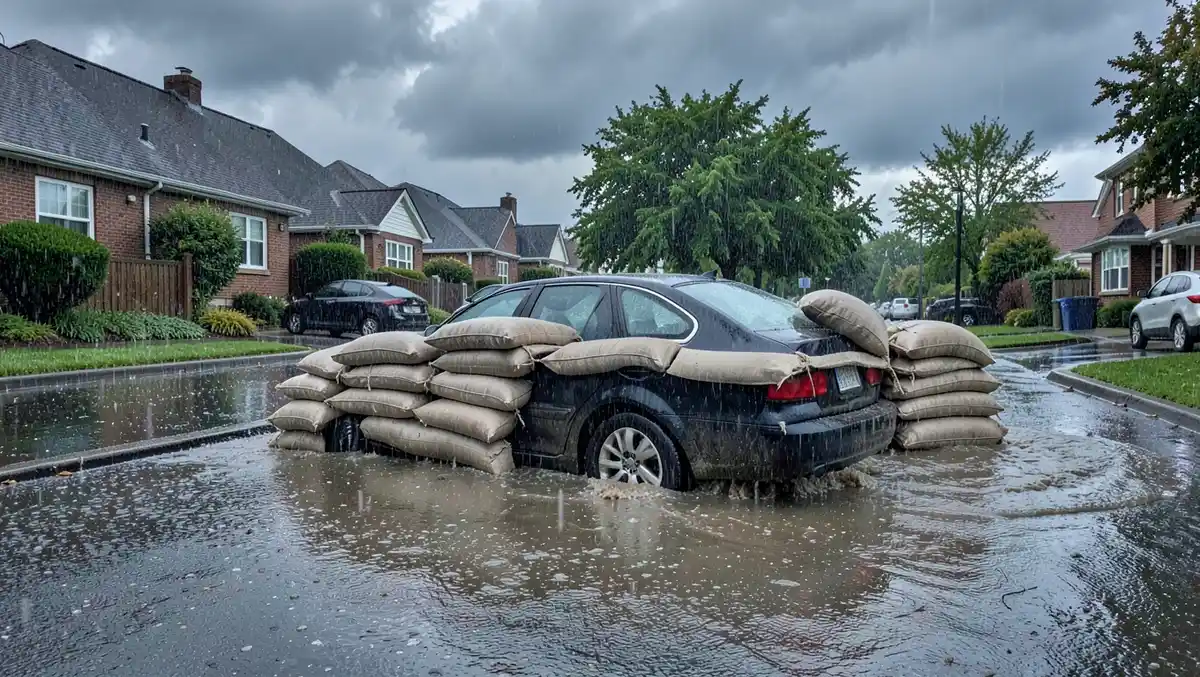
- If the car cannot be moved, stack sandbags around the tires and low points of the body, leaving a gap rather than sealing them tight against the paint, so water is diverted around the car instead of pooling against it.
- Fit a fully sealed, waterproof cover over the car for extra protection against a few inches of standing water reaching the doors.
- Close all windows, the sunroof, and any vents, and disconnect the battery if you are leaving the vehicle unattended in a flood-prone spot for more than a few hours.
- Park nose-out or in a spot that gives you a clear, fast exit if conditions worsen before the water arrives.
Do Waterproof Car Flood Covers Actually Work?
The covers sold specifically for flood protection are different from an ordinary rain or sun cover. Instead of draping loosely over the car, they fully enclose the vehicle and seal at the seams, so the design is closer to a large waterproof bag than a fitted cover. Most are made from PE or PVC sheeting sized to fit most sedans and SUVs, and they are reusable across multiple storms if you rinse off mud and let them dry before folding them away.
What they will not do is protect a car that becomes fully submerged, gets hit by fast-moving water, or is punctured by floating debris. Treat a sealed cover as protection against standing water a few inches deep – the scenario most flood-prone driveways actually see – not as a substitute for moving the car when relocation is possible.
If Your Car Already Flooded: What to Do Next
Do not turn the key or try to start the engine if water reached the floorboards or higher – have the car towed instead. Disconnect the battery to cut power to the wiring while everything dries. Photograph the water line, the interior, and the odometer before you touch anything, since your insurer will want that documentation for a comprehensive claim.
Once the car is out of the water, getting the interior dry quickly matters more than almost anything else – mold and corrosion set in within a day or two of standing moisture. Our guides on drying wet car carpet fast and getting standing water out of a car walk through the extraction and drying steps in detail.
Does Car Insurance Cover Flood Damage?
Only comprehensive coverage pays for flood and water damage; standard liability coverage and most collision-only policies do not. Comprehensive will pay for repairs, or the car’s actual cash value if it is declared a total loss. If a lender required comprehensive coverage as a condition of your loan or lease, you likely already have it. For a full breakdown of what is and is not covered after other kinds of severe weather, see our guide on whether car insurance covers natural disasters.
How to Avoid Buying a Flood-Damaged Used Car
After any major flood, some water-damaged cars get dried out, cleaned up, and resold with the flood history hidden through a practice known as title washing. Before buying a used car, run its VIN through the National Insurance Crime Bureau’s free VINCheck tool and a paid history report such as Carfax, both of which flag vehicles reported as flood or salvage losses by participating insurers.
In person, check for a musty or moldy smell, silt or water lines inside the door panels and under the carpet, fogged-up headlight or taillight housings, rust on screws and bolts that are not normally exposed to weather, and mismatched upholstery that could mean flood-damaged seats were swapped out.
Frequently Asked Questions
Does Car Insurance Cover Flood Damage?
Only comprehensive coverage pays for flood damage to a car; liability-only and most standalone collision policies do not. Comprehensive typically covers repairs or, if the car is a total loss, its actual cash value. If you carry a loan or lease, your lender may already require comprehensive coverage.
Can I Start My Car After It Has Been in a Flood?
No. If water may have reached the engine, do not start it or even turn the key to the on position. Water pulled into the cylinders cannot compress like air, and the piston can bend a connecting rod or crack the block on the next stroke, a failure mechanics call hydrolock. Have the car towed and inspected before anyone tries to start it.
Do Waterproof Car Covers Actually Stop Flood Damage?
A fully enclosed, sealed cover can keep a parked car dry through a few inches of standing water, which is the scenario most flood-prone driveways and streets actually see. It will not protect a car that becomes fully submerged, is hit by fast-moving water, or is punctured by debris, so treat it as one layer of protection, not a substitute for moving the car to higher ground when that is possible.
How High Does Floodwater Have to Be to Damage a Car?
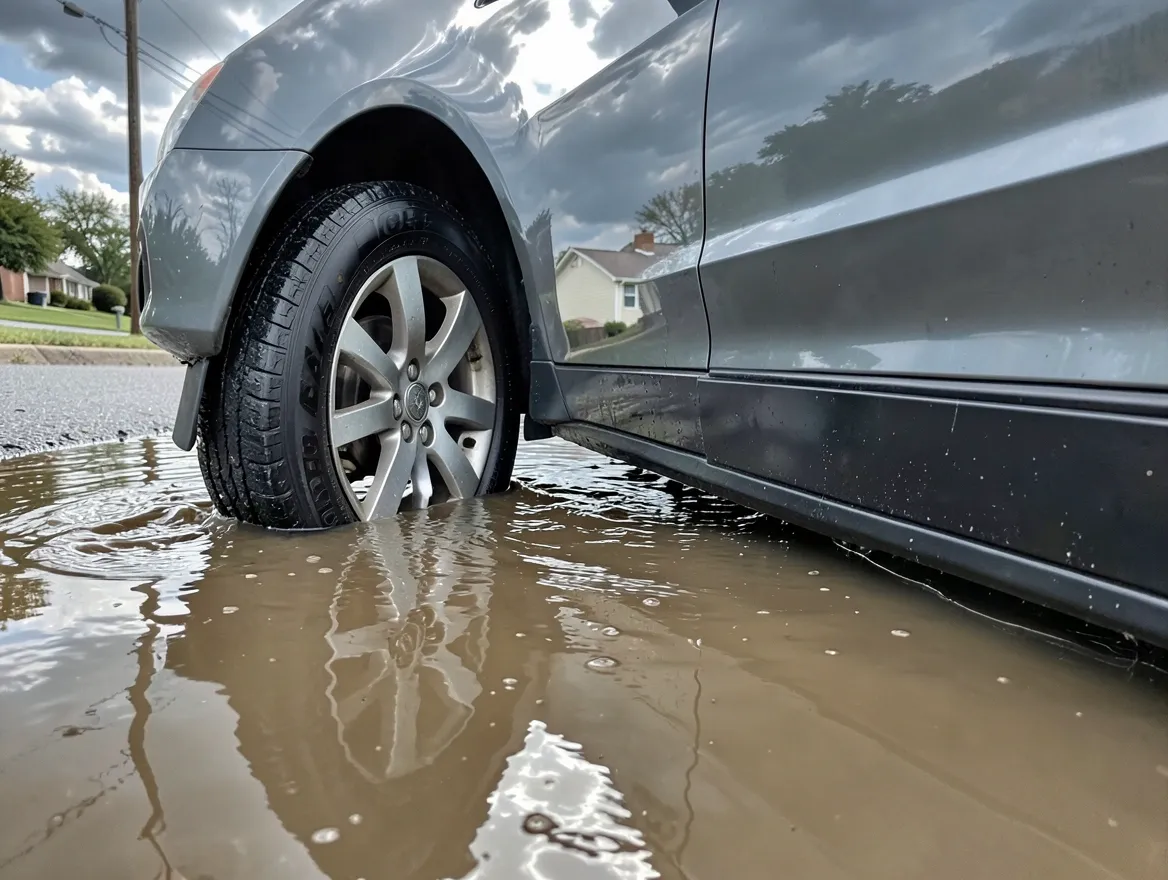
Water at or above the bottom of the doors can start seeping into the cabin and reach carpet, seats, and wiring under the floor. Once water reaches the engine’s air intake, usually somewhere around the middle of the wheel, the engine is at risk of hydrolock if it is running or restarted. Even six inches of moving water can be enough to stall a car or float it off the road.
How Do I Know If a Used Car Has Flood Damage?
Check the free NICB VINCheck tool and a paid vehicle history report such as Carfax for a flood or salvage title before buying. In person, look for a musty smell, water lines or silt inside door panels and under the carpet, foggy headlights, rust on screws that are normally not exposed to weather, and mismatched upholstery that suggests replaced flood-damaged seats.
Should I Leave My Car or Move It During a Flood Warning?
Move it to higher ground as soon as a flood watch or warning is issued for your area; that single step prevents more damage than any cover or sandbag arrangement. If moving the car is not an option, sandbag the low points around it and consider a sealed flood cover, then disconnect the battery if you have to leave the vehicle in a flood zone.
Conclusion
Moving a car to higher ground before a flood remains the most reliable protection there is, but when that is not an option, a ring of sandbags and a fully sealed waterproof cover can keep a few inches of standing water from reaching the cabin and engine. If a flood does reach the car, skip the ignition, get it towed, dry the interior fast, and lean on comprehensive insurance to cover the repair bill.
Products related to this article
Sponsored / affiliate links. As an Amazon Associate I earn from qualifying purchases. I may earn additional commission from eligible campaigns.