Fuel Cell for Derby Car: Rules, Sizes and Installation Guide
A fuel cell for a derby car is not a hydrogen power source — it is a purpose-built, crash-resistant fuel tank that replaces your car’s factory gas tank before it hits the arena.
If you searched this term expecting hydrogen fuel-cell technology, you are not alone — the phrase means something completely different in motorsports. In demolition derby, a “fuel cell” is simply the industry term for a reinforced, impact-rated fuel tank, usually made of aluminum or steel, that gets mounted in a safer spot than a stock gas tank ever could be. It runs on ordinary gasoline, just like the engine always did. Below is what it actually is, why nearly every derby rulebook requires one, how big it can legally be, and how it gets installed and secured.
What Is a Fuel Cell in a Demolition Derby Car?
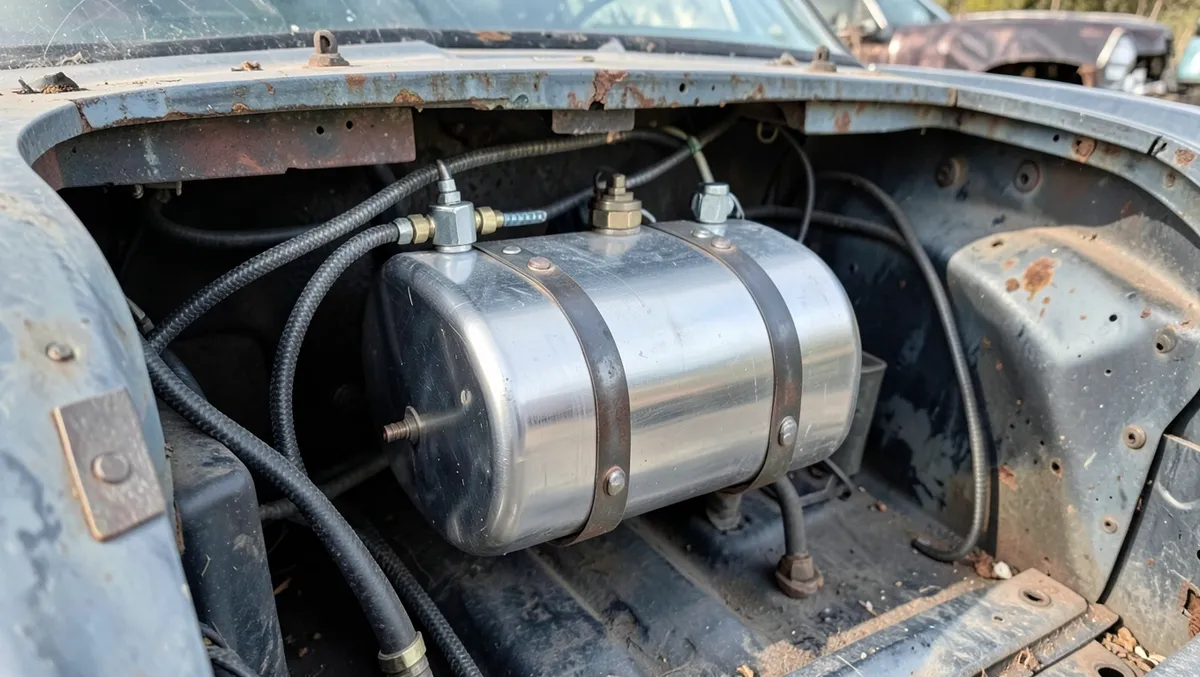
In a demolition derby, a fuel cell is an aftermarket metal fuel tank — almost always aluminum or steel — that replaces the car’s original gas tank. It is a mechanical fuel container, not an electrochemical device. This is a different meaning from the hydrogen fuel cells used in vehicles like the Toyota Mirai, which generate electricity from hydrogen and oxygen. A demolition derby fuel cell still holds plain pump gasoline and feeds it to a normal combustion engine — the only thing that changes is where the fuel lives and how well it is protected from a hit.
Some fuel cells use an internal foam baffling and a bladder-style liner (borrowed from circle-track and drag racing), while the aluminum tanks sold for derby and drift builds are typically a simpler welded metal box with a filler cap, a fuel-level sender, and fittings for the supply and return lines.
5-GALLON PICK (FITS MOST DERBY CAPS)
 |
5 Gallon Fuel Cell Gas Tank – Aluminum, with Level Sender – $76.50 A 5-gallon capacity fits comfortably under the fuel limit written into most demolition derby rulebooks, so it is a safe starting point before you check your own event’s exact cap.
|
Why Derby Cars Cannot Use the Stock Gas Tank
On most cars, the factory gas tank sits at the very back of the vehicle, under or behind the trunk floor — exactly the area that takes the hardest, most repeated hits in a demolition derby. Manufacturers design that tank for a single low-speed rear-end collision, not for being rammed a dozen times an event. A thin stamped-steel factory tank in that location is, as one fuel cell manufacturer puts it, a mobile fire hazard once the crush zone starts folding around it.
That is why almost every demolition derby rulebook requires the stock tank to be removed entirely and replaced with an approved fuel cell relocated to a safer spot inside the car, well away from the impact zones.
Demolition Derby Fuel Cell Rules: Size, Material, and Mounting
Every track, fair, and demolition derby association writes its own rulebook, and specific numbers do vary — always check the rules for your exact event before you build. That said, a few requirements show up in almost every set of derby rules:
- Capacity: Most events cap the fuel cell at 5 to 7 gallons. A handful allow up to a maximum of about 7 gallons, but plenty of tracks set their limit at 5 gallons, so check before you buy a bigger tank than you are allowed to run.
- Material: Aluminum and steel fuel cells or approved marine-style tanks are typically allowed. Loose plastic fuel cells are commonly banned outright — some rulebooks only permit a plastic marine tank when it is fully enclosed inside its own metal box.
- Mounting location: The tank almost always has to move to where the rear seat used to be (or a similarly protected spot away from the trunk crush zone), not stay in the factory location.
- Securing method: Rules generally require the tank to be bolted or chained down with metal hardware. Rubber hold-down straps, nylon ratchet straps, and self-tapping screws are frequently listed as prohibited.
- Fuel lines and shutoff: Hoses typically must be double-clamped and run inside a protective outer conduit so a leak cannot reach the driver’s compartment. A gas shutoff valve at the tank, rated to survive an impact or rollover, is a near-universal requirement.
Because these specifics change from one derby association to the next, treat the list above as a starting checklist, not a substitute for your event’s printed technical rules.
How to Install a Fuel Cell in a Derby Car
Every build is a little different, but the general installation sequence that shows up across derby build guides looks like this:
- Remove the stock tank and lines completely. Drain the factory tank, disconnect the fuel lines, and pull the whole assembly out of the rear crush zone.
- Build or install a mounting tray. Fabricate a metal tray or bracket set where the rear seat used to sit, using isolation padding to cut down on vibration.
- Secure the fuel cell with metal hardware. Bolt or chain it down — not with rubber or nylon straps — so it cannot shift or come loose in a hit.
- Run double-clamped fuel lines inside a protective conduit. Route the supply and return lines away from sharp edges and exhaust heat, and sleeve them so a leak cannot drip into the cabin.
- Install a shutoff valve at the tank. Mount it somewhere the driver (or a corner worker) can reach quickly, and make sure it is rated to stay closed through an impact or rollover.
- Pressure- or leak-test the system before tech inspection. Check every fitting for weeping fuel before the car ever goes near the arena.
Most derby events require a tech inspector to physically check the fuel cell, its mounting, and the shutoff valve before you are allowed to run — build with that final inspection in mind, not just with “good enough to pass a glance.”
Fuel Cell vs. Stock Gas Tank: Key Differences
| Feature | Stock Gas Tank | Derby Fuel Cell |
|---|---|---|
| Material | Thin stamped steel or plastic | Welded aluminum or steel |
| Location | Rear crush zone (factory spot) | Former rear-seat area, away from impact zones |
| Mounting | Factory straps/hangers | Bolted or chained with metal hardware |
| Fuel lines | Single factory line, no conduit | Double-clamped, sleeved in protective conduit |
| Shutoff valve | Not standard | Required by most rulebooks |
| Typical capacity | 12–20+ gallons | Capped around 5–7 gallons by most events |
Frequently Asked Questions
What is a fuel cell in a demolition derby car?
It is a reinforced aluminum or steel fuel tank that replaces the car’s factory gas tank. It still runs on regular gasoline and feeds a normal combustion engine — it is not related to hydrogen fuel cell technology.
Why can’t you use the stock gas tank in a derby car?
The factory tank sits in the rear crush zone, exactly where a derby car takes the most repeated hits. Almost every rulebook requires it to be removed and replaced with a fuel cell mounted somewhere safer, such as the former rear-seat area.
How many gallons can a derby car fuel cell hold?
Most demolition derby associations cap fuel cell capacity around 5 to 7 gallons, though the exact limit varies by event. Always confirm the number in your specific track’s rulebook before buying a tank.
Can you use a plastic fuel tank in a demolition derby?
Usually not on its own. Most rulebooks ban standalone plastic fuel cells and only allow a plastic marine-style tank when it is fully enclosed inside an approved metal container.
Is a shutoff valve required on a derby car fuel cell?
Yes, in nearly every rulebook. A gas shutoff valve mounted at the tank, rated to stay closed through an impact or rollover, is one of the most consistently required fuel-system items across derby associations.
Where does the fuel cell go in a demolition derby car?
It almost always moves from the factory trunk location to where the rear seat used to be, secured with metal straps or chain and kept away from the vehicle’s main impact zones.
Conclusion
A fuel cell for a derby car has nothing to do with hydrogen power — it is a reinforced aluminum or steel gas tank, relocated away from the crush zone and secured with metal hardware, a double-clamped fuel line, and a shutoff valve. Capacity is typically capped around 5 to 7 gallons, but the exact number, materials allowed, and mounting requirements all come down to your specific derby association’s rulebook. Confirm those numbers before you build, and treat the fuel cell installation as a tech-inspection item, not an afterthought.
Products related to this article
Sponsored / affiliate links. As an Amazon Associate I earn from qualifying purchases. I may earn additional commission from eligible campaigns.