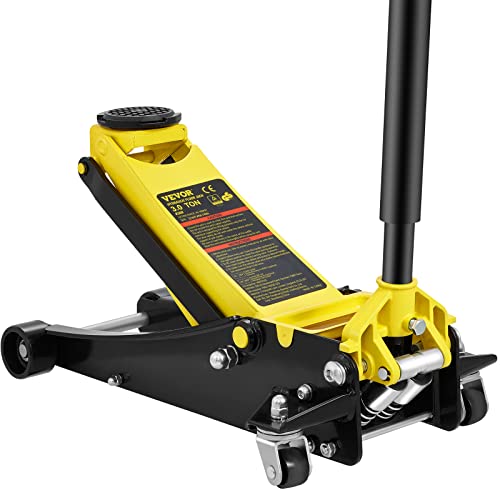
Floor Jack for Low Cars: Low-Profile Jack Buying Guide
A low-profile floor jack is one built with a thinner, flatter frame so it can slide under vehicles with minimal ground clearance — typically 3 inches of clearance or less at the pinch weld, versus the 4-6 inches a standard floor jack needs to fit underneath at all.
That difference matters more than it sounds like it should. Most standard shop floor jacks have a saddle height of 5-6 inches even fully lowered, which simply will not slide under a lowered sedan, a sports coupe, or many stock coupes with aggressive front splitters. Try it anyway and the jack either stops dead against the bumper lip or you scrape the underbody trying to force it in.
This guide covers how to figure out how low a jack you actually need, what separates a real low-profile jack from one that is just marketed that way, the tradeoffs between steel and aluminum builds, and how to lift a low car safely once you have the right tool.
What Counts as a Low-Profile Floor Jack?
The number that actually defines a low-profile jack is its minimum saddle height — how short the jack sits when fully lowered, before you start pumping. A standard 3-ton shop jack typically bottoms out around 5-6 inches. Jacks marketed as “low profile” usually bring that down to 3.5-4.5 inches. Jacks marketed as “ultra-low profile” or “racing” jacks can go as low as 2.5-3 inches.
That 2-3 inch difference is the whole point. It is the difference between a jack that slides cleanly under a front air dam and one that jams against it before you have even lined it up with a pinch weld.
A second, less obvious feature worth checking: the wheel/caster design. Low-profile jacks generally use a wider wheelbase and lower-profile casters so the frame itself stays thin corner-to-corner, not just at the saddle. A jack that only lowers its saddle height but keeps a tall main body will still snag on splitters and lower valances before it ever reaches the jacking point.
Genuinely Low-Profile Pick
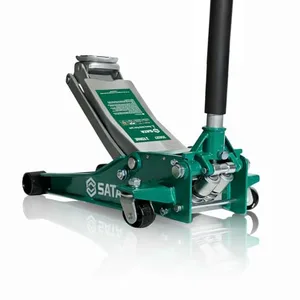 |
SATA 3-Ton Ultra-Low Profile Floor Jack – $159.59 At a 2-11/16″ minimum saddle height, this is the kind of jack the “ultra-low profile” category above is describing — low enough to slide under most lowered sedans and coupes without touching the front lip.
|
How Low Is Too Low? Check Your Car’s Clearance First
Before buying anything, measure the gap you actually have to work with. Park on a flat, hard surface and measure straight down from the ground to the lowest point of the pinch weld or frame rail near the jacking point — not the lowest point of the bumper or splitter, since you will be sliding the jack in from the side, not straight underneath the nose.
- 4+ inches of clearance: A standard “low profile” jack (3.5-4.5″ minimum height) will usually work fine.
- 3-4 inches of clearance: You need a jack specifically rated 3-3.5″ or lower — most generic “low profile” listings will not actually clear this.
- Under 3 inches: You are in ultra-low-profile territory (2.5-3″), the category most lowered cars, air-ride builds, and some exotics fall into.
Listings that just say “low profile” with no number attached are not useful for this decision — always check the specific minimum height figure in the product specs, not the marketing name. If a car has been lowered on coilovers or air suspension beyond stock ride height, measure again after the install; the clearance figure in the owner’s manual will no longer apply.
The jacking point itself does not move just because the car is lower — it is still the reinforced pinch weld or frame rail your manual specifies. For a full walkthrough of where that point actually is on your car, see where to put a jack under a car safely.
Steel vs. Aluminum, and What Weight Capacity You Actually Need
Two more specs decide which low-profile jack fits your situation: the frame material and the rated weight capacity.
Steel frame jacks are heavier (often 55-75 lbs) but generally hold up better under repeated, hard use and cost less for the same rated capacity. Aluminum frame jacks weigh roughly half as much, which matters if you are carrying the jack to track days or moving it in and out of a trunk, but they typically cost 30-60% more for an equivalent 2-3 ton rating.
On capacity: check your car’s actual curb weight (listed on the door jamb sticker or in the manual) and buy a jack rated well above it — not exactly at it. A 2-ton (4,000 lb) jack covers most compact and midsize sedans. A 3-ton (6,000+ lb) jack gives you margin for heavier sedans, crossovers, or if you plan to use the same jack on a second, heavier vehicle later.
| Jack Category | Typical Min. Height | Typical Capacity | Best Suited For |
|---|---|---|---|
| Standard floor jack | 5-6 in. | 2-3 ton | Trucks, SUVs, stock-height sedans |
| Low-profile aluminum jack | 3.5-4.5 in. | 1.5-2 ton | Daily-driven low sedans and coupes |
| Low-profile steel racing jack | 3-3.5 in. | 2-3 ton | Enthusiast cars, mildly lowered vehicles |
| Ultra-low-profile jack | 2.5-3 in. | 2-3 ton | Slammed/lowered cars, low sports cars |
These are typical ranges, not fixed rules — always confirm the exact minimum height and capacity on the specific listing before you buy, since two jacks in the same marketing category can differ by half an inch, which is often the difference between fitting and not fitting.
How to Use a Low-Profile Floor Jack Safely
The lifting process is the same as any floor jack, but a low car leaves less margin for error — you have less room to see what the jack saddle is actually contacting.
- Park on flat, level, hard ground and set the parking brake. Never jack a car on gravel, grass, or an incline.
- Locate the correct jacking point from your owner’s manual — the reinforced pinch weld or frame rail, never the floor pan, exhaust, or plastic underbody trim.
- Roll the jack in from the side rather than the front, since most low front bumpers and splitters will not clear the jack’s body if you try to come in head-on.
- Center the saddle squarely under the jacking point before pumping. An off-center saddle can slip once weight comes on it.
- Pump slowly and watch the surrounding bodywork, splitter, and side skirt clearance the whole way up.
- Once lifted to the height you need, place jack stands rated for your vehicle’s weight under the frame and lower the car onto the stands. Never work, reach, or lie under a vehicle supported only by a jack — hydraulic jacks can fail or release under load.
If you are lifting to change a tire rather than doing extended work underneath, see how to jack up a car to change a tire safely and quickly for the full step-by-step. For longer jobs like an oil change, how to lift a car for an oil change safely at home covers ramps as an alternative to jack stands.
Frequently Asked Questions
What Is a Low-Profile Floor Jack?
It is a floor jack built with a thinner frame and a lower minimum saddle height — usually 2.5-4.5 inches when fully lowered, compared to 5-6 inches on a standard jack — so it can slide under vehicles with limited ground clearance.
How Low of a Jack Do I Need for a Lowered Car?
Measure your car’s actual clearance at the jacking point first. Most lowered cars need a jack rated 3 inches or under at minimum height; heavily lowered or air-ride builds often need one in the 2.5-2.7 inch range.
Can I Use a Regular Floor Jack on a Low Car?
Usually not. A standard jack’s 5-6 inch minimum height will typically hit the bumper or splitter before it ever reaches the jacking point on a low car. You need a jack specifically rated for a lower minimum height.
Is Aluminum or Steel Better for a Low-Profile Jack?
Steel is heavier but generally more durable and less expensive at a given capacity. Aluminum is lighter and easier to transport but costs more for the same rating. Either is safe to use as long as it is rated above your vehicle’s weight.
Do I Still Need Jack Stands With a Low-Profile Jack?
Yes, always. A floor jack of any profile is a lifting tool, not a support tool. Once the car is raised, transfer the weight onto jack stands rated for the vehicle before doing any work underneath it.
Where Do I Position a Low-Profile Jack Under a Low Car?
The jacking points do not change based on ride height — they are the same reinforced pinch welds or frame rails listed in your owner’s manual. The difference with a low car is approach angle: roll the jack in from the side, not head-on. See where to put a jack under a car safely for the full breakdown by vehicle type.
Conclusion
The single number that matters most when shopping for a floor jack for a low car is the minimum saddle height — measure your actual clearance first, then buy a jack rated below it, not just one labeled “low profile.” Pair whatever capacity you buy (rated comfortably above your car’s curb weight) with a set of properly rated jack stands, since no floor jack, however low it sits, is meant to hold a vehicle up on its own while you work underneath it.
Products related to this article
Sponsored / affiliate links. As an Amazon Associate I earn from qualifying purchases. I may earn additional commission from eligible campaigns.