Funny Car Decals for Women That Actually Last
For funny car decals for women that actually last, choose cast or high-quality calendared outdoor vinyl with UV laminate, plus removable adhesive if you lease; avoid paper stickers and indoor vinyl. Cheap decals fade, curl, crack, or leave glue behind after a few washes and hot months. This guide covers durability classes, fit for sedans, SUVs, trucks, and leases, plus the features that help a decal survive sun, road spray, and cleanup.
What makes a decal last outdoors?


Outdoor survival starts with the material, not the joke. A decal that is weatherproof, UV-resistant, water-resistant, adhesive-backed, and rated for exterior use will hold up far better than an indoor sticker, especially on a rear window, hatch, or smooth painted panel that sees sun and wash cycles.
Design matters too, but durability comes first. A funny quote printed on weak stock can peel at the edges long before the message gets old. If you want the decal to last through summer heat, rain, and repeated cleaning, look for exterior-rated vinyl plus a topcoat or laminate. That layer slows sun fade and helps protect the print from fine scratches.
Outdoor vinyl versus cheap sticker stock
Outdoor vinyl is built for exposure. Cheap sticker stock is not. The difference shows up in edge lift, color shift, and cracked film after hot days and cold nights. A quality decal should stay flat and readable after daily parking, not only for a week in a showroom.
One useful clue is the cut. Die-cut vinyl has no background rectangle, so it can sit cleanly on glass or smooth paint with less visual bulk. That clean edge also helps the decal look intentional instead of pasted on.
Funny car decal durability table
Use this table to choose by durability class first, then by style. Lifespan depends on exposure, surface prep, and washing method, but the comparisons below reflect the usual tradeoffs buyers face.
| Option | Material | Adhesive type | Expected outdoor lifespan | Ideal placement | Removal difficulty | Common failure modes |
|---|---|---|---|---|---|---|
| Cast outdoor vinyl with laminate | Exterior-rated vinyl with UV laminate | Permanent adhesive | Longest service life in this group | Rear window, smooth paint, side glass | Hard | Residue, edge lift if surface is dirty, laminate scuffing |
| High-quality calendared outdoor vinyl | Printed vinyl with protective topcoat | Permanent adhesive | Good for regular daily use | Rear window and other flat smooth surfaces | Hard to moderate | Fading, shrinkage, edge curl on curved panels |
| Die-cut single-color vinyl | Solid-color die-cut vinyl | Permanent adhesive | Good outdoors when properly applied | Glass or smooth paint | Moderate to hard | Weed-line lifting, corner peel, residue on removal |
| Printed removable vinyl | Printed outdoor vinyl | Removable adhesive | Shorter than permanent vinyl | Lease cars, short-term seasonal use | Easy to moderate | Edge lift, early fade, water intrusion at corners |
| Static cling | Cling film, no adhesive | None | Short outdoor life | Interior side of glass only | Easy | Falls off, wrinkles, poor hold in heat and humidity |
| Paper sticker | Paper or basic label stock | Light adhesive | Poor outdoors | Indoor craft use only | Easy | Rapid fading, soaking, tearing, glue failure |
| Laminate-free printed vinyl | Printed vinyl without topcoat | Permanent or removable adhesive | Fair to short, depending on sun exposure | Garage-kept cars, low-exposure areas | Moderate | UV fade, scratch marks, ink wear, edge lift |
| Layered die-cut decal | Multiple vinyl layers | Permanent adhesive | Good, but depends on installer skill | Rear window or smooth side panel | Hard | Misalignment, thicker edges, lifting at layer seams |
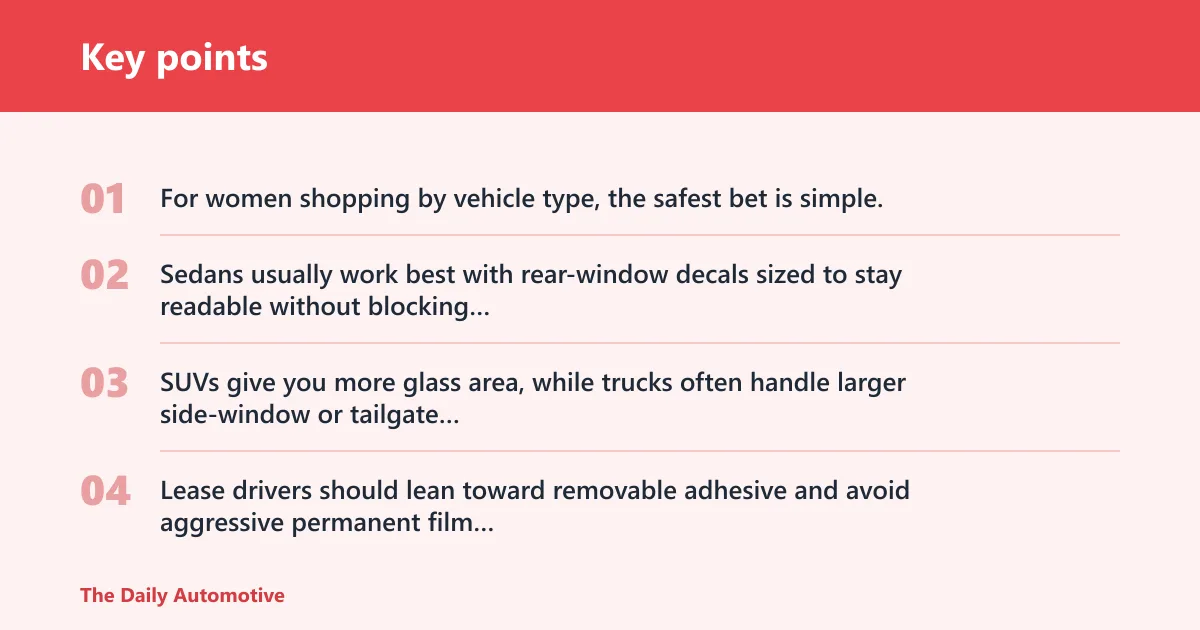
For women shopping by vehicle type, the safest bet is simple. Sedans usually work best with rear-window decals sized to stay readable without blocking the center view. SUVs give you more glass area, while trucks often handle larger side-window or tailgate placements. Lease drivers should lean toward removable adhesive and avoid aggressive permanent film unless the contract allows it.
Are vinyl car decals better than static cling for outside use?
Yes. Exterior vinyl is usually the better choice for outside use because it bonds to the surface and resists wind, rain, and routine washing. Static cling is better described as an interior glass option, not a long-term exterior one. For a decal that has to survive daily driving, vinyl wins almost every time.
Static cling can make sense if you want a temporary seasonal message on the inside of a rear window. It is easier to remove and leaves no adhesive residue. The tradeoff is shorter life, weaker hold in heat, and a much higher chance of shifting or dropping on its own.
Picture a rear-window joke decal on a commuter sedan that sits in sun all afternoon. Static cling may look fine on day one, then start slipping after a few hot days. Exterior vinyl with proper adhesive stays in place and is less likely to flap at the corners or fall off in rain.
How do you choose the right adhesive?
Choose adhesive by how long the decal must stay on the vehicle and how cleanly you want it to come off. Permanent adhesive gives a stronger bond and better long-term hold. Removable adhesive is easier to lift later, but it usually gives up some lifespan to get that convenience.
Permanent adhesive
Permanent adhesive makes sense for a decal you want to keep through seasons and wash cycles. It helps resist edge lift and makes the decal less vulnerable to tunnel washes and repeated soaking. The downside is simple: removal can be harder, and residue is more likely if the film is old, baked by sun, or pulled too quickly.
Removable adhesive
Removable adhesive suits renters, lease cars, and drivers who change styles often. It is lower tack and usually kinder during removal, though it may not hold as long in strong sun or on rougher surfaces. If you want a playful decal for a few months, this is the safer starting point.
A common first-timer mistake is buying the cutest design available and ignoring adhesive class. The decal may look fine for a week, then the corners start to lift after a car wash. That usually points to weak adhesive, poor prep, or both.
Rear window placement rules
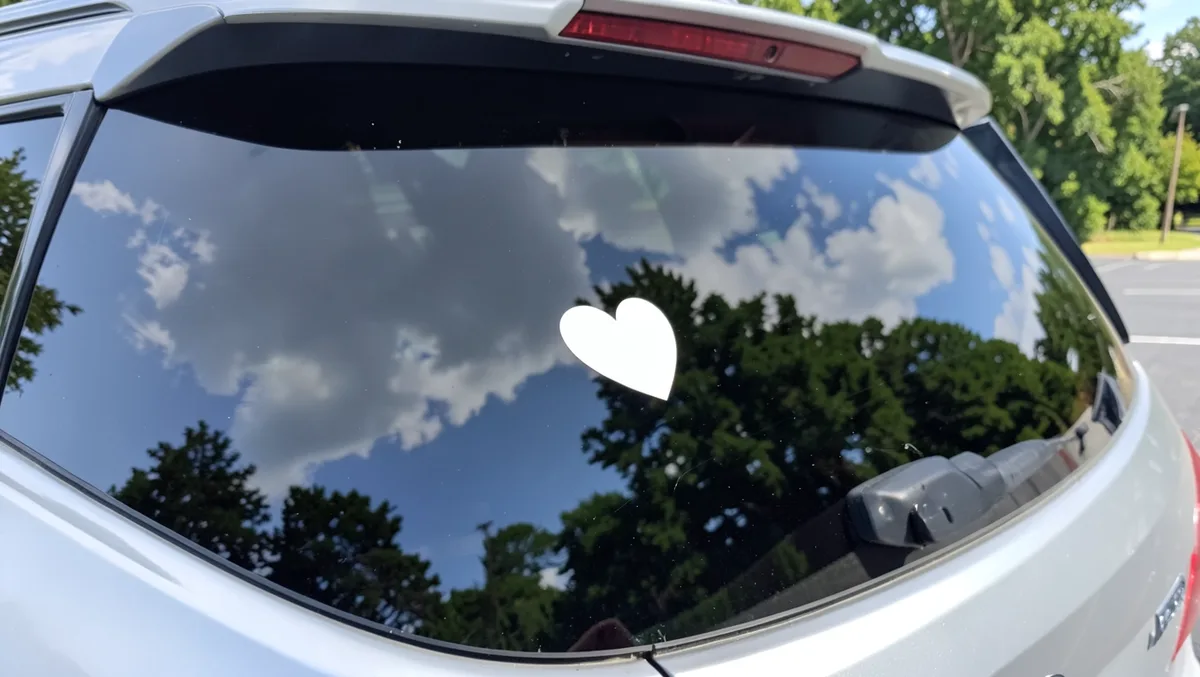
Rear-window placement is popular because it gives the decal visibility without crowding the bodywork. It also works well for die-cut lettering and smaller humor phrases. The key is to keep it readable, place it where the wipers will not strike it, and install it on clean glass.
Visibility and wiper-safe placement
On a rear window, place the decal low enough to stay out of the driver’s main sightline but high enough to avoid interference from the defroster lines and rear wiper sweep. If the vehicle has heavy tint, check whether the decal will still read clearly from outside.
Some rear-window decals are too large for safe visibility. For sedans, a common practical range is about 8 to 14 inches wide. SUVs can often take about 12 to 20 inches. Trucks may handle wider graphics on the rear glass or tailgate, but the exact fit still depends on frame shape, wiper path, and defroster layout.
Size and fit by vehicle type
For a small sedan, a compact line of text or a die-cut phrase usually looks cleaner than a wide block of print. SUVs often have more vertical room, so a taller design can fit without blocking the view. Trucks can take bolder statements, but placement should still avoid the center view through the glass.
Clean the surface with a non-waxy glass cleaner and dry it fully before installation. Dust, road film, and leftover dressing can weaken the bond. That matters more than most buyers expect.
How do you apply a decal without bubbles?
Use transfer tape, clean the surface carefully, and apply the decal slowly from one edge to the other. Transfer tape holds the lettering in position during install, then comes off after the vinyl has bonded. That step reduces misalignment and helps prevent bubbles from getting trapped under the film.
- Wash the placement area and dry it fully.
- Wipe away grease, dust, and wax residue.
- Dry-fit the decal with tape before peeling the backing.
- Use transfer tape to keep lettering aligned.
- Press from the center outward with a squeegee or soft card.
- Remove the transfer tape slowly at a low angle.
- Check edges and press down any spots that have not bonded.
Suppose a 12-inch rear-window decal is centered on the glass but the installer rushes the transfer tape removal. A corner can lift with the tape, then trap air and dust at the edge. Slower removal and firmer smoothing would have lowered that risk.
Common install mistakes
The biggest problems are dirty glass, crooked alignment, and too much handling before the adhesive settles. Cold weather can make the film less pliable, while hot glass can make repositioning harder. If the decal is large, a second set of hands can help keep the tape from folding or sticking early.
Will it damage paint or window tint?
A quality decal should not damage paint or tint when installed and removed correctly, but cheap adhesive, old film, and rough removal can cause problems. Paint risk rises when residue is left behind and scrubbed too aggressively. Tint risk rises when the film is pulled hard or when a sharp tool is used near the glass film.
Paint-safe removal basics
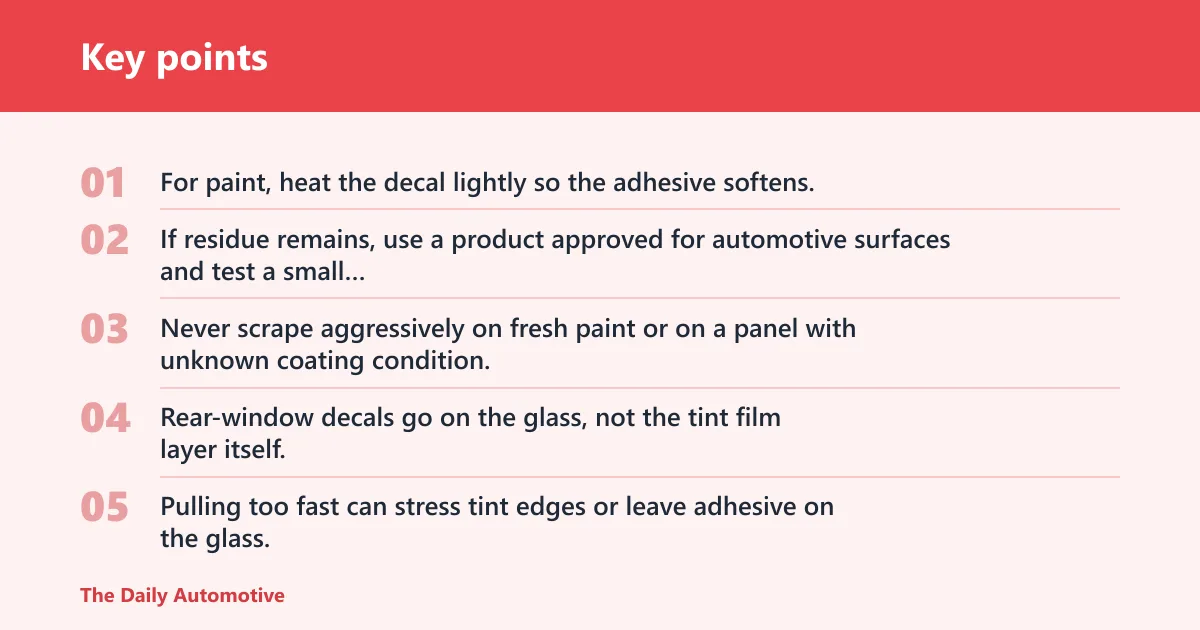
For paint, heat the decal lightly so the adhesive softens, then peel slowly at a shallow angle. If residue remains, use a product approved for automotive surfaces and test a small hidden area first. Never scrape aggressively on fresh paint or on a panel with unknown coating condition.
Tint considerations
Rear-window decals go on the glass, not the tint film layer itself, but removal still matters. Pulling too fast can stress tint edges or leave adhesive on the glass. A removable adhesive is often the safer pick if easier removal later is the priority.
What causes residue or edge lift? Usually one of three things: weak prep, old adhesive, or low-grade film. Heat, rain, and repeated washing then finish the job by working moisture into the edge. A good decal with proper surface prep resists that chain of failures much better.
What’s the difference between cute and funny car decals for women? Cute decals lean toward hearts, bows, pets, florals, or soft typography. Funny decals rely on sarcasm, punchy one-liners, or a sharper tone. For daily driving, the more minimal die-cut look often ages better than a busy printed design because there is less edge and less ink area to fail.
Funny is not always the better long-term choice. A cleaner message with fewer colors often resists fading and looks intentional on a rear window. Cute prints can work well too, but if the design uses many colors and a large solid background, laminate and adhesive quality matter even more.
Frequently asked questions
What are the best funny car decals for women that actually last?
The best long-lasting options are outdoor-rated vinyl decals with UV laminate, weather-resistant construction, and either permanent or removable adhesive chosen for the vehicle’s use. Die-cut vinyl also tends to age better visually on glass or smooth paint because there is no background rectangle to peel, yellow, or trap dirt.
How long do car decals last in sun and rain?
That depends on material grade, adhesive, and whether the decal has UV laminate. Outdoor-rated vinyl lasts much longer than paper or indoor stock, while laminate helps slow fading and scratching. Sun exposure, tunnel washes, and poor prep are the main reasons a decal fails early.
Will a car decal damage paint or window tint?
Usually not, if the decal is removed slowly and the adhesive is suited to the surface. Damage risk rises with old adhesive, aggressive peeling, and harsh cleanup. For lease cars or tinted glass, removable adhesive is the safer choice because it lowers the chance of residue and cleanup problems.
What size car decal should I get for a rear window?
A practical size depends on the vehicle. Small sedans usually suit about 8 to 14 inches wide, SUVs often allow 12 to 20 inches, and trucks may take larger graphics. The decal should stay readable without blocking the driver’s rear view or crossing the wiper path.
How do I apply a car decal so it doesn’t bubble or peel?
Clean and dry the surface first, then use transfer tape to hold the decal in alignment. Press from the center outward, remove the tape slowly, and avoid installing on dirty or waxy glass. Bubbles and peeling usually come from rushed placement, poor prep, or handling the film before it bonds.
Products related to this article
Sponsored / affiliate links. As an Amazon Associate I earn from qualifying purchases. I may earn additional commission from eligible campaigns.