Why Do Rotors Rust Overnight After Snow and How to Stop It?
Orange rotor rust after snowy parking is often normal flash rust that can form in a few hours; light braking should usually scrape it off in about one to three stops. Ignore it, and you can mistake normal surface corrosion for a brake fault or miss a pad, caliper, or parking-brake issue. This guide explains why it happens, how fast it forms, what removes it, and when to get the brakes inspected.
What makes snow and road salt rust rotors faster
Most brake rotors are cast iron, and bare cast iron rusts quickly when moisture reaches it. The friction face must stay bare so the pads can grip it, so it does not get the kind of permanent coating body panels have. After snow, that exposed face may be wet, salty, and still warm enough for oxidation to start before morning.
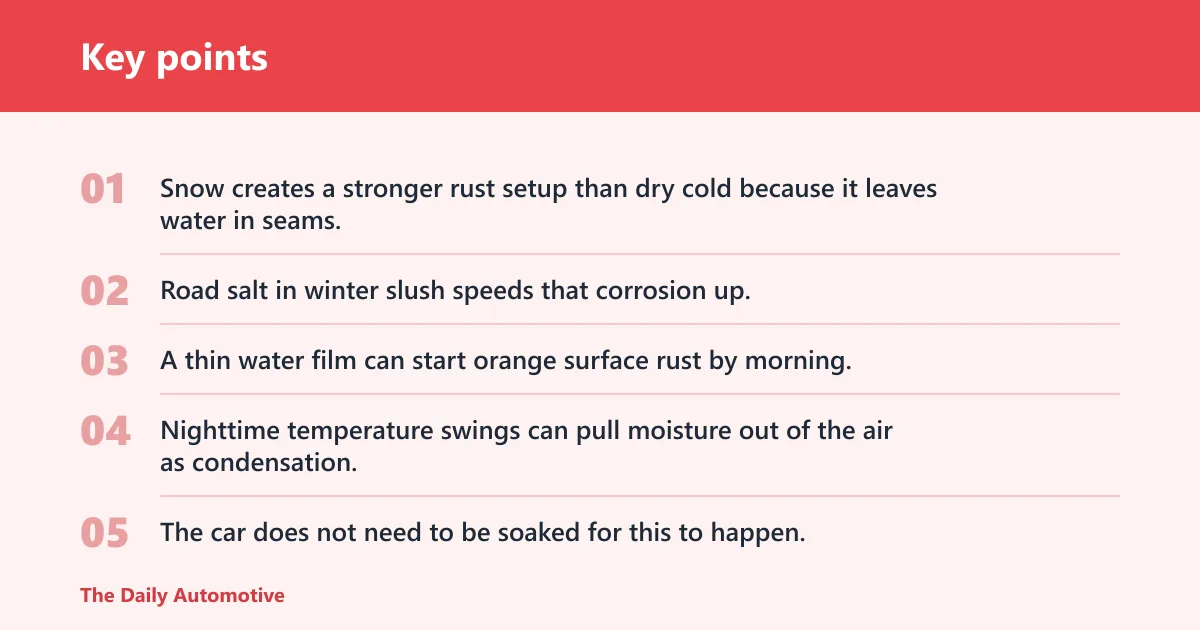
Snow creates a stronger rust setup than dry cold because it leaves water in seams, vent holes, and on the rotor face. Road salt in winter slush speeds that corrosion up. A thin water film can start orange surface rust by morning, even if the car never sat in visible rain.
Humidity matters too. Nighttime temperature swings can pull moisture out of the air as condensation, and dew or fog can leave enough water on the rotor to start flash rust. The car does not need to be soaked for this to happen.
Why snow and slush rust rotors faster than dry weather
Fresh snow can melt into a thin film, then refreeze or sit as damp residue on the rotor face. Salty slush is worse because the salt keeps the water active and pushes corrosion harder than plain moisture. That is why a car can look fine in the afternoon and show orange rotors the next morning.
Normal braking later scrapes the light rust off the working surface. The trouble starts when the rust is heavier than a light film or when the corrosion reaches the edges, hats, vents, or hardware.
Is orange rotor rust normal?
Yes. Thin orange-brown surface rust on the rotor face is common after rain, snow, a car wash, or a damp night, and it can show up within hours. If the car has been parked for 2 to 7 days, light surface rust is still common and usually clears after your first few stops.
That kind of rust is flash rust, not deep damage. It sits on top of the friction surface and usually comes off as the pads sweep the rotor. What matters is how the brakes feel and whether the rust clears quickly in normal driving.
What flash rust looks like
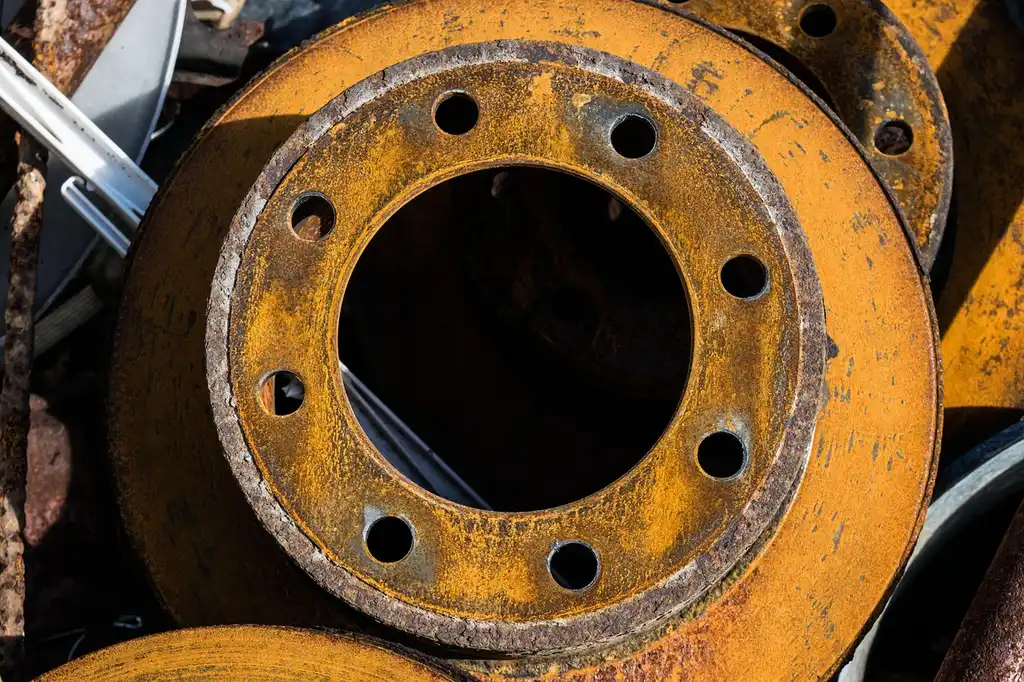
Flash rust usually looks like a thin, even orange film across the rotor face. It may be more visible on the outer swept area than in the middle, and it often looks worse through wheel spokes than it really is. A light haze is normal; flaky, rough, or pitted metal is not.
Do not confuse surface rust on the working face with corrosion on the hat, rotor edges, vent openings, or pad hardware. Those areas can corrode even when the braking surface still cleans up normally.
How normal braking clears it
Brake pads scrape the rotor face every time you stop. That action removes light rust and restores the bare friction surface. In many cases, a few normal stops are enough, and rust that remains after 10 to 20 gentle stops should be inspected.
Light surface rust cleaned off by normal driving is expected. If the rotor still feels rough or noisy after a normal drive, the problem may be more than flash rust.
What makes winter rust worse
Road salt, humidity, condensation, and long parking gaps all raise rotor rust risk. A car that sits outside through several cold nights will often show more rust than one that is driven daily, because the rotor can stay wet and oxidize without the pads cleaning it.
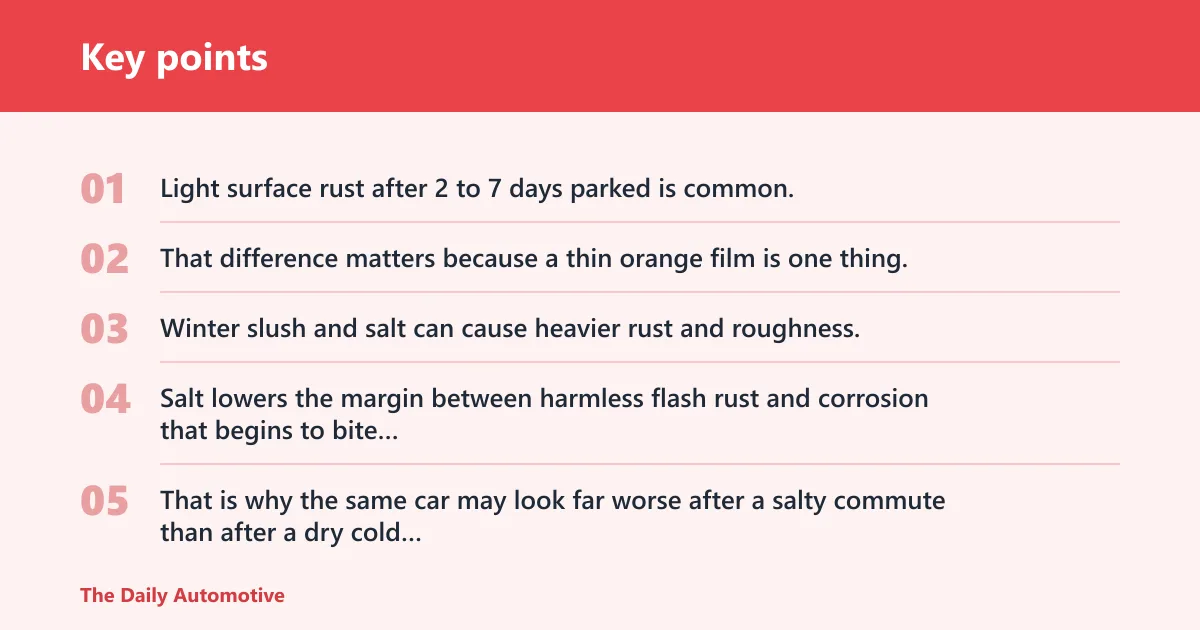
Parking duration matters. Light surface rust after 2 to 7 days parked is common, and pitting usually takes months of a car sitting. That difference matters because a thin orange film is one thing; metal loss and roughness are something else.
Road salt and salty slush
Winter slush and salt can cause heavier rust and roughness. Salt lowers the margin between harmless flash rust and corrosion that begins to bite into the metal, especially after repeated drives on treated roads. That is why the same car may look far worse after a salty commute than after a dry cold spell.
Salt also sticks to brake hardware, backing plates, and caliper brackets. Those parts can corrode even if the rotor face looks only lightly rusted.
Humidity, dew, and freezing-night condensation
Humidity can rust rotors even without rain. A damp night with a temperature drop can leave a thin water film on the iron, and that is enough for orange surface rust by morning. Fog and dew can do the same thing, especially on cars parked outside with little airflow.
Garaging the car reduces moisture exposure, but it does not make the brakes immune. A damp garage can still leave enough moisture on the metal to form flash rust.
Why parked cars rust more than moving ones
Moving cars keep the rotor faces cleaner because the brakes wipe the surface during use. Parked cars lose that cleaning cycle, so the rust can sit and build. EVs and hybrids often show this more clearly because regenerative braking reduces friction-brake use.
Say your sedan sits outside at an airport for six days after a snowstorm. The rotors may come back with a visible orange ring, yet the first drive may still feel normal once the pads clean the face. That is common if the rust is only on the swept surface.
When should you worry?
Worry when the brake feel changes, the noise changes, or the rust does not clear after normal driving. Pulsation, grinding, squealing, weak braking, or pitting are warning signs. Rust that remains after 10 to 20 gentle stops should be inspected, because it may point to deeper corrosion or another brake problem.
Pulsation, grinding, squealing, and weak braking
Pulsation in the pedal or steering wheel can point to uneven rotor surfaces, not just surface rust. Grinding usually means metal-to-metal contact or severe pad wear. Squealing can come from rust, but persistent noise after a short drive deserves attention. Weak braking is especially important because it can signal a seized caliper, contaminated pad, or parking-brake issue.
Pitting, heavy corrosion, and rust that will not clear
Deep pitting is not normal flash rust. It usually takes months of a car sitting and can leave the rotor face rough enough to reduce braking smoothness. Heavy corrosion on the hat, edges, or vents can also spread to hardware and backing plates, even if the shiny swept ring still looks usable.
Suppose a crossover sits outside all winter and the front rotors still feel rough after a week of daily use. That is not the same as a light orange film after one snowy night. If the rust does not clear and the brakes do not feel right, the car needs an inspection.
Rotor rust decision table
Use this as a quick winter check. The rust pattern and brake feel matter more than color alone.
| Scenario | Expected rust pattern | First-drive symptoms | Gentle stops usually needed | Red-flag symptoms that need inspection |
|---|---|---|---|---|
| After fresh snow | Light orange film on the rotor face | Brief scraping sound, normal pedal feel | 1 to 3 stops | Grinding, pulsation, weak braking, rust still visible after normal driving |
| After salty slush | Heavier orange-brown rust and roughness | Squeal, more noise, slight rough feel at first stop | 3 to 10 stops | Persistent squealing, vibration, dragging brake feel, roughness that does not fade |
| After a car wash in freezing weather | Flash rust may form quickly on the face and edges | Short scraping sound, possible light pad noise | 1 to 3 stops | Pedal pulsation, pulling, weak braking, rust that returns immediately after normal use |
| After a week parked outside | Visible surface rust across the swept area; more on edges and vents | Longer scraping period, possible first-stop noise | 3 to 10 stops, sometimes up to 20 gentle stops | Grinding, pulsation, pitting, thick flakes, brake warning lamp, rust that remains after 10 to 20 gentle stops |
You cannot stop winter rotor rust completely, but you can reduce how often it becomes visible and how long it lasts. The best approach is a ladder: keep the brakes in use, cut down moisture exposure, and choose coated rotors when winter corrosion is a repeat problem.
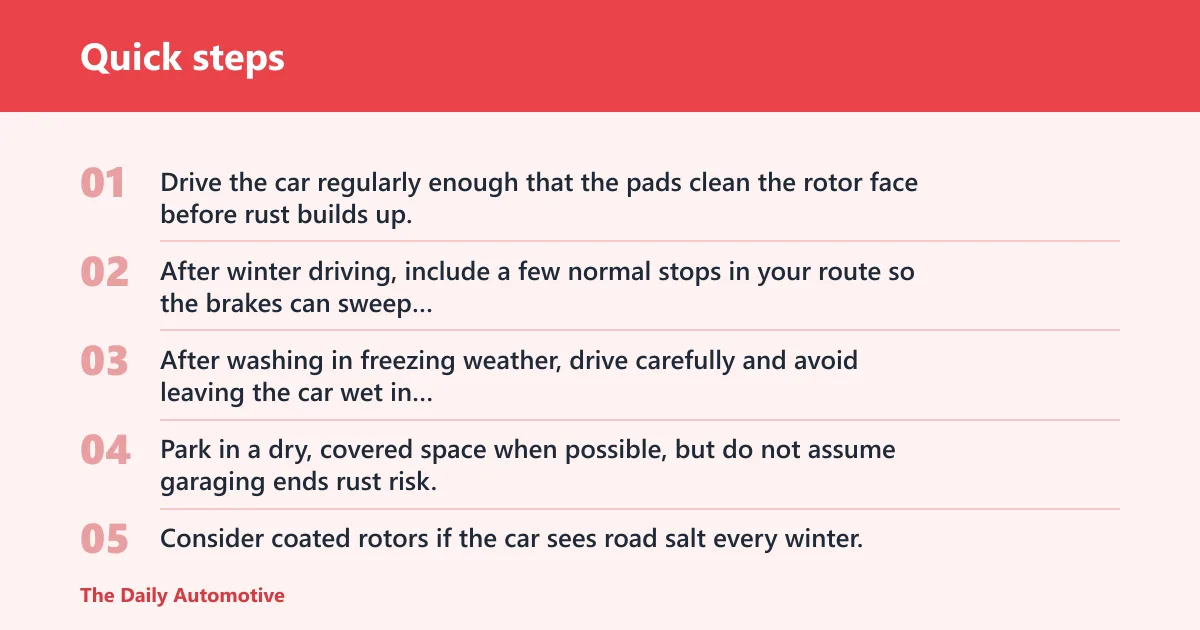
- Drive the car regularly enough that the pads clean the rotor face before rust builds up.
- After winter driving, include a few normal stops in your route so the brakes can sweep off light rust.
- After washing in freezing weather, drive carefully and avoid leaving the car wet in subfreezing conditions.
- Park in a dry, covered space when possible, but do not assume garaging ends rust risk.
- Consider coated rotors if the car sees road salt every winter.
- Inspect brake hardware, backing plates, and calipers if noise or dragging develops.
Driving patterns that keep the friction surface cleaner
Regular driving helps keep rotors cleaner because the pads keep wiping the swept area. Short trips that never warm or exercise the brakes enough can leave rust behind longer, especially on cars that mostly coast, use regen, or sit for days at a time.
A common first-timer mistake is to see orange rust and avoid the brakes out of caution. Gentle, normal braking is what clears light surface rust. The key is to listen for what happens after the first few stops, not to panic at the first orange ring.
Parking and washing habits for winter
Do not park a wet car in deep freezing conditions and assume the brakes will dry cleanly overnight. If you wash the car in winter, take a careful drive afterward so the rotors do not sit wet. That matters more after salty roads, where residue can stay on the metal and speed corrosion.
Garaging helps, but it is only part of the answer. A warm, damp garage can still leave moisture on the rotor face, and a car stored outside under a cover can trap humidity if the cover holds water against the wheels.
Where coated rotors help and where they do not
Coated rotors protect the hat, edges, and sometimes the internal vents better than bare iron. Zinc-plated and Evolution fully coated rotors offer maximum protection in winter use. The friction surface still wipes clean in use, so they are not rust-proof where the pads actually work.
That makes coated rotors useful in salty climates, but they are not a cure-all. They reduce visible corrosion on non-friction areas and can slow overall rust, yet the swept face still needs normal braking to stay clean.
Why EVs and hybrids rust more
Electric vehicles and hybrids may develop more visible rotor rust because they use regenerative braking more. That means the friction brakes may stay unused longer, so the rotor face does not get scrubbed as often. The result is more lingering flash rust, especially after short trips or long parking.
This does not mean the brakes are failing. It means the cleaning action happens less often, so rust has more time to show up on the visible face and on the edges.
What to watch after long parking or short trips
Pay close attention after a long airport stay, a week of sitting outside, or a season of short errands. If the first few stops bring the brakes back to normal, the rust was likely surface level. If the car still squeals, drags, or feels weak after several stops, the brake system needs a closer look.
For EVs and hybrids, a longer use of the friction brakes now and then can help keep the rotor faces cleaner. That does not remove winter rust completely, but it reduces how long the visible film lingers.
Frequently asked questions
Why do my brake rotors rust overnight after snow?
Snow leaves moisture on the bare cast-iron rotor face, and road salt makes that moisture more corrosive. A thin water film can start orange surface rust by morning, even if the car only sat overnight. The rust is usually superficial if it wipes off in the first few stops.
Is orange rust on brake rotors normal after a snowy night?
Yes. Thin orange surface rust after a snowy night is usually normal flash rust. It is common on cast iron and usually clears after normal driving. The concern starts when the rust stays after 10 to 20 gentle stops or the brake feel changes.
How fast can brake rotors rust after rain or snow?
Rotor rust can start in a few hours, and a damp night can be enough for visible orange film by morning. Rain, humidity, car washing, road salt, and long-term parking all speed it up. Light rust after 2 to 7 days parked is also common.
How do I stop brake rotors from rusting in winter?
You cannot fully prevent winter rotor rust, but you can slow it down. Drive the car regularly, include normal braking in your route, avoid leaving the car wet in freezing weather, and park in a dry space when possible. Coated rotors help the hat and edges more than the friction face.
When should rusty brake rotors be inspected or replaced?
Inspect the brakes if you get pulsation, grinding, squealing, weak braking, or rust that remains after normal driving. Heavy corrosion, pitting, or rust that does not clear after 10 to 20 gentle stops also needs attention. Deeper corrosion on hardware or backing plates matters too.
Will driving normally remove surface rust from rotors?
Usually yes. Light surface rust is cleaned off by normal driving as the pads sweep the rotor face. That process may take a few stops, especially after salty slush or longer parking. If the rust does not fade and the brakes still feel rough, inspect them.
Products related to this article
Sponsored / affiliate links. As an Amazon Associate I earn from qualifying purchases. I may earn additional commission from eligible campaigns.