Heart Wheels for Car: Steering Wheels vs. Heart-Shaped Rims
“Heart wheels for car” actually covers two different products: heart-shaped steering wheels that bolt onto your existing hub, and heart-shaped alloy wheel rims that replace your car’s actual wheels. Both are real, purchasable items—here’s how to tell them apart and pick the right one.
Search for “heart wheels for car” and you’ll find two very different categories of product mixed together. One is a heart-shaped steering wheel—an aftermarket wheel you install in place of your factory one, usually paired with a quick-release hub. The other is a heart-shaped alloy rim—a full replacement wheel with heart-shaped cutouts machined into the barrel, the kind you’d see on a show car or a custom build. Below, we cover a genuine pick from each category, plus one thing most listings for both never mention: what you give up (and need to check) before installing either one.
Heart-Shaped Steering Wheels vs. Heart-Shaped Wheel Rims
If you just want a quick answer: a steering wheel swap is the cheaper, faster change (usually $50–$150 plus a hub adapter) and mostly affects your car’s interior look and grip feel. A wheel rim swap changes your car’s actual wheels—the part that touches the road—and costs far more (often $500–$2,500+ for a full set), since you’re buying structural, load-bearing parts, not just a cosmetic accessory.
| What You’re Changing | Heart Steering Wheel | Heart Wheel Rims |
|---|---|---|
| Typical price | $50–$150 | $500–$2,500+ per set |
| Affects | Interior look, grip, hand feel | Ride, handling, road contact |
| Install difficulty | Moderate (hub adapter usually needed) | Requires a tire shop, plus balancing |
| Key safety check | Loses driver’s airbag (see FAQ below) | Load rating & certification for street use |
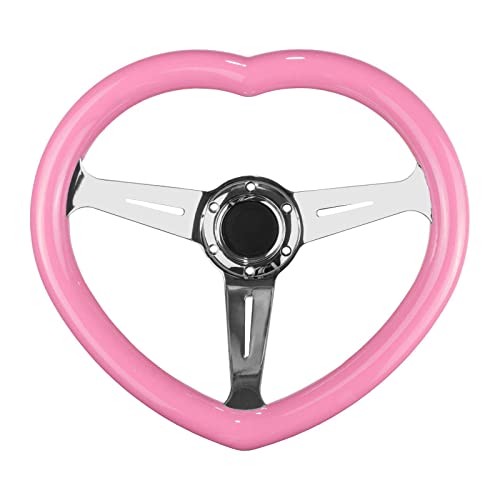
TIYPEOR Universal Heart-Shaped Racing Steering Wheel
The TIYPEOR Universal Racing Steering Wheel is a straightforward pick if you’re shopping for a heart-shaped racing wheel. It measures 320mm (12.5″) with a 40mm deep dish and uses a standard 6-bolt pattern, so it works with most common quick-release hub adapters rather than one specific proprietary mount.
Pros
- Standard 6-bolt pattern works with common aftermarket hub adapters, not a proprietary mount.
- ABS shell with aluminum-alloy spokes resists rust and corrosion better than painted steel.
- Deep-dish design leaves extra clearance for larger hands or gloves during spirited driving.
Cons
- No driver’s airbag—confirm your local laws before using this on a street-driven car (see FAQ).
- You’ll almost always need a separate hub adapter for your specific make and model; it isn’t included.
This is a currently available, in-stock listing—a safe swap if you were eyeing an older heart-shaped wheel listing that’s since been discontinued.
4Pcs Heart-Shaped Forged Aluminum Alloy Wheel Set (17–21″)
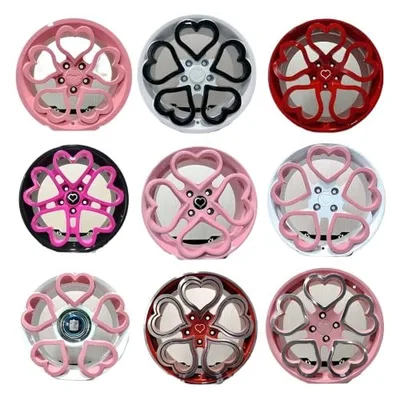
This is the wheel-rim option, not a steering wheel: a 4-piece forged aluminum alloy set in 17–21″ sizes with heart-shaped cutouts machined into each barrel. Flow-formed construction keeps the wheels lighter than a typical cast wheel of the same size, and it’s offered with multiple bolt patterns so you can match it to a range of sedans, SUVs, and trucks.
Pros
- Flow-formed (not just cast) construction trims weight versus a comparable standard cast wheel.
- Sold with multiple bolt-pattern options rather than one fixed fitment.
- Available in several diameters and finishes (pink, black, red, and more).
Cons
- Priced like the structural, load-bearing part it is—expect roughly $2,000–$2,500 for a full set of four, not steering-wheel money.
- Confirm the listed load rating and certification (look for JWL, VIA, TUV, or DOT marks) before daily driving on public roads; a local tire shop can also verify fitment and inspection compliance before you buy.
Because these are functional wheels and not a bolt-on accessory, have a tire shop mount, balance, and torque them to spec rather than installing them yourself—the same way you’d treat any other wheel purchase.
idain Universal Acrylic Heart-Shaped Racing Steering Wheel
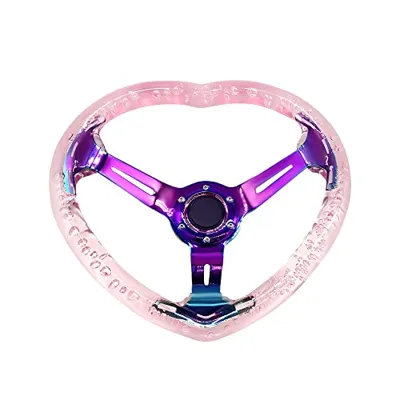
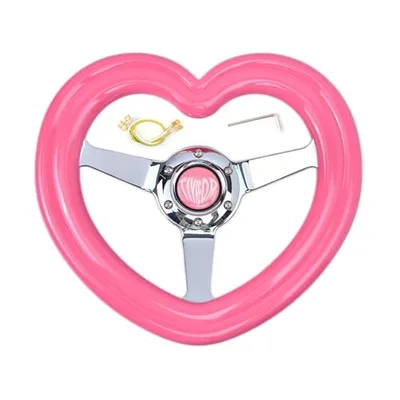
The idain Universal Acrylic Racing Steering Wheel targets the same aftermarket niche as the TIYPEOR above, but swaps the ABS shell for a translucent acrylic rim, giving it a glittery, see-through look instead of a solid gloss finish. It’s marketed as a fit for standard passenger vehicles as well as off-road buggies and club cars (golf carts).
Pros
- Acrylic construction gives a distinct translucent look you won’t get from a painted ABS or steel wheel.
- Lightweight compared to a cast metal steering wheel of similar size.
- Also fits off-road buggies (RZR-style) and club cars, not just passenger vehicles.
Cons
- “Universal fit” still means checking your specific hub and horn-wire compatibility before ordering.
- Like the TIYPEOR wheel, this has no driver’s airbag—see the safety note below before using it on a street car.
Golf carts and off-road buggies don’t have a driver’s airbag to begin with, which is one reason this style of wheel is especially common on club cars and RZRs—there’s no factory safety system to give up.
Frequently Asked Questions
What Are Heart Wheels For Cars?
“Heart wheels” refers to two different products: heart-shaped steering wheels that replace your factory wheel for a personalized interior, and heart-shaped alloy rims with heart cutouts machined into the wheel itself. Both are real aftermarket products, most often finished in pink, chrome, or a mix of the two.
Do Heart-Shaped Steering Wheels Have An Airbag?
No. Aftermarket racing-style steering wheels, heart-shaped or otherwise, almost never include a driver’s airbag. Removing a factory airbag-equipped wheel to install one of these disables that safety system and may not be street-legal in your area. These wheels are best suited to track cars, show cars, or vehicles without a factory airbag in the first place, such as golf carts and off-road buggies—check your local vehicle code before installing one on a car you drive on public roads.
Are Heart-Shaped Wheel Rims Street Legal?
It depends on the specific wheel’s certification, not just its shape. Look for a listed load rating and marks like JWL, VIA, TUV, or DOT, which indicate the wheel was tested to carry your vehicle’s weight safely. A wheel with no listed certification or load rating is a bigger gamble for daily driving—have a tire shop confirm fitment and inspection compliance before you buy, especially in states with strict vehicle inspections.
How Do Heart-Shaped Steering Wheels Improve Driving?
The main benefit is personalization, not performance—these wheels are chosen for their look. Some owners also report the deep-dish, three-spoke design common on this style feels more secure to grip than a thin factory rim, though that comes down to personal preference rather than a measurable driving improvement.
Are Heart Wheels Compatible With All Cars?
Most listings are marketed as “universal,” but that only covers the wheel’s own bolt pattern or hub fitment—it doesn’t guarantee it’ll bolt straight onto your car. For steering wheels, you’ll typically need a hub adapter matched to your specific make and model. For wheel rims, you need to match bolt pattern, offset, and center bore, or use appropriate adapters. Always confirm fitment with the seller or a shop before ordering.
What Materials Are Heart Wheels Made Of?
Heart-shaped steering wheels are typically ABS plastic or acrylic over an aluminum-alloy spoke frame. Heart-shaped wheel rims are usually forged or flow-formed aluminum alloy, which is lighter than a cast wheel of the same size while still being a load-bearing part.
How Do You Install A Heart-Shaped Steering Wheel?
Disconnect the battery first (most factory wheels have an airbag), remove the factory wheel from its hub, attach a hub adapter matched to your vehicle, then bolt on the new wheel using its standard bolt pattern. Because this usually means removing an airbag-equipped factory wheel, it’s worth having a shop handle the install if you’re not confident working around SRS components.
Conclusion
“Heart wheels for car” covers two genuinely different upgrades: a heart-shaped steering wheel for a personalized interior, or a set of heart-shaped alloy rims that change your car’s actual wheels. Both are real, currently available products, but they come with different costs and different things to check first—hub compatibility and airbag loss for the steering wheel, and load rating or certification for the rims.
If you just want a distinctive interior touch without touching your car’s safety equipment, the steering wheel is the simpler, cheaper route. If you want your car’s entire look to stand out, the rim set is the bigger commitment—just treat it like any other wheel purchase and have a shop verify fit and certification before it goes on the road.
Products related to this article
Sponsored / affiliate links. As an Amazon Associate I earn from qualifying purchases. I may earn additional commission from eligible campaigns.