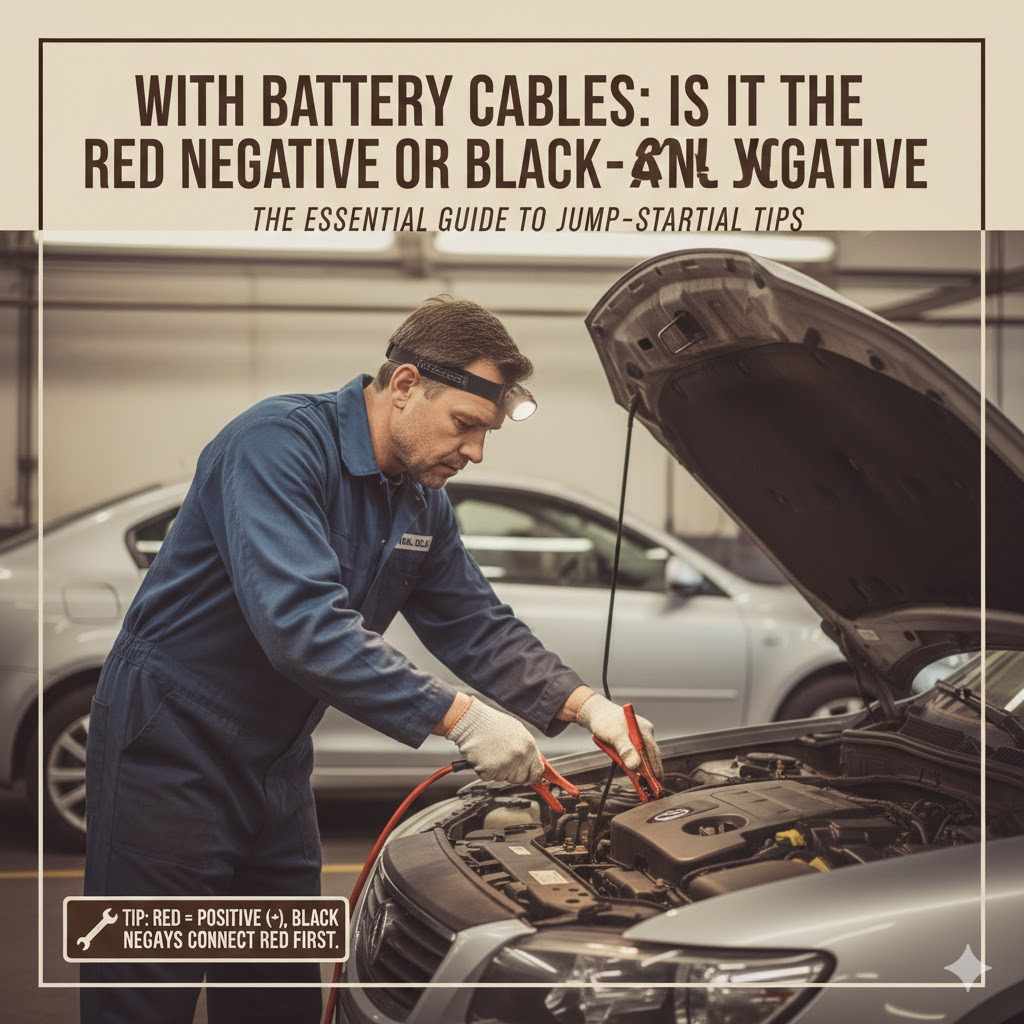
Hey Google With Battery Cables Is It The Red Negative Or The Black Negative
TITLE: Red vs. Black Battery Cable: Which One is Negative for Jump-Starting?
It’s a moment many of us dread. Your car won’t start. You’ve got jumper cables, but then comes the confusing part.
Which cable goes where? Specifically, is the red cable negative or is the black one negative when jump-starting a car? This confusion can lead to mistakes that are not only ineffective but also quite dangerous.
We’ve all been there, staring at those two different colored cables and hoping we don’t mess it up.
The red cable is for the positive (+) terminal, and the black cable is for the negative (-) terminal when jump-starting a car. Always connect red to positive and black to negative.
Understanding Your Car Battery Terminals
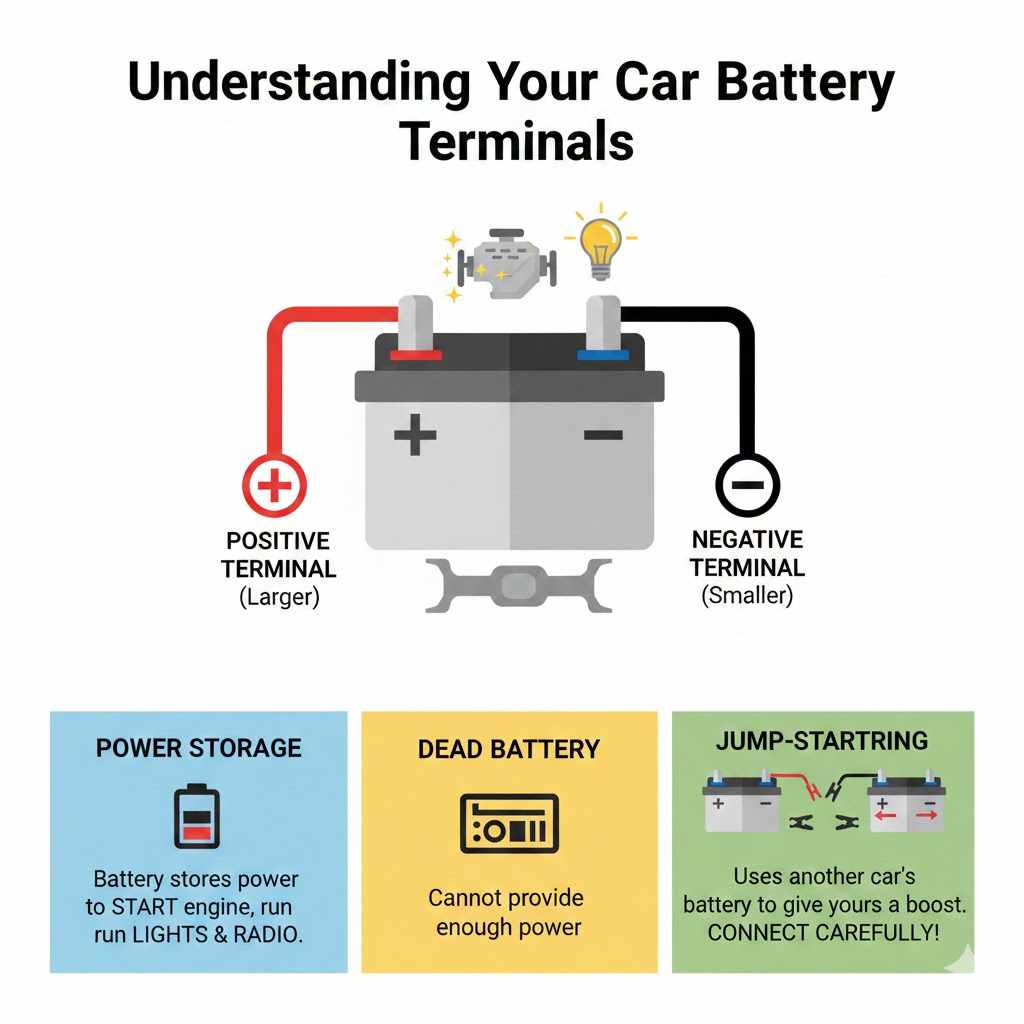
Your car battery has two main posts, also called terminals. They are marked with symbols. One is a plus sign (+).
This is the positive terminal. The other is a minus sign (-). This is the negative terminal.
They are different sizes too. The positive terminal is usually a bit larger. The negative terminal is typically smaller.
These terminals are where the electricity flows from and to. The battery stores power. This power starts your engine.
It also runs your car’s lights and radio. When a battery is dead, it cannot provide enough power. Jump-starting uses another car’s battery to give yours a boost.
You need to connect the two batteries carefully.
The Color Code of Jumper Cables
Jumper cables are designed with safety in mind. They have two different colored wires. These colors are a standard way to tell them apart.
This system helps prevent dangerous mix-ups. You’ll almost always see red and black cables. These colors are not just for looks.
They have a specific meaning.
The red jumper cable is always for the positive (+) connection. The black jumper cable is always for the negative (-) connection. This is a universal rule.
Knowing this makes the whole process much simpler. Think of red for “run” or “right” (positive). Think of black for “back” or “base” (negative).
It’s really important to remember this. Red means positive. Black means negative.
This applies to most electrical work, not just car batteries. Sticking to this color code is a key safety step. It helps you avoid short circuits.
It also keeps you from damaging the car’s electrical system.
My Own Jumper Cable Scare
I remember one icy morning a few years back. My old sedan just wouldn’t turn over. Dead as a doornail.
I called my neighbor, bless her heart. She came over with her car and a set of jumper cables. We popped our hoods.
Mine was on the driver’s side. Hers was on the passenger’s side.
We looked at the batteries. Mine was a bit corroded. Hers looked cleaner.
She started telling me what to do. “Okay, red to positive on your battery. Then red to positive on my battery.” So far, so good.
Then came the black cables. She said, “Black to negative on my battery.” That made sense. My heart gave a little lurch.
She then pointed to my battery. “And black to negative on yours.” I paused. I looked at the cables.
I looked at the terminals. The black cable was heavy. It felt important.
Was it really supposed to go to the negative terminal of my dead battery? I felt a surge of panic. What if I connect it wrong?
What if I blow something up? She saw my face. She smiled kindly.
“Don’t worry,” she said. “Just follow the colors. Red to plus.
Black to minus. It’s always like that.” She was right. And it worked.
That day, I learned to trust the colors.
Jumper Cable Connection Order: The Safe Way
Step 1: Preparation
Park the working car close to the dead car. Both cars should be off. Engage the parking brakes on both vehicles.
Step 2: Connect Red Cable (Positive +)
Attach one end of the red jumper cable to the positive (+) terminal of the dead battery. Attach the other end of the red cable to the positive (+) terminal of the good battery.
Step 3: Connect Black Cable (Negative -)
Attach one end of the black jumper cable to the negative (-) terminal of the good battery. Attach the other end of the black cable to an unpainted metal surface on the engine block of the dead car. This is called a ground.
Do NOT connect it directly to the negative terminal of the dead battery if you can avoid it. This reduces the risk of sparks near the battery.
Why the Negative Cable Connection Matters
Connecting the negative jumper cable is a critical step. It needs to be done correctly to ensure safety. The battery produces hydrogen gas.
This gas can be explosive. Sparks can ignite this gas. Connecting the final negative cable to a ground point away from the battery minimizes this risk.
Think of it like this: the dead car’s battery is struggling. The good car’s battery is providing the power. The electricity needs a complete circuit.
The red cables complete the positive side of the circuit. The black cables complete the negative side. The final connection to ground completes the circuit safely.
A direct connection to the dead battery’s negative terminal might seem logical. However, the last connection should always be to a metal part of the chassis or engine. This is because the final connection is often where the first spark occurs.
You want that spark to happen far away from any potentially explosive battery gases.
Grounding: What It Means
What is Grounding?
Grounding in a car’s electrical system means connecting to the metal frame of the car. The car’s metal body acts as a conductor. It’s like a return path for electricity.
Most cars use the negative terminal of the battery as the main ground.
Why Ground the Last Connection?
Car batteries can release hydrogen gas. This gas is flammable. Making the last connection to a solid metal part of the engine or chassis, away from the battery, helps prevent sparks from igniting this gas.
This is a major safety precaution.
Good Grounding Spots:
- Unpainted metal brackets on the engine block.
- A sturdy, unpainted bolt head on the engine.
- The strut tower brace.
Bad Grounding Spots:
- Painted surfaces.
- Plastic parts.
- Moving engine parts.
- Fuel lines or the fuel filter.
Common Mistakes and How to Avoid Them
People often get confused about the order of connections. They might also mix up positive and negative. Sometimes, the cables themselves can be a problem.
Old, frayed cables are dangerous. They can easily cause shorts.
Here are common errors:
- Connecting red to black. This creates a direct short. It can damage both cars.
- Touching clamps together. If the clamps are connected to batteries, touching them causes sparks.
- Not turning off cars. Both cars must be off before connecting cables.
- Connecting the last negative cable to the dead battery. This is a fire hazard.
- Using damaged cables. Check for tears or exposed wires.
To avoid these mistakes, follow the steps carefully. Always double-check your connections. If you are unsure, ask someone for help.
It’s better to be safe than sorry. A few extra minutes of care can prevent costly repairs and injuries.
What Happens When You Connect It Right?
When you connect the jumper cables correctly, you create a path for power. The good battery sends electricity to the starter motor and ignition system of the dead car. This gives the engine enough power to turn over.
Once the dead car starts, leave the cables connected for a few minutes. Let the good car’s alternator charge the dead battery a bit. Then, remove the cables in the reverse order.
Remove the black cable first from the ground point, then from the good battery. Then remove the red cable from both batteries.
Do not remove the cables too quickly. Your car’s battery needs time to regain some charge. Driving the car for at least 20-30 minutes will help the battery charge up.
This gives it a better chance to start on its own next time. If the battery continues to die, it might need replacing.
Removing the Jumper Cables Safely
Order is Key
Removing the cables is just as important as connecting them. Always reverse the connection order.
Step 1: Remove Black Cable (Negative -)
Remove the black cable from the ground point on the formerly dead car. Then, remove the other end of the black cable from the negative (-) terminal of the good battery.
Step 2: Remove Red Cable (Positive +)
Remove the red cable from the positive (+) terminal of the formerly dead car. Finally, remove the other end of the red cable from the positive (+) terminal of the good battery.
Important Note: Make sure the cable clamps do not touch each other or any metal parts of the car while removing them.
When to Call a Professional
While jump-starting is a common fix, it’s not always the solution. If jump-starting doesn’t work, there might be a bigger problem. It could be a bad starter, a faulty alternator, or a completely dead battery that won’t hold a charge.
You should also call a professional if:
- You are uncomfortable performing the jump-start.
- The battery terminals are heavily corroded and you can’t clean them.
- You see cracks in the battery case.
- The battery is leaking fluid.
- The car’s warning lights stay on after jump-starting.
- Your car has a hybrid or electric system. These require special procedures.
Professional mechanics have the right tools and knowledge. They can diagnose the exact issue. They can also perform the repair safely.
Don’t risk further damage or injury if you’re unsure.
Quick Check: Is it Just the Battery?
Signs of a Weak Battery:
- Slow engine crank.
- Clicking sound when you try to start.
- Dim headlights or interior lights.
- Battery warning light on the dashboard.
Signs of Alternator Problems:
- Dashboard warning light (often a battery symbol).
- Electrical issues (dimming lights, power windows slow).
- Whining sound from the engine.
- Car dies while driving.
Signs of Starter Problems:
- A loud click or grinding noise when you turn the key.
- Engine won’t crank at all, but lights work.
Battery Maintenance Tips
Preventing a dead battery is always better than fixing one. Simple maintenance can extend your battery’s life. It can also prevent those stressful dead-battery moments.
Here are some tips:
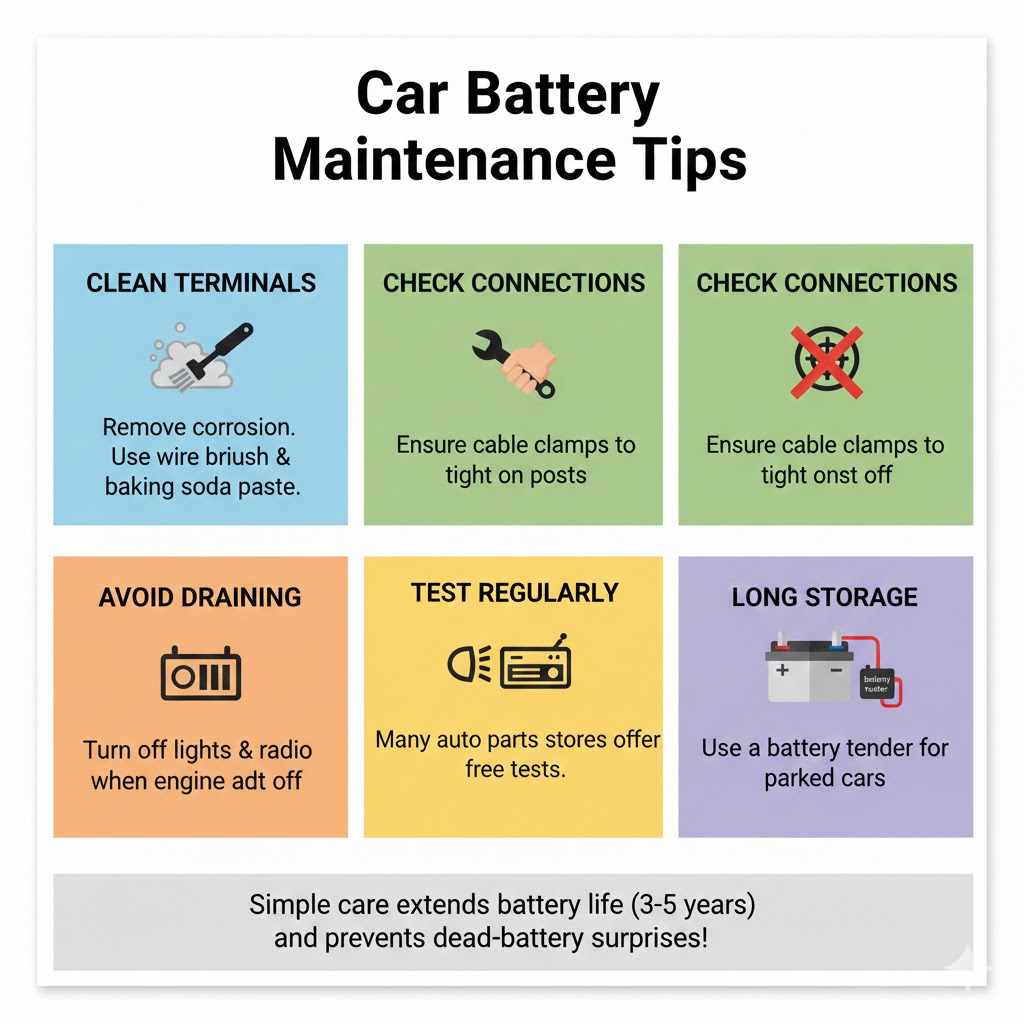
- Keep terminals clean. Corrosion can block electrical flow. You can clean them with a wire brush and a baking soda/water paste.
- Check for loose connections. Make sure the cable clamps are tight on the terminals.
- Avoid draining the battery. Turn off headlights, radio, and other electronics when the engine is off.
- Test your battery regularly. Auto parts stores often do this for free.
- Consider battery tender for long storage. If you won’t drive the car for weeks, a tender keeps the battery charged.
Taking care of your battery means fewer surprises. It also means saving money in the long run. A battery can last 3-5 years with good care.
Neglect can shorten that life significantly.
Frequently Asked Questions
Is it always red for positive and black for negative on jumper cables?
Yes, this is a standard safety convention in the United States. Red cables are for positive (+) terminals and black cables are for negative (-) terminals. Always verify this if you have unusual or unfamiliar cables, but for standard automotive jumper cables, this is the rule.
What happens if I connect the red cable to the negative terminal by mistake?
Connecting the red (positive) cable to the negative terminal of a battery will create a short circuit. This can cause sparks, damage the battery, and potentially harm the car’s electrical system. It can also cause a surge of power that is very dangerous.
Can I jump-start a car if the battery is completely dead?
Yes, you can often jump-start a car even if the battery is completely dead. However, the battery might be unable to hold a charge afterward. In such cases, the battery may need to be replaced. The jumper cables provide temporary power to start the engine so the alternator can begin charging the battery.
What if my car doesn’t start after jump-starting?
If your car doesn’t start after a proper jump-start, the issue might be with the starter motor, the alternator, or the fuel system, not just the battery. It’s best to call a mechanic to diagnose the problem further. Ensure all connections were secure and correct before assuming it’s something more serious.
How long do I need to run the engine after jump-starting?
After successfully jump-starting, let the engine run for at least 15-30 minutes. Driving the car around will help the alternator recharge the battery more effectively than just idling. This gives the battery a chance to regain sufficient charge for the next start.
Is there a risk of electric shock from car batteries?
While car batteries contain a significant amount of electrical energy, the voltage is relatively low (12 volts). The main danger comes from the potential for sparks to ignite hydrogen gas produced by the battery, leading to an explosion, or from short circuits causing damage and heat. Always follow safety procedures.
Final Thoughts on Battery Cable Connections
Understanding which cable is negative for jump-starting is crucial. It’s about safety and success. Remember that red is positive (+) and black is negative (-).
Following the correct connection and disconnection order is vital. This simple knowledge can save yu a lot of trouble. And it keeps you and your car safe.