How Big Is a NASCAR Gas Tank Really?
Many racing fans and curious onlookers wonder, How Big Is a NASCAR Gas Tank Really? It’s a question that pops up often, especially when you’re new to the sport. You see those cars on the track for hours, and you might imagine a giant fuel tank. But the reality is a bit different and might surprise you.
This guide will break it down simply, step by step, so you’ll know all about NASCAR gas tanks without any confusing jargon. We’ll cover what makes them special and why they are designed the way they are.
How Big Is A NASCAR Gas Tank Really
The question of How Big Is a NASCAR Gas Tank Really? is a popular one among motorsports enthusiasts. It’s easy to assume that a car designed for such high-speed, long-duration races would need a massive fuel tank. However, NASCAR’s approach to fuel capacity is quite specific and plays a significant role in race strategy, car design, and safety.
Unlike the fuel tanks you might find in a regular passenger car, NASCAR tanks are built to strict regulations and serve a very particular purpose.
Understanding NASCAR Fuel Tanks
NASCAR stock cars don’t have the same kind of fuel tanks you’d find in your everyday vehicle. These are highly specialized pieces of equipment, designed with safety and performance in mind. The size of the tank isn’t just about how much fuel it can hold; it’s also about its construction, weight, and how it fits within the overall design of the race car.
The key thing to remember is that NASCAR rules dictate the maximum size of the fuel tank. This is done to ensure fair competition and to manage race dynamics. The size and capacity have a direct impact on how many pit stops a team needs to make during a race, which in turn influences strategy and adds an element of excitement for viewers.
The Official Size and Capacity
So, to directly answer the question How Big Is a NASCAR Gas Tank Really?, official NASCAR regulations state that a fuel tank can hold a maximum of 22 US gallons. This is a standardized size across all major NASCAR series, including the Cup Series, Xfinity Series, and Truck Series.
This capacity might seem relatively small when you consider the length of some NASCAR races, which can go for hundreds of miles. For instance, a typical Cup Series race is around 300-600 miles. This means that without strategic refueling, cars wouldn’t be able to complete the entire race distance on a single tank.
Why This Size?
The 22-gallon limit isn’t arbitrary. It’s a carefully calculated figure that balances several important factors:
- Race Strategy: This capacity forces teams to make pit stops for refueling. Pit stops are a critical part of NASCAR racing, adding drama, requiring skilled pit crews, and allowing teams to adjust their race strategy. Without refueling, races would be less dynamic.
- Weight Management: A larger fuel tank would mean more weight, especially when full. Managing the car’s weight is crucial for performance. The 22-gallon limit helps keep the car within a manageable weight range throughout the race.
- Safety: Fuel is a highly flammable substance. Smaller tanks, when properly designed and protected, can contribute to overall car safety in the event of an accident. NASCAR places a very high emphasis on safety for drivers and crews.
- Fairness: A standardized fuel tank size helps level the playing field. It means teams can’t gain a significant advantage simply by having a much larger, custom-built fuel tank.
Fuel Tank Construction and Safety Features
NASCAR fuel tanks are not just simple plastic containers. They are sophisticated safety devices designed to withstand the extreme forces and conditions of racing.
Materials: Today’s NASCAR fuel tanks are typically made of durable, impact-resistant materials. Often, they are constructed with multiple layers, including a bladder system that helps prevent fuel leakage even if the outer shell is compromised. Some tanks incorporate Kevlar or other advanced composite materials for added strength and fire resistance.
Bladder System: A critical safety feature is the fuel bladder. This is a flexible, self-sealing bag inside the tank. If the tank is punctured, the bladder is designed to collapse and seal the hole, preventing fuel from spilling out.
This significantly reduces the risk of fires.
Fuel Cell Design: The entire unit is often referred to as a fuel cell rather than just a gas tank. This terminology emphasizes its robust and protective design. The fuel cell is securely mounted within the car’s chassis, usually in a protected area behind the driver’s seat.
Ventilation and Fillers: NASCAR fuel cells have specialized filler necks and venting systems. These are designed for rapid refueling during pit stops. The filler necks often have breakaway features to prevent the fueling hose from being pulled out forcefully during a pit stop, which could cause an accident.
How Refueling Works
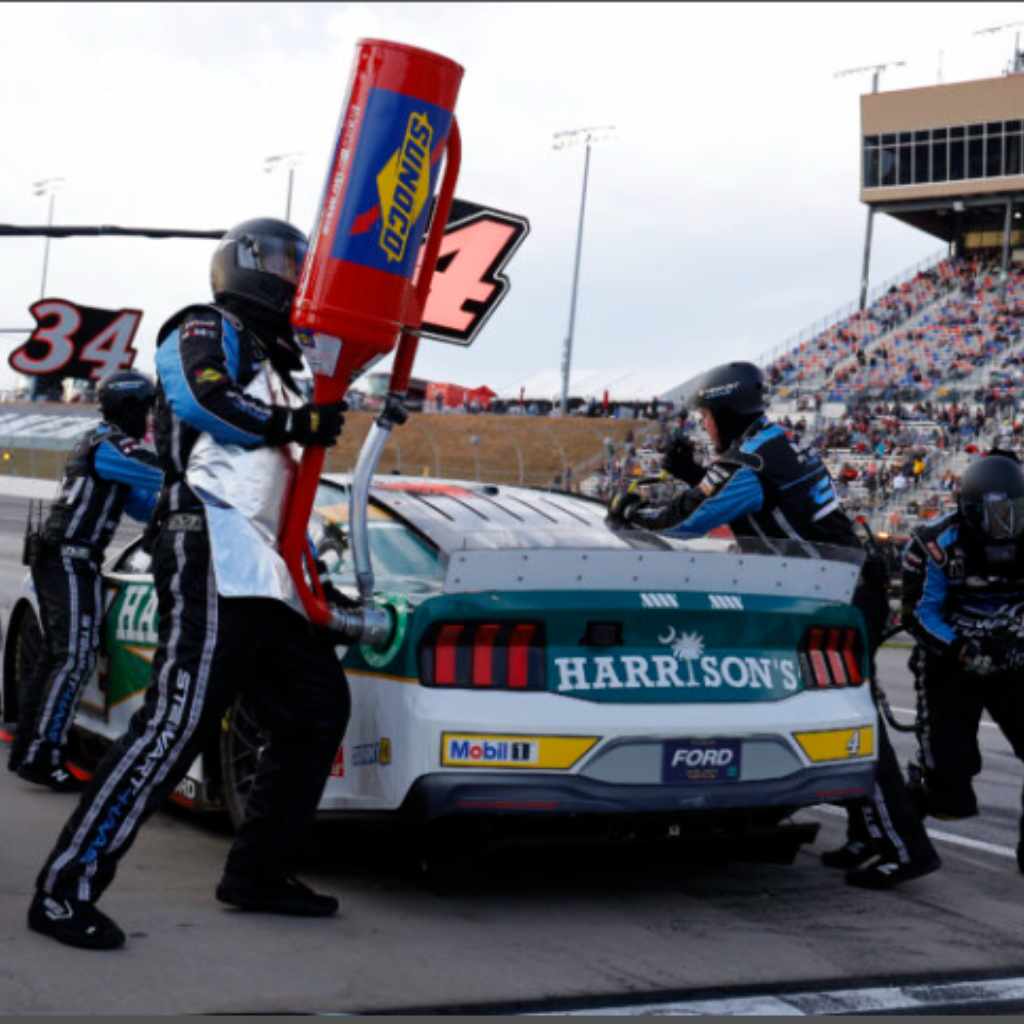
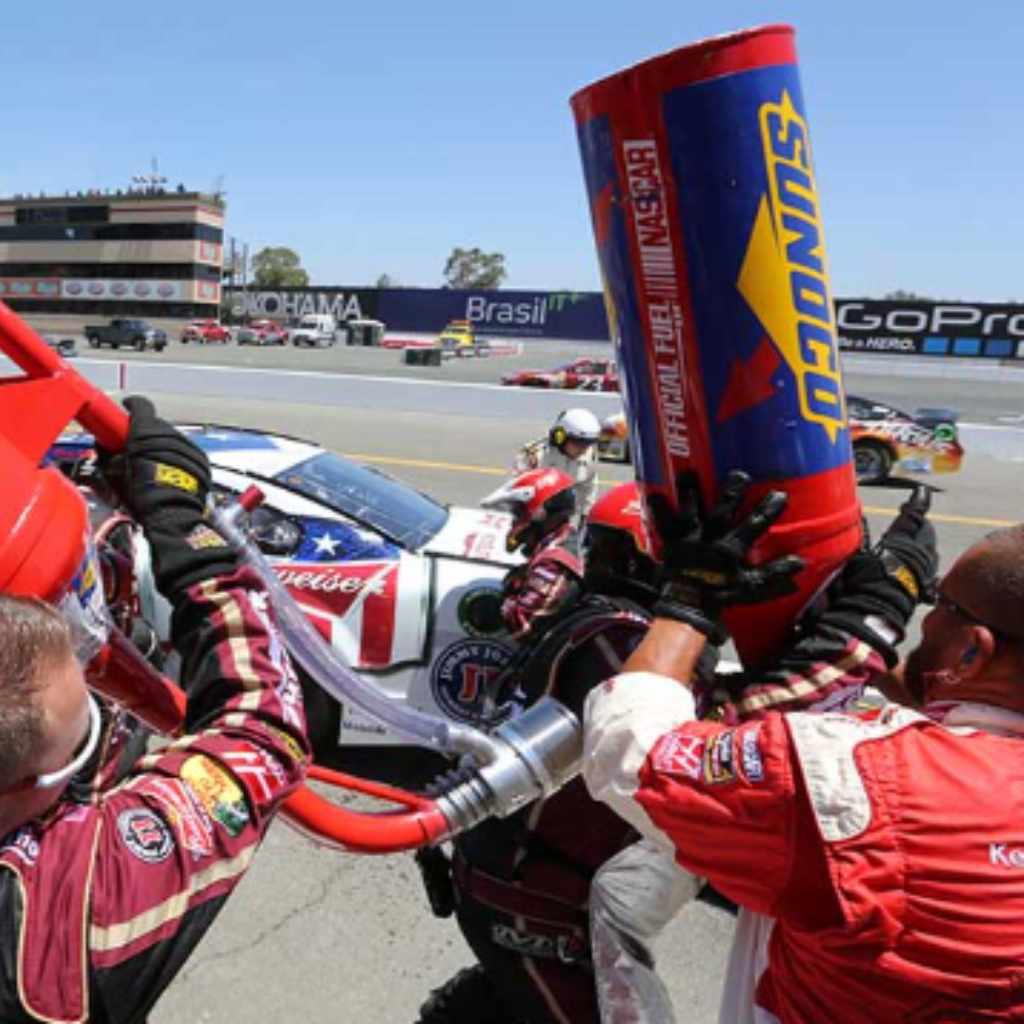
Refueling is one of the most exciting parts of a NASCAR pit stop. A pit crew member, called a fuel man or fueler, uses a special fueling rig. This rig connects to the car’s fuel cell and pumps the required amount of fuel in a matter of seconds.
The speed at which this happens is astonishing and requires immense coordination from the entire pit crew.
Because the tank size is limited and races are long, fuel management is a key strategic element. Teams calculate fuel mileage based on track conditions, driving style, and cautions (when the pace car slows the field, using less fuel). This calculation determines how much fuel they need to take on each pit stop to make it to the end of the race or to the next planned pit stop.
Fuel Mileage in NASCAR
Understanding fuel mileage is vital for NASCAR teams. Fuel mileage refers to how many miles a car can travel on one gallon of fuel. This isn’t a fixed number; it varies greatly depending on several factors:
- Track Type: Shorter tracks and tracks with frequent braking and acceleration (like Martinsville) generally result in lower fuel mileage compared to larger, faster tracks (like Talladega or Daytona) where cars run at consistent high speeds.
- Driving Style: Aggressive driving, frequent acceleration, and hard braking consume more fuel. A driver who can maintain a consistent pace and minimize unnecessary throttle or brake inputs can improve fuel mileage.
- Car Setup: Engine tuning, tire pressure, and aerodynamic adjustments can all influence fuel efficiency. Teams will work to optimize these aspects.
- Race Conditions: Running in traffic, drafting behind other cars, and the presence of caution periods all affect how much fuel is used.
For a typical Cup Series car on an intermediate track (around 1.5 miles), fuel mileage might range from 5 to 7 miles per gallon. On a superspeedway, this could be slightly higher due to sustained high speeds. On short tracks, it might be significantly lower.
Calculating Fuel Needs
Teams use sophisticated computer programs and simulations to predict fuel consumption. They will input variables like track length, expected number of laps, estimated green flag conditions, and even the probability of caution flags. Based on this, they determine the minimum amount of fuel they need to carry for each stint.
This is where the art and science of NASCAR strategy come into play. Teams need to balance carrying enough fuel to finish the race or reach their next pit window with carrying too much, which adds unnecessary weight and hurts performance.
Comparison with Other Vehicles
It’s interesting to compare the NASCAR gas tank size to other vehicles to get a better perspective.
| Vehicle Type | Approximate Fuel Tank Capacity (US Gallons) |
|---|---|
| NASCAR Stock Car (Cup Series) | 22 |
| Typical Passenger Car (Sedan/SUV) | 12-18 |
| Large Pickup Truck | 25-36 |
| Commercial Truck (Semi-trailer) | 100-150+ |
As you can see, the 22-gallon NASCAR tank is comparable to, or slightly larger than, the tank in many standard passenger cars. However, NASCAR cars are designed to be refueled quickly and strategically, unlike passenger cars which typically aim for maximum range between fill-ups. The sheer fuel capacity needed for a large commercial truck highlights the different purposes and scales of fuel storage.
Impact on Race Length and Strategy
The 22-gallon fuel tank is a foundational element that dictates much of the strategic planning in a NASCAR race. Without this constraint, races might be decided purely on raw speed, with fewer opportunities for teams to outmaneuver their competitors through pit stop timing and fuel management.
Pit Stop Frequency: For a typical 400-mile race, a car achieving 6 miles per gallon would need about 67 gallons of fuel (400 miles / 6 mpg). Since they can only hold 22 gallons, they’ll need to refuel multiple times. This means 3-4 pit stops for fuel alone, plus additional stops for tires.
Fuel Saving Strategies: During caution periods, drivers often lift off the throttle to conserve fuel. This “fuel saving” or “gas mileage” run can sometimes allow a team to skip a scheduled pit stop, gaining track position. This adds another layer of excitement and strategic thinking.
The “Fuel Mileage Race”: In some races, especially at the end, teams might be running very low on fuel. The tension builds as drivers try to stretch their fuel to the finish line, sometimes running out just before they can complete the final lap. This can lead to dramatic finishes where the winner is determined by who has enough fuel to cross the line.
Evolution of NASCAR Fuel Tanks
NASCAR fuel tanks have evolved over the years, primarily driven by advancements in safety technology. In the earlier days of stock car racing, fuel tanks were often simpler metal containers, sometimes even modified street car tanks. These posed a significant fire risk.
The development of specialized racing fuel cells with integrated bladders and improved materials marked a major leap forward in safety. The current 22-gallon capacity has been a standard for a considerable time, with the focus shifting more towards the safety and reliability of the fuel cell’s construction and integration into the car.
The move to the current generation of race cars, known as Next Gen cars, has also brought about refinements. While the fundamental capacity remains the same, the placement and integration of the fuel cell within the chassis have been optimized for safety and weight distribution.
The “Joker Tank” Myth
You might sometimes hear about a “joker tank” or a secret larger tank. This is generally a myth or a misunderstanding of how regulations work. NASCAR has strict rules and inspections to ensure all teams comply with the 22-gallon limit.
Any team caught attempting to use a larger tank would face severe penalties.
The focus for teams is not on illegally increasing fuel capacity but on maximizing efficiency and strategy within the allowed limits. clever pit stop timing, effective drafting, and smart fuel saving are the legal and accepted ways to manage fuel over a race distance.
Final Thoughts
So, How Big Is a NASCAR Gas Tank Really? It’s a precisely regulated 22 US gallons. This size is not about simply storing a large amount of fuel but about shaping the entire spectacle of NASCAR racing. It dictates pit stop strategies, influences the intensity of fuel saving tactics, and adds that thrilling element of unpredictability to race finishes.
The engineering behind these fuel cells prioritizes safety with advanced materials and bladder systems, protecting drivers from potential hazards. Teams work hard to optimize every drop of fuel, turning fuel mileage into a critical competitive advantage.
The next time you watch a NASCAR race, pay attention to the pit stops and the strategic calls related to fuel. You’ll appreciate how this seemingly simple measurement of a gas tank creates so much drama and skill on the track. Remember that the constraints in racing often lead to the most exciting and strategic contests.
Focus on what makes a difference in lap times and race outcomes – it’s often the small details that have the biggest impact, and fuel is definitely one of those.
Frequently Asked Questions
Question: What is the exact capacity of a NASCAR gas tank?
Answer: A NASCAR gas tank, officially known as a fuel cell, has a maximum capacity of 22 US gallons.
Question: Are NASCAR fuel tanks made of metal?
Answer: Modern NASCAR fuel cells are made of advanced composite materials and often include a flexible bladder system for safety, rather than just simple metal.
Question: How many miles can a NASCAR car go on a full tank?
Answer: This varies greatly by track and driving style, but typically a NASCAR car can travel between 5 to 7 miles per gallon, meaning a full tank might last around 110 to 154 miles under optimal conditions.
Question: Does every NASCAR series use the same size fuel tank?
Answer: Yes, the 22 US gallon capacity is standardized across the major NASCAR series, including the Cup Series, Xfinity Series, and Truck Series.
Question: Why don’t NASCAR cars have bigger gas tanks to race longer without stopping?
Answer: The 22-gallon limit is a rule designed to ensure fair competition, manage car weight, promote strategic pit stops, and enhance overall race safety.
Final Thoughts
The size of a NASCAR gas tank, at precisely 22 US gallons, is a critical piece of the racing puzzle that many fans find fascinating. This capacity isn’t just a number; it’s a strategic tool that shapes how races unfold. It ensures that pit stops are an integral part of the competition, demanding incredible skill and precision from pit crews.
Teams must constantly calculate and manage their fuel, making decisions that can determine their success on any given race day. The technology within these fuel cells also highlights NASCAR’s commitment to safety, with advanced materials and designs built to withstand extreme conditions.
Thinking about how much fuel is needed for a long race and the limitations imposed by the tank size reveals the clever strategies teams employ. From fuel-saving techniques during caution flags to the nail-biting finishes where drivers try to stretch their last few gallons, the fuel tank plays a starring role. It’s a reminder that in motorsports, understanding the rules and how to work within them often leads to victory.
For anyone curious about the mechanics of racing, grasping the significance of the fuel tank is a great step in appreciating the full picture of NASCAR competition.