How Car Rentals Handle California Tolls
Figuring out how car rentals handle tolls in California can feel a little confusing, especially if you’re new to it. You might wonder about extra fees or if you’ll get surprise bills later. It’s a common question because everyone wants to avoid unexpected costs and keep their trip smooth.
Don’t worry, it’s actually pretty simple once you know the basics. This guide will break down exactly how it all works, step-by-step. We’ll look at how rental companies manage tolls, what your options are, and how to make sure you’re not overcharged.
Let’s get started on making your California road trip a breeze!
Understanding California Toll Roads
California has a number of toll roads and bridges that can add to your travel expenses. These roads are designed to help manage traffic congestion and fund transportation projects. For drivers, especially those unfamiliar with the state’s system, these tolls can be a point of confusion when renting a car.
Understanding where these tolls are located and how they are collected is the first step in managing them effectively during your rental period.
What Are Toll Roads and Bridges
Toll roads and bridges are part of the infrastructure that helps keep traffic moving smoothly. Drivers pay a fee to use these specific routes. This fee goes towards maintaining the roads, building new ones, and improving traffic flow.
In California, you’ll find these in major metropolitan areas like Los Angeles and San Francisco, as well as on certain bridges connecting cities. They are clearly marked, so you’ll usually see signs indicating an upcoming toll zone or bridge. Knowing about them beforehand helps you plan your route and your budget.
How Tolls Are Collected
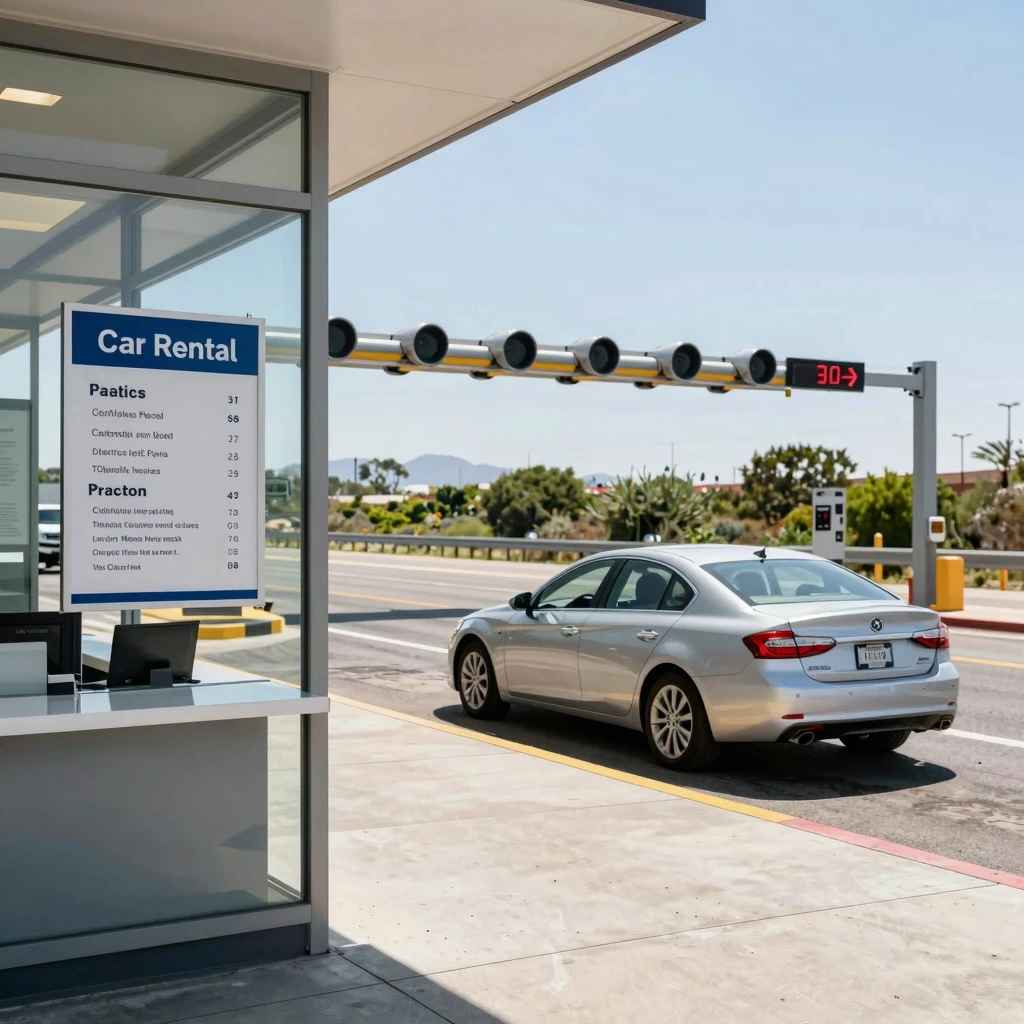
Tolls in California are primarily collected electronically. This means there are often no cash booths. The most common methods involve transponders mounted on vehicles or license plate recognition systems.
When a car passes through a toll point, a device reads its transponder or takes a picture of its license plate. This information is then used to identify the vehicle and its owner. For rental cars, this electronic system is key to how rental companies manage toll payments on behalf of their customers.
Transponders and License Plate Readers
Transponders are small electronic devices that communicate with toll collection systems. Many rental cars are equipped with these, often placed on the windshield. When you drive on a toll road, the transponder sends a signal that registers your passage.
If a car doesn’t have a transponder, or if it malfunctions, license plate readers come into play. These cameras capture an image of your license plate. This image is then used to find the vehicle’s registration information, which is linked to the rental company.
This system is very efficient for capturing toll data.
Common Toll Collection Scenarios
On toll roads and bridges, you might encounter different ways tolls are managed. Some tolls are collected at specific points with electronic readers. Others are on bridges where you pay a fixed rate.
You might also see express lanes on freeways that require a toll, especially during peak hours. It’s important to pay attention to signs that indicate these toll areas to avoid unexpected charges. For rental cars, the company often has a system in place to handle these various toll collection methods.
Rental Company Toll Programs
Rental car companies have specific programs to handle tolls incurred by their customers. These programs aim to simplify the process, but they can also lead to confusion if not fully understood. Each company offers different options, so it’s wise to research them before you rent.
The Convenience Fee Structure
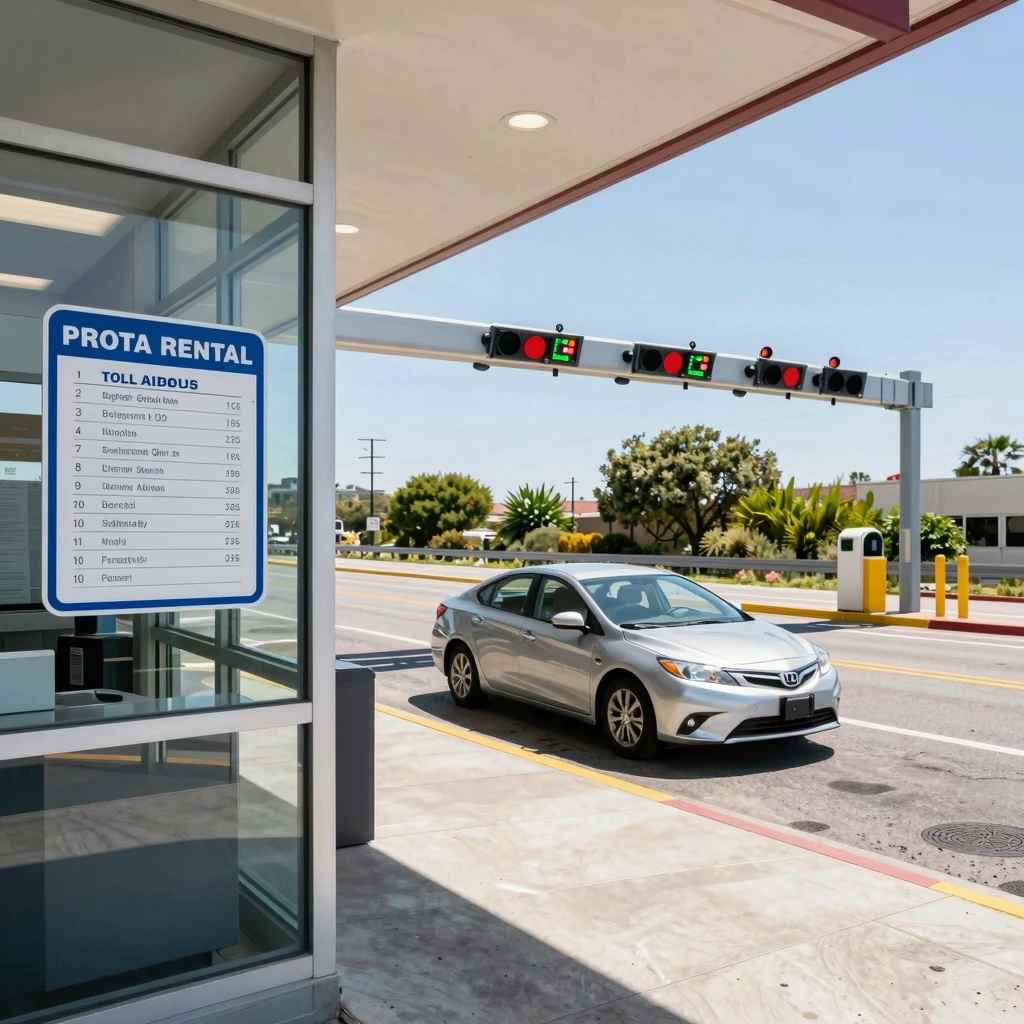
Most rental car companies charge a daily or per-rental fee for their toll service, even if you don’t use any tolls. This fee covers the administrative costs of their toll management system. You’ll also be charged for the actual tolls you incur, often at a higher rate than if you paid directly.
This fee structure is designed for convenience, allowing you to pass through tolls without stopping. However, it can add up quickly, especially on longer trips or in areas with many toll roads.
How Toll Charges Are Processed
When you drive a rental car through a toll, the system records the vehicle’s license plate. The rental company is then billed by the toll authority. They will, in turn, charge your credit card for the tolls plus their administrative fees.
This process can take several days or even weeks after you return the car. It’s important to keep this in mind and check your credit card statements carefully following your rental period.
Example of a Daily Toll Pass Program
Let’s say you rent a car from Company A and opt for their “Toll Pass” program. This program might cost $15 per day. If you drive through one toll bridge that costs $5 during that day, you will be charged $15 for the Toll Pass fee plus the $5 toll, totaling $20.
Even if you didn’t use any tolls that day, you would still be charged the $15 daily fee if the program was activated. This highlights the importance of understanding whether the fee applies daily regardless of usage.
Alternative Options to Rental Company Programs
While rental company toll programs offer convenience, they are not always the most cost-effective. You might be able to save money by managing tolls yourself. This often involves using your own transponder or paying tolls directly where possible.
Some rental agreements might allow you to decline the rental company’s toll program altogether, giving you more control over how you pay.
Using Your Own Transponder
If you have a transponder from your home state or a service like FasTrak, you can often use it in a rental car. You’ll need to check with your transponder provider to ensure it’s compatible with California’s toll systems. Some companies allow you to add a rental car to your existing account temporarily.
This can bypass the rental company’s fees entirely, as tolls will be charged directly to your transponder account. Always confirm this compatibility before your trip.
Paying Tolls Directly
In some cases, you can pay tolls directly. If you see a toll booth that accepts cash, you can pay there. For electronic tolls without a transponder, some systems allow you to pay online within a specified timeframe after passing through the toll.
This usually involves visiting the toll authority’s website and entering your license plate number. This method requires more active management on your part but can lead to significant savings compared to rental company programs.
Strategies for Managing Tolls
Successfully managing tolls on a California road trip requires a bit of planning and awareness. By using smart strategies, you can avoid unexpected charges and keep your travel budget on track. It’s about being informed and making choices that suit your travel style and financial preferences.
Before You Rent Your Car
The best time to think about tolls is before you even pick up your rental car. Research the rental company’s policies thoroughly. Look for information about their toll programs, associated fees, and any options you have to opt out.
Understanding these details upfront will prevent surprises down the road.
Researching Rental Company Policies
Every rental company has a different approach to tolls. Some, like Hertz, offer PlatePass. Avis has a Toll Pass program.
Enterprise may offer their own system. Each of these typically involves a daily fee plus the cost of tolls. Reading the rental agreement carefully is essential.
Pay close attention to any clauses about toll usage and fees. Don’t hesitate to ask rental counter staff for clarification on their specific toll policies.
Planning Your Route
If you plan to avoid tolls, you can use GPS navigation apps that allow you to set preferences for avoiding toll roads. Google Maps and Waze are excellent tools for this. They can recalculate your route to bypass toll points, saving you both money and potential administrative fees from the rental company.
This proactive route planning can save you a lot of hassle.
During Your Rental
While you have the car, staying aware of your surroundings and your rental agreement is key. Pay attention to road signs and any systems you might have opted into.
Recognizing Toll Zones
Toll roads and bridges are usually well-marked with signs. Look for symbols indicating tolls or express lanes. If you see these signs, be aware that using the road will likely incur a charge.
If you have opted out of the rental company’s toll service, consider rerouting if possible. Otherwise, be prepared for the associated charges to appear later on your credit card statement.
Keeping Track of Your Usage
If you are using a rental company’s toll program, or if you have your own transponder linked, it’s wise to keep a rough tally of your toll usage. This helps you verify the charges when they eventually appear on your statement. You can often check toll transponder accounts online to see real-time usage.
This helps you catch any discrepancies early on.
After You Return Your Car
The process isn’t quite over when you hand back the keys. There’s a final step to ensure everything is settled correctly.
Reviewing Your Final Bill
Your final bill from the rental company might take some time to arrive, as they process toll charges. Carefully review this bill for any toll fees. Compare these charges against your own records of toll usage.
If you see discrepancies or charges you don’t recognize, contact the rental company immediately. It’s much easier to resolve issues while the rental period is still fresh in everyone’s minds.
Disputing Incorrect Charges
If you believe you were wrongly charged for tolls, you have the right to dispute them. Gather any evidence you have, such as your own toll records, route tracking from navigation apps, or receipts. Contact the rental company’s customer service department to explain the situation.
Be polite but firm, and provide all necessary documentation. Many issues can be resolved through clear communication and presented evidence.
Understanding Specific California Toll Systems
California’s toll system is diverse, with different authorities managing various routes. Knowing the main ones can help you anticipate charges and understand how your rental car company interacts with them. Each system has its own rules and methods of collection, which are important for rental car users to be aware of.
FasTrak and Its Role
FasTrak is a widely used electronic toll collection system in California, particularly in Northern California. It operates on bridges and toll roads managed by agencies like the Golden Gate Bridge, Highway and Transportation District and the Bay Area Toll Authority. Many rental cars in this region are equipped with FasTrak transponders.
This system simplifies toll payments by allowing vehicles to pass through toll plazas without stopping. Rental companies often integrate their billing with these FasTrak systems.
How Rental Cars Use FasTrak
When a rental car is equipped with a FasTrak transponder, its passage through a toll is recorded. The toll authority then bills the registered owner of the vehicle. Since the rental car is registered to the rental company, the company receives the bill.
They then pass this cost on to you, the renter, along with their own administrative fees. This is a common method for toll collection in areas where FasTrak is prevalent. It’s crucial to know if your rental car has this device.
The 407 Express Lanes Example
While not in California, the concept of express toll lanes is similar. However, California has its own variations. For instance, express lanes on freeways like those in Southern California can be used with a transponder.
These lanes are priced dynamically, meaning the toll can change based on traffic volume. Rental car companies may include these lanes in their toll programs, and it’s important to understand how these variable rates are applied.
Example of Dynamic Toll Pricing
Imagine driving on a California freeway with dynamic express lanes. At peak hour, the toll to use these lanes might be $10. A few hours later, with less traffic, the same lane might only cost $3.
If your rental car’s toll program charges you the highest possible rate or a set premium for using any express lane, you could end up paying more than necessary. Being aware of these fluctuating prices helps in making informed decisions about using these lanes.
Toll Authorities and Their Websites
Several agencies operate toll roads and bridges across California. Knowing these authorities can be helpful for understanding where tolls are located and how to manage them. Key authorities include Caltrans (California Department of Transportation), the Golden Gate Bridge, Highway and Transportation District, and various regional tolling agencies.
Most of these authorities have websites where you can find information about toll rates, payment options, and how to resolve toll violations. These sites are valuable resources for renters.
Finding Information on Toll Websites
If you need to check a specific toll amount or understand a charge, visiting the relevant toll authority’s website is the best approach. For example, if you received a bill for a toll in the Bay Area, you would visit the Bay Area Toll Authority’s website. There, you can often enter your license plate number to see details of the toll transaction.
This transparency can help you confirm the accuracy of the charges before contacting the rental company.
Example Scenario 1 Toll Management
You rent a car in San Francisco and plan to visit Sausalito across the Golden Gate Bridge. The bridge has a toll when heading southbound into the city. The rental company automatically enrolls you in their toll service for a $10 daily fee plus tolls.
The bridge toll is $9. You will be charged $19 for that day. If you had opted out and had your own FasTrak, you’d only pay $9.
This shows the potential cost difference.
Example Scenario 2 Toll Management
You rent a car in Los Angeles and are driving around the city. You inadvertently use a 405 express lane during rush hour. Your rental agreement states you get their “Toll Pass” which is $20 per day.
The express lane toll was $7. You will be charged $27. If you had used a navigation app to avoid toll roads or had your own compatible transponder, you could have potentially avoided this combined charge.
Avoiding Unnecessary Toll Charges
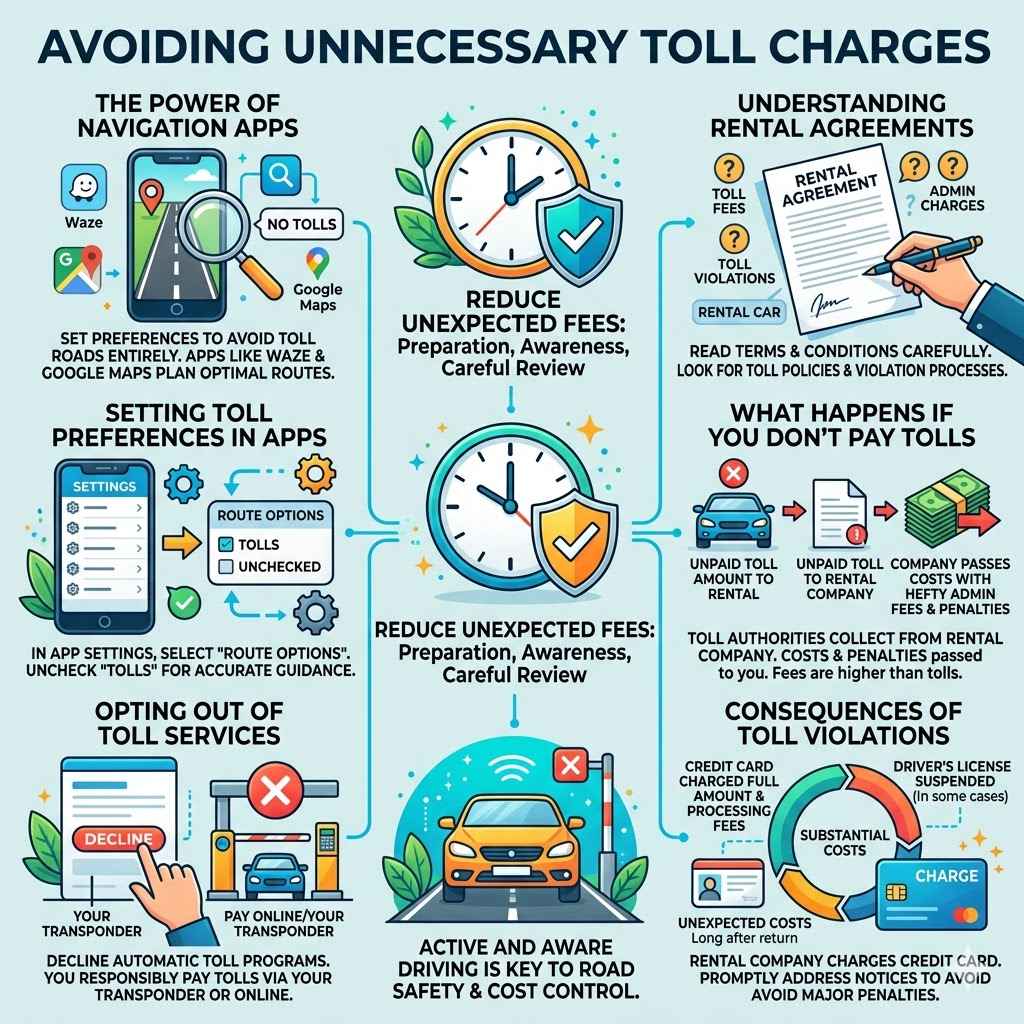
The best way to handle tolls is often to avoid unnecessary charges altogether. This requires a combination of preparation, awareness during your trip, and careful review after. By implementing these steps, you can significantly reduce the chances of unexpected fees.
The Power of Navigation Apps
Modern navigation apps are incredibly powerful tools for toll management. Apps like Waze and Google Maps allow you to set preferences to avoid toll roads entirely. When you input your destination, the app will find the route with the fewest or no tolls.
This is a simple yet highly effective method for controlling your toll expenses and avoiding any fees associated with rental car toll programs.
Setting Toll Preferences in Apps
In Google Maps, for example, you can go to settings and select “Route options.” Here, you’ll find a checkbox for “Tolls.” Simply uncheck this option, and the app will plan your routes to avoid them. Waze also has similar settings that are easy to find within its navigation menu. Always ensure these settings are applied before you start driving to get accurate route guidance.
Understanding Rental Agreements
Your rental agreement is a legal document that outlines all terms and conditions, including toll policies. Reading this document carefully before signing is critical. Look for sections detailing toll fees, administrative charges, and the company’s process for handling toll violations.
If anything is unclear, ask the rental agent for an explanation. This is your best defense against unexpected charges.
Opting Out of Toll Services
Many rental companies offer an “opt-out” option for their toll services. This means you can decline their automatic toll payment program. If you choose to opt out, it is your responsibility to pay all tolls incurred.
This is often the most cost-effective option if you are willing to manage toll payments yourself, perhaps by using your own transponder or paying online where available. Make sure you clearly state you are opting out.
What Happens If You Don’t Pay Tolls
Failing to pay tolls can lead to significant consequences. Toll authorities will first attempt to collect the unpaid toll amount directly from the vehicle’s registered owner, which is the rental company. They will then likely pass these costs on to you, often with hefty administrative fees and penalties.
These charges can be much higher than the original toll amount and can appear long after you’ve returned the car.
Consequences of Toll Violations
If a rental car accumulates unpaid tolls and penalties, the rental company will typically charge your credit card for the full amount, plus their own processing fees. This can result in substantial unexpected costs. In some cases, unpaid tolls can even lead to your driver’s license being suspended.
It’s crucial to address any toll notices promptly. Rental companies have strict policies against unpaid tolls.
Frequently Asked Questions
Question: How do I know if my rental car has a toll transponder
Answer: Look on the windshield for a small electronic device, often in a black box, or check with the rental agent when you pick up the car. They should be able to tell you if it’s equipped with a toll pass or transponder.
Question: Can I refuse the rental company’s toll service
Answer: Yes, in most cases you can refuse the rental company’s automatic toll service. However, you must then be prepared to pay all tolls yourself through their designated methods, such as using your own transponder or paying online.
Question: How long after returning the car can I expect to be charged for tolls
Answer: It can take anywhere from a few days to several weeks for toll charges to appear on your credit card statement. This is because the rental company has to process the bills from the toll authorities.
Question: What if I see a toll charge I don’t recognize on my bill
Answer: First, try to recall your route during the rental period. If you still don’t recognize it, contact the rental company immediately. Provide them with your rental details and request clarification or evidence of the toll charge.
Question: Is it cheaper to use my own toll transponder than the rental company’s program
Answer: Often, yes. Rental companies add their own administrative fees on top of the actual toll costs. Using your own transponder usually means you only pay the direct toll amount or your usual account fees.
Summary
Effectively managing tolls in California with a rental car is straightforward once you understand the system. By researching rental company policies, utilizing navigation apps to avoid tolls, and carefully reviewing your final bill, you can prevent unexpected charges. Always consider opting out of rental company toll programs if you’re comfortable handling tolls yourself for potential savings.
This proactive approach ensures a smoother and more budget-friendly trip.