Best Auto Service Tools for DIY Repairs (2026): We Compared
The best auto service tools for DIY repairs are a socket set, torque wrench, jack and jack stands, breaker bar, pliers, screwdrivers, trim tools, drain pan, and scan tool. Skip the basics and you strip fasteners, mis-torque wheels, and turn cheap maintenance into shop work. This guide ranks the smallest tool stack that covers common home repairs, then adds specialty tools only when a job truly needs them.
Quick comparison
| Product | Badge | Best for | Price | ||
|---|---|---|---|---|---|
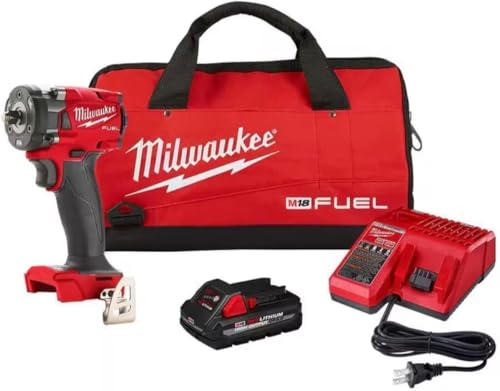 |
Milwaukee M18 Fuel 18 V 3/8 in. Cordless Brushless CompactMilwaukee | Our pick | 18V · Brushless · 3/8-Inch Drive | $275.00
Price as of 20 Oct 2026
|
View |
 |
Klein Tools 33809M Grab-And-Go Impact Socket Set, Metric,KLEIN TOOLS | Pair with it | Metric · 10-Piece · Impact-Rated | $29.98
Price as of 20 Oct 2026
|
View |
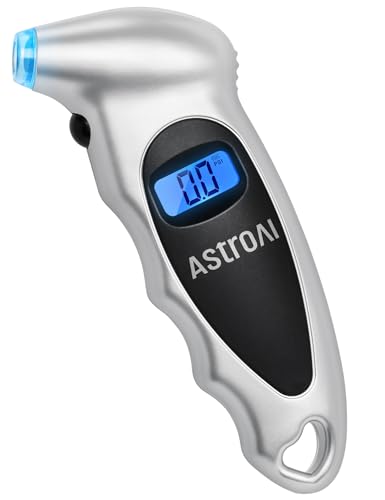 |
AstroAI Digital Tire Pressure Gauge 150PSI, ±1PSI AccuracyAstroAI | Budget pick | Digital · 150PSI · ±1PSI Accuracy | $6.99
Price as of 20 Oct 2026
|
View |
The shortest useful starter stack covers wheels, brakes, battery service, trim, and simple electrical checks without buying duplicate tools. Metric plus SAE coverage matters if you own more than one vehicle or plan to help family and neighbors.
How we chose these tools
We compared the tools by job coverage per dollar, the size ranges that matter first, and how well each tool helps avoid damage. Safety mattered as much as speed. Storage, warranty, and the ability to buy one tool now and add more later also mattered.
The best picks solve a specific job cleanly. A good starter kit should tighten wheels correctly, reach brake hardware, remove trim without breaking clips, and read fault codes without pretending to diagnose everything on its own.
Job coverage per dollar
Beginner tools should cover the widest set of common repairs first. That means a socket set, torque wrench, and lifting gear before niche accessories. Specialty tools come later, when you are actually doing brake, suspension, or electrical work.
Size range and compatibility
Mixed fleets need both metric and SAE. Most modern domestic and import vehicles use a lot of metric fasteners, but older vehicles and some accessories still use SAE sizes. A kit that ignores one side will leave gaps fast.
Safety and fastener control
Tools that control force matter more than flashy extras. That includes six-point sockets, a torque wrench, a breaker bar for seized hardware, and jack stands for under-vehicle work. These are the tools that prevent rounded bolts and collapsed cars.
Durability, warranty, and storage
Chrome-vanadium wrenches, impact-rated sockets, and organized cases hold up better than random low-grade pieces. Organization matters because a missing 10 mm socket wastes time immediately. A neat case also makes it easier to see what you still need.
Do you need metric or SAE tools for car repair?
You need both if you want one toolkit to handle the broadest range of DIY jobs. Metric covers most current cars, but SAE still shows up on older vehicles, battery hardware, accessories, and some American-market repairs. A mixed set prevents dead ends.
If you only own one newer car, metric may cover most of your routine maintenance. If you own a second older vehicle, or plan to work on other cars, SAE becomes worth buying early. The small savings from skipping SAE rarely pay off.
The socket sizes that matter first
For metric work, the common first purchases are the sizes that appear on wheels, brake hardware, battery clamps, interior trim fasteners, and sensor brackets. For SAE, the same logic applies: buy the sizes that actually appear on your vehicle before filling in the rest.
Say your car has a 17 mm wheel lug and 13 mm brake caliper bolts, but your battery hold-down uses a 10 mm nut. A metric-only starter set handles those jobs. Then a second vehicle with a 1/2-inch bracket bolt or older accessory hardware makes SAE useful too.
Where metric-only kits fall short
Metric-only kits fail the moment you meet a SAE fastener on a battery tray, accessory bracket, or older suspension component. They also create slowdowns on roadside work, where you may need to help a different car with different hardware. Mixed coverage is cheaper than a second trip.
Socket set: best for most fasteners
A basic socket set is essential for most repairs. The best all-around automotive setup uses 3/8-inch drive for everyday work, 1/2-inch drive for lug nuts and suspension fasteners, deep sockets for spark plugs and long studs, six-point sockets for grip, and a fine-tooth ratchet for tighter swing arcs.
A practical automotive socket set should include metric and SAE sizes. That is the core of the smallest useful kit because wheels, brakes, battery terminals, underhood brackets, and many trim fasteners all depend on sockets more than any other hand tool.
3/8-inch drive as the everyday size
The 3/8-inch drive is the all-around size for most DIY car work. It is small enough for engine bay access, strong enough for common fasteners, and flexible enough to pair with extensions and adapters. That makes it the best first drive size for most beginners.
Research and kit descriptions point to 3/8-inch drive as the ideal starting point for automotive socket sets. The Gearwrench 80550 is described as a socket set for DIY car repair, and the broader market includes compact kits such as the 46-piece Egofine set, the 228-piece DEKOPRO kit, the 240-piece Prostormer kit, and the 325-piece KingTool kit.
6-point sockets, deep sockets, and a 72-tooth ratchet
Six-point sockets grip the flat sides of a fastener better than 12-point designs, which reduces rounding on rusty or painted bolts. Deep sockets matter for spark plugs and long studs, where a shallow socket simply will not seat fully. A 72-tooth ratchet helps when the swing arc is tight.
A compact ratchet is not just a convenience. In crowded engine bays, that smaller sweep can be the difference between removing a bolt and stripping its head because you had to reposition too many times. Tight access is where a fine-tooth ratchet pays for itself.
When to add 1/2-inch drive sockets
Move up to 1/2-inch drive when you begin handling lug nuts, suspension bolts, and other higher-torque fasteners. This size is less about finesse and more about strength and force. It pairs well with a breaker bar for stuck hardware and heavy wheel work.
Most DIY garage kits should have both 3/8-inch and 1/2-inch drive sockets if the owner plans to rotate tires, service brakes, or touch suspension parts. That combination covers the jobs beginners encounter first without forcing you into repeated tool rentals.
Torque wrench: best for accurate tightening
A torque wrench is important for avoiding over-tightening and under-tightening. Most DIY car repairs fall somewhere in a 10 to 150 ft-lbs range, but spark plugs often need a lower-range wrench for accuracy. Click, beam, and digital models all have a place.
Auto Precision says a torque wrench is vital for accurate fastener tightening, and that fits the job: wheel installs, brake work, spark plugs, and suspension fasteners all depend on correct clamping force. The key is buying the right range for the job.
Click, beam, and digital types
Click torque wrenches are the most common choice for beginners because they stop at a preset value. Beam wrenches are simple and do not rely on a spring mechanism, but they can be harder to read in a cramped bay. Digital models are easier to read and may offer extra functions.
If you want one general-purpose wrench for wheels, brakes, and suspension, a mid-range click wrench is the most practical first buy. A beam wrench can serve as a simple backup. A digital wrench is useful if you want easier readings and a cleaner display.
Why calibration matters
Torque wrenches need calibration to stay trustworthy. If the wrench is off, a wheel can be under-tightened or a brake fastener can be crushed past spec. That risk grows over time if the wrench is stored wound tight or dropped.
For spark plugs, the caution is different: a large-range wrench is often inaccurate near the low end of its scale. That is why spark plug work often calls for a lower-range torque wrench rather than the same wrench you use on lug nuts.
Where a lower-range wrench is the better choice
A lower-range wrench is the better choice for spark plugs, small engine cover bolts, and delicate fasteners that require only modest torque. Using a big wrench at the bottom of its range invites bad readings. Save the big wrench for wheels and suspension hardware.
Picture a valve cover or spark plug job where the spec is much lower than a wheel lug. A wrench that is too large for that fastener can push you into guesswork. The safe move is to match the wrench range to the job, not the other way around.
Jack and jack stands: best for safe lifting
Jack stands are non-negotiable for under-vehicle safety, and the floor jack is only the lifting tool. Buy a floor jack with enough capacity for your vehicle, preferably a low-profile design if your car sits low. Then use jack stands with a real load rating that matches the job.
The same source recommends jack stands for under-vehicle repairs, and that advice should be treated as mandatory. Never work under a car supported only by a floor jack. Use the designated lift points listed for the vehicle, not random suspension or sheet-metal locations.
Floor jack capacity and low-profile design
A floor jack should lift the vehicle comfortably without maxing out the pump. Low-profile jacks matter for lowered cars, sports sedans, and some front splitters that leave less ground clearance. The wrong jack can be useless before it starts lifting.
Buy enough capacity for the vehicle, not just the corner you plan to raise. Capacity labels can be misleading if you ignore how weight shifts during lifting. That is why a margin matters. A jack should not be operating on the edge of its rating.
How to read jack stand ratings
Jack stand ratings are often misunderstood because the number may refer to a pair or to each stand. Check the label carefully and account for how the car’s weight is distributed. A pair rating is not the same as a single-stand rating.
The stand choice should match the vehicle and the work. For suspension or brake work, give yourself enough margin to support the corner safely without guessing. The stand is what protects you if the jack loses pressure or slips.
Using designated lift points
Use the factory lift points or the approved jacking points in the owner’s manual. That protects rocker panels, pinch welds, battery trays, and floor pans from bending or crushing. It also keeps the vehicle from slipping off the stand saddle.
A common first-timer mistake is placing the jack under a flat floor panel because it looks sturdy enough. The panel can deform, then the jack saddle shifts. The right lift point removes that risk before the car ever comes off the ground.
Tool stack decision table
This table ranks the first 15 tools by the jobs they cover, the minimum spec to buy, and the failure you avoid by owning them now. It is meant to keep the starter stack small and useful, not complete on day one.
| Tool | Primary job | Minimum spec | Common failure if omitted | Priority tier |
|---|---|---|---|---|
| Socket set | Remove and install common fasteners on wheels, brakes, battery trays, and brackets | Metric and SAE, 3/8-inch drive, 6-point sockets | Rounded bolts, stalled jobs, wrong-size improvisation | Tier 1 |
| Ratchet | Turn sockets in tight spaces | 72-tooth head, durable release button | Too much swing required in cramped bays | Tier 1 |
| Torque wrench | Tighten wheels, brake hardware, suspension fasteners, and spark plugs to spec | Click, beam, or digital; common DIY range around 10 to 150 ft-lbs | Over-tightened threads, warped parts, loose wheels | Tier 1 |
| Floor jack | Lift the vehicle for tire, brake, and underbody access | Low-profile design and capacity matched to the vehicle | Unsafe lifting, inability to reach factory lift points | Tier 1 |
| Jack stands | Hold the vehicle safely while you work underneath | Load rating matched to the vehicle and pair setup | Working under an unsupported car | Tier 1 |
| Breaker bar | Loosen seized lug nuts and suspension bolts | Long handle, 1/2-inch drive | Rounded fasteners, damaged ratchet gear | Tier 1 |
| Combination wrench set | Reach nuts and bolts where a socket cannot fit | 8 mm to 19 mm, open-end and box-end, chrome-vanadium steel | Inability to hold a fastener while turning a bolt | Tier 1 |
| Screwdriver set | Remove interior trim, covers, battery shields, and small screws | Phillips, flathead, Torx T15 to T30, hex/Allen bits, magnetic tips, stubby driver | Stripped screws, broken clips, damaged plastic panels | Tier 1 |
| Pliers and cutters | Grip hoses, compress clips, cut wire ties, and reposition small parts | Needle-nose, slip-joint, locking pliers, side cutters | Pinched fingers, damaged wiring, stuck clips | Tier 1 |
| Diagnostic scanner | Read fault codes and view live data from OBD2 systems | Beginner-friendly OBD2 reader with code and live-data functions | Guessing at check engine light causes | Tier 2 |
| Work light | See fasteners, fluid leaks, and routing under the hood or car | Bright LED, corded or cordless | Missed bolts, dropped hardware, slow work | Tier 2 |
| Trim tools | Remove clips and panels without marring plastic | Nylon or non-marring pry tools | Broken clips, scratched panels | Tier 2 |
| Extensions and adapters | Reach recessed fasteners | Assorted lengths for 3/8-inch and 1/2-inch drive | Inability to access hidden bolts | Tier 2 |
| Drain pan | Catch oil, coolant, or brake fluid during service | Large enough for the job, with pour spout | Mess, spills, unsafe cleanup | Tier 2 |
| Test light or multimeter | Check simple electrical power and ground issues | Basic voltage and continuity checks | Damaged wiring stays hidden | Tier 2 |
Klein 3/8-inch metric socket set: best for compact coverage
This Klein Tools 33809M set is for the beginner who wants a compact metric socket kit without buying a large case first. Based on the published details, it covers nine common metric sizes in a 3/8-inch drive format, with color-coded rings and stamped markings for quick identification.
The advantage here is speed and clarity. The 10 mm through 19 mm range covers many routine fasteners, and the impact-rated Cr-Mo steel is built for high-torque use. The drawback is obvious: it is metric only, so SAE fasteners still require a separate set.
Milwaukee M18 Fuel 3/8-inch impact wrench: best for stuck fasteners
This Milwaukee impact wrench is for the user who has already moved past hand tools and wants faster wheel service and stubborn-fastener removal. The compact 5.25-inch body helps in tight spaces, and the included battery and charger make it a complete cordless setup from the start.
It is a strong fit for lug nuts and suspension work where a hand ratchet starts to struggle. The drawback is cost and overlap: a cordless impact wrench is useful, but it does not replace a torque wrench for final tightening, and it is more tool than a true first purchase for every beginner.
AstroAI tire pressure gauge: best for quick checks
This AstroAI digital tire pressure gauge is a simple add-on for anyone keeping a roadside kit or doing tire rotations at home. The published details list ±1 PSI accuracy, a 150 PSI maximum, a backlit display, and a nozzle light for low-light use.
It does one job well: checking inflation. The drawback is that it does not help with actual repair work, so it belongs in the maintenance layer of the kit, not the core service stack. It is useful, but it is not a substitute for sockets, lifting gear, or torque control.
Which one should you buy first?
Buy the socket set first if you are starting from zero. It unlocks the broadest number of repairs for the least money and gives you the foundation for everything else. Add jack stands and a torque wrench next if wheel or brake work is on the schedule.
If you work on one car, buy the tool that matches its fasteners first. That usually means metric sockets, a 3/8-inch ratchet, and a torque wrench with a range that fits wheel and brake hardware. If you own multiple vehicles, start with a mixed metric-and-SAE socket set and a breaker bar.
Skip specialty tools until the job demands them. A scan tool is useful for check engine lights, but a basic reader only gives codes and live data. It does not reliably tell you whether the fault is sensor, circuit, or mechanical without further testing. Buy the scanner when diagnostics become a real need.
Say your wheel lug is seized and the 3/8-inch ratchet starts flexing. That is the moment the breaker bar earns its place. Suppose you pull an interior panel and the plastic clip splits because the screwdriver was wrong. That is the moment trim tools move from optional to necessary.
Best choice for a budget starter kit
Start with a compact metric socket set, a basic ratchet, screwdrivers, pliers, and a tire pressure gauge if space and money are tight. That combination handles the most common small jobs and keeps the kit easy to store. Add jack stands before any under-vehicle work.
Best choice if you work on one car
Buy around the vehicle’s actual fastener sizes instead of chasing a huge tool count. A focused set with the correct metric sockets, a torque wrench, and the right combination wrenches will outperform a bigger box full of rarely used pieces.
Best choice if you own multiple vehicles
Choose a broader socket set with metric and SAE coverage, a breaker bar, and a torque wrench that fits wheel and suspension work. Multiple vehicles create mixed fastener patterns fast. A larger kit is cheaper than piecing together duplicate tools later.
What to skip until you need it
Skip advanced diagnostic tools, specialty suspension tools, and powered accessories until a repair calls for them. Brake caliper tools, coil-spring compressors, and advanced scan functions are useful, but they are not first purchases for a basic garage. Let the job decide.
Frequently asked questions
Which tools are needed for car repair?
The core repair set is a socket set, ratchet, torque wrench, jack and jack stands, breaker bar, screwdrivers, pliers, and a work light. Add a diagnostic scanner for check engine light work and combination wrenches for places a socket cannot reach. That covers most basic home repairs.
What tools do I need for DIY car repair?
Start with the tools that cover the most jobs: metric and SAE sockets, a 3/8-inch ratchet, a torque wrench, jack stands, and a breaker bar. Then add screwdrivers, pliers, and a scan tool. Specialty tools wait until you tackle brakes, suspension, or electrical diagnosis.
What are the best auto service tools for beginners?
The best beginner tools are the ones that reduce mistakes. A six-point socket set, a torque wrench, jack stands, screwdrivers with Torx bits, pliers, and a simple OBD2 scanner give you the widest repair coverage without making the kit bloated or hard to store.
What size socket set is best for car repairs?
A 3/8-inch drive socket set is the best all-around starting point. It handles most common fasteners with good access and enough strength for routine work. Add 1/2-inch drive sockets when you begin working on lug nuts, suspension bolts, and other higher-torque hardware.
Is a torque wrench necessary for DIY car repairs?
Yes. It matters for wheel installs, brake work, spark plugs, and suspension hardware. Most DIY work falls around 10 to 150 ft-lbs, but spark plugs often need a lower-range wrench for accuracy. A torque wrench prevents both loose fasteners and damaged threads.
Products related to this article
Sponsored / affiliate links. As an Amazon Associate I earn from qualifying purchases. I may earn additional commission from eligible campaigns.