How Car Services Work: Checks, Costs, and Extras
A car service is a workshop inspection plus scheduled replacement of items such as engine oil, filters, and time-based fluids, with extra work added only if the inspection finds wear, leaks, faults, or safety issues. Skip it and you can face higher repair bills, shorter component life, poor fuel economy, and denied warranty claims. This guide breaks down the process step by step, what should be checked or replaced, what counts as extra, and how to judge a fair quote.
What a car service actually is


A service is not one fixed job. It is a scheduled mix of checks, maintenance, and sometimes follow-up repairs, all based on the vehicle’s mileage, age, and service history. The workshop follows a checklist, then flags anything that needs approval before more work is done.
Routine maintenance versus repair work
Routine servicing covers predictable items that wear or age over time, such as engine oil, filters, and fluid checks. Repair work starts when the inspection finds damage, low wear life, leaks, warning lights, or failed parts. That split matters because a quote can include both, but they are not the same job.
Why the manufacturer service schedule matters
The manufacturer service schedule is the interval list in the owner’s manual. It tells you what should be done at set mileage or time points for that make and model, and it matters for warranty compliance. A workshop may suggest extras, but the manual is the reference for required maintenance.
Interim, full, and major service at a glance
An interim service is the lighter visit, usually around 6 months or 6,000 miles, and is often chosen by drivers who cover higher mileage. A full service is usually annual or around 12,000 miles and is more comprehensive. A major service is the deepest routine visit, often adding more replacement items and closer inspection of wear parts.
How a service visit works from drop-off to handover
A service visit usually follows the same workshop flow: booking, arrival checks, inspection, routine maintenance, approval for anything extra, then invoice and handover. Understanding that sequence helps you see why a quote can change after the car is opened up or scanned.
Booking and service authorisation
When you book, the workshop should ask for the vehicle registration, mileage, service history, and any symptoms such as noise, warning lights, or fluid loss. You should ask what is included, what is not, and whether the price covers parts, labour, and taxes. That avoids surprises later.
Initial inspection and checklist work
On arrival, a mechanic or service adviser records the mileage, walks around the car, and checks for obvious damage, warning lights, leaks, and tyre condition. Then the workshop starts the scheduled checklist. A service does not mean every possible repair is done automatically; anything beyond the listed work needs approval.
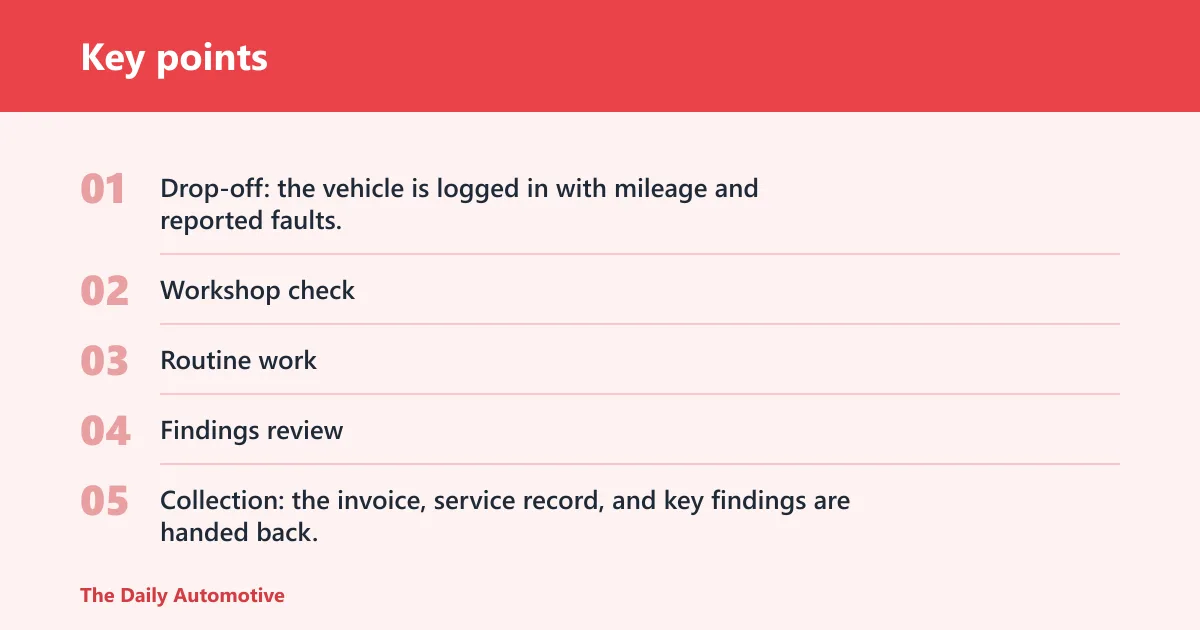
- Drop-off: the vehicle is logged in with mileage and reported faults.
- Workshop check: the car is inspected against the service schedule.
- Routine work: agreed maintenance items are completed.
- Findings review: any extra faults are reported for approval.
- Collection: the invoice, service record, and key findings are handed back.
Collection, invoice, and service record update
At collection, the invoice should separate scheduled service items from optional extras and repairs. The service record or service book should also be stamped or updated in digital form. That record matters for warranty tracking, future servicing dates, and resale value.
Service workflow table
| Stage | Mechanic action | Customer decision point | Typical time impact | Common upsell or failure flag |
|---|---|---|---|---|
| Interim service | Change engine oil and oil filter, check basic safety items, inspect fluids, lights, tyres, and visible leaks | Approve any worn part found during the inspection | Often part of a half-day booking | Air filter, cabin filter, brake fluid, or wiper blades may be suggested separately |
| Full service | Carry out a wider checklist: brakes, tyres, lights, fluids, engine condition, belts, and general under-bonnet checks | Approve replacements outside the core service | Usually longer than an interim service | Brake wear, tyre damage, battery weakness, or warning lights often trigger extra work |
| Major service | Perform deeper maintenance, often including more filters, plug changes where due, and a broader inspection of wear items | Confirm cost before any added labour or parts | Can take most of a day | Spark plugs, brake fluid, drive belt checks, and other age-based items may be due |
| Repair found during service | Diagnose the fault, price the repair, and pause the job if approval is needed | Approve, delay, or decline the repair | May add hours or move collection to another day | Leaking caliper, low brake pads, cracked tyre sidewall, coolant leak, or fault code investigation |
What mechanics check during a service
Mechanics do more than change oil. They inspect wear, leaks, fluid condition, safety items, and warning signs that point to future failure. What is checked depends on the service level, but the core idea is the same: catch maintenance due items before they become breakdowns.
Engine oil and oil filter
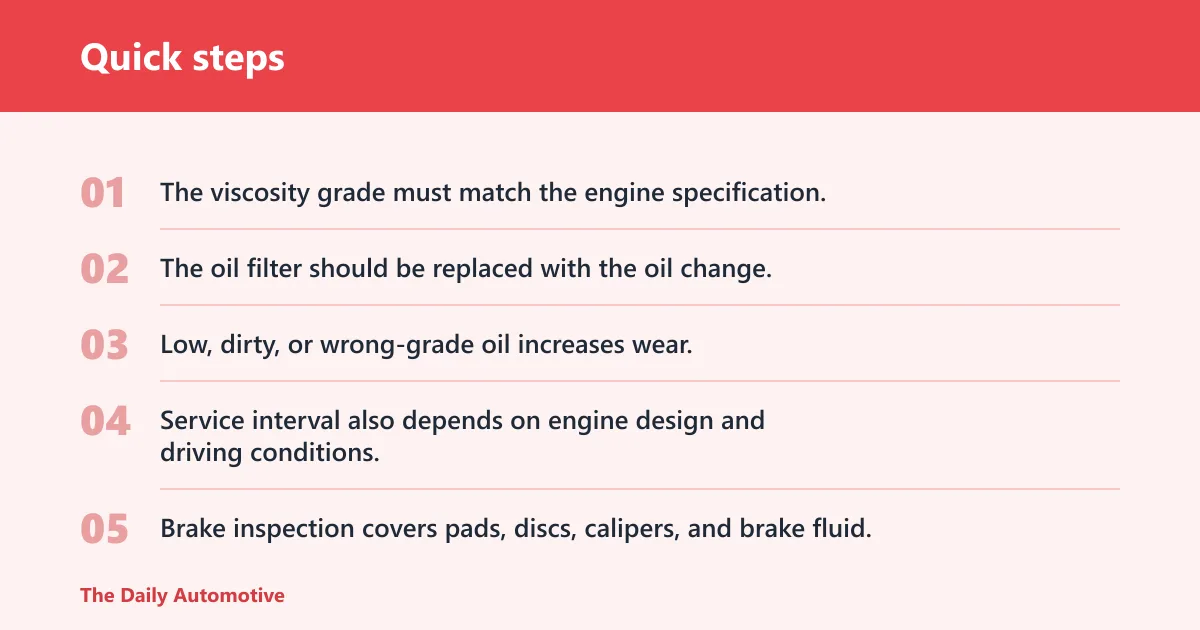
Engine oil is central to the service. The viscosity grade must match the engine specification, because the wrong oil can affect lubrication and cold-start performance. The oil filter should be replaced with the oil change, since a dirty filter can reduce flow and allow contamination to stay in circulation.
Low, dirty, or wrong-grade oil increases wear. Service interval also depends on engine design and driving conditions, so a car used for short trips, towing, or heavy urban use may need oil changes sooner than a lightly used car.
Brake inspection
Brake inspection covers pads, discs, calipers, and brake fluid. The workshop looks for wear, noise, sticking calipers, leaks, and fluid condition. If pads are thin or discs are below spec, the service should turn into a repair quote, because brakes are a critical safety item.
Tyre inspection
Tyre checks include tread depth, pressure, uneven wear, and sidewall damage. A tyre that wears on one edge can signal alignment or suspension issues. Rotation and balancing may be suggested if wear patterns or vibration point that way, but those are separate operations unless bundled in the service package.
Fluid top-ups and contamination checks
Routine service checks usually include coolant, brake fluid, power steering fluid where fitted, and screenwash or washer fluid. The workshop should also look for contamination, not only level. Milky coolant, dark brake fluid, or contaminated washer fluid can point to a maintenance or repair issue, not just a low level.
Diagnostic scan and warning lights
A diagnostic scan reads OBD-II fault codes and can help trace warning lights, sensor faults, and some emission-related problems. It is not always included in a basic service. If a warning light is on, or the driver reports poor running, the workshop may charge diagnostic time separately before any repair estimate is given.
Picture a diesel hatchback that arrives for a full service with the engine light on. The service can still cover the checklist work, but the fault-code scan, diagnosis, and any sensor replacement are separate decisions. That is why a service invoice can contain both routine maintenance and a paid diagnostic line.
What is included, and what costs extra?
The important line is not “service” versus “no service.” It is scheduled maintenance versus optional replacement or fault repair. A fair quote should show which items are included in the booked service level and which items were only found after inspection.
Checklist items versus optional replacements
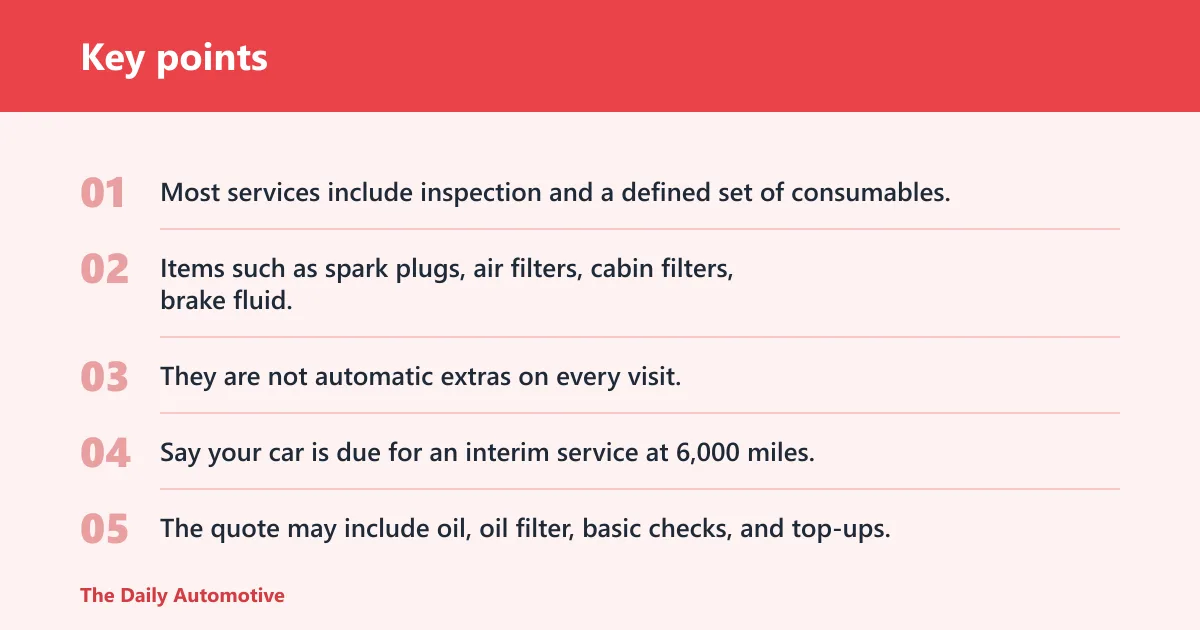
Most services include inspection and a defined set of consumables. Items such as spark plugs, air filters, cabin filters, brake fluid, and battery testing may be included only on certain service levels or when the manufacturer schedule calls for them. They are not automatic extras on every visit.
Say your car is due for an interim service at 6,000 miles. The quote may include oil, oil filter, basic checks, and top-ups, while an air filter or brake fluid change may be listed as optional because the schedule does not require them yet. That separation is the key to judging the price.
Spark plugs, air filters, and brake fluid
Spark plugs are usually replaced on mileage- or time-based intervals rather than at every service. Air filters and cabin filters can also be due only at certain intervals or when dirt loading is high. Brake fluid is time-sensitive because it absorbs moisture, but whether it is included depends on the service level and manufacturer schedule.
Labor, parts, consumables, and diagnostic time
To judge whether a quote is fair, break it into four parts: labour, parts, consumables, and diagnostic time. Labour covers the mechanic’s time. Parts are items such as filters or plugs. Consumables include oil, washers, and fluids. Diagnostic time should appear separately when fault-code investigation is needed.
How often should a car be serviced?
Service timing depends on mileage, time, and the manufacturer schedule. Many cars use annual or mileage-based intervals, whichever comes first. If the car covers high miles, shorter intervals may be sensible because oil and wear items age faster under heavier use.
Mileage and time intervals
The owner’s manual should list the recommended service interval for the exact make and model. That schedule may call for annual servicing, a set mileage, or both. Following it helps keep maintenance aligned with the engine, gearbox, brakes, and other systems fitted to that vehicle.
High-mileage driving and interim services
Interim services suit drivers who cover lots of miles or run the car in harsher conditions. A common interval for that lighter visit is about 6 months or around 6,000 miles. It is a practical way to keep oil and basic safety items in check between the larger annual services.
Warranty and manufacturer compliance
For cars under warranty, missing the manufacturer service schedule can lead to avoidable disputes. The workshop should use the correct parts and fluids, and the record should show the work was done on time. That service history also makes it easier to prove what maintenance has already been completed.
How do car service plans work?
Car service plans are prepaid or subscription-style maintenance agreements that spread the cost of routine servicing over time. They can be useful for budgeting, but the terms matter. A plan may cover routine service items and parts, yet still exclude wear-and-tear repairs or any fault found during inspection.
Prepaid and subscription-style plans
Some plans collect a monthly payment, while others ask for a lump sum up front. The plan may then cover one or more scheduled services at a fixed workshop or network. The exact cover depends on the provider, so you need to check whether the plan follows manufacturer intervals or a separate timetable.
What plans may include
A plan may bundle oil, filters, labour for scheduled servicing, and standard inspection checks. Some include brake-fluid changes or other age-based maintenance. Others only cover the basic service and leave replacement parts outside the plan. Read the schedule carefully before relying on the headline monthly payment.
What plans usually exclude
Most plans exclude wear-and-tear repairs such as brake pads, discs, tyres, batteries, suspension parts, and fault repairs caused by leaks or sensor problems. They may also exclude diagnostics unless the provider states otherwise. That distinction matters because the service visit can still uncover a separate repair bill.
Frequently asked questions
What do mechanics do in a full service?
In a full service, mechanics usually carry out a wider checklist than an interim service. That often includes brakes, tyres, lights, fluid levels, engine checks, and under-bonnet inspection. The exact list depends on the make and model, so the service schedule should be checked first.
Does a car service include oil change?
Many services include an oil and oil filter change, especially interim and full services, but not every package does. The oil grade should match the manufacturer specification, and the filter should be replaced with the oil. Always confirm that both parts are included before booking.
What should I ask for when booking a car service?
Ask which service level you are booking, what is included, what is excluded, and whether the quote covers parts, labour, and taxes. Also ask if diagnostics are extra, whether the schedule follows the owner’s manual, and how approval works if the inspection finds a repair.
What is the difference between interim and full service?
An interim service is the lighter visit, often at 6 months or 6,000 miles, and usually focuses on oil, filter, and basic safety checks. A full service is typically annual or 12,000 miles and includes a more extensive inspection of brakes, tyres, lights, fluids, and the engine.
Products related to this article
Sponsored / affiliate links. As an Amazon Associate I earn from qualifying purchases. I may earn additional commission from eligible campaigns.