How Many Litres Of Oil Does A 2.0L Engine Take?
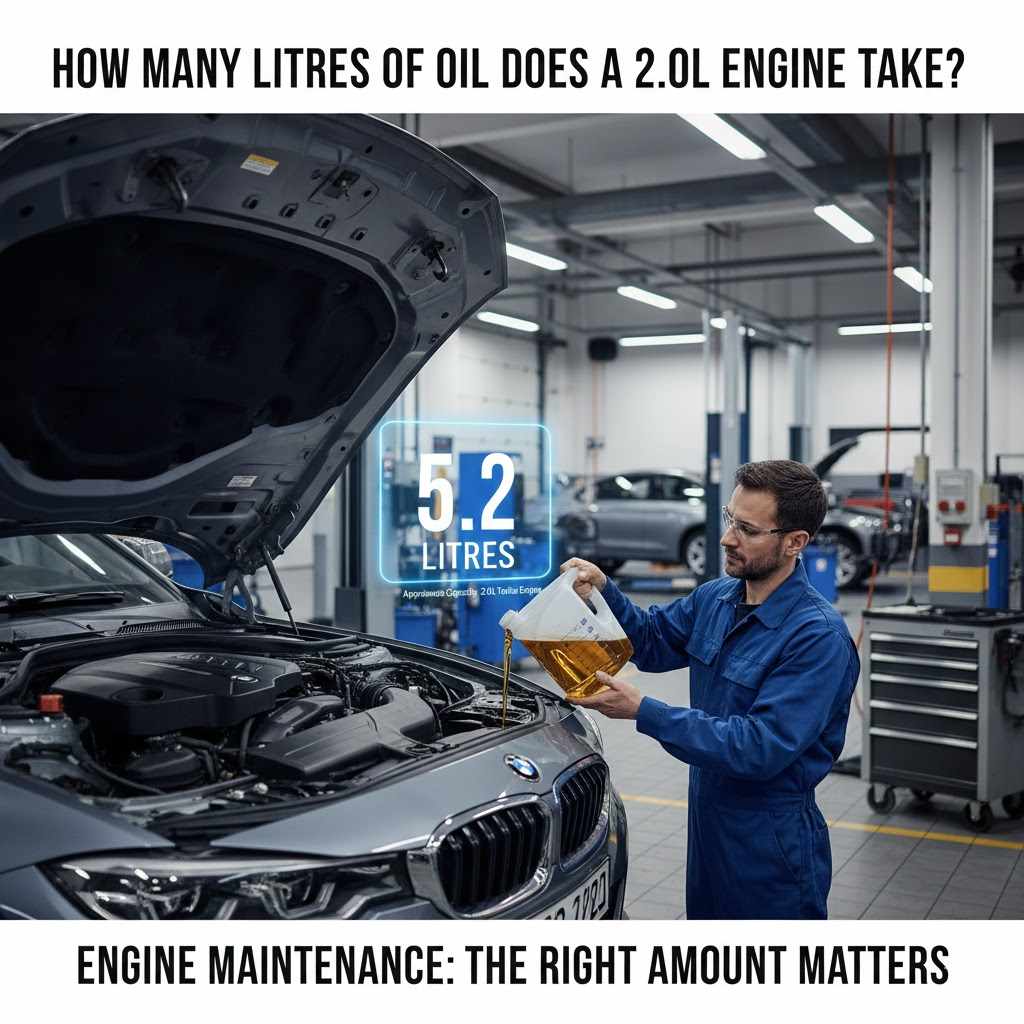
Figuring out how much oil your car needs can feel a bit tricky when you’re just starting out. You might wonder, “How Many Litres of Oil Does a 2.0L Engine Take?” because engines can be a bit different. Don’t worry, it’s not as hard as it sounds! We’ll make it super simple, step-by-step, so you can feel confident changing your oil. Let’s get this sorted out.
Understanding Your 2.0L Engine Oil Needs
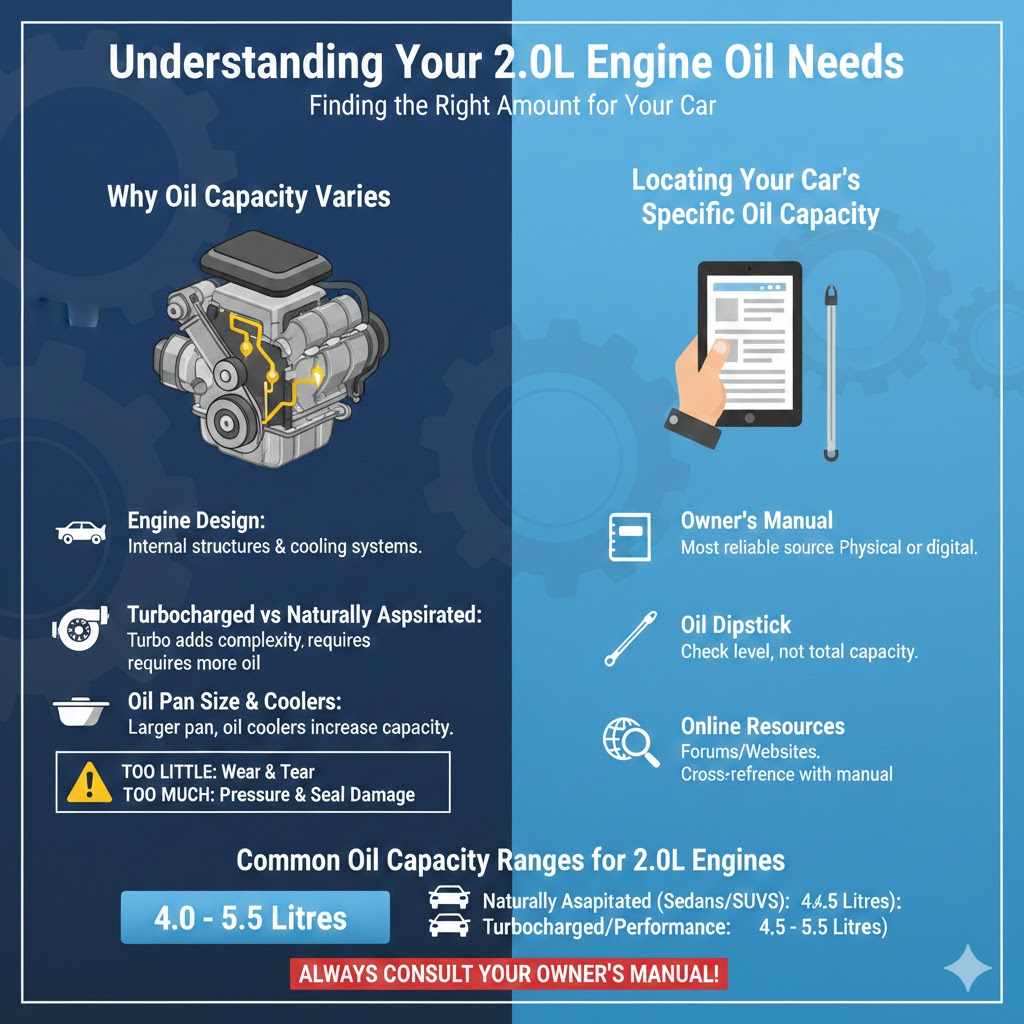
Knowing exactly how much oil a 2.0L engine requires is a common question for many car owners, especially those new to basic maintenance. This isn’t about a single magic number that fits every 2.0L engine. Factors like the specific make and model of your car, the engine’s design, and even whether it’s turbocharged or not can change the oil capacity.
Getting this right is important because too little oil means parts don’t get enough lubrication, leading to wear and tear. Too much oil can also cause problems, like creating excessive pressure or foaming, which can damage seals and other engine components.
This section will help you pinpoint the correct amount of oil for your specific 2.0L engine. We will explore the key factors that influence oil capacity and guide you on how to find this information for your car. Understanding these details will make your next oil change a breeze.
Why Oil Capacity Varies in 2.0L Engines
The volume of oil a 2.0L engine needs isn’t a one-size-fits-all figure. Several elements contribute to this variation, making it crucial to look beyond just the engine displacement. Each automaker designs engines with unique internal structures and cooling systems. These designs determine how much oil is needed to circulate effectively and keep all the moving parts properly lubricated and cooled.
A naturally aspirated 2.0L engine might hold a different amount of oil compared to a turbocharged 2.0L engine. Turbochargers add complexity, requiring more oil for lubrication and cooling of the turbocharger itself. The oil pan’s size and shape also play a role. A larger oil pan can hold more oil, offering better cooling and a longer interval between oil changes. The presence of oil coolers, which are sometimes added to performance or heavy-duty engines, will also increase the total oil capacity.
Locating Your Vehicle’s Specific Oil Capacity
Finding the precise amount of oil your 2.0L engine needs is straightforward if you know where to look. The most reliable source of this information is your vehicle’s owner’s manual. This document is specifically written for your car and provides detailed specifications, including the engine’s oil capacity.
If you don’t have a physical copy of your owner’s manual, most manufacturers offer digital versions on their official websites. A quick search for ” owner’s manual PDF” will likely lead you to it.
Another excellent resource is the oil dipstick. While it tells you if your oil level is correct when it’s full, the markings on the dipstick can indirectly indicate the total capacity when you’re performing an oil change. However, it’s best used as a final check rather than a primary source for total volume.
You can also find this information on automotive forums or reliable car maintenance websites. However, always cross-reference this information with your owner’s manual to ensure accuracy for your specific vehicle.
Common Oil Capacity Ranges for 2.0L Engines
While each 2.0L engine is unique, there are general ranges you can expect. This gives you a good idea of what to look for, but remember to always confirm with your car’s manual. Most 2.0L gasoline engines typically require between 4.0 and 5.5 litres of engine oil.
For example, many common sedans and SUVs with naturally aspirated 2.0L engines might fall within the 4.0 to 4.5 litre range. Performance-oriented vehicles or those with more complex turbocharging systems could use slightly more, perhaps around 4.5 to 5.5 litres. Diesel engines, though less common in a 2.0L displacement for passenger cars, might have slightly different requirements.
It’s important to note that these are approximate figures. Using the wrong amount of oil can be detrimental. Always consult your vehicle’s owner’s manual for the exact capacity. This ensures your engine receives the optimal amount for lubrication and longevity.
The Importance of Correct Engine Oil Levels
Maintaining the correct engine oil level is not just a recommendation; it’s a fundamental aspect of engine health and longevity. Engine oil performs several critical functions that keep your 2.0L engine running smoothly and efficiently. When the oil level is right, these functions are carried out optimally.
This section will explore why the precise quantity of oil matters. We will discuss the roles of engine oil and the consequences of having too much or too little. Understanding these points will highlight why checking and topping up your oil correctly is a vital part of car care.
Functions of Engine Oil
Engine oil is a vital fluid that serves multiple indispensable purposes within your car’s engine. Its primary role is to lubricate moving parts, reducing friction and wear. Think of it as a slippery barrier between metal components that are constantly grinding against each other at high speeds.
Beyond lubrication, engine oil also plays a crucial role in cooling the engine. As it circulates, it picks up heat from the engine’s internal components and carries it away to the oil pan, where it can dissipate. This helps prevent overheating, a major cause of engine damage.
Engine oil also helps to clean the engine by suspending dirt, debris, and carbon deposits. These contaminants are then carried to the oil filter, where they are removed. Furthermore, oil helps to seal the gaps between the piston rings and cylinder walls, which is essential for maintaining compression and power. Lastly, it helps protect metal surfaces from rust and corrosion.
Consequences of Low Oil Levels
Running your 2.0L engine with too little oil can lead to severe and costly damage. When the oil level drops below the minimum mark, the oil pump struggles to draw enough oil to lubricate all parts of the engine. This starvation leads to increased friction between moving parts.
Components like the crankshaft, camshaft, pistons, and connecting rods will begin to grind against each other without sufficient lubrication. This friction generates excessive heat and causes rapid wear. You might start to hear knocking or tapping sounds from the engine, which are warning signs of impending failure.
In severe cases, prolonged low oil levels can cause parts to seize up, leading to catastrophic engine failure. This often results in the need for a complete engine rebuild or replacement, which is one of the most expensive repairs a car owner can face. It is crucial to check your oil level regularly and top it up if it is low.
Consequences of High Oil Levels
While low oil is detrimental, having too much oil in your 2.0L engine can also cause significant problems. Overfilling the crankcase can lead to the crankshaft, which spins rapidly, splashing into the excess oil. This churning action can aerate the oil, creating foam.
Foamy oil is less effective at lubricating engine parts because air pockets reduce its ability to form a protective film between metal surfaces. This can lead to increased wear and tear, similar to the effects of low oil. The foamy oil can also reduce its ability to dissipate heat effectively, potentially contributing to overheating.
Another serious issue with overfilling is increased oil pressure. The excess oil can overwhelm the oil system’s designed pressure limits. This can force oil past seals and gaskets, causing them to leak or blow out. In extreme cases, the increased pressure can damage engine components. Always adhere to the recommended oil capacity and avoid overfilling.
How to Check and Add Engine Oil Correctly
Checking and adding engine oil to your 2.0L engine is a fundamental maintenance task that almost anyone can do. Doing it correctly ensures your engine is properly lubricated and protected. This process involves a few simple steps to get an accurate reading and add the right amount of oil.
This section will guide you through the entire process, from preparing your car to performing the final check. We will cover everything you need to know to ensure you are adding the correct quantity of oil to your 2.0L engine.
Step-by-Step Oil Level Check
Checking your engine oil level is a simple process that takes only a few minutes. It’s a good habit to get into, especially before long trips or if you notice any changes in your car’s performance.
1. Park on a Level Surface: Ensure your car is parked on a flat, level ground. This is critical for an accurate reading. If the car is on an incline, the oil will pool to one side, giving you a false reading.
2. Warm Up the Engine (Slightly): For most cars, it’s best to check the oil when the engine is warm, but not hot. Drive for about 5-10 minutes to let the oil circulate and reach operating temperature. Then, turn off the engine and wait for 5-10 minutes. This allows the oil to drain back into the oil pan.
3. Locate the Dipstick: Open the hood and find the engine oil dipstick. It usually has a brightly coloured handle (often yellow or orange) and is clearly labelled with an oil can symbol.
4. Pull Out the Dipstick: Pull the dipstick out completely.
5. Wipe the Dipstick: Use a clean, lint-free cloth or paper towel to wipe off all the oil from the dipstick.
6. Reinsert the Dipstick: Push the dipstick back into its tube all the way until it’s fully seated.
7. Pull Out Again and Read: Pull the dipstick out again. The oil level should be visible on the metal part. Look for the markings, typically two dots or lines labelled “Min” and “Max” or “Add” and “Full.” The oil level should be between these two marks, ideally closer to the “Full” mark.
If the oil level is below the “Add” or “Min” mark, you need to add oil. If it’s above the “Full” or “Max” mark, you have too much oil.
How to Add Engine Oil
Once you’ve determined that your 2.0L engine needs more oil, follow these steps to add it safely:
1. Locate the Oil Filler Cap: Open the hood and find the oil filler cap. It’s usually clearly marked with an oil can symbol and the recommended oil type or viscosity (e.g., 5W-30).
2. Remove the Filler Cap: Unscrew and remove the oil filler cap.
3. Insert a Funnel: Place a clean funnel into the oil filler opening. This prevents spills and ensures the oil goes directly into the engine.
4. Add Oil Gradually: Start by adding about half a litre (or half a quart) of the correct type of oil specified in your owner’s manual. It’s always better to add a little at a time and recheck the level than to overfill.
5. Replace Filler Cap: Screw the oil filler cap back on tightly.
6. Wait and Recheck: Wait for a few minutes for the oil to settle into the oil pan. Then, repeat the dipstick check process (steps 4-7 from the previous section).
7. Add More if Needed: If the oil level is still below the “Full” mark, add another small amount of oil (e.g., a quarter litre or a quarter quart) and recheck. Continue this process until the oil level reaches the “Full” mark. Do not go past the “Full” mark.
8. Final Check: Once the level is correct, ensure the oil filler cap and dipstick are properly secured.
Remember to always use the type and viscosity of engine oil recommended in your vehicle’s owner’s manual.
Using the Right Type and Amount of Oil
Using the correct type and amount of oil is paramount for the health of your 2.0L engine. Your car’s manufacturer has specified the exact type of oil needed, usually indicated by a viscosity grade (e.g., 5W-30) and a performance standard (e.g., API SN, ILSAC GF-6). Using the wrong viscosity can affect lubrication, fuel economy, and engine wear.
For instance, if your owner’s manual specifies 5W-30 oil, using a thicker oil like 10W-40 in cold weather could make it harder for the engine to start and for oil to reach critical parts quickly. Conversely, using a thinner oil than recommended in hot weather might not provide adequate protection.
When it comes to the amount, as discussed, overfilling or underfilling your 2.0L engine can cause serious damage. The owner’s manual will state the engine’s oil capacity in litres or quarts. Always refer to this for the precise amount needed. When adding oil, start with a smaller quantity than you think you need, checking the dipstick frequently to avoid overfilling. It’s easier to add more oil than to drain excess oil.
Factors Affecting Oil Capacity Beyond Engine Size
While the “2.0L” in your engine’s designation tells us its displacement, it doesn’t tell the whole story about its oil capacity. Several other factors come into play that can influence how much oil your specific engine requires. Ignoring these can lead to incorrect filling, potentially harming your engine.
In this section, we will explore these additional factors. Understanding them will provide a more complete picture of why simply knowing the engine size isn’t enough. You will learn what else to consider for optimal engine care.
Vehicle Make and Model Specifics
Every car manufacturer designs its engines and the surrounding systems with unique specifications. Even two cars with identical 2.0L engines from different manufacturers can have different oil capacities. This is due to variations in engine block design, the size and shape of the oil pan, and the integration of other components.
For example, a sporty sedan might have a lower-profile oil pan to improve ground clearance, which could affect its capacity compared to an SUV with a more conventional oil pan design. Automakers also consider the intended use of the vehicle. A car designed for heavy towing might have a slightly larger oil capacity or an additional oil cooler, both of which would increase the total oil volume needed.
Therefore, always consult your specific vehicle’s owner’s manual. It is the definitive source for your car’s oil capacity and type. Generic information can be a starting point, but the manual is tailored to your exact make and model.
Turbocharged vs. Naturally Aspirated Engines
A significant factor influencing oil capacity is whether the 2.0L engine is turbocharged or naturally aspirated. Naturally aspirated engines rely on atmospheric pressure to draw air into the cylinders. Turbocharged engines, on the other hand, use a turbocharger to force more air into the cylinders, increasing power output.
This added component, the turbocharger, requires its own lubrication and cooling system. The turbocharger spins at extremely high speeds (often over 100,000 RPM) and generates substantial heat. Engine oil is used to lubricate the turbo’s bearings and to help dissipate this heat. As a result, turbocharged engines typically require a slightly larger volume of oil than their naturally aspirated counterparts to accommodate the needs of the turbocharger system.
This extra oil volume helps maintain optimal operating temperatures for the turbocharger and ensures its longevity. Ignoring this difference and filling a turbocharged engine with the same amount of oil as a naturally aspirated one could lead to insufficient lubrication for the turbo, potentially causing premature failure.
Presence of Oil Coolers
Some 2.0L engines, particularly those in performance-oriented vehicles, heavier-duty applications, or cars designed for towing, may be equipped with an external oil cooler. An oil cooler is a small radiator-like device designed to further reduce the temperature of the engine oil.
When an oil cooler is present, it adds extra volume to the engine’s oil circulation system. The oil flows from the engine, through the cooler, and back to the engine. This means that the total amount of oil the engine system holds will be greater than in a vehicle without an oil cooler.
If your vehicle has an external oil cooler, this will be reflected in the total oil capacity specified in your owner’s manual. It’s crucial to account for this additional volume when performing an oil change. Failing to do so could mean you are underfilling the engine with oil, compromising its lubrication and cooling efficiency.
Oil Pan Design and Capacity
The oil pan is the reservoir at the bottom of the engine that holds the bulk of the engine oil. The design and size of the oil pan significantly influence the total oil capacity of the engine. Different vehicles have different oil pan designs based on factors like ground clearance requirements, engine bay packaging, and the manufacturer’s intent for the vehicle.
A car designed for off-roading or with a sporty, low-slung profile might have a shallower oil pan to maintain adequate ground clearance. This shallower design typically results in a lower oil capacity. Conversely, an SUV or truck might have a deeper oil pan, allowing for a larger oil volume.
The material of the oil pan can also play a minor role, though less so than its volume. Some oil pans are made of steel, while others might be made of lighter materials like aluminum. However, the primary determinant of oil capacity is the internal volume of the pan. Always refer to your owner’s manual to know the exact oil capacity for your specific vehicle’s oil pan configuration.
Finding Information Beyond the Owner’s Manual
While the owner’s manual is the gold standard for determining your 2.0L engine’s oil capacity, there are other reliable avenues to explore if you cannot access it. These resources can be particularly helpful if you’ve lost your manual or are working on a vehicle you’re not intimately familiar with.
This part of our guide will point you towards additional trustworthy sources. You will learn where else to look to confirm the correct oil volume for your car. This ensures you have all the bases covered for a successful oil change.
Online Vehicle Specification Databases
Numerous reputable automotive websites maintain extensive databases of vehicle specifications. These databases are populated with information compiled from manufacturers, automotive journalists, and user-submitted data. You can often find detailed information about your specific make, model, year, and engine type, including its oil capacity.
When using these sites, be precise with your vehicle’s details. Enter your year, make, model, and engine size. The results will typically list the recommended oil type and viscosity, as well as the exact oil capacity in litres or quarts. Always cross-reference information from these databases with other sources if possible, though most are highly reliable.
Some popular and trustworthy sites include Edmunds, Kelley Blue Book (KBB), and specialized automotive repair data providers. A quick search for ” oil capacity” will usually bring up several of these resources.
Automotive Forums and Communities
Online automotive forums and communities can be a wealth of information, but caution is advised. These platforms are user-driven, meaning the information comes from other car owners. While many users are knowledgeable and helpful, there’s always a chance of inaccurate advice.
When seeking information on forums, look for threads where multiple users confirm the same oil capacity for your specific vehicle. Pay attention to posts from users who seem experienced or who have the same engine and trim level as yours. It’s also a good practice to ask clarifying questions if the information is unclear.
Many forums have dedicated sections for specific car makes and models, where enthusiasts share tips and technical advice. Remember to treat information from forums as supplementary and always try to verify it with official sources like the owner’s manual or reliable specification databases.
Professional Mechanic Recommendations
If you’re still unsure or want to be absolutely certain, consulting a professional mechanic is always a solid option. Mechanics have extensive experience with a wide range of vehicles and possess access to specialized repair manuals and diagnostic tools.
When you bring your car in for service, or even just for a quick question, a mechanic can quickly look up the exact oil capacity for your 2.0L engine. They can also advise on the best type of oil for your vehicle and driving conditions.
Don’t hesitate to ask your mechanic for guidance, especially if you’re new to DIY car maintenance. They can provide valuable insights and ensure you’re performing tasks correctly. Many independent repair shops and dealership service departments are happy to answer quick questions or provide specifications if you call them.
Tools and Supplies for an Oil Change
Before you start adding oil or performing a full oil change, it’s essential to have the right tools and supplies on hand. Having everything ready beforehand makes the process much smoother and more efficient. This way, you won’t have to stop halfway through to find a missing item.
This section will list the necessary items. Being prepared ensures you can complete the task correctly and safely, whether you’re just topping up or doing a full oil change on your 2.0L engine.
Essential Tools for Oil Changes
Performing an oil change involves a few specific tools to ensure you can safely drain the old oil and add the new.
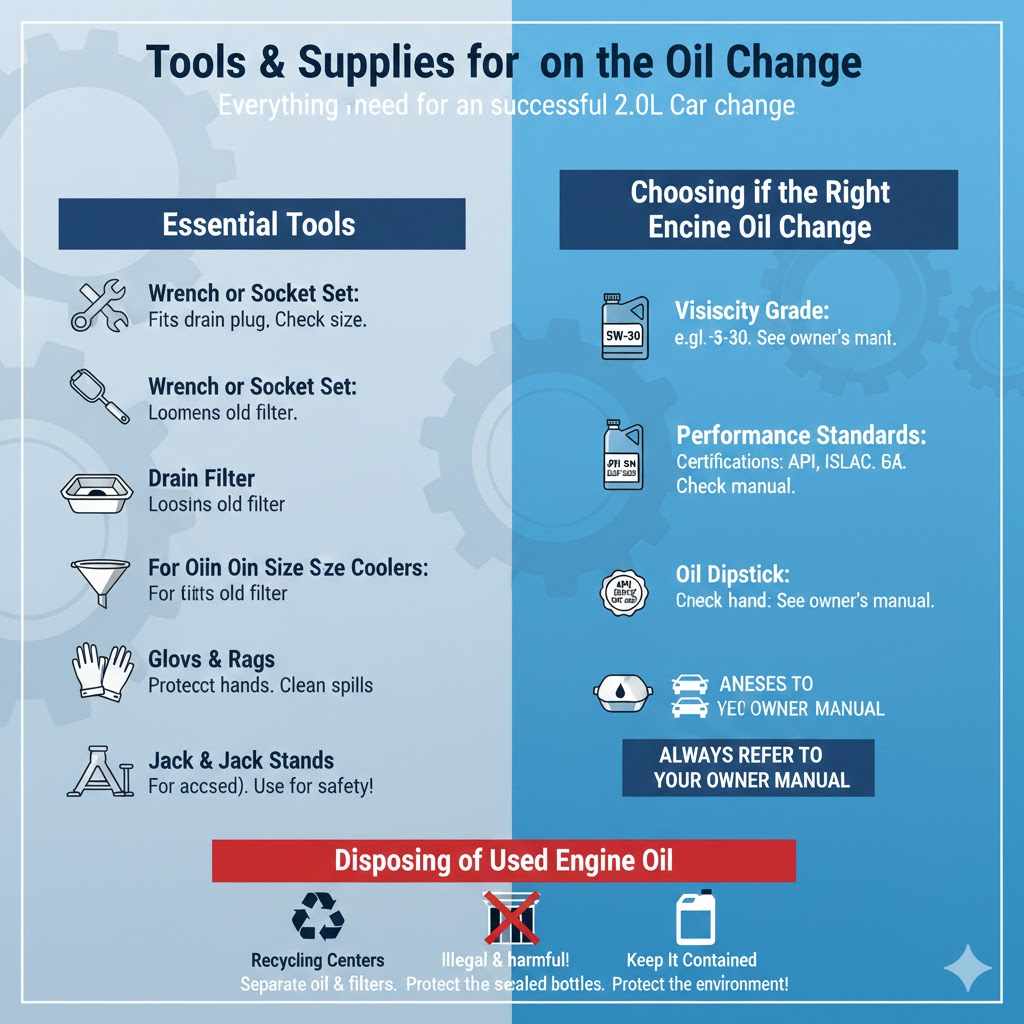
Wrench or Socket Set: You will need a wrench or socket that fits the oil drain plug on your oil pan. The size varies by vehicle, so check this beforehand.
Oil Filter Wrench: This tool is used to loosen and remove the old oil filter. There are various types, including strap wrenches, cap wrenches, and plier-type wrenches. Choose one that fits your oil filter.
Drain Pan: A sturdy container specifically designed to catch old engine oil is essential. Ensure it’s large enough to hold all the old oil from your engine.
Funnel: A clean funnel is crucial for adding new oil without spills. Make sure it fits securely into your engine’s oil filler neck.
Gloves: Disposable nitrile gloves protect your hands from oil and grime.
Rags or Paper Towels: Keep plenty of clean rags or shop towels handy for wiping the dipstick, oil filler cap, and any spills.
Jack and Jack Stands (if needed): If your car’s oil drain plug and filter are difficult to reach, you might need to lift the vehicle using a jack. Always use jack stands for safety if you need to work under the car.
Choosing the Right Engine Oil
Selecting the correct engine oil for your 2.0L engine is as important as using the right amount. The oil’s viscosity (thickness) and its performance specifications are critical.
Viscosity Grade: This is usually expressed as a number followed by a ‘W’ and then another number (e.g., 5W-30). The ‘W’ stands for ‘Winter,’ and the first number indicates how the oil flows at cold temperatures, while the second number indicates its viscosity at operating temperature. Your owner’s manual will specify the recommended viscosity grade for your vehicle and climate.
Performance Standards: Engine oils must meet certain industry standards to ensure they provide adequate protection. Look for certifications like API (American Petroleum Institute) service designations (e.g., API SP, API SN Plus) or ILSAC (International Lubricant Standardization and Approval Committee) standards (e.g., ILSAC GF-6A). These standards indicate that the oil has been tested and meets specific performance criteria for engine protection, fuel economy, and emissions.
Always refer to your vehicle’s owner’s manual for the exact specifications. Using the wrong type of oil can lead to poor performance, increased wear, and even engine damage.
Disposing of Used Engine Oil
Proper disposal of used engine oil is vital for environmental protection. Engine oil contains contaminants that can harm soil and water if not handled correctly.
Recycling Centers: Most auto parts stores and local recycling centers accept used motor oil. They have special containers for safe collection and processing. Some municipalities also have designated drop-off locations for hazardous waste, which includes used oil.
Never Pour Down Drains: Do not pour used oil down storm drains, into sewers, or onto the ground. This is illegal and extremely harmful to the environment.
Keep It Contained: Store used oil in a clean, sealed container, such as the original oil bottles or a dedicated oil disposal container. This prevents spills and leaks during transport.
Separate Oil and Filters: Used oil filters also contain residual oil and should be disposed of properly. Many recycling centers that accept used oil also accept used oil filters.
Responsible disposal is a simple but critical step in the DIY oil change process.
Frequently Asked Questions
Question: How many litres of oil does a 2.0L engine typically take?
Answer: Most 2.0L gasoline engines require between 4.0 and 5.5 litres of engine oil. However, this can vary based on the specific vehicle make, model, and whether the engine is turbocharged.
Question: Where can I find the exact oil capacity for my car?
Answer: The most reliable place to find the exact oil capacity for your car is in its owner’s manual. Online vehicle specification databases and professional mechanics are also good resources.
Question: What happens if I put too much oil in my 2.0L engine?
Answer: Overfilling your engine with oil can cause the crankshaft to churn the oil, creating foam. Foamy oil is less effective at lubricating parts, leading to increased wear. It can also cause oil leaks by over-pressurizing seals and gaskets.
Question: Is it okay to use a different viscosity oil than what my manual recommends?
Answer: It is not recommended to use a different viscosity oil than what your manual specifies. The manufacturer has tested and determined the optimal viscosity for your engine’s performance and longevity under various conditions.
Question: How often should I check my engine oil level?
Answer: It’s a good practice to check your engine oil level at least once a month, and before any long road trips. Checking it regularly helps you catch any potential leaks or oil consumption issues early.
Conclusion
So, how many litres of oil does a 2.0L engine take? The answer isn’t a single number but a range that depends on your specific car. Always check your owner’s manual for the exact capacity and type of oil. This simple step ensures your engine gets the perfect amount for optimal lubrication and protection. Regular checks and correct filling keep your car running smoothly for years to come.