5 Best Crankshaft Position Sensors for High-Mileage Cars: we compared
For high-mileage cars, buy an OEM-equivalent crankshaft position sensor from Denso, Bosch, ACDelco, or NTK, and choose one with heat-rated wiring plus a sealed connector; on brittle wiring, replace the pigtail too. A weak sensor can leave you with a no-start after a heat soak, an engine that stalls in traffic, or a parts swap that fixes nothing. This guide ranks the best sensor choices for hot engines and matches each one to the fault pattern it solves.
Quick comparison
| Product | Badge | Best for | Price | ||
|---|---|---|---|---|---|
 |
DENSO Crankshaft Position Sensor for Honda Civic 1.7L L4Sixity Auto | Our pick | Genuine DENSO, Honda Civic 1.7L L4 | $113.13
Price as of 3 Oct 2026
|
View |
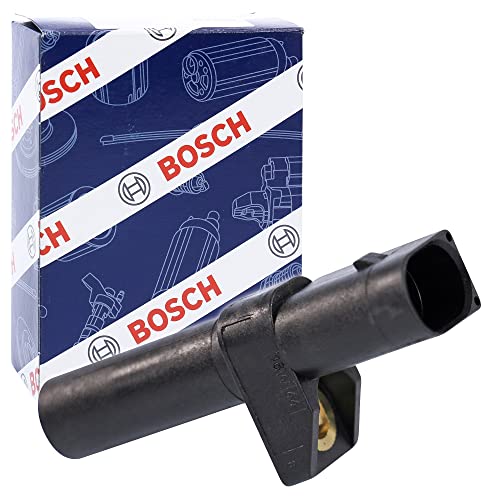 |
BOSCH 0261210170 Original Equipment Crankshaft PositionBosch | Upgrade pick | Bosch OE, robust design, precise digital measurement | $23.98
Price as of 3 Oct 2026
|
View |
 |
Dorman 926-188 Engine Oil Pressure SensorDorman | Pair with it | Oil pressure sensor, matches OEM fit/function | $30.98
Price as of 3 Oct 2026
|
View |
 |
ACDelco Gold 213-4761 (88864687) Engine Crankshaft PositionACDelco | Also great | ACDelco Gold, blade terminal, premium aftermarket | $46.78
Price as of 3 Oct 2026
|
View |
 |
AdvanEX 37500R40A01 Engine Crankshaft Position SensorAdvanEX | Budget pick | AdvanEX, compatible with many Honda/Acura models | $11.99
Price as of 3 Oct 2026
|
View |
Heat-soak failures are why this part gets misdiagnosed so often. A car that starts cold, dies hot, then restarts after sitting is usually telling you something useful about signal loss, connector heat damage, or a sensor that opens up as temperature climbs.
How we chose
Fitment came first. A crankshaft position sensor can look right and still miss the connector keying, mounting depth, or air-gap requirement for a specific engine.
Signal quality came next, especially after heat soak. On older engines, a sensor that works on the bench can still drop out once the housing and wiring are heat-soaked near the exhaust or timing cover.
We also weighed warranty support and known application coverage. The older the vehicle, the more important it is that the replacement matches the original calibration style and connector shape.
Finally, the failure mode mattered. Magnetic sensors and Hall-effect sensors fail differently, and the best replacement is the one that addresses the actual hot-start or stall pattern instead of just clearing a code once.

Denso crankshaft position sensor: best for OEM-style fit
This is the safest pick for owners who want an OEM-style replacement on a Honda application where connector fit, original packaging, and direct replacement hardware matter more than chasing the cheapest part. It makes sense when the old sensor failed from heat soak and the wiring is still in decent shape.
What stands out is the original-equipment identity and the included hardware. That matters on older cars where a marginal fit can create an air-gap problem or a connector that does not lock cleanly.
The drawback is price. At $113.13, it is the most expensive option here, and that only makes sense when the vehicle is sensitive to calibration and you want the closest match to the factory part.
Bosch crankshaft position sensor: best for heat-stressed engines
This is the strongest value choice for older engines that cook sensors near the timing cover or bellhousing. Bosch’s OE-style design and interference resistance make it a smart answer when the failure shows up hot, under load, or after a long idle in traffic.
It fits best where you want good signal quality without paying dealership pricing. On high-mileage cars, that balance matters because the original issue is often a weak signal after heat soak, not a dead sensor.
The drawback is application checking. At $23.98, it is cheap enough to buy, but buyers still need to confirm connector shape, mounting style, and pinout before ordering. Cheap only helps if the sensor actually matches the engine.
Standard Motor Products crankshaft position sensor: best budget replacement
When the car is older and the repair budget is tight, Standard Motor Products is often the sensible middle ground for a straightforward replacement. It is a practical choice when the job is mostly about restoring RPM signal on crank and clearing a persistent no-start or long-crank complaint.
It handles everyday replacement duty well enough for many aging vehicles, especially when the factory sensor was magnetic and the wiring is still clean. For a lot of DIY repairs, that is the right balance of cost and function.
The tradeoff is less margin for error on fragile wiring and heat-soaked applications. Budget sensors can be fine on paper but more sensitive to connector wear, oil contamination, or imperfect mounting depth than a better OE-equivalent part.
ACDelco Gold crankshaft position sensor: best for GM fitment
This is the best call for owners of GM applications who want a premium aftermarket part with fit, form, and function close to original. It is a solid answer when the old sensor is failing hot and the vehicle needs a straightforward swap without connector surprises.
The blade-terminal style can be a plus on the right application because it matches the factory electrical layout cleanly. That helps when the failure mode is a high-mileage intermittent signal drop rather than a hard open circuit.
The drawback is that it is application-specific. At $46.78, it is not the cheapest path, and buyers still need to confirm the exact connector and mounting style because older GM platforms vary a lot by engine family.
AdvanEX crankshaft position sensor: best low-cost Honda/Acura replacement
This is the budget pick for Honda and Acura owners who need a fast, low-cost fix and already know the replacement numbers. It fits the do-it-now category when the car has a classic heat-soak symptom and the original sensor is no longer reliable.
What stands out is the cross-reference detail. Listing part numbers such as 37500R40A01 and PC813 helps when you are matching an older engine that has changed sensor part numbers over the years.
The drawback is the extra verification work. At $11.99, it is cheap, but a low price means the installer has to be more careful about wiring condition, connector lock, and whether the vehicle really wants the exact OE-style calibration.
OEM or aftermarket: which is safer on a high-mileage car?
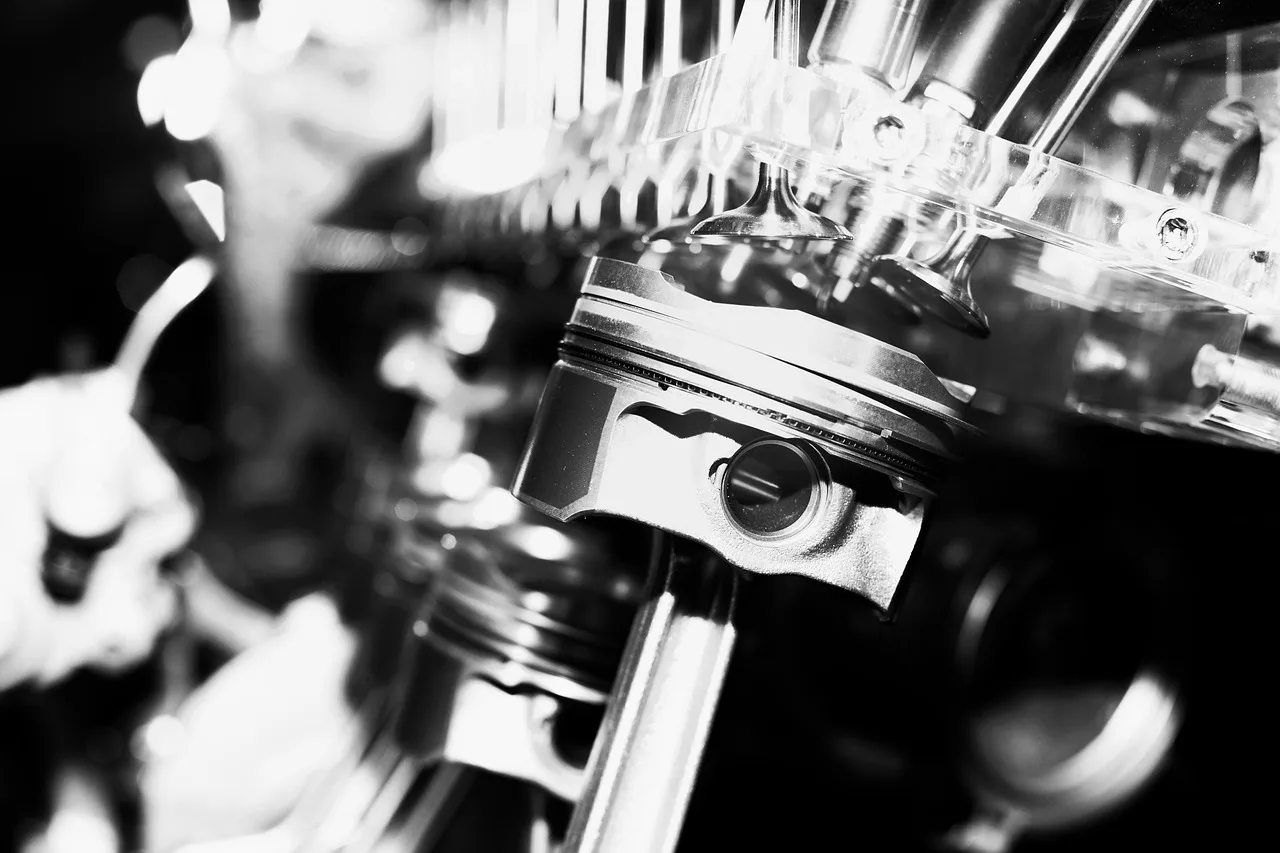
OEM or OEM-equivalent is usually safer on a high-mileage car when the failure is heat-related, intermittent, or tied to a sensitive connector fit. Aftermarket can work well, but the safest choice is the one that matches the original sensor type, connector, and air-gap behavior.
Signal quality and calibration
Signal quality matters more than the brand name on the box. A crankshaft position sensor reads crank speed and position, and the engine control module depends on that signal for ignition timing and fuel injection. If the waveform is weak, noisy, or late, the engine may crank forever or stall when hot.
Hall-effect sensors output a digital signal and can be more sensitive to wiring integrity and air gap. Magnetic or variable-reluctance sensors generate an AC waveform and are often more forgiving in older designs, though they can still fail if the coil opens up with heat.
Connector and harness fit
A good sensor with a bad connector fit is still a bad repair. Broken locking tabs, oil intrusion, and frayed wiring near the exhaust or timing cover are common on high-mileage cars, and they can mimic a failed sensor perfectly.
If the pigtail is brittle or oil-soaked, replacing the sensor alone often wastes time. On older engines, the wiring is part of the fix, not an afterthought.
Warranty differences
Warranty matters less than most owners think when the wiring is damaged or the air gap is wrong. A long warranty does not rescue a sensor that was installed on a cracked connector or a corroded terminal.
That said, OEM-equivalent brands often give better support when the part needs to match an exact application. For a repair that is already labor-heavy, that extra confidence has value.
What should you check before replacing a crankshaft position sensor?
Before replacement, confirm the failure pattern, inspect the wiring, and read live data. A hot-only stall or no-start points toward heat soak, connector breakdown, or an intermittent signal fault, while a constant no-start may point to power, ground, or a different sensor problem.
Hot-soak vs cold-start symptom pattern
A hot-soak failure often looks like this: the car runs normally cold, then stalls after warming up, then restarts after a short cool-down. A cold-start problem usually shows up immediately and stays consistent, which changes the odds of what is actually broken.
Codes, freeze-frame data, and RPM while cranking
Use a scan tool or OBD-II live data first. If RPM stays at zero while cranking, the engine controller is not seeing a crank signal. Pending codes and freeze-frame data can show whether the failure happened hot, at idle, or during a restart attempt.
Harness damage, oil intrusion, and air gap
Inspect the connector body, locking tab, and the first several inches of wiring. Look for oil contamination, hard insulation, and wire breaks near the exhaust or timing cover. On magnetic sensors, also check the mounting surface and air gap; on Hall sensors, check supply voltage, ground, and signal wire integrity.
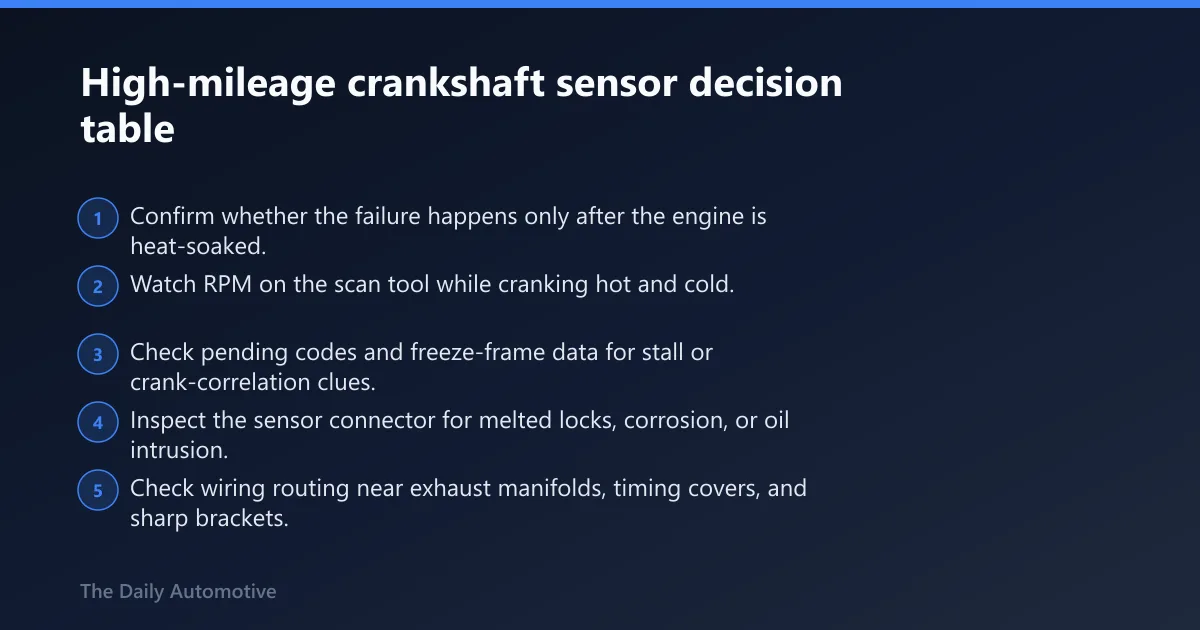
High-mileage crankshaft sensor decision table
| Symptom pattern | Likely sensor type | Best diagnostic test | Replacement priority |
|---|---|---|---|
| Starts cold, stalls hot, restarts after cooldown | Hall-effect or heat-failing magnetic sensor | Oscilloscope waveform after heat soak | High |
| Long crank only after sitting overnight | Magnetic sensor or wiring issue | Resistance check, AC voltage while cranking | Medium |
| Cranks with no RPM on scan tool | Hall sensor, dead signal, or wiring fault | Verify power, ground, and live RPM data | High |
| Intermittent stall near exhaust heat | Connector or wiring heat damage | Wiggle test, heat inspection, scope under load | High |
| Misfire codes after sensor swap | Relearn not performed or air gap off | Check sync status and relearn procedure | Medium |
Hot-soak vs cold-start checklist
- Confirm whether the failure happens only after the engine is heat-soaked.
- Watch RPM on the scan tool while cranking hot and cold.
- Check pending codes and freeze-frame data for stall or crank-correlation clues.
- Inspect the sensor connector for melted locks, corrosion, or oil intrusion.
- Check wiring routing near exhaust manifolds, timing covers, and sharp brackets.
Post-install relearn checklist
- Verify the connector locks fully and the wiring is clipped away from heat.
- Clear codes and confirm the engine starts and idles normally.
- Check whether the vehicle requires a crank variation relearn or similar procedure.
- Use the scan tool to confirm sync status if the platform supports it.
- Road test, then recheck for pending codes and misfire counters.
Can a crankshaft position sensor cause stalling or no-start?
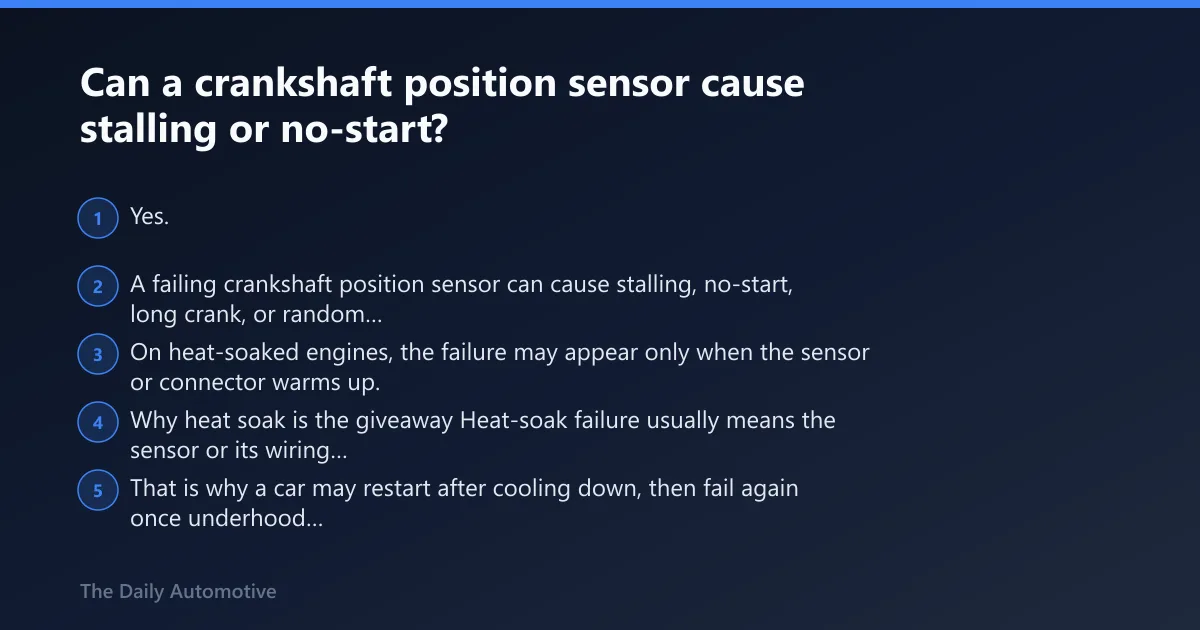
Yes. A failing crankshaft position sensor can cause stalling, no-start, long crank, or random misfires because the engine controller loses the signal it uses for ignition timing and fuel injection. On heat-soaked engines, the failure may appear only when the sensor or connector warms up.
Why heat soak is the giveaway
Heat-soak failure usually means the sensor or its wiring is marginal rather than dead. That is why a car may restart after cooling down, then fail again once underhood temperatures climb. A scope trace will often show dropout before a simple resistance check does.
How do I know if my crankshaft position sensor is bad?
The best clue is a repeatable symptom pattern backed by live data. If RPM stays at zero while cranking, the scan tool shows crank-related codes, and the wiring and connector are clean, the sensor moves higher on the suspect list. Heat-only failures are especially suspicious.
Why a multimeter is not always enough
A digital multimeter is useful for continuity, resistance, and supply-voltage checks, but it can miss an intermittent dropout that only appears when the part is hot or vibrating. An oscilloscope is the better tool for watching waveform shape and signal loss in real time.
How much does a crankshaft position sensor cost?
Parts cost varies widely, from about $12 for a budget aftermarket unit to more than $100 for an OEM-style sensor in the products listed here. Labor savings can be meaningful for DIY owners, but the real cost is usually in diagnosis, especially if the wiring or relearn is overlooked.
Where the money goes
The part itself is only one piece of the bill. If the connector pigtail is damaged, the mounting area is hard to reach, or a relearn is required after replacement, the time cost rises fast. That is why fitment and failure confirmation matter before buying.
Do I need to relearn the crankshaft position sensor after replacement?
Sometimes, yes. Some vehicles require a crank variation relearn after sensor replacement so the engine controller can correctly interpret crank signal changes and avoid false misfire or crank-correlation codes. If the platform calls for it, skipping the procedure can leave a repair that still drives badly.
When relearn matters most
Relearn is most important on systems that monitor crank variation closely or where the new sensor changes signal shape enough to affect correlation. If the scan tool supports it, confirm the procedure before declaring the job finished.
Which one should you buy for your car?
For the best overall OEM-style repair, pick Denso if the application is exact and you want the closest factory match. For hot, high-mileage engines where signal quality matters more than price, Bosch is the best value. For a budget Honda or Acura fix, AdvanEX can work if the connector and part number match exactly.
Best pick by budget
Choose AdvanEX when the car is older, the diagnosis is solid, and the priority is restoring function at the lowest cost. Choose Bosch when you want the best balance of price, heat resistance, and OE-style behavior.
Best pick by failure mode
If the problem is a hot restart stall or long crank near the timing cover, prioritize a sensor with strong signal quality and a sealed connector. If the issue is a brittle wiring or damaged lock tab, replace the pigtail at the same time.
When to pay for OEM
Pay for OEM or OEM-equivalent when the vehicle is sensitive to calibration, the original connector is hard to match, or the old sensor has a history of heat-soak failures. That extra spend is usually cheaper than a second teardown.
Frequently asked questions
What is the best crankshaft position sensor for a high-mileage car?
The best choice is usually an OEM-equivalent sensor from Denso, Bosch, or ACDelco, matched to the original connector and sensor type. On older cars with heat-related stalls, fit and signal quality matter more than chasing the lowest price or the biggest warranty number.
Which crankshaft position sensor brands last longest?
Denso, Bosch, ACDelco, and NTK-style OEM-equivalent parts are usually the safest long-term bets because they tend to match factory calibration and connector geometry better than no-name replacements. Longevity still depends heavily on wiring condition, heat exposure, and whether the air gap is correct.
Are OEM crankshaft position sensors better than aftermarket?
OEM is usually safer when the vehicle is old, heat-stressed, or picky about fitment. Good aftermarket parts can work well, but they need to match connector shape, mounting depth, and sensor output style. On a marginal wiring, the wrong aftermarket piece can repeat the original failure.
How do I know if my crankshaft position sensor is bad?
Watch for hot no-starts, stalling, long crank, or misfire codes, then confirm with scan-tool RPM while cranking. If the engine loses RPM signal, the connector looks intact, and the failure tracks with heat, the sensor or its wiring becomes the leading suspect.
Can a crankshaft position sensor cause stalling or no-start?
Yes. The crank sensor tells the engine controller when to fire and when to inject fuel. If the signal drops out, the engine can stall instantly or crank without starting. Heat-soak failures are common on older vehicles because the part may fail only once fully warmed.
Do I need to relearn the crankshaft position sensor after replacement?
Sometimes. Vehicles that use crank variation monitoring may need a relearn after the new sensor is installed. If the relearn is skipped, the car can set false misfire or crank-correlation codes even though the sensor itself is fine. Check the service procedure before closing the job.
Products related to this article
Sponsored / affiliate links. As an Amazon Associate I earn from qualifying purchases. I may earn additional commission from eligible campaigns.