MAF Sensor Price: What You’ll Really Pay at the Shop
MAF sensor prices can vary widely for the part, and OEM units often cost more than aftermarket; installed cost often falls in the low hundreds and can be higher depending on fitment and labor. Skip the total, and you can buy the wrong sensor, chase the wrong fault, and see the bill rise once labor gets added. This guide breaks down the price drivers, OEM versus aftermarket choices, and what labor usually adds before you buy.
This guide is part of our Car sensors and parts guide series.
What does a MAF sensor do, and why does it fail?
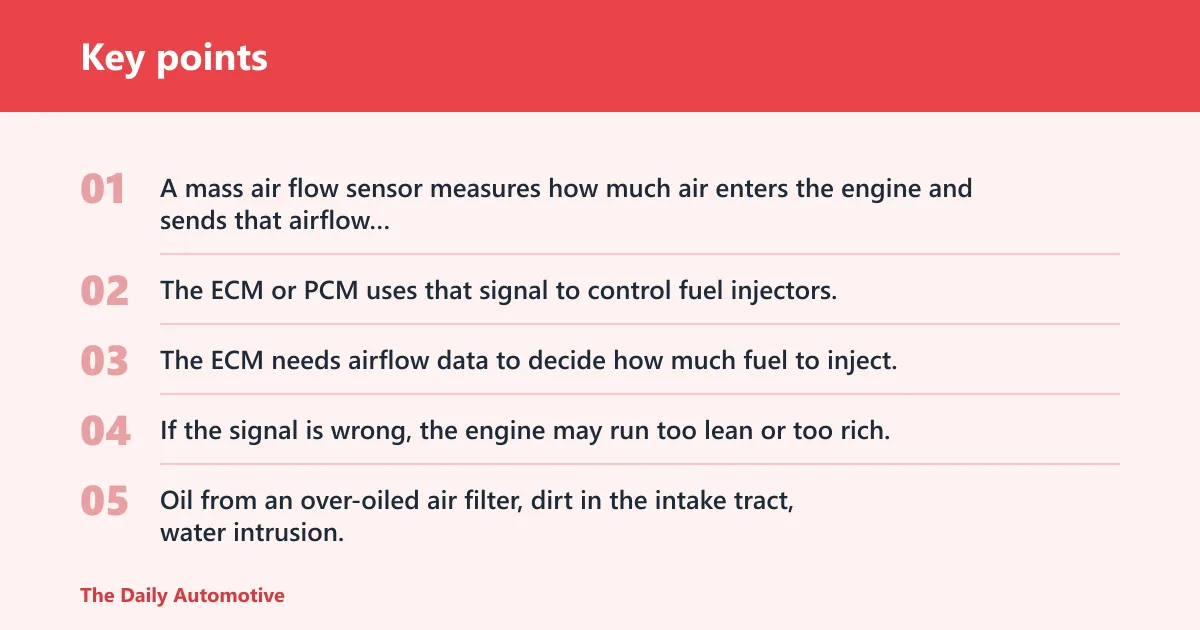
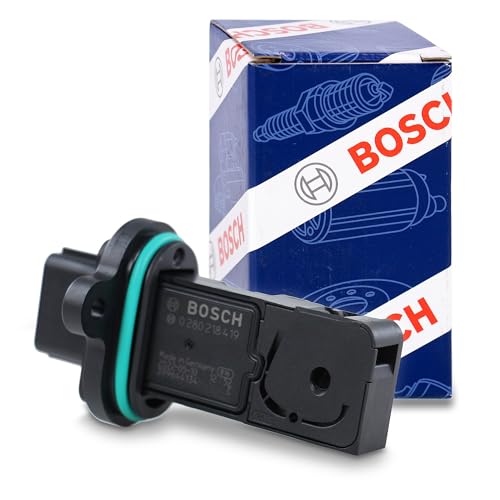
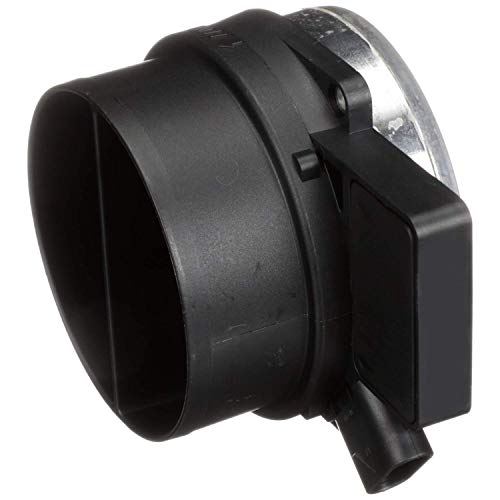
A mass air flow sensor measures how much air enters the engine and sends that airflow data to the engine control module. The ECM or PCM uses that signal to control fuel injectors, so a bad reading can throw off the air-fuel mixture, hurt drivability, and turn on the check engine light with airflow-related trouble codes.
Why the ECM depends on the signal
The ECM needs airflow data to decide how much fuel to inject. If the signal is wrong, the engine may run too lean or too rich, and both conditions can affect acceleration, idle quality, and fuel use.
Why the sensor fails in the real world
Contamination is a common issue. Oil from an over-oiled air filter, dirt in the intake tract, water intrusion, wiring problems, and a damaged connector can all distort the reading. A bad sensor is not the only possible cause of MAF-related symptoms.
How much does a MAF sensor cost?
Part-only MAF sensor price often falls into three bands: roughly $60-$120 for many economy applications, $100-$200 for a broad middle range, and $200-$250 or more for some luxury, turbocharged, and European models. The installed total is higher because labor, diagnosis, and access can add a meaningful charge.
Vehicle-fitment cost table by segment
| Vehicle segment | Low part price | Mid part price | High part price | Common installed total |
|---|---|---|---|---|
| Economy compact and midsize cars | $60 | $100-$150 | $180 | $150-$300 |
| Pickup trucks and SUVs | $90 | $140-$200 | $230 | $200-$400 |
| Luxury, turbocharged, and European vehicles | $140 | $180-$220 | $250+ | $300-$500+ |
Why the bill changes by vehicle
Compact cars often use simpler intake layouts and more common sensor designs. Trucks and SUVs may need larger housings or different connector styles. European and performance models can use application-specific parts that cost more and may be harder to source.
Suppose a 4-cylinder sedan uses a sensor mounted right at the air filter box. The part may be cheap and the swap quick. Now picture a turbocharged import with tighter packaging and a specialized connector; the part price rises, and labor usually follows.

What symptoms point to a bad MAF sensor?
A faulty MAF sensor can cause a check engine light, rough idle, slow acceleration, rough or jerky acceleration, hard starting, black smoke from the exhaust, and fuel consumption changes up or down. Those signs overlap with other intake and fuel problems, so codes and inspection matter.
Common drivability symptoms
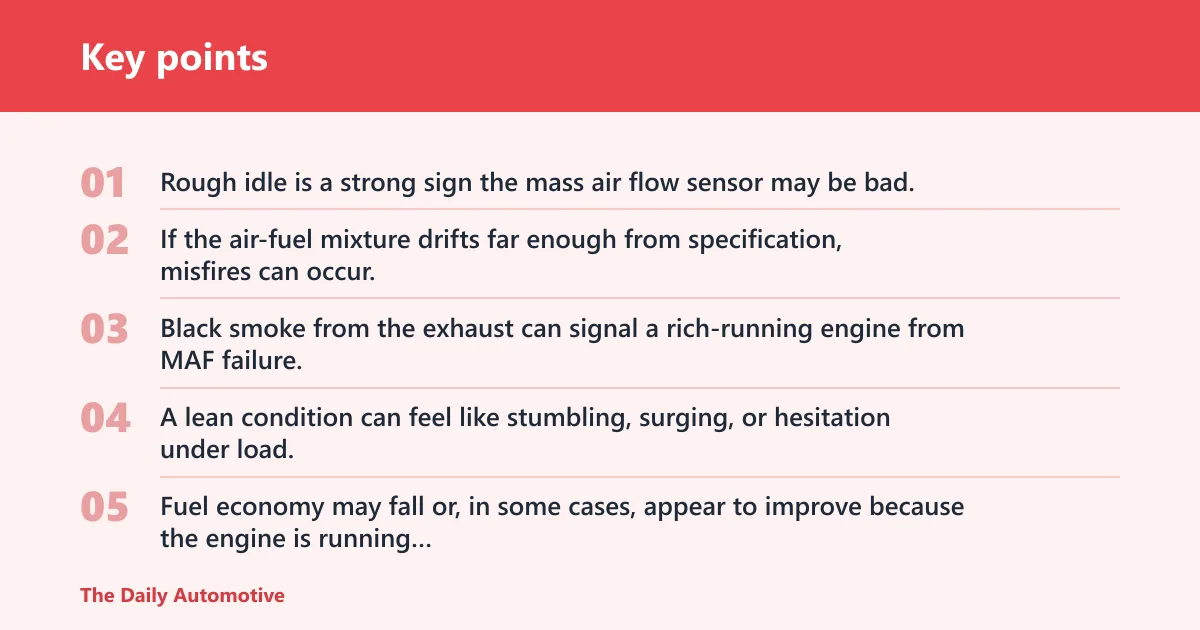
Rough idle is a strong sign the mass air flow sensor may be bad, especially when it comes with hesitation on tip-in, weak throttle response, or slow acceleration. If the air-fuel mixture drifts far enough from specification, misfires can occur.
Warning signs that point to mixture trouble
Black smoke from the exhaust can signal a rich-running engine from MAF failure. A lean condition can feel like stumbling, surging, or hesitation under load. Fuel economy may fall or, in some cases, appear to improve because the engine is running incorrectly.
Why the check engine light matters
A faulty MAF sensor can trigger a check engine light, but the light alone does not prove the sensor is the only problem. OBD2 codes can help narrow the issue to a bad sensor, a vacuum leak, a wiring fault, or contamination in the intake path.
Where is the MAF sensor located?
The MAF sensor is often mounted in the intake tube, close to the air filter box, on the large hose between the air filter box and the intake manifold. Exact placement varies by manufacturer and engine layout.
Why location affects the repair
A sensor mounted high and open in the engine bay is usually easy to reach. A sensor buried under covers, ducts, or turbo plumbing takes longer to inspect and replace. Access changes both diagnosis time and labor cost.
What to inspect around the sensor
Check the air filter box, intake hose, clamps, and electrical connector. A split hose, loose clamp, or damaged connector can mimic a bad sensor and send the wrong airflow data to the ECM.
How do I know if I need OEM or aftermarket MAF sensor?
OEM and aftermarket MAF sensor choices differ in price, fitment, and compatibility. OEM parts usually cost more but are the safer bet when the vehicle is picky about calibration, connector shape, or sensor housing design. Aftermarket parts can save money when the application match is exact.
Price and fitment tradeoffs
Aftermarket sensors are often cheaper, sometimes by a wide margin. The risk is application mismatch: connector style, sensor curve, housing size, or calibration can differ enough to cause drivability issues or repeat codes.
When OEM is the safer choice
Choose OEM when the vehicle has a history of sensitivity to intake and fueling parts, when the engine uses a specialized housing, or when the catalog listing is unclear. A cheaper sensor is not a bargain if it creates a second repair visit.
- Match the exact engine code and model year.
- Compare connector shape and sensor housing design.
- Check whether the part is sold as a sensor only or as a housing-and-sensor assembly.
- Review whether the vehicle needs OEM calibration standards.
- Price the total, not the sticker on the box.
What does labor add to MAF sensor replacement cost?
Labor can add a modest amount on an easy job and a much larger amount on a cramped one. DIY cost may be limited to the part, but a shop bill includes diagnosis, removal, installation, code clearing, and often a road test to confirm the fix.
DIY versus shop cost
If the sensor is accessible and the issue is already confirmed, the job may take little time. If the diagnosis is still open, the technician may spend time checking codes, inspecting air leaks, and confirming whether the sensor is truly bad before replacing it.
How access and layout change labor
Easy-access sensors near the air filter box are usually faster to replace than sensors buried in a turbo inlet or under engine covers. Tight packaging, brittle clips, and corroded fasteners all add time.
Why diagnosis can add cost before replacement
An OBD2 scanner is used to read trouble codes before replacing parts. A scan may be followed by smoke testing, wiring checks, or a short road test if the codes point to an intake leak or intermittent sensor fault rather than a dead sensor.
What symptoms mean my MAF sensor is bad?
The strongest clues are a check engine light paired with rough idle, hesitation, hard starting, black smoke, or fuel economy changes. Because those symptoms also show up with air leaks and wiring faults, you should confirm the codes first with an OBD2 scanner before buying parts.
Diagnosis before replacement
Start with the trouble codes. Then inspect the intake hose, air filter box, and electrical connector. If the sensor is contaminated, cleaning may help; if the sensor reads wrong or the wiring is damaged, replacement is more likely.
What not to do
Do not buy a sensor just because the engine feels off. A vacuum leak can create similar symptoms, and a dirty air filter or loose clamp can confuse the diagnosis. The part should match the fault, not the guess.
Can a bad MAF sensor cause rough idle or black smoke?
Yes. A bad MAF sensor can cause rough idle, and black smoke from the exhaust can signal a rich-running engine from MAF failure. When the ECM gets the wrong airflow data, it may command the wrong fuel amount, which disrupts idle quality and can overfuel the engine.
Why the mixture goes wrong
If the sensor reports too much airflow, the ECM may add too much fuel. If it reports too little, the engine can run lean, stumble, and hesitate. Either direction can create drivability complaints that feel serious even before the car leaves a parking space.
What else can look similar
Bad spark plugs, vacuum leaks, dirty throttle parts, and wiring faults can imitate a MAF problem. That is why code checking and intake inspection matter before you spend money on a replacement sensor.
Replace, clean, or inspect first?
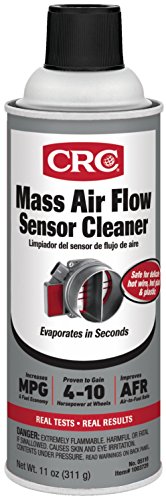
A dirty sensor can sometimes be cleaned, but contamination is not the same as failure. Clean the sensor when the code pattern, intake condition, and visual inspection point to residue on the element. Replace it when readings stay wrong after cleaning or when the unit has electrical damage.
Decision checklist
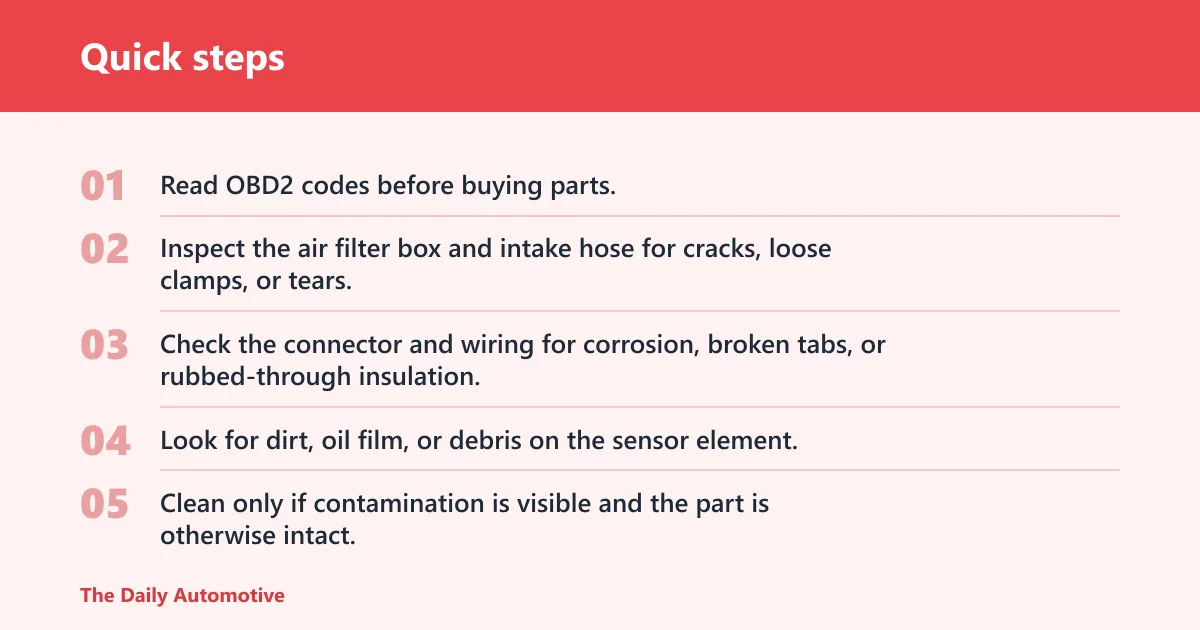
- Read OBD2 codes before buying parts.
- Inspect the air filter box and intake hose for cracks, loose clamps, or tears.
- Check the connector and wiring for corrosion, broken tabs, or rubbed-through insulation.
- Look for dirt, oil film, or debris on the sensor element.
- Clean only if contamination is visible and the part is otherwise intact.
- Replace if the sensor still reads poorly after cleaning or if wiring and connector damage is present.
When cleaning makes sense
Cleaning is most useful when the sensor is dirty but not electrically failed. A contaminated sensor near a dusty intake path can sometimes recover after proper cleaning, but that should follow a scan and inspection, not substitute for them.
When inspection matters more than the part
If the intake hose is split or the connector is loose, the sensor may be blamed for a problem it did not create. Air leaks can skew airflow readings and produce the same rough idle, hesitation, and check engine light that send owners shopping for a new sensor.
Frequently asked questions
Is it worth cleaning a MAF sensor instead of replacing it?
Cleaning is worth considering only when the sensor is contaminated, not electrically damaged. If codes, wiring checks, and intake inspection point to dirt or oil film, cleaning may help. If readings remain wrong afterward, replacement is the better move.
Products related to this article
Sponsored / affiliate links. As an Amazon Associate I earn from qualifying purchases. I may earn additional commission from eligible campaigns.