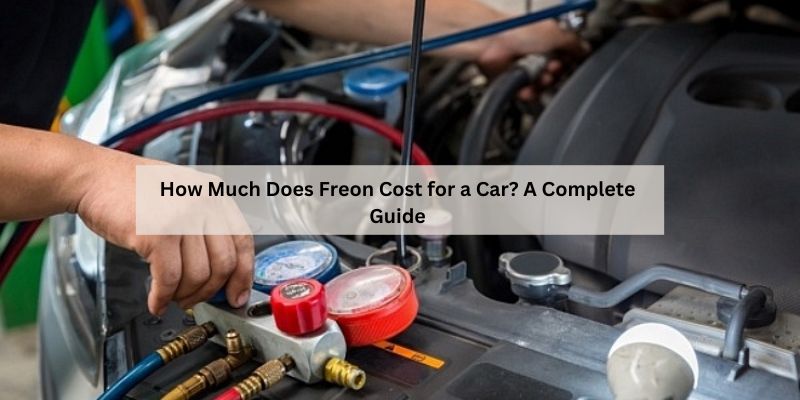
How Much Does Freon Cost for a Car? A Complete Guide
Hey there! So, you’re wondering how much Freon costs for a car? I hear you—when your car’s air conditioning starts blowing warm air, it’s a real problem, especially in the summer heat. I’ve been there myself, like when my old SUV’s AC gave out during a road trip, leaving me sweating and scrambling to figure out the fix. Over the years, I’ve learned a ton about car refrigerants, shopped around for prices, and even tackled a DIY recharge or two.
In this guide, I’m going to share everything I know about the cost of Freon for a car in the USA in 2025. We’ll cover what Freon is, what affects the price, and whether you should do it yourself or go to a pro. It’s like we’re sitting in your garage, chatting about how to cool your car down. Let’s get started!
What Is Freon, and Why Does Your Car Need It?
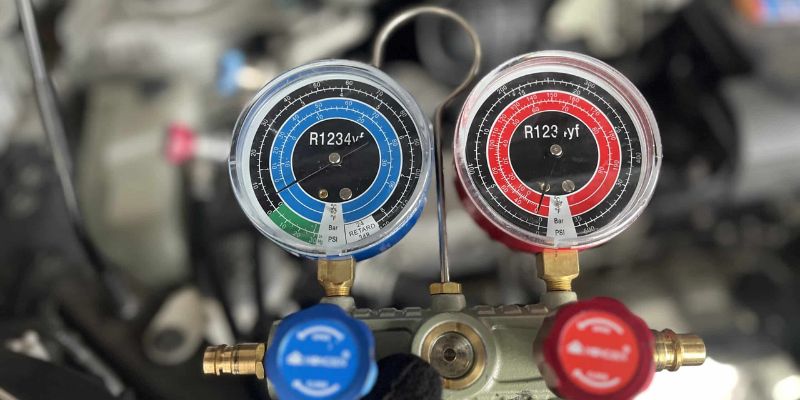
Let’s kick things off with what Freon is. Freon is a brand name for refrigerants used in air conditioning systems, including the one in your car. It’s the stuff that makes your AC blow cold air by soaking up heat from inside the car and releasing it outside. I used to think it was just some mysterious chemical, but it’s a coolant that cycles through parts like the compressor and evaporator. Most cars today use refrigerants called R-134a or R-1234yf, not the old Freon R-12, which got phased out because it wasn’t great for the planet.
Your car’s AC needs the right amount of refrigerant to work properly. If it’s low, you’ll get warm air or weak cooling. I noticed this in my sedan when the AC barely worked on a hot day—it was low on R-134a. Adding more refrigerant, or “recharging,” often fixes it, but the cost depends on a few things. Let’s break it down.
Types of Refrigerant Used in Cars
Not all cars use the same refrigerant, and the type makes a big difference in cost. I’ve dealt with a couple of types over the years, and here’s what I’ve learned:
- R-134a: This is the go-to for cars made from the mid-1990s to around 2015. It’s pretty affordable and easy to find. I used it in my 2010 SUV, and it was budget-friendly.
- R-1234yf: Newer cars, especially those from 2015 onward, often use this eco-friendly refrigerant. It’s pricier because it’s better for the environment and is required in many modern models. My friend’s 2021 crossover uses R-1234yf, and the cost surprised me.
- R-12 (Old-School Freon): If your car is super old, like pre-1994, it might use R-12. But it’s been banned in the USA since 1996 because it harms the ozone layer. You’d need to switch to R-134a, which I helped my uncle do with his vintage Mustang—it was a hassle.
To find out what your car uses, check the owner’s manual or look for a sticker under the hood. I found my SUV’s refrigerant type on a label near the engine—it saved me from buying the wrong stuff.
How Much Refrigerant Does a Car Need?
Before we talk prices, let’s figure out how much refrigerant your car needs. Most cars hold 12 to 28 ounces (0.75 to 1.75 pounds) of refrigerant. My SUV needed about 24 ounces of R-134a, while my wife’s compact car took only 16 ounces. Bigger vehicles like trucks or SUVs usually need more. You can find the exact amount in your car’s manual or by asking a mechanic. I always check because putting in too much or too little can mess up the AC system.
How Much Does Freon Cost for a Car in 2025?
Now, let’s get to the main question: how much does it cost to get Freon (or refrigerant) for your car? The price depends on whether you’re doing it yourself or paying a shop, plus the type of refrigerant. Here’s what I’ve found for 2025 in the USA, based on my own experience and checking around:
DIY Refrigerant Costs
If you’re recharging the AC yourself, you’ll buy refrigerant from an auto parts store or online. Here’s what I’ve seen:
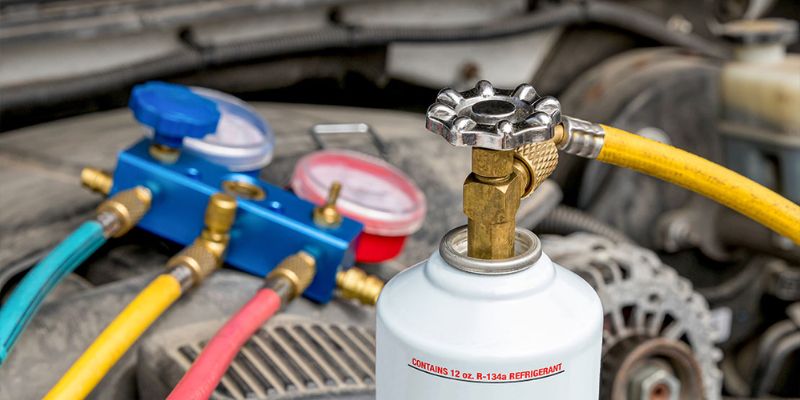
- R-134a: Costs about $10-$20 per pound (16 ounces). A 12-ounce can is usually $5-$10, and most cars need 1-2 cans. I grabbed a 12-ounce can for $7 last year, but prices are up a bit now due to supply changes. For a car needing 24 ounces, expect to spend $12-$20 on refrigerant.
- R-1234yf: This is much more expensive, around $100-$150 per pound. An 8-ounce can might cost $40-$50, and a car needing 12-16 ounces could run $80-$150. I checked for my friend’s crossover, and an 8-ounce can was $45 online.
You might also need a recharge kit with a hose and gauge, which costs $20-$50. I got a kit for $25, and it was easy to use. Total DIY cost for R-134a is about $30-$70, while R-1234yf can hit $100-$200.
Professional Recharge Costs
Going to a mechanic or shop means paying for refrigerant, labor, and sometimes a diagnostic fee. Here’s what I’ve found:
- R-134a Recharge: A typical AC recharge costs $250-$500, including 1-2 pounds of R-134a, labor, and a system check. I paid $264 for my SUV at a local shop, which included a leak test. Some shops charge $37 per pound for extra R-134a if you need more.
- R-1234yf Recharge: This is pricier, ranging from $300-$600, because R-1234yf costs up to $150 per pound. My friend got a quote of $450 for his crossover, which needed 12 ounces.
- Extra Repairs: If there’s a leak or a bad part like a compressor, costs can jump. A leak repair might add $100-$300, while a new compressor can be $800-$2,750. I had a small leak fixed for $150, and it kept the AC working longer.
Prices depend on where you live—big cities like Los Angeles or Chicago are more expensive than smaller towns. I saved $50 by going to a local shop instead of a dealership.
What Affects the Cost of Freon?
The price isn’t just about the refrigerant itself. I’ve learned a few things that can make the cost go up or down:
Type of Refrigerant
R-1234yf costs way more than R-134a because it’s newer and eco-friendly. If you’ve got a car made after 2015, you’re likely stuck with the higher price. I was glad my SUV used R-134a—it kept my wallet happy.
Amount of Refrigerant
Bigger cars need more refrigerant, which means a bigger bill. My SUV’s 24 ounces cost more to fill than my wife’s car, which needed just 16 ounces. Check your car’s specs to avoid surprises.
Labor and Service Fees
Shops charge $50-$150 per hour for labor, and a recharge takes 1-2 hours. Some add a diagnostic fee of $50-$100 to check for leaks. I found a shop that didn’t charge the diagnostic fee if I got the recharge there, which was a nice deal.
Leaks or Other Issues
Low refrigerant usually means a leak somewhere. Fixing a small leak, like a bad hose, might cost $100-$300. Bigger problems, like a faulty evaporator, can hit $1,000 or more. I had a leaky valve replaced for $120, and it stopped the refrigerant from escaping.
Where You Live
Costs are higher in urban areas or places with strict environmental rules. I paid $300 for a recharge in a city, but saw quotes as low as $200 in a rural area. It pays to shop around.
DIY vs. Professional
Doing it yourself saves money but takes know-how. I spent $32 on a DIY recharge for my sedan, compared to $264 at a shop. But R-1234yf is trickier to handle, so I’d leave that to a pro.
Why Are Freon Prices Going Up in 2025?
I’ve noticed refrigerant prices are climbing, and it’s not just my imagination. The EPA is cutting back on R-134a production to protect the environment, with a 40% reduction starting in 2024. This makes R-134a harder to get, pushing prices from $10 to $19-$37 per pound in some cases. I saw this when shopping for my SUV—cans were pricier than a year ago.
R-1234yf is also expensive because it’s in high demand for newer, greener cars. I read that it can cost 15 times more than R-134a per pound. Plus, new regulations in 2025 are pushing for even more eco-friendly refrigerants, which might keep prices high. I’m keeping an eye on this for my next car purchase.
Should You Recharge Your Car’s AC Yourself?
You might be thinking about saving money with a DIY recharge, like I did. It’s possible for R-134a, but it’s not for everyone. Here’s what I’ve learned about the pros and cons:
Pros of DIY
- Saves Money: A $7 can of R-134a and a $25 kit are way cheaper than a $300 shop bill. I spent $32 total on my sedan’s recharge.
- Convenient: You can do it at home on your schedule. I recharged my AC in my driveway in about 45 minutes.
- Pretty Easy for R-134a: DIY kits come with clear instructions and gauges to avoid overfilling. I found it straightforward once I watched a quick video.
Cons of DIY
- Risk of Mistakes: Overfilling or underfilling can damage the compressor, which costs $800-$2,750 to fix. I was careful to follow the gauge readings.
- Leaks Stay Unfixed: A DIY recharge doesn’t find or fix leaks, so you might need another refill soon. I had to take my car to a shop later for a leak.
- R-1234yf Is Tough: This refrigerant needs special equipment, and DIY kits are rare and expensive. I wouldn’t try it myself—too risky.
- Legal Issues: Some states have rules about handling refrigerants. I checked local laws to make sure I was okay doing it myself.
If you’re comfortable with tools and your car uses R-134a, DIY can work. I did it successfully, but I took my friend’s R-1234yf car to a shop to be safe.
How to Recharge Your Car’s AC Yourself (R-134a)
If you’re going the DIY route for R-134a, here’s how I did it:
Step 1: Get Your Supplies
Buy a can of R-134a and a recharge kit with a hose and gauge. I got mine for $32 at an auto parts store. Make sure the can has enough for your car’s needs—check the manual for the amount.
Step 2: Find the Low-Pressure Port
Pop the hood and look for the AC low-pressure port, usually marked with an “L” or a blue cap. It’s often near the compressor. I found mine on the passenger side of my SUV’s engine bay.
Step 3: Attach the Hose
Connect the recharge kit’s hose to the low-pressure port. Make sure it’s secure—I gave it a gentle tug to check. Start the car and turn the AC to max cold.
Step 4: Add Refrigerant
Follow the kit’s instructions to release refrigerant into the system. I shook the can gently and watched the gauge to stay in the green zone. Add it slowly, checking the AC’s air—it should get colder.
Step 5: Check and Disconnect
Once the system is full (per the gauge or manual), disconnect the hose and close the port. I tested the AC, and it was icy cold again. If it’s still warm, you might leak—time for a pro.
When to Call a Professional
Sometimes, it’s better to let a mechanic handle it. I took my wife’s car to a shop when I suspected a leak I couldn’t find. Here’s when I’d call a pro:
- R-1234yf System: It needs special tools, so DIY isn’t practical. I left my friend’s crossover to the experts.
- Leaks or Bigger Issues: If the AC stays warm after a recharge, there’s likely a leak or a bad part. A shop can diagnose it for $50-$100.
- No Experience: If you’re not comfy with car repairs, a pro is safer. I paid $300 for a recharge and leak fix, and it was worth the peace of mind.
Look for a shop with good reviews. I saved $100 by going to a local mechanic instead of a dealership.
Tools and Supplies You Might Need
If you’re doing it yourself, here’s what I used:
| Item | Purpose |
|---|---|
| Refrigerant (R-134a) | To recharge the AC system. |
| Recharge kit | Includes a hose and gauge to add refrigerant safely. |
| Gloves | To protect your hands from cold refrigerant or sharp parts. |
| Safety glasses | To shield your eyes in case of a refrigerant leak. |
I spent about $32 total, but R-1234yf would’ve been $100-$150. If you’re going to a shop, you won’t need any of this—they handle it all.
Tips to Save Money on Freon Costs
I’ve picked up a few ways to keep costs down:
- Shop Around: Get quotes from multiple shops. I saved $50 by comparing prices in my area.
- Check for Deals: Some shops offer AC recharge specials in summer. I found a $200 deal that included a leak check.
- Fix Leaks Early: A small leak repair now is cheaper than repeated recharges. I spent $150 to fix a leak, saving me from a $264 recharge later.
- Maintain Your AC: Run the AC monthly, even in winter, to keep the system lubricated. I do this to avoid compressor issues.
Why Keeping Your AC Cool Is Worth It
A working AC isn’t just about comfort—it’s about safety. Driving in a hot car can make you drowsy or distracted, which I noticed on a long trip without AC. Plus, a well-maintained AC system lasts longer, saving you from big repairs like a new compressor. I’ve kept my SUV’s AC running strong for years by staying on top of recharges and leaks.
Conclusion
There you have it—everything you need to know about how much Freon costs for a car! I hope this guide has cleared up the costs, options, and steps to keep your car’s AC blowing cold. Whether you’re grabbing a $7 can of R-134a for a DIY recharge or paying a shop $450 for R-1234yf, you’re now ready to make the best choice for your budget and car. I still remember the relief of cool air after recharging my SUV’s AC—it’s a game-changer. So, check your refrigerant type, shop smart, and enjoy a cool, comfortable ride. Got more questions? Check out the FAQs below, or drop a comment on the blog—I’d love to hear how it went!
FAQs
How do I know what refrigerant my car uses?
Check your car’s manual or look for a sticker under the hood, usually near the engine or radiator. I found my SUV’s type (R-134a) on a label by the compressor.
Can I recharge my car’s AC myself?
Yes, for R-134a, it’s doable with a $30-$70 kit and some care. I did it on my sedan, but R-1234yf needs special tools, so I’d go to a pro for that.
Why is R-1234yf so expensive?
It’s eco-friendly and required in newer cars, which drives up demand. I saw it costs $100-$150 per pound, compared to $10-$20 for R-134a.
What if my AC is still warm after a recharge?
You probably have a leak or a bigger issue, like a bad compressor. I had this happen and paid $150 to fix a leaky hose—get a shop to check it.
How often should I recharge my car’s AC?
Only when it’s low, usually every 1-3 years if there’s a small leak. I recharge my SUV every two years, but fixing leaks can make it last longer.