How Much Does a Tesla Car Cost? Full Pricing Guide
For 2026, a Tesla Model 3 appears to start in the low-$40,000 range before taxes and fees, with a Model Y in the mid-$40,000 range, and the effective buy-in can be lower if you qualify for the federal EV credit. Miss the destination charge or tax-credit rules, and the quote you compare can be thousands off. This guide covers 2026 Tesla MSRP, destination, likely credit effects, and which model fits your use case.
How much does a Tesla car cost in 2026?
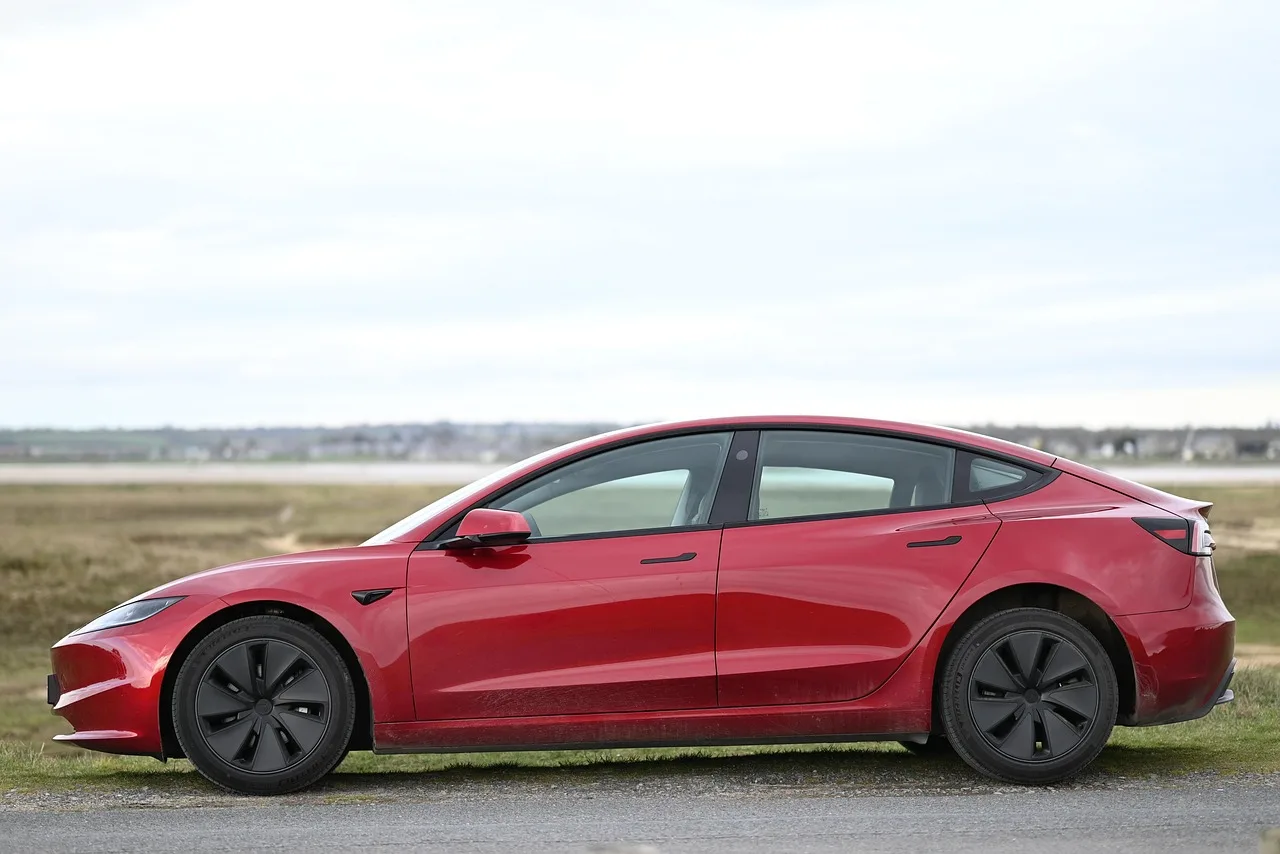


Why MSRP is only the starting point
The sticker price is only the first line. Tesla’s lineup includes Model 3, Model Y, Model S, Model X, and Cybertruck, and CNET notes that its price breakdown includes a flat $1,390 destination charge. That fee sits on top of MSRP, and local tax, title, and registration costs come after that.
Trim choice changes the quote fast. A base model can fit a commuter, while a higher trim can add performance and a much larger price tag for buyers who want it. For 2026, that spread matters more than it does on many non-EV brands because federal credit eligibility can hinge on both vehicle price and buyer income.
What buyers should expect before taxes and local fees
Think of Tesla pricing in three steps: MSRP first, destination second, then taxes and local fees. If you qualify for the federal EV credit, you may be able to subtract up to $7,500 from the effective cost, but only if the vehicle and the buyer both satisfy the rules.
The number to compare is “price after destination, before local taxes, then minus any credit if eligible.” That is not the same as the advertised starting price.
Tesla 2026 price matrix: model, trim, range, and destination fee
This matrix separates the base figure from the destination charge and gives a rough effective range for eligible buyers. The credit estimate is simple: MSRP plus destination, then minus up to $7,500 where the model and buyer qualify. Range figures matter here, because price without range is a weak value check.
| Model | Trim | MSRP | Destination fee | EPA range | Estimated effective price after up to $7,500 credit |
|---|---|---|---|---|---|
| Model 3 | Base | About $39,990 | $1,390 added on top | 272 to 341 miles | About $33,880 to $33,880 before taxes, if eligible |
| Model 3 | Long Range AWD / Performance | Higher than base trim | $1,390 added on top | 272 to 341 miles | Base plus trim premium, then minus up to $7,500 if eligible |
| Model Y | Long Range AWD | About $44,990 | $1,390 added on top | 260 to 310 miles | About $38,880 before taxes, if eligible |
| Model Y | Performance | Higher than Long Range AWD | $1,390 added on top | 260 to 310 miles | Trim premium, then minus up to $7,500 if eligible |
| Model S | Long Range | $74,990 | Added on top | Up to 402 miles | $67,490 before taxes, if eligible |
| Model S | Plaid | $89,990 | Added on top | Up to 402 miles | $82,490 before taxes, if eligible |
| Model X | Long Range | Low-end price listed by CNET at $81,380 | Added on top | 326 miles | Likely over the effective federal cap for many buyers |
| Model X | Plaid | Higher than Long Range | Added on top | 326 miles | Higher than Long Range, with no simple credit assumption |
| Cybertruck | AWD | $79,990 | Added on top | Range not provided in the source set | About $74,? before taxes if eligible; price stays near the SUV cap line |
| Cybertruck | Cyberbeast | Higher than AWD | Added on top | Range not provided in the source set | Higher than AWD, with no simple credit assumption |
One note on the table: the Cybertruck row is about body style and buy-in, not a promise of credit eligibility. The source set here does not provide a clean 2026 range figure for the truck, so price comparison is the main value lens for that model.

How much does a 2026 Tesla Model S cost?
The 2026 Model S starts at $74,990 for Long Range and $89,990 for Plaid, before destination and taxes. That puts the Plaid about $15,000 above the Long Range, or roughly 20% more before any local fees. For buyers who want sedan practicality and long range, the base trim is the cleaner value.
Long Range versus Plaid pricing gap
The jump from $74,990 to $89,990 is easy to measure. It is large enough that many buyers should ask what the extra money buys in day-to-day use, not only in acceleration numbers.
If you want a family road-trip sedan, the Long Range trim offers roughly 400 miles of range. That is a strong figure in this price class and makes the base trim the easier recommendation for buyers who care more about range than track-day speed.
Why Model S sits above the tax-credit cap
Federal EV credit rules are tied to MSRP caps, and the Model S sits above the sedan limit. That means many buyers should assume no credit when they compare a Model S against a Model 3 or Model Y. The effective price can still look attractive to some shoppers, but not because of a simple $7,500 reduction.
Picture a buyer cross-shopping a fast sedan for commuting and weekend travel. The Model S Plaid may seem tempting, but the Long Range trim usually makes more sense once you account for the $15,000 spread and the likely loss of credit eligibility.
How much does a 2026 Tesla Model Y or Model 3 cost?
The Model 3 and Model Y are Tesla’s lower-cost entry points, with the Model 3 starting around $39,990 and the Model Y around $44,990. Both add the $1,390 destination charge, and both are the most likely models in the lineup to matter to federal EV credit shoppers, depending on final MSRP and buyer income.
Base price versus higher trim spread
Trim pricing is where Tesla’s cost picture changes fast. A base Model 3 or Model Y can look attainable, but the Long Range AWD and Performance versions move the total much higher. The key question is whether you need the extra grip, extra speed, or simply the lower entry price.
For the Model 3, CNET’s 2024 low-end price was $40,380, and the model’s range was listed between 272 and 341 miles. For the Model Y, CNET’s 2024 low-end price was $49,130, and its range was listed at 260 to 310 miles. Those figures help frame the 2026 decision even when trim mix changes.
Which trim is the better value for commuters
A common first-timer mistake is paying for the fast trim before learning whether the car will spend most of its time in traffic and suburban parking lots. For that use case, the base Model 3 usually makes the strongest case because it starts lower and still offers a usable range band.
The Model Y makes more sense if you want the taller seating position, easier cargo loading, and SUV shape. The price gap over Model 3 is easier to justify when you need the extra space, not when you simply want the Tesla badge.
How much does a 2026 Tesla Cybertruck cost?
The 2026 Cybertruck AWD is listed at $79,990, and the Cyberbeast sits above it. That makes the truck Tesla’s most unusual body style and one of the hardest models to compare on simple sedan-style value math. Destination still matters, because it sits on top of MSRP here too.
AWD price versus Cyberbeast price
At $79,990, the AWD version already lives near the upper end of the lineup. The Cyberbeast asks for more, so the spread from the cheaper truck trim to the top truck trim is a premium for performance, not for basic utility.
CNET notes that the Cybertruck can tow up to 11,000 pounds. That makes the value question different from Model 3 or Model Y. Buyers looking for a work-capable truck may care more about towing and bed utility than about range-per-dollar alone.
How its body style changes the value calculation
The Cybertruck is not a normal family crossover, and that matters. Its shape, cargo layout, and towing spec place it in a different comparison set from the Model Y. If you need a pickup, the truck body style is the reason to pay the premium; if you do not, the added cost is hard to defend.
Can the federal EV tax credit lower your Tesla price?
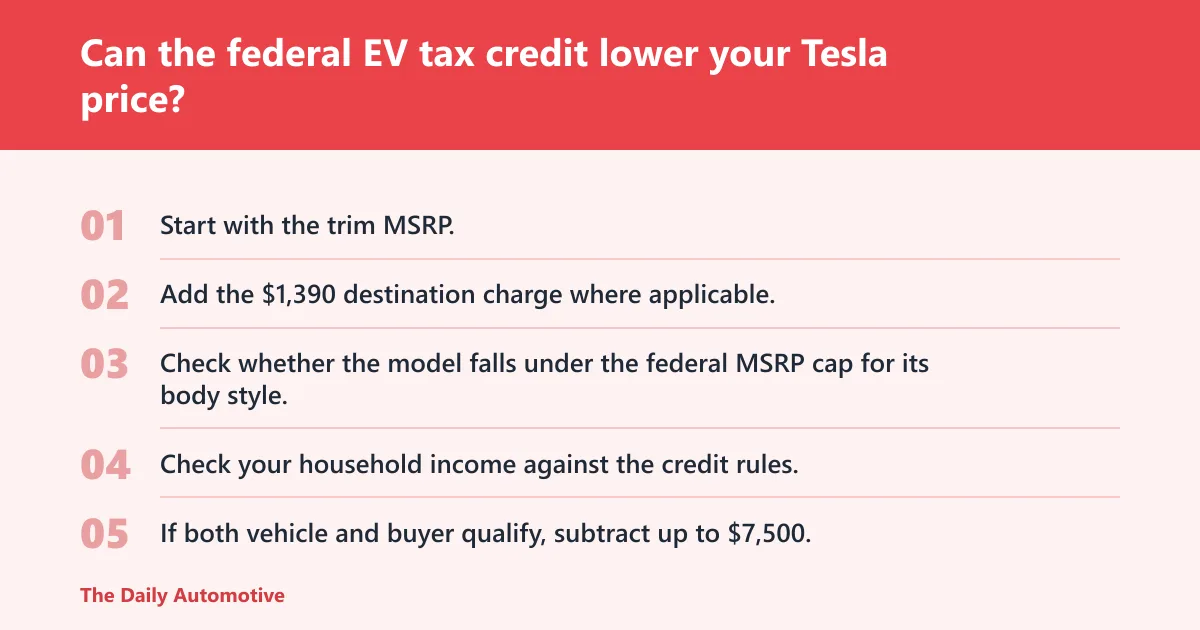
Yes, but only for eligible buyers and qualifying vehicles. The federal EV credit may be up to $7,500, and the rules generally include income limits, MSRP limits, and vehicle eligibility requirements. That means the advertised price and the real purchase price can be very different.
Up to $7,500 and who qualifies
The credit is not automatic. Your income must fit the program’s limits, and the vehicle must qualify under the federal rules. Tesla buyers should also separate the vehicle price from any software add-ons, because those extras do not turn a non-qualifying model into a qualifying one.
Income caps and MSRP caps
There are two common filters: what you earn and what the car costs. Sedans face one MSRP cap, SUVs and trucks a different one. That is why Model Y and Cybertruck shoppers need to read the cap differently from Model 3 and Model S shoppers.
Model S sits above the sedan cap. Model X is in the SUV class, but its listed low-end price from CNET is $81,380, which puts it in a much tougher credit position than Model Y. The Model Y is the Tesla most likely to sit close to the SUV cap boundary, which is why it gets so much attention from credit shoppers.
How to estimate an effective purchase price
- Start with the trim MSRP.
- Add the $1,390 destination charge where applicable.
- Check whether the model falls under the federal MSRP cap for its body style.
- Check your household income against the credit rules.
- If both vehicle and buyer qualify, subtract up to $7,500.
- Add local tax, title, and registration to get close to your out-the-door number.
Suppose you are comparing a Model Y against a Model S for a suburban commute with weekend trips. The Model Y can be the better financial fit because it starts lower, sits closer to the SUV credit rules, and gives you usable cargo space without jumping into Model S territory.
Tesla’s full lineup covers sedan, SUV, and truck use cases, and that is why price comparisons need context. The Model 3 is the entry sedan, the Model Y is the volume SUV choice, the Model S is the premium sedan, the Model X is the premium SUV, and the Cybertruck is the outlier pickup. Most shoppers should start with use case, then check the credit rules, then compare trims.
Frequently asked questions
how much does a 2026 tesla roadster cost
Tesla has not provided a current 2026 Roadster price in the facts used here, so a reliable figure should not be treated as confirmed. For shoppers comparing today’s lineup, the practical choices are Model 3, Model Y, Model S, Model X, and Cybertruck. Those are the current Tesla models with clearer pricing data.
how much does a 2026 electric car cost
A 2026 electric car can range from low-$30,000 effective prices for qualifying entry models to well above $100,000 for premium trims. Battery size, body style, range, and software all move the number. Tax credits can trim the bill, but only when the car and buyer meet the federal rules.
how much does a 2026 tesla self driving car cost
“Self-driving” is a pricing confusion point. The vehicle price and Tesla software price are separate, and Full Self-Driving is not part of the base car price. Buyers should price the car first, then treat Autopilot or FSD as a separate software decision if Tesla offers it on that vehicle.
how much does a 2026 tesla model s plaid cost
The 2026 Tesla Model S Plaid costs $89,990 before destination and taxes. That is $15,000 more than the Model S Long Range. For most buyers, the Long Range is the stronger value because it already offers up to 402 miles of range, while the Plaid mainly buys extra performance.
Products related to this article
Sponsored / affiliate links. As an Amazon Associate I earn from qualifying purchases. I may earn additional commission from eligible campaigns.