How Much Should I Charge to Haul a Car?
Hey there! If you’re reading this, you’re probably wondering how much to charge for hauling a car. Maybe you’re starting a car hauling business, or you just got a request to transport someone’s vehicle. Either way, setting the right price is tricky. You want to make a profit, but you also don’t want to scare off customers. I’ve been down this road myself, figuring out what works in the car hauling world. Let me share what I’ve learned to help you nail down a fair price that keeps your business rolling. In this article, I’ll break it all down for you—factors that affect pricing, how to calculate your costs, and tips to stay competitive. Let’s dive in!
Why Pricing Car Hauling Is So Important
Pricing is the heartbeat of your car hauling business. Charge too much, and customers will pass you by for someone cheaper. Charge too little, and you’re working hard for pennies—or worse, losing money. When I started hauling cars, I made the mistake of undercharging just to get jobs. It felt good to stay busy, but my bank account wasn’t happy. I quickly learned that pricing isn’t just about picking a number. It’s about understanding your costs, knowing your market, and delivering value to customers.
The car hauling industry is competitive. Customers compare quotes, and they want reliability, safety, and a fair price. Your pricing needs to reflect the quality of your service while covering your expenses. Let’s look at the key factors that influence how much you should charge.
Factors That Affect Car Hauling Prices
When I first started, I thought pricing was simple—just charge a flat rate per car. But it’s not that easy. Several factors come into play, and understanding them helps you set a price that’s fair for you and your customers. Here’s what I consider every time I quote a job.
Distance of the Haul
The distance you’re hauling the car is the biggest factor. It makes sense, right? Driving 100 miles isn’t the same as driving 1,000 miles. Longer hauls mean more fuel, more time, and more wear on your truck. In my experience, the cost per mile decreases as the distance increases. For example, a 200-mile trip might cost $2 per mile, but a 1,000-mile trip might drop to $1 per mile. Why? Because fixed costs like loading and unloading get spread out over more miles.
Vehicle Size and Weight
Not all cars are created equal. Hauling a compact sedan is cheaper than hauling a massive SUV or a heavy-duty pickup truck. Bigger vehicles take up more space on your trailer, which means you can carry fewer cars at once. They also burn more fuel because of the extra weight. When I haul a luxury SUV, I know it’s going to cost more than a small hatchback. Customers usually understand this, but I always explain it to avoid surprises.
Type of Transport: Open vs. Enclosed
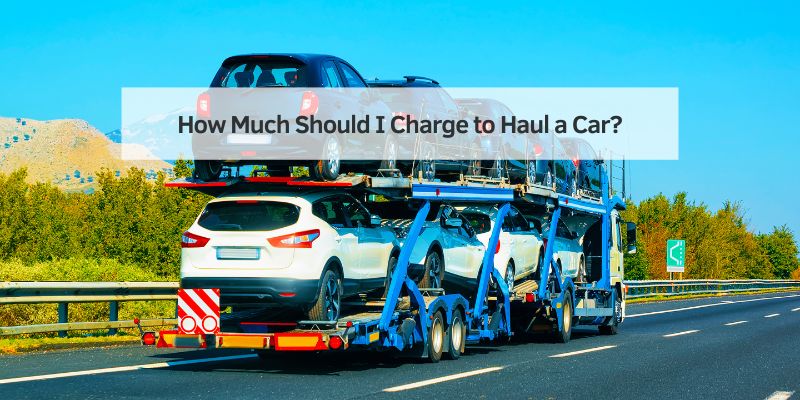
There are two main ways to haul cars: open transport and enclosed transport. Open transport is the most common and affordable option. It’s what you see on highways—cars loaded on an open trailer. Enclosed transport, on the other hand, is pricier because it protects the car from weather, road debris, and prying eyes. I’ve hauled classic cars and luxury vehicles in enclosed trailers for clients who want extra care. It costs more, but they’re willing to pay for peace of mind.
Pickup and Delivery Locations
Where you’re picking up and delivering the car matters. Urban areas with easy access are cheaper because you can get in and out quickly. Rural areas or hard-to-reach spots? That’s going to cost more. I once had to pick up a car from a remote mountain town, and the extra time and fuel added up. If the delivery spot is a busy city with tight streets, that can also bump up the price due to navigation challenges.
Time of Year and Demand
The car hauling business has busy seasons and slow seasons. Summer is usually peak season because people are moving, buying cars, or shipping vehicles to car shows. During these times, I can charge a bit more because demand is high. Winter, especially in snowy areas, can be slower, so I might lower my rates to stay competitive. Keep an eye on market trends in your area to adjust your pricing.
Your Experience and Reputation
When I was new to car hauling, I charged less to build my reputation. Now that I’ve got years of experience and happy customers, I can charge more. Clients are willing to pay for a hauler they trust to deliver their car safely. If you’re just starting, you might need to start lower to attract customers. As you build a track record, you can raise your rates.
How to Calculate Your Car Hauling Costs
Now that you know what affects pricing, let’s talk about how to figure out your costs. This is where I made mistakes early on—I didn’t account for all my expenses. To set a fair price, you need to know exactly what it costs you to haul a car. Here’s how I do it.
Fuel Costs
Fuel is one of your biggest expenses. I calculate fuel costs based on the distance of the haul and my truck’s fuel efficiency. For example, if I’m hauling 500 miles and my truck gets 8 miles per gallon, that’s 62.5 gallons of fuel. At $3.50 per gallon, that’s about $219 in fuel alone. Don’t forget to factor in fuel price changes—they can vary by state or even by week.
Truck Maintenance and Wear
Hauling cars puts wear and tear on your truck and trailer. Tires, brakes, and oil changes add up. I set aside a portion of every job for maintenance. For a 1,000-mile haul, I might estimate $50-$100 for wear and tear, depending on the load and road conditions. If you’re leasing or financing your equipment, include those payments in your calculations.
Insurance and Licensing
You need proper insurance to haul cars legally. My commercial auto insurance and cargo insurance cost me about $1,500 a month. I divide that by the number of jobs I do each month to figure out how much to include in each quote. Don’t forget about licensing fees or permits for oversized loads—they can add a few hundred dollars to your annual costs.
Time and Labor
Your time is valuable. Hauling a car isn’t just driving—it’s loading, unloading, communicating with customers, and handling paperwork. I estimate how many hours a job will take and factor in my target hourly rate. For example, a 500-mile haul might take 10 hours of driving, plus 2 hours for loading and unloading. If I want to earn $50 per hour, that’s $600 for labor alone.
Overhead Costs
Running a car hauling business comes with overhead. Think about your phone bill, website hosting, marketing, or even the coffee you drink on long drives. I track these expenses monthly and include a small percentage in each quote. It’s easy to overlook these, but they add up fast.
Here’s a quick table to show how these costs might look for a 500-mile haul of a standard sedan:
| Expense | Estimated Cost |
|---|---|
| Fuel (500 miles) | $219 |
| Truck Maintenance | $50 |
| Insurance (per job) | $75 |
| Labor (12 hours at $50) | $600 |
| Overhead | $50 |
| Total | $994 |
This table helps me see that I need to charge at least $994 to break even on this job. To make a profit, I add a markup—usually 20-30%. So, I’d quote around $1,200-$1,300 for this haul.
Average Car Hauling Rates in the USA
When I started, I had no idea what the “going rate” was for car hauling. I did some research and talked to other haulers to get a sense of the market. Based on my experience and industry standards, here’s what you can expect to charge in the USA.
For open transport, the average rate is about $1 to $2 per mile for distances under 500 miles. For longer hauls (1,000+ miles), it drops to $0.75 to $1.25 per mile. Enclosed transport is pricier, often $1.50 to $3 per mile for short hauls and $1 to $2 per mile for longer ones.
For example:
- A 200-mile haul might cost $400-$600 (open) or $600-$800 (enclosed).
- A 1,000-mile haul might cost $1,000-$1,500 (open) or $1,500-$2,000 (enclosed).
These are just averages. Your rates will depend on the factors we talked about earlier, like vehicle size and location. Always check what other haulers in your area are charging to stay competitive.
How to Set Your Price as a Beginner
If you’re new to car hauling, pricing can feel overwhelming. I remember stressing about quoting too high or too low. Here’s what worked for me when I was starting out.
First, research your local market. Look at what other haulers are charging on platforms like uShip or CitizenShipper. These sites let customers post jobs and get quotes, so you can see what’s typical. When I started, I set my rates about 10-15% below the average to attract customers. For example, if the going rate was $1.50 per mile, I’d charge $1.25-$1.35.
Next, be upfront about your costs. I always explain to customers why my price is what it is—fuel, time, insurance, etc. Transparency builds trust. Finally, don’t be afraid to negotiate. Some customers will haggle, and that’s okay. Just know your bottom line—the minimum you need to cover costs and make a profit.
Tips to Stay Competitive Without Undercutting Yourself
The car hauling market is tough. There are always new haulers willing to work for less, but undercutting yourself hurts in the long run. Here’s how I stay competitive while keeping my prices fair.
- Offer Great Service: I make sure every car is delivered on time and in perfect condition. Happy customers leave good reviews, which lead to more jobs.
- Build Relationships: Repeat customers are gold. I give small discounts to loyal clients, which keeps them coming back.
- Invest in Your Equipment: A reliable truck and trailer make you look professional. Customers notice when you show up with well-maintained gear.
- Market Yourself: I use social media and a simple website to showcase my services. Sharing photos of successful hauls helps attract new customers.
- Be Flexible: Sometimes, I take on shorter hauls at a lower rate to fill gaps in my schedule. It’s better than sitting idle.
Common Mistakes to Avoid When Pricing
I’ve made my fair share of pricing mistakes, and I want you to avoid them. Here are some traps to watch out for.
- Forgetting Hidden Costs: Early on, I didn’t account for things like tolls or parking fees. Always include these in your quotes.
- Undercharging to Win Jobs: It’s tempting to lowball to get work, but it’s not sustainable. You’ll burn out or lose money.
- Ignoring Your Time: Your time is worth something. Don’t just focus on fuel and truck costs—factor in every hour you spend on the job.
- Not Adjusting for Demand: If you’re in a busy season, don’t be afraid to charge more. I learned this the hard way during a slow winter when I could’ve raised my rates in the summer.
How to Quote a Job Like a Pro
Quoting a job is an art. Here’s my step-by-step process for creating a quote that wins the job and keeps me profitable.
- Ask Questions: I always ask the customer about the car’s make and model, pickup and delivery locations, and whether they want open or enclosed transport.
- Calculate Costs: I add up fuel, maintenance, insurance, labor, and overhead, like we talked about earlier.
- Check the Market: I look at what others are charging for similar jobs in the area.
- Add a Profit Margin: I aim for a 20-30% profit on top of my costs.
- Be Clear and Professional: I send a detailed quote that explains the price and what’s included, like insurance or delivery timelines.
For example, if a customer wants a sedan hauled 300 miles, I might calculate $450 in costs (fuel, labor, etc.). I’d add a 25% profit margin, bringing the quote to about $560. I’d then check if that’s in line with local rates before sending it.
Scaling Your Car Hauling Business
Once you’ve got pricing figured out, you might want to grow your business. I started as a one-man operation, but now I run multiple trucks. Here’s how pricing ties into scaling.
- Hire Drivers: If you hire employees, factor their wages into your costs. I pay my drivers $25-$35 per hour, depending on experience.
- Expand Your Fleet: More trucks mean more jobs, but also more maintenance and insurance costs. Make sure your rates reflect this.
- Target High-Value Clients: I started focusing on luxury car dealers and classic car owners who need enclosed transport. They’re willing to pay more for specialized service.
- Streamline Operations: I use software to track expenses and jobs, which saves me time and helps me price accurately.
Wrapping It All Up
Figuring out how much to charge to haul a car isn’t just about picking a number—it’s about understanding your costs, knowing your market, and valuing your work. I’ve learned that the hard way, from undercharging in my early days to now running a profitable business. By considering factors like distance, vehicle size, and transport type, you can set a price that’s fair for you and your customers. Don’t forget to account for all your expenses—fuel, maintenance, insurance, and your time. Stay competitive by offering great service and building a reputation that lets you charge what you’re worth.
Whether you’re just starting or looking to grow, pricing is your foundation. Take the time to crunch the numbers, research your market, and be confident in your quotes. You’ve got this! If you’re ready to start hauling cars, go out there and set prices that keep your business moving forward.
Frequently Asked Questions
How do I know if I’m charging enough to make a profit?
Calculate all your costs—fuel, maintenance, insurance, labor, and overhead. Add a 20-30% profit margin. If your quote covers these and is competitive with local rates, you’re on the right track.
Should I charge more for luxury or classic cars?
Yes. Luxury and classic cars often require enclosed transport and extra care. I charge 50-100% more for these because of the added responsibility and equipment costs.
What’s the difference between open and enclosed transport pricing?
Open transport is cheaper, usually $1-$2 per mile. Enclosed transport costs more, about $1.50-$3 per mile, because it protects the car from weather and debris.
How can I compete with haulers who charge less?
Focus on quality service, reliability, and building a strong reputation. Customers will pay more for a hauler they trust. I also offer small discounts to repeat clients to keep them coming back.
Do I need to adjust my prices based on the season?
Yes. Demand is higher in summer, so you can charge more. In slower seasons like winter, you might need to lower rates slightly to stay busy.