How To Catch A Car Thief: Proven Essential Strategies
While you can’t personally “catch” a car thief, you can significantly deter theft and aid recovery through preparation and immediate action: use anti-theft devices, park smartly, report suspicious activity, and contact authorities promptly. Your vigilance is key to protecting your vehicle.
Imagine this: you walk out to where you parked your car, ready to start your day, only to find… an empty space. That sinking feeling is one of the worst for any car owner. Car theft is a frustrating and upsetting experience, but knowing what to do can make a huge difference. This guide is here to help you understand how to protect your vehicle and what steps to take if the worst happens. We’ll go through simple, practical strategies that anyone can use to make their car a less tempting target and how to best work with law enforcement if your car goes missing.
Understanding Car Theft: Your First Line of Defense
Car theft isn’t just about joyriding; stolen vehicles are often used in other crimes or broken down for parts. Knowing common theft methods helps you prevent them. For instance, older cars are sometimes targeted for their parts, while newer, more valuable cars might be taken for resale or export. The good news is that many preventative measures are straightforward and don’t cost a lot. By making your car a harder target, you massively reduce the chances of it being stolen.
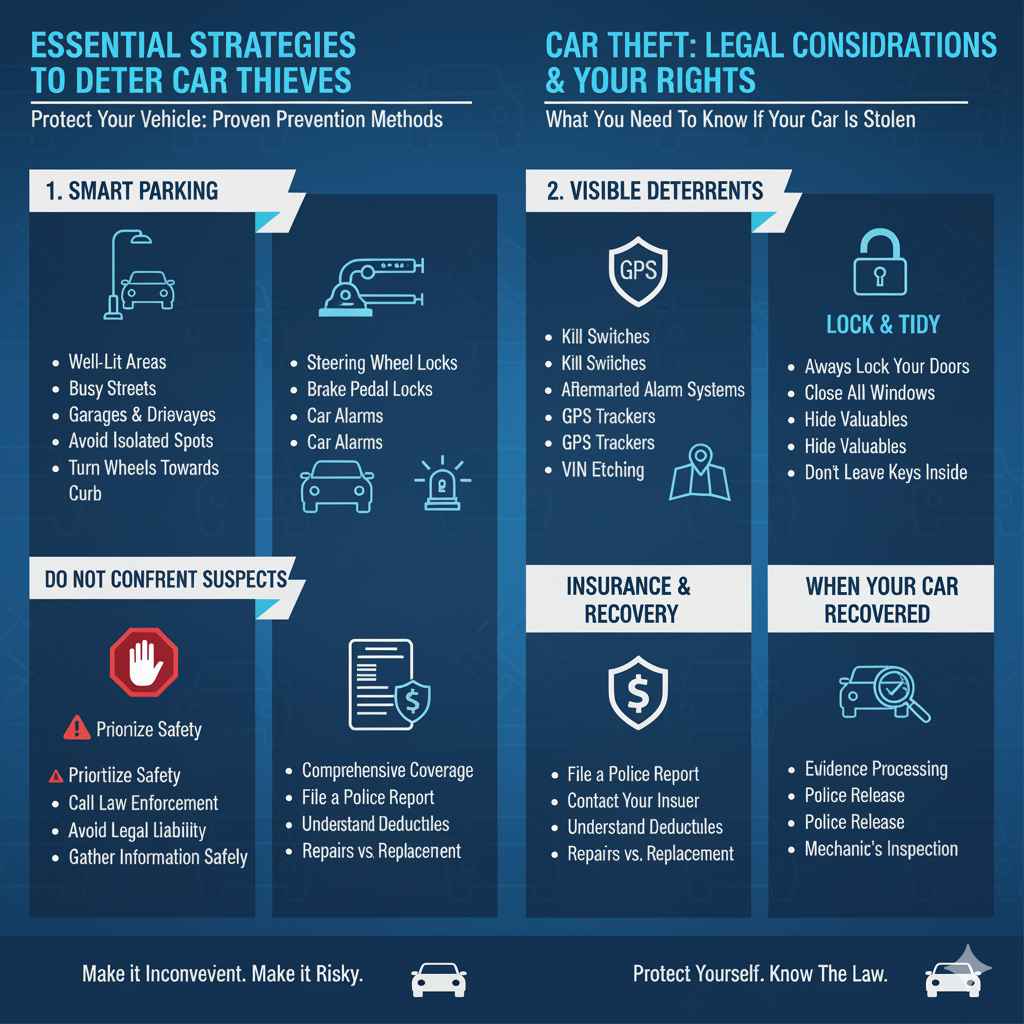
Essential Strategies to Deter Car Thieves
Preventing your car from being stolen is all about making it inconvenient and risky for thieves. Think of it like securing your home – the more layers of protection you have, the safer your belongings are. Here are proven strategies that work, from simple habits to more advanced tools.
1. Smart Parking: Location, Location, Location
Where you park your car can significantly impact its safety. Thieves often look for easy targets in poorly lit or isolated areas.
- Well-Lit Areas: Always try to park in brightly lit places, especially at night. Thieves prefer the cover of darkness.
- Busy Streets: Parking where there’s foot traffic or visibility from nearby homes and businesses can deter thieves.
- Garages and Driveways: If you have a garage, use it! If not, parking in your driveway is better than street parking. Lock your garage door!
- Avoid Isolated Spots: Large, empty parking lots or secluded areas behind buildings are prime spots for car thieves. Stay away from these if possible.
- Turn Wheels Towards the Curb: When parking on a street, especially on a hill or incline, turn your wheels towards the curb. This makes it harder for a thief to tow your car away quickly.
2. Visible Deterrents: Let Them Know It’s Protected
Sometimes, just the idea that a car is protected is enough to make a thief move on. Visible security measures act as a strong warning.
- Steering Wheel Locks: These bright, visible devices are a classic deterrent. They make steering impossible and are a visual reminder that the car is secured.
- Brake Pedal Locks: Similar to steering wheel locks, these prevent the brake pedal from being pressed, thus immobilizing the car.
- Car Alarms: A loud, audible alarm can scare off a thief and attract attention. Ensure your alarm system is functional.
- Immobilizer Systems: Many modern cars come with factory-installed immobilizers that prevent the engine from starting without the correct key or fob.
3. Hidden Security: Advanced Protection
These methods are less visible but highly effective for tracking or preventing theft.
- Kill Switches: A hidden kill switch can be installed to disable the ignition or fuel pump, making it impossible for a thief to start the car even if they bypass other security.
- Aftermarket Alarm Systems: Beyond factory alarms, some systems offer features like shock sensors, proximity sensors, and even phone notifications.
- GPS Trackers: These small devices can be hidden in your car and allow you to track its location in real-time if it’s stolen. This is crucial for recovery. You can find various options available, like vehicle trackers that offer peace of mind.
- VIN Etching: Having your Vehicle Identification Number (VIN) etched onto windows and major parts makes the car harder for thieves to sell for parts, as each component becomes identifiable.
4. Keep It Locked and Tidy
It sounds obvious, but many thefts happen because cars are left unlocked or valuables are visible.
- Always Lock Your Doors: Make it a habit, even if you’re just stepping away for a minute.
- Close All Windows: Don’t give an easy entry point.
- Hide Valuables: Never leave anything tempting in plain sight – phones, laptops, bags, or even loose change can attract opportunists. Use the trunk for storage.
- Don’t Leave Your Keys Inside: This includes spare keys! It’s a common mistake that leads to easy theft.
When the Unthinkable Happens: What to Do Immediately
If you discover your car is missing, staying calm and acting quickly is essential. Every minute counts when it comes to recovery.
Step 1: Confirm It’s Stolen
Before calling the police, double-check that your car hasn’t been towed by the city or a private company. Look for parking tickets or towing company signs in the area.
Step 2: Gather Information
Have the following details ready before you call the authorities:
- Your Vehicle’s Information: Make, model, year, color, license plate number, and VIN.
- Distinguishing Features: Any unique damage, stickers, roof racks, or aftermarket modifications (e.g., tinted windows, custom wheels).
- Last Known Location and Time: Where and when you last saw your car.
- Details of Any Security Devices: Mention if you have a GPS tracker installed.
Step 3: Contact Law Enforcement Immediately
Call your local police department or sheriff’s office. This is not a situation where you should wait. Reporting the theft quickly:
- Initiates an Official Search: They will file a report and enter your car into national databases as stolen.
- Helps Recovery Efforts: The sooner they know, the sooner they can alert patrols and look for your vehicle.
- Is Necessary for Insurance: A police report is almost always required for an insurance claim.
Step 4: Notify Your Insurance Company
Contact your auto insurance provider as soon as possible after reporting the theft to the police. They will guide you through the claims process. Be prepared to provide the police report number.
Step 5: Activate GPS Tracker (If Applicable)
If your car is equipped with a GPS tracking system, activate it immediately. Many tracking services have a dedicated team or app to help you monitor the vehicle’s location and share this information with the police.
Step 6: Alert Your Bank (If You Have a Loan)
If your car is financed, inform your lender about the theft. They will need this information for their records and to manage the loan.
Working With Law Enforcement and Recovery
Once the theft is reported, the police are your primary partners in recovery. They have the resources and jurisdiction to locate stolen vehicles.
Your Role in the Process
While police do the heavy lifting, your cooperation is vital. Be:
- Available: Provide contact information and be ready to answer follow-up questions.
- Honest: Give accurate details.
- Patient: Recovery can take time, and sometimes cars are found quickly, other times it can be much longer.
What Happens After a Report?
When a car is reported stolen, its details are entered into systems like the National Crime Information Center (NCIC) database. This alerts law enforcement agencies nationwide. Police officers who encounter your vehicle during routine stops or traffic enforcement will be notified it is stolen and can then take appropriate action, which usually involves impounding it.
Recovery and Your Vehicle
If your car is recovered, it will likely be taken to a police impound lot. You will need to show proof of ownership and pay any towing and storage fees before you can retrieve it. It’s also advisable to have a mechanic inspect the vehicle for any damage or tampering, especially if it was involved in other crimes while missing. Documenting any damage is important for your insurance claim.
Advanced Tracking and Recovery Technologies
We live in a tech-savvy world, and car security has benefited greatly. Beyond basic alarms and locks, these technologies are game-changers.
Category of Tracking Devices
There are several types of tracking devices, each with different features and price points:
| Type of Tracker | How it Works | Pros | Cons |
|---|---|---|---|
| GPS Trackers (Real-Time) | Uses GPS satellites to pinpoint location and transmits data via cellular network. | Most accurate real-time location. Can provide speed and route history. Often integrates with apps. | Requires subscription fees. Battery life can be a concern if not hardwired. Can be blocked by dense urban areas or underground parking. |
| LoJack Systems | Uses radio frequency technology, often activated by police when a theft is reported. | Can be effective even without a clear GPS signal. Often has a good success rate in recovery. | May require professional installation. Less real-time tracking for the owner; relies on police activation. |
| Cellular/Mobile Trackers | Uses cellular triangulation to estimate location. | Often cheaper than GPS trackers. No subscription fees for some. | Less precise than GPS. Accuracy varies greatly depending on cell tower density. |
Choosing the Right System
Consider your budget, the type of car you own, and your comfort level with technology. For many, a real-time GPS tracker with a user-friendly app offers the best combination of security and peace of mind. Reputable companies offer installation services which can ensure the device is well-hidden and properly connected.
The Role of Aftermarket Security Enhancements
Sometimes, factory security isn’t enough. Aftermarket systems can add layers of protection. These might include:
- More Sensitive Alarms: With adjustable sensitivity to avoid false alarms but loud enough to alert.
- Remote Start Kill: Prevents the car from being started remotely if stolen.
- Immobilizer Systems: Many aftermarket options offer enhanced protection against hot-wiring.
When considering aftermarket options, it’s always a good idea to consult with a professional installer to ensure the system is compatible with your vehicle and installed correctly. You can find resources on vehicle security system installation from organizations like the CarComplaints.com, which often provide consumer-friendly guides.
Legal Considerations and Your Rights
It’s important to understand your legal rights and responsibilities if your car is stolen and recovered, or if you consider taking matters into your own hands (which you should not do).
Do NOT Pursue or Confront Suspects
This is a critical safety warning. Trying to “catch” a car thief yourself can be extremely dangerous. You could be injured or worse, and you could also face legal consequences for interfering with a potential crime scene or using excessive force. Rely on law enforcement for recovery and apprehension.
Insurance and Recovery
Your insurance policy will dictate the terms of compensation if your car is stolen and not recovered. Comprehensive coverage typically covers theft. If your car is recovered but damaged, your policy usually covers repairs after you pay your deductible. Understand your policy details – if in doubt, ask your insurance agent.
When Your Car is Recovered
After a car is recovered, it may be processed for evidence. You can usually collect your vehicle once the police release it and you settle any impound fees. Again, a thorough inspection by a mechanic is recommended.
FAQ: Your Car Security Questions Answered
Q1: How can I make my car harder to steal?
You can make your car harder to steal by using visible deterrents like steering wheel locks, parking in well-lit and populated areas, keeping your car locked at all times, and hiding all valuables inside. Installing an aftermarket alarm or a GPS tracker adds another significant layer of security.
Q2: What’s the first thing I should do if I suspect my car has been stolen?
First, confirm it hasn’t been towed by checking for parking tickets or towing company signs. Then, gather your car’s details (make, model, year, VIN, license plate) and call your local police department immediately to file a stolen vehicle report.
Q3: Will my car insurance cover theft?
Yes, if you have comprehensive coverage on your auto insurance policy. This type of coverage is designed to protect against theft and damage from non-collision events. You’ll need to file a claim and typically have a deductible.
Q4: How do GPS trackers help recover stolen cars?
GPS trackers allow you to monitor your car’s location in real-time via an app or online portal. This information can be shared with law enforcement, greatly increasing the chances of quick recovery and reducing the risk of the vehicle being permanently lost or disappearing across borders.
Q5: Are older cars more at risk of theft?
Older cars can be at higher risk because they may lack modern anti-theft systems like immobilizers and may be targeted for their parts. However, popular newer models are also frequently stolen for resale or export. The best prevention applies to all cars.
Q6: Can I install a kill switch myself?
Installing a kill switch involves working with your car’s electrical system. While some basic DIYers might manage it, it’s generally recommended to have this done by a professional auto electrician to ensure it’s installed correctly and doesn’t interfere with other systems or void warranties. For more information on car electrical systems, look for guides from reputable automotive repair resources.
Conclusion: Your Proactive Approach to Car Security
Protecting your vehicle from theft is a proactive process. By implementing smart parking habits, utilizing effective security devices, and knowing exactly what to do if your car is stolen, you significantly boost your chances of preventing a loss or ensuring a swift recovery. Remember, it’s not about being a security expert, but about making informed, simple choices that safeguard your valuable asset. Stay vigilant, stay prepared, and keep your car safe.