How to Disable a Car Alarm When It Keeps Going Off
The fastest fix for a car alarm that will not stop is usually the panic button on your key fob or starting the engine, since both actions reset almost every factory alarm system in seconds. If the fob is unresponsive, locking and unlocking the driver’s door, pulling the alarm fuse, or disconnecting the battery are the next most reliable options.
This guide walks through all five disabling methods in order from quickest to most drastic, explains what usually triggers a false alarm in the first place, and covers the safety and warranty risks worth knowing before you leave the alarm off for good.
Why Car Alarms Go Off
BEST FOR PULLING THE ALARM FUSE SAFELY
 |
306-Piece Car Fuse Assortment Kit with Puller and Tester – $9.48 Includes a proper fuse puller plus every common blade-fuse size, so you can pull the alarm fuse without damaging the fuse box and have a spare on hand if it turns out to be blown.
|
A car alarm rarely goes off without a trigger, even when the cause is not obvious. Modern systems rely on a mix of sensors and electrical signals, and any one of them misfiring is enough to set off the horn and lights. The most common culprits are:
- Sensitive sensors: Motion, vibration, and door or hood sensors are tuned to catch a break-in attempt, but strong wind, a passing truck, or even an animal jumping on the hood can trip them.
- Low battery voltage: A weak or aging 12-volt battery can send erratic signals to the alarm module, triggering false alerts even when nothing has touched the car.
- Worn key fob: A dying fob battery or a damaged button can send a partial signal that the alarm module misreads as a threat instead of a command.
- Loose or damaged wiring: A frayed wire or a corroded connector anywhere in the alarm circuit can create a short that fires the alarm at random.
- Aftermarket alarm glitches: Non-factory alarm kits are more prone to false triggers than factory systems, especially if the sensitivity was set too high during installation.
Knowing which of these applies to your car helps you decide whether a temporary disable is enough or whether the alarm needs an actual repair.
Is It Safe to Disable Your Car Alarm?
A car alarm exists to deter theft, so switching it off completely does remove one layer of protection, and that matters most if you park on the street or in a high-crime area overnight. If you are only disabling it for a few minutes to troubleshoot the cause, the risk is minimal.
A malfunctioning alarm that goes off constantly is not protecting anything anyway, so disabling it temporarily to diagnose the real issue is a reasonable step. Just do not leave it off long-term without another form of security, such as a steering wheel lock or GPS tracker, especially if you park outside.

Methods to Disable a Car Alarm
Which method works best depends on your car and whether the alarm is a factory system or an aftermarket kit. Start with the least invasive option and only move to disconnecting the battery or pulling a fuse if the simpler methods fail.
Use the Key Fob
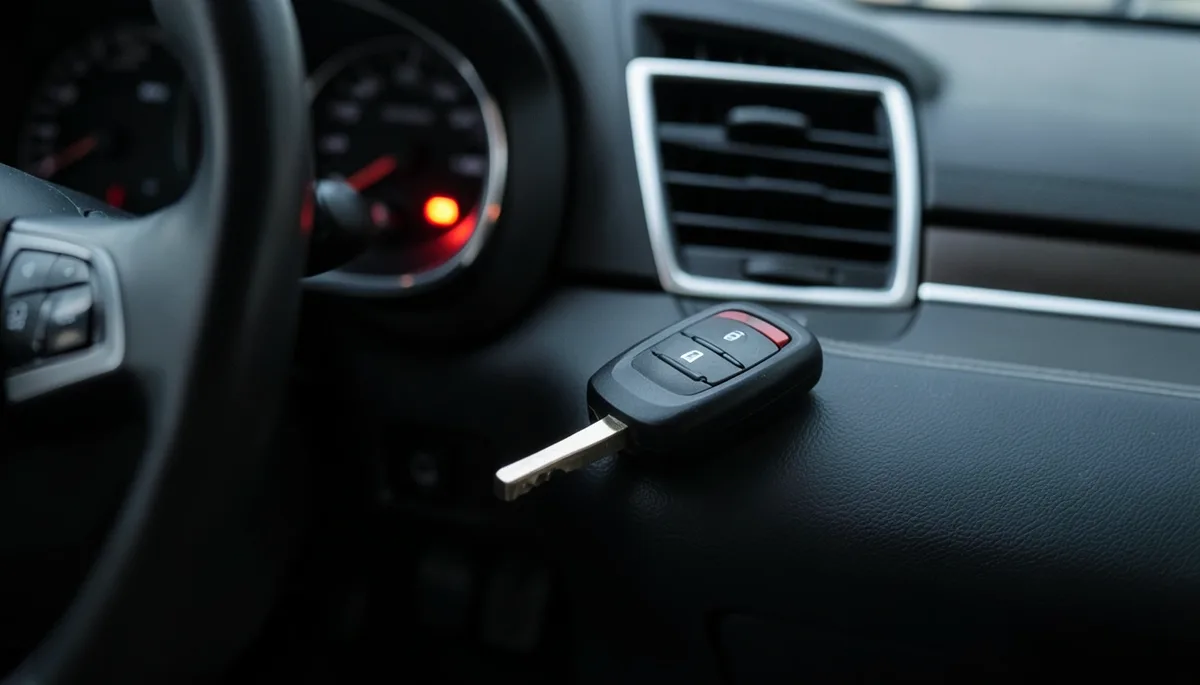
Press the unlock button, or the panic button if your fob has one, since either will usually silence the alarm instantly. If the fob does not respond at all, the battery inside it is the most likely cause. A replacement CR2032 battery costs about $5 and takes two minutes to swap: pop the fob open with a small flathead screwdriver, replace the battery, and try again.
If a fresh battery does not fix it, the fob may be out of sync with the car’s receiver. Press and hold the lock and unlock buttons together for a few seconds until you hear the car chirp or the locks cycle, which resyncs most factory fobs. The exact resync sequence varies by manufacturer, so check your owner’s manual if this does not work on the first try.
Use the Car Key
If the fob fails, use the physical key instead. Insert it into the driver’s door lock and turn it to unlock, then lock and unlock the door again. This manual cycle resets the alarm on most vehicles the same way the fob’s unlock button does.
On some cars, turning the key in the ignition to the accessory or “on” position, without starting the engine, also disarms the alarm. Check your owner’s manual for your model’s specific sequence, since this step varies more than the door-lock method does.
Disconnect the Battery
This is the most drastic option, but it works when the fob and key methods fail. Make sure the car is off and the key is out before you start.
- Pop the hood: With the ignition off and the key away from the car.
- Locate the battery: Most are under the hood, though some vehicles mount it in the trunk.
- Disconnect the negative terminal first: Loosen it with a wrench and wrap it in a rag so it cannot touch metal by accident.
- Wait 5 to 10 minutes: This gives the alarm module’s capacitors time to fully discharge and reset.
- Reconnect the battery and start the car: Tighten the negative terminal last.
Disconnecting the battery resets the alarm, but it will also clear your radio presets and the clock, so keep a small wrench in the car for exactly this situation.
Find the Alarm Fuse
Pulling the alarm fuse is a more targeted fix than disconnecting the whole battery. Check your owner’s manual for the fuse box location. On most vehicles it is either under the dashboard to the left of the steering column or under the hood near the battery. Look for a fuse labeled “alarm,” “security,” or “BCM,” then remove it with a fuse puller or a pair of needle-nose pliers.
This disables the alarm without touching the rest of the electrical system, but remember to put the fuse back, or get the alarm repaired, once you are done. Leaving it out disables your anti-theft protection entirely.
Reset the Alarm System
Some factory alarms just need a reset rather than a full disable, especially after a dead battery or a power surge. The reset sequence is usually a specific pattern of key turns or fob button presses listed in your owner’s manual. For many cars it is turning the key to “on” for about 10 seconds, then off, repeated two or three times.
If you have an aftermarket alarm, look for a hidden valet or reset switch, often tucked under the dash near the steering column or behind the glovebox. Holding it for a few seconds typically disarms the system. For a full breakdown of factory versus aftermarket reset steps, see our guide to resetting a car alarm system.
Disable Aftermarket Alarms
Aftermarket systems are more variable than factory alarms because installers wire them differently from car to car. The alarm module, usually a small box tucked under the dashboard, has a main power wire that will stop the alarm from firing once disconnected. This does leave the car without that added layer of security, so treat it as a temporary fix.
If you are not sure which wire feeds the module, check the installation manual that came with the kit or look up the wiring diagram from the manufacturer before cutting anything. Mark any wire you disconnect with tape so you do not mix it up when reconnecting it.
Tools You Might Need
None of the methods above require a full toolbox, but having these on hand makes the job faster:
- Multimeter: Useful for checking whether the car battery is at fault before you start disconnecting anything. A basic automotive multimeter runs about $20.
- Wrench or socket set: Needed to loosen the battery terminal; a 10mm wrench fits most vehicles.
- Small screwdriver: For opening the key fob to swap its battery.
- Fuse puller: Makes pulling a small fuse far easier than trying to grip it with your fingers; sold for about $5 at auto parts stores, or included in fuse assortment kits.
- Owner’s manual: Has your specific car’s fuse box location and reset sequence.

Risks of Disabling Your Alarm
Turning off an alarm is not free of downsides. Keep these in mind before you leave it disabled for more than a few minutes:
- Theft vulnerability: A car without an active alarm is an easier target, so add another layer of security, such as a steering wheel lock, if you plan to leave the alarm off. It is worth checking whether your car insurance actually covers theft before you decide the risk is acceptable.
- Warranty concerns: Disabling a factory alarm on a newer vehicle can affect coverage tied to the anti-theft system. Check with your dealer first if the car is still under warranty.
- Electrical side effects: Pulling the wrong fuse or wire can knock out unrelated systems, like the radio or interior lights, until the fuse is replaced.
- Inspection and legal issues: In some states, tampering with an immobilizer, as opposed to just the alarm siren, can cause problems during a vehicle inspection. Check your state’s rules if you are permanently disabling anything beyond the alarm horn.
If you are disabling the alarm for good rather than just resetting it, look into other anti-theft options, such as a GPS tracker, a wheel clamp, or the keyless-entry theft prevention steps in our companion guide.
When to Call a Professional
Sometimes none of the DIY steps stick, and that is a sign to bring in a professional instead of continuing to guess:
- The alarm will not stay off: If it keeps re-triggering after every method above, the problem is likely a failing sensor or module rather than something you can reset. Diagnosing a wiring fault at a shop typically runs $75 to $150 in labor.
- It is an aftermarket system: A shop that specializes in car audio and security systems can trace a complex aftermarket install far faster than guessing from the wiring diagram alone.
- You are not comfortable pulling wires: Cutting the wrong wire on an aftermarket harness can affect the ignition or starter circuit, so it is worth paying a mechanic if you are unsure which wire is which.
A dealership or an auto electrician can usually diagnose a stubborn alarm circuit in under an hour. Ask for a quote before any diagnostic work begins so there are no surprises.
Preventing Alarm Problems
A little upkeep goes a long way toward keeping the alarm from acting up in the first place:
- Replace the fob battery yearly: A $5 CR2032 is far cheaper than getting stuck with a dead fob.
- Check the car battery: A weak battery is one of the most common causes of alarm glitches. If yours is running low, see our guide on how to charge a car battery without a charger.
- Make sure doors, windows, and the hood are fully latched: An unlatched door or hood is one of the most common false-alarm triggers.
- Keep up with regular maintenance: A shop visit will usually catch a chafed wire or a failing sensor before it starts tripping the alarm at random.
- Keep the owner’s manual handy: It has your car’s exact reset sequence and fuse box location, which saves time the next time the alarm acts up.
Table of Common Alarm Disabling Methods
Use this table to match your situation to the fastest method:
| Method | How It Works | Best For | Drawback |
|---|---|---|---|
| Key Fob | Press the unlock or panic button | Immediate silencing when the fob works | Useless if the fob battery is dead |
| Car Key | Lock/unlock the door manually, or turn the ignition to “on” | When the fob fails or is out of sync | Slower, and the exact steps vary by model |
| Disconnect Battery | Unplug the negative terminal for 5–10 minutes | Persistent alarms nothing else stops | Resets radio presets and the clock |
| Pull Alarm Fuse | Remove the alarm fuse from the fuse box | A quick fix without a full electrical reset | Fuse box location varies by model |
| Reset System | Cycle the key or fob per the manual, or use the valet switch | Alarms that just need a reboot after a power blip | Sequence differs by manufacturer |
| Disconnect Aftermarket | Unplug the alarm module’s main power wire | Faulty aftermarket kits with no valet switch | Leaves the car without alarm protection |
Conclusion
A blaring car alarm feels like more of an emergency in the moment than it actually is. Nearly every case can be solved with the key fob, the physical key, a fuse pull, or a battery disconnect, roughly in that order of how invasive they are. Track down the root cause once the noise stops, since a fob battery, a car battery, or a loose sensor connection is behind most repeat triggers. If the alarm keeps coming back no matter what you try, that is the signal to let a mechanic look at the wiring instead of pulling more fuses.
FAQs
Why does my car alarm keep going off for no reason?
The most common causes are a low car battery, a worn key fob battery, a door or hood that is not fully latched, or a sensor that has become too sensitive. Check the battery and the door and hood latches first, since those account for most false alarms.
Can I disable my car alarm permanently?
You can, usually by pulling the fuse or disconnecting the alarm module’s wiring, but it is risky since it removes an anti-theft layer. It is safer to fix whatever is causing the false alarms and add a backup deterrent, like a steering wheel lock, if you decide to leave it off.
Will disconnecting the battery reset my car’s other settings?
Yes. Disconnecting the battery to reset the alarm will typically clear the clock and any saved radio presets, and on some cars it can also reset the idle relearn or the window auto-up and auto-down function. That is a minor tradeoff compared to a stuck alarm.
What if my key fob does not stop the alarm?
Replace the fob’s battery first, since a dying CR2032 is the most common cause. If a fresh battery does not help, try resyncing the fob by holding the lock and unlock buttons together, and check your owner’s manual for your model’s exact resync steps.
How do I know if my alarm is aftermarket?
Look for extra buttons, an LED indicator, or a separate module wired in under the dash that is not part of the factory setup. The installation paperwork or the alarm’s own manual, if you have it, will also identify the brand.
Should I call a mechanic for a faulty alarm?
Yes, once the fob, key, fuse, and battery-disconnect methods stop working. A recurring alarm at that point almost always means a wiring or sensor issue that needs a proper diagnosis rather than another reset.
Products related to this article
Sponsored / affiliate links. As an Amazon Associate I earn from qualifying purchases. I may earn additional commission from eligible campaigns.
 4G GPS Tracker Car Anti-Theft Long Battery Life 20000mAh Real Time GPS Tracking Device Magnet No Geographic Restriction Car Tracker with Alerts, Geo Fence, History Playback TK905C
 306 PCS Car Fuses Assortment Kit, With 2 Car Fuse Tester and 2 Fuse Puller, Ahier Blade-type Automotive Fuses Replacement Fuses Standard & Mini & Low Profile Mini (2A/5A/10A/15A/20A/25A/30A/35A) (306)