Best Car Tires: 3 Picks Compared
Choose tires by matching the exact size, load index, and speed rating first, then pick a tread type that fits your weather and roads: all-season for mild, low-snow driving, all-weather for frequent cold snaps and snow risk, touring for comfort and mileage. Get the size or category wrong and you can add noise, cut wet grip, hurt fuel economy, and shorten tread life. This guide compares three real tire picks by comfort, all-weather safety, and value so you can match one to your driving pattern.
How to choose the right tire
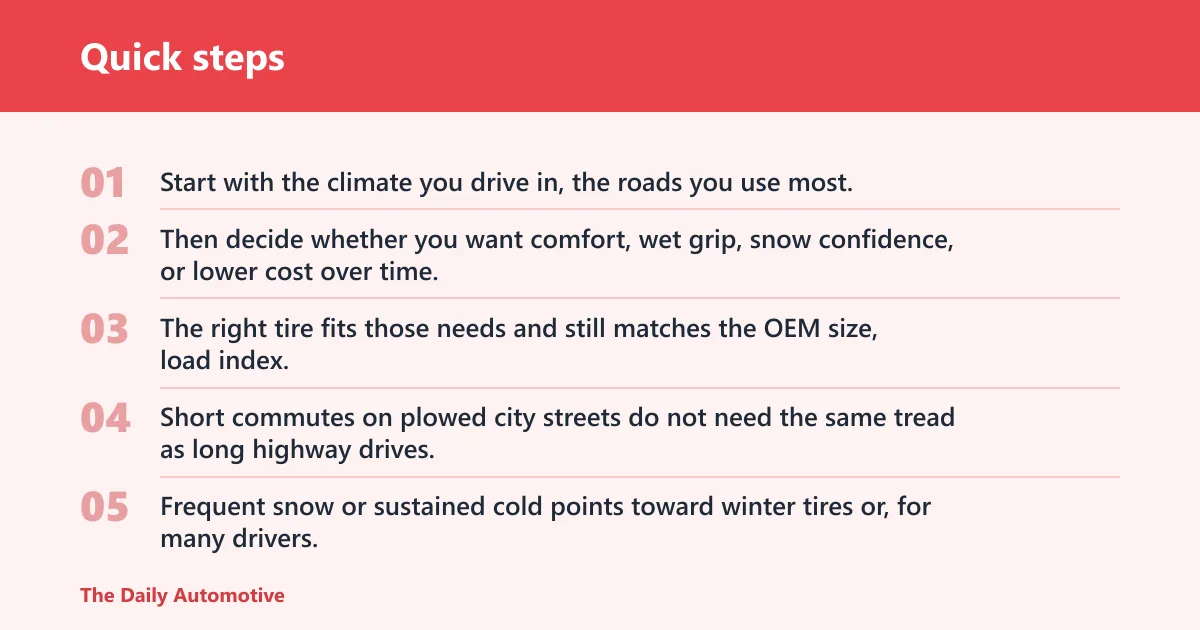


Start with the climate you drive in, the roads you use most, and how much noise or ride firmness you will tolerate. Then decide whether you want comfort, wet grip, snow confidence, or lower cost over time. The right tire fits those needs and still matches the OEM size, load index, and speed rating.
Start with climate and commute
Short commutes on plowed city streets do not need the same tread as long highway drives, steep hills, or regular winter storms. Mild weather points toward all-season tires. Frequent snow or sustained cold points toward winter tires or, for many drivers, all-weather tires with severe-snow marking.
Decide what matters most
If you care most about a quiet cabin and steady mileage, a comfort-focused touring tire usually makes sense. If wet braking and winter traction matter more, move toward all-weather or winter. If budget is the main constraint, compare value picks by total ownership cost, not just the sticker price.
Match the tire type to the job
All-season tires fit daily driving in mild weather. Winter tires are the right tool for snow and ice, and they should be used in sets of four. Summer tires belong on warm roads where dry and wet grip matter more than cold-weather mobility.
Find your tire size and ratings
Use the sidewall, the driver’s side door jamb sticker, and the owner’s manual together. The sidewall tells you what is on the car now. The placard and manual tell you what the vehicle was designed to use. Check all three before you buy.
Read the sidewall size code
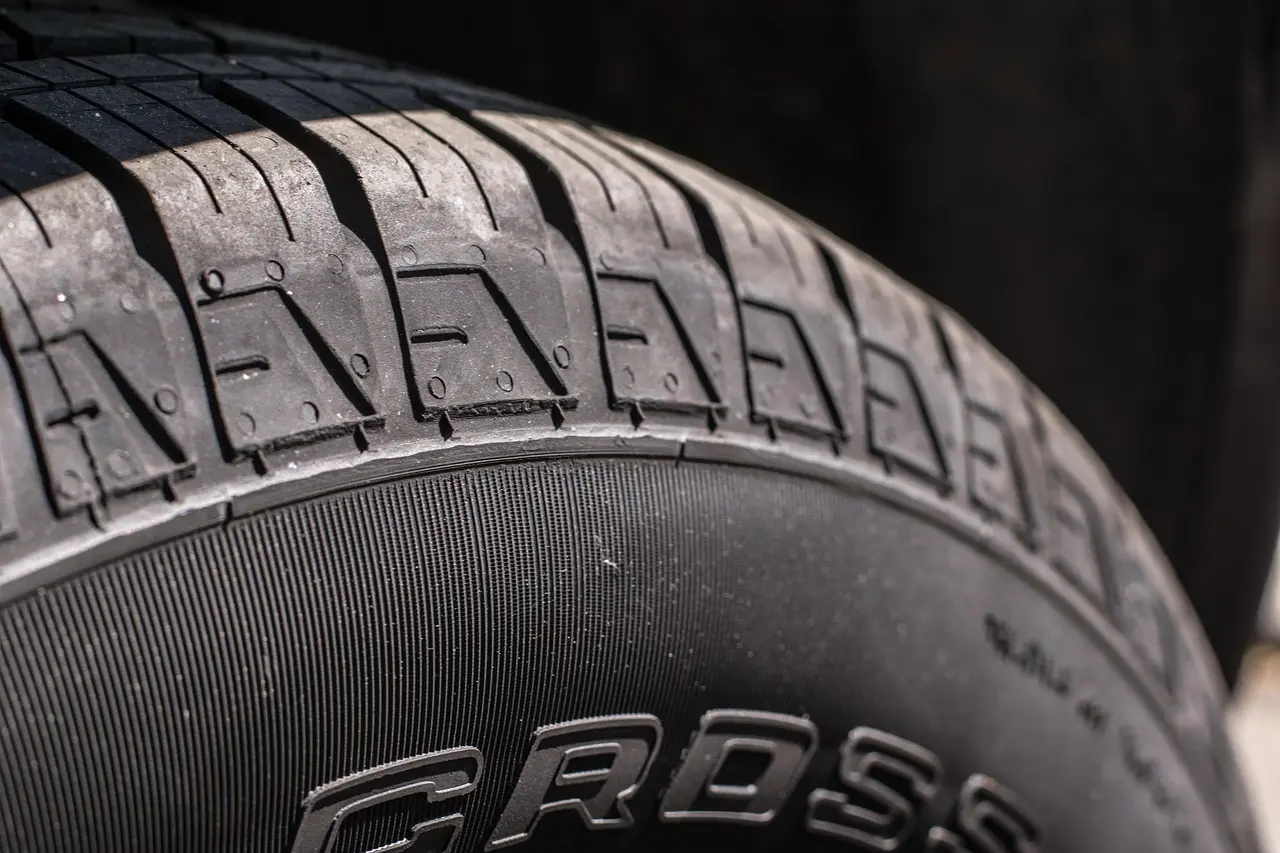
A common tire size example is P225/65R17 97H. In that code, 225 is the width in millimeters, 65 is the aspect ratio, R means radial construction, 17 is the wheel diameter in inches, 97 is the load index, and H is the speed rating. The code also tells you whether the tire fits the wheel and whether it meets the vehicle’s load and speed needs.
Use the doorjamb placard as the OEM reference
The driver’s side door jamb sticker is a vehicle-specific reference for tire size and inflation. It is the first place to check when you want the correct OEM fitment. If the placard and the sidewall do not match, do not assume the larger or narrower tire is acceptable.
Check the owner’s manual for load and speed limits
The owner’s manual lists OEM tire specifications and gives a backup reference for size and rating. Load index describes how much weight a tire can support. Speed rating indicates the maximum safe speed for the tire. Both should meet or exceed the vehicle’s original requirements unless a fitment guide explicitly says otherwise.
Confirm the DOT date code before buying
The DOT date code shows the manufacture week and year. That matters because a tire can sit in inventory long enough to age before it is sold. Freshness is not the only factor, but it is worth checking, especially if you are paying for a new set.
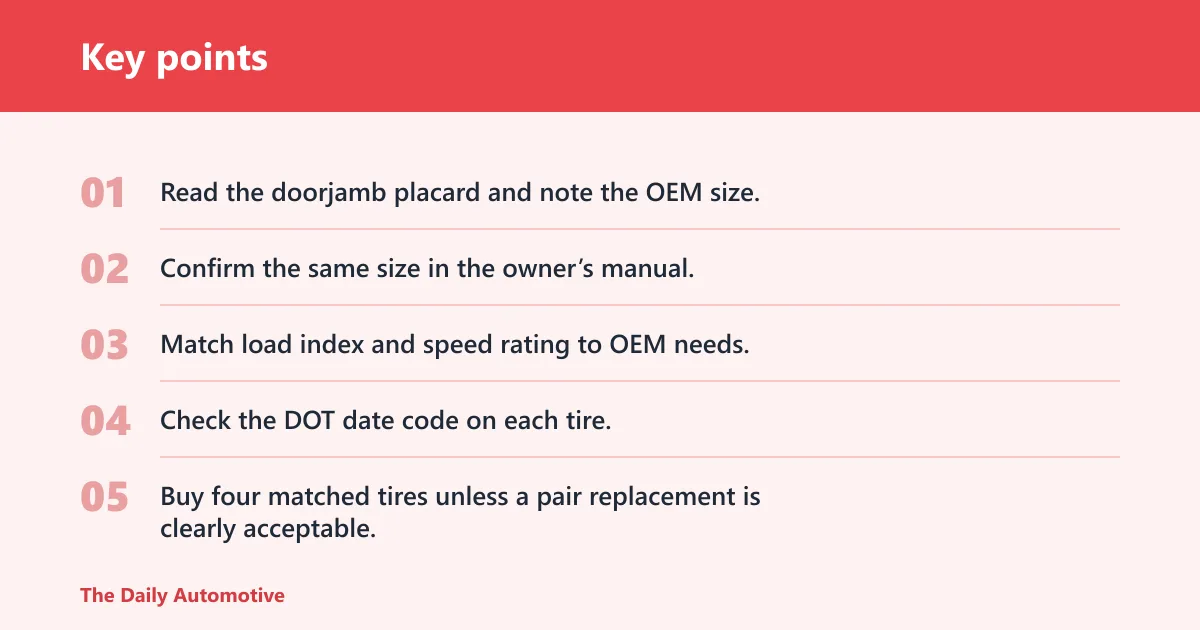
- Read the doorjamb placard and note the OEM size.
- Confirm the same size in the owner’s manual.
- Match load index and speed rating to OEM needs.
- Check the DOT date code on each tire.
- Buy four matched tires unless a pair replacement is clearly acceptable.
What the main tire types mean
All-season, all-weather, winter, and summer tires solve different problems. The right choice depends on temperature, precipitation, and how often you face low-grip roads. A tire can be excellent in one season and a poor fit in another.
All-season tires
All-season tires are built for year-round traction and a comfortable ride. They are usually the default replacement category for many drivers. Consumer Reports notes that they often lack the precise handling and grip of performance tires, and their snow ability is limited compared with winter-specific rubber. (Consumerreports)
All-weather tires
All-weather tires are generally considered a subcategory of all-season tires, and they are often described as offering better snow performance and year-round convenience. The same source says they provide true year-round traction. Many are marked for severe snow duty, which is useful when you want one set for most of the year and real winter capability.
Winter tires
Winter tires are optimized for snow and ice. They use a softer compound for cold temperatures and more biting edges for grip. Consumer Reports advises using them in sets of four, not as a mixed pair on a vehicle that still has all-season tires on the rear or front. (Consumerreports)
Summer tires
Summer tires focus on dry and wet grip in warm weather. They can bring sharper handling and stronger braking on dry pavement, but they are poor choices for cold temperatures and snow. If your climate sees winter weather, summer tires should not be the year-round answer.
Which tire type fits your driving?
The right category depends on where you drive and when. Mild weather with little snow points to all-season tires. Regular winter travel points to winter tires. If you want one tire for most months and still need snow capability, all-weather is usually the better compromise.
Daily commuting in mild weather
If your commute is mostly city or highway driving with only light winter weather, an all-season tire is often enough. It is usually quieter than more aggressive options and tends to ride well. That makes it a practical choice when snow is rare and you want predictable wear.
Cold weather, snow, and ice
If you face packed snow, slush, or icy mornings often, choose winter tires. All-season tires can leave you short on bite when temperatures drop and roads stay slick. Even mild winters can be the wrong environment for a standard all-season tire if you regularly drive before plows clear the roads.
Hot-weather grip and handling
If the car is used mostly in warm weather and you care more about steering response than winter drivability, summer tires fit that job. They are the best match for drivers who can swap tires for the cold season and want sharper dry and wet performance during the rest of the year.
Mixed weather with occasional winter trips
If you want one set of tires and do not face deep winter regularly, all-weather tires are worth a close look. They give up some ride smoothness or tread life compared with comfort-first all-seasons, but they close the gap in snow enough for drivers who only see occasional cold snaps.
Three real tire picks
This table compares three real options by the tradeoff that matters most: comfort, all-weather safety, or value. Pick the one that fits your commute instead of picking by brand reputation alone.
| Tire | Tire type | Best use case | Wet traction | Snow ability | Road noise | Expected tread life | Typical price band | Who should avoid it |
|---|---|---|---|---|---|---|---|---|
| Michelin Defender2 | All-season touring | Comfort-first commuting and long highway use | Strong for an everyday touring tire | Light snow only | Low | Long, relative to many touring tires | Higher | Drivers who need real snow traction or sharper handling |
| Michelin CrossClimate2 | All-weather | Year-round driving with frequent cold weather | Strong | Better than standard all-season, with severe snow-duty marking on many sizes | Moderate | Moderate | Higher | Drivers who want the lowest purchase price or the quietest ride |
| General Altimax RT45 | All-season touring | Value-focused replacement for mild climates | Good for the price | Light snow only | Moderate | Moderate to good | Lower to mid | Drivers in frequent snow, ice, or mountain weather |
The CrossClimate2 is often cited as a top all-season choice and is available in many sizes, including 16- to 20-inch fitments. Car Talk lists it as its Best All Season Tire and notes the three-peak mountain snowflake rating. That makes it a strong example of an all-weather tire for drivers who want year-round use with more winter margin than a standard all-season.
Say your car uses P225/65R17 tires and you commute on wet suburban roads most of the year, then drive into the mountains twice each winter. A standard touring all-season may be enough for the commute, but an all-weather tire is the safer one-set compromise when those mountain trips involve cold pavement and sudden snow.
What ratings and specs matter most?
Some tire labels matter more than marketing copy. Load index, speed rating, and UTQG tell you whether the tire meets the car’s requirements and how it may wear. They do not tell you everything, but they are the first specs to verify before chasing brand names or discounts.
Load index and speed rating
Load index describes how much weight a tire can support, so it must meet or exceed the vehicle’s needs. Speed rating indicates the maximum safe speed for the tire and should match or exceed OEM needs. A lower rating is not a harmless downgrade if the vehicle was built around higher-capacity rubber.
UTQG treadwear, traction, and temperature
UTQG ratings are manufacturer-assigned grades for treadwear, traction, and temperature. Treadwear gives a relative wear grade, traction describes wet braking performance in the test system, and temperature indicates heat resistance. Those grades are useful for comparison inside a category, but they are not a perfect cross-brand promise.
Road noise, tread life, and wet braking tradeoffs
Quiet tires often give up some steering sharpness. Longer-wearing tires may not stop as confidently in heavy rain as a stickier design. If your commute is long and your roads are rough, prioritize comfort and wear. If you face hard rain or cold weather often, give more weight to wet braking and snow ability.
The same source says its testing covered about 130 tire models over the past three years, which is a reminder to lean on test data instead of a brand’s reputation alone. For many shoppers, the best tire is the one that solves the actual commute, not the one with the loudest marketing.
Can you replace just two tires?
Sometimes, yes. But only if the remaining tires still have enough tread, the vehicle setup allows it, and the new pair is matched to the same axle with careful attention to handling balance. On some vehicles and in some weather, a full set of four is the safer choice.
When pairs are acceptable
A pair replacement can work when the other two tires are relatively fresh, the vehicle is not sensitive to mismatched rolling diameter, and the new tires are installed on the axle where they best preserve stability. The goal is to avoid creating a front-to-rear grip imbalance that changes how the car behaves in rain or snow.
When a full set of four is safer
If the old tires are near wear limits, the vehicle uses all-wheel drive with strict matching requirements, or winter traction matters, replace all four. Winter tires should be used as a full set of four. Mixing worn and new tires can change braking balance and cornering response in ways that are hard to predict.
Why mixed wear can change handling
Different tread depths do not just change how a tire looks. They change grip, hydroplaning resistance, and the way the car responds in a sudden lane change. A common first-timer mistake is buying one pair of new tires for the front axle and leaving heavily worn tires on the rear, then being surprised by unstable wet handling.
When should you replace tires?
Replace tires when tread is too low, age is too advanced, or damage has made the tire unsafe. Uneven wear, bubbles, cuts, and repeated pressure loss are warning signs. The goal is to replace before grip and stability fall off in the conditions you actually drive through.
Tread depth and age limits
Low tread reduces wet grip and snow performance. Age matters too, even if the tread still looks decent. Tires harden over time, and that reduces their ability to bite into wet or cold pavement. If the DOT date code is old enough to raise questions, inspect carefully before buying.
Uneven wear and damage signs
Look for shoulder wear, center wear, cupping, sidewall cuts, bulges, or repeated punctures. Those signs point to alignment, inflation, balancing, or structural problems. Fix the cause before installing new tires, or the replacement set may wear out early for the same reason.
Basic care after installation
After installation, check inflation, ask for balancing, and rotate the tires on schedule. Keep the tires at the pressure shown on the doorjamb placard unless the vehicle manual says otherwise. That keeps wear more even and helps preserve the ride and handling you paid for.
Frequently asked questions
How do I choose the right tires for my car?
Start with the OEM size, load index, and speed rating from the doorjamb placard and manual. Then match the tread type to your climate and commute. Mild weather points to all-season, snow risk points to all-weather or winter, and warm-weather handling points to summer tires.
How do I read my tire size on the sidewall?
Use the code format on the tire, such as P225/65R17 97H. The width is 225 mm, the aspect ratio is 65, R means radial construction, 17 is wheel diameter in inches, 97 is the load index, and H is the speed rating.
What is the difference between all-season and winter tires?
All-season tires aim for year-round traction and a comfortable ride, with light snow capability. Winter tires use a softer cold-weather compound and more biting edges for snow and ice grip. If winter roads are common where you drive, winter tires are the better tool.
Should I buy the same tire type that came on my car?
Usually, yes, if the original tire type matched your climate and driving needs. But if the factory tire was chosen for a different priority, such as low rolling resistance or sporty handling, an equivalent or better-fit replacement can make more sense. Keep the OEM size and rating requirements intact.
What tire speed rating do I need for my car?
Use the speed rating in the owner’s manual or on the doorjamb placard as the minimum. The replacement tire should match or exceed that rating unless a vehicle-specific exception applies. Do not drop the speed rating just because the tire is cheaper.
What do UTQG treadwear, traction, and temperature ratings mean?
UTQG is a manufacturer-assigned system for treadwear, traction, and temperature. Treadwear is a relative wear grade, traction relates to wet braking, and temperature indicates heat resistance. Use it as one comparison tool, not as the only factor, because it does not capture every real-world tradeoff.
Products related to this article
Sponsored / affiliate links. As an Amazon Associate I earn from qualifying purchases. I may earn additional commission from eligible campaigns.