Who Fixes Cars: Expert Mechanics You Can Trust Today
A general repair shop handles many brakes, batteries, belts, starters, and diagnostics, but a dealer or brand specialist is often a better choice for transmission programming, ADAS calibration, hybrid or EV high-voltage work, and any car that should not be driven. Picking the wrong shop can mean repeat repairs, missed faults, or a breakdown on the road. Here’s how to judge trust, pick the right mechanic for the job, and decide when towing or roadside help is safer than driving.
Who fixes cars when the problem is unclear?
Start with a general auto mechanic for common drivability problems, then move to a certified technician, specialist, or dealer when the fault points to a deeper system. If the car is unsafe to drive, use roadside assistance or towing first. The right first stop depends on the symptom, not the guess.
General shop, specialist, dealer, mobile, or fleet shop
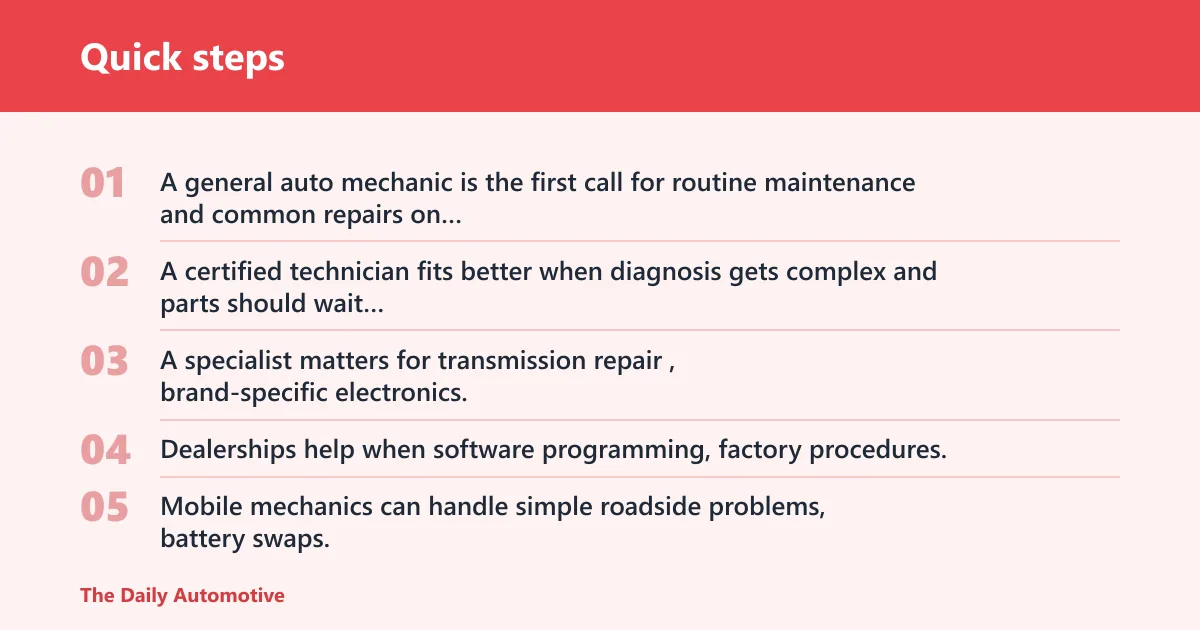
A general auto mechanic is the first call for routine maintenance and common repairs on foreign and domestic cars. A certified technician fits better when diagnosis gets complex and parts should wait until the fault is proven. A specialist matters for transmission repair, brand-specific electronics, or hybrid and EV work.
Dealerships help when software programming, factory procedures, or warranty work is involved. Mobile mechanics can handle simple roadside problems, battery swaps, and some starter or belt issues, but they are limited when the car needs lifts, heavy equipment, or deep teardown. Fleet shops focus on uptime and scheduled service for business vehicles.
When towing is the safer first step
Use towing when the car overheats, will not start in traffic, loses brake function, grinds badly in the transmission, or has visible tire damage that makes driving unsafe. Roadside assistance can help with a dead battery, flat tire, lockout, or fuel delivery. It is for getting the car to a shop, not for proving the diagnosis.
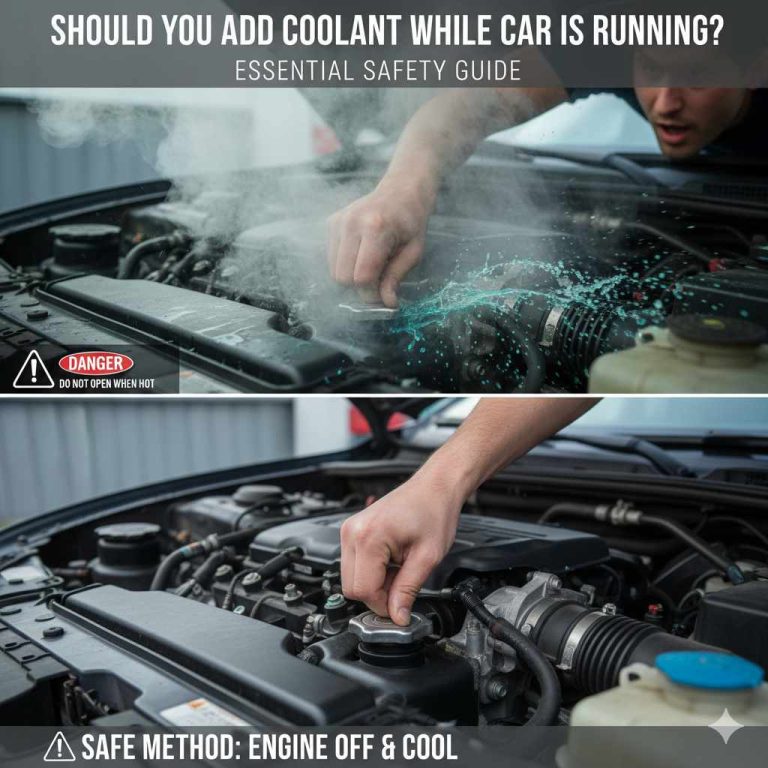
Say your sedan starts flashing a temperature warning at idle, then steam appears from the hood. Do not keep driving to “see if it clears.” Shut it down, arrange towing, and let a shop inspect the cooling system before any new parts go in.
What does a general auto mechanic handle?
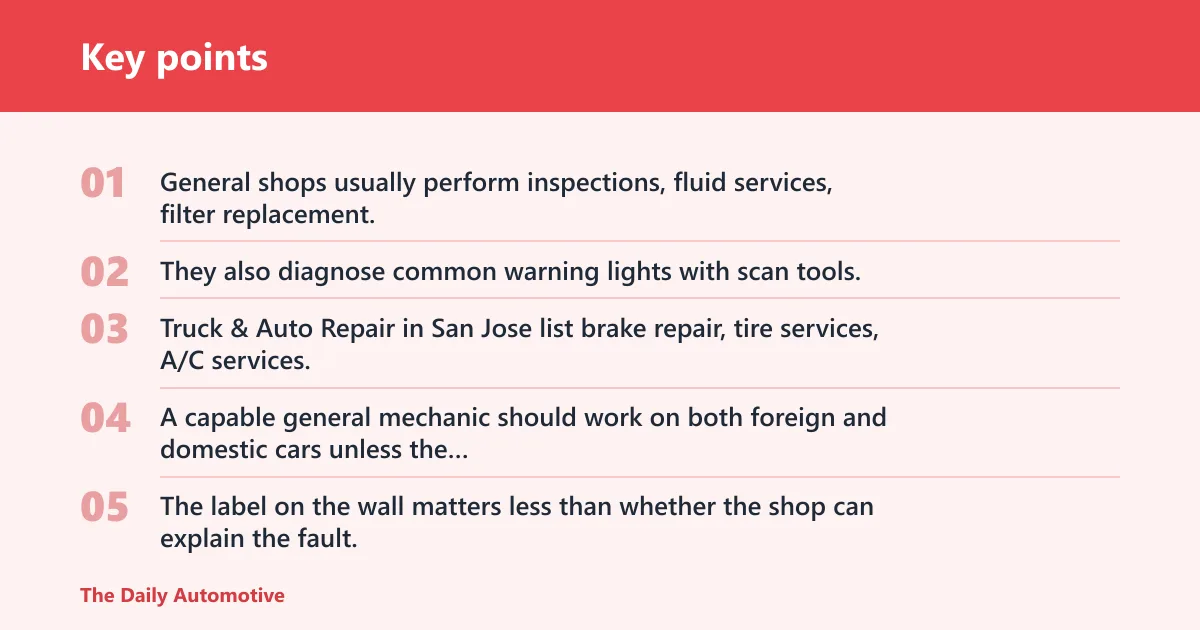
A general auto mechanic handles most routine maintenance and common repairs: oil changes, brake work, tire service, A/C checks, battery replacement, starter and alternator issues, belts, hoses, and many check engine light complaints. For most drivers, this is the right starting point because it covers the repairs that fail most often.
Routine maintenance and common repairs
General shops usually perform inspections, fluid services, filter replacement, wiper service, bulb replacement, and basic driveline checks. They also diagnose common warning lights with scan tools. Shops like T.A.T. Truck & Auto Repair in San Jose list brake repair, tire services, A/C services, check engine light diagnostics, diesel engine repair, and suspension and alignment services, which is the mix many general shops offer.
Foreign and domestic vehicles
A capable general mechanic should work on both foreign and domestic cars unless the vehicle needs brand-specific software or special procedures. The label on the wall matters less than whether the shop can explain the fault, show you scan data, and describe what was tested before parts are ordered.
When should you choose a specialist?
Choose a specialist when the repair is more complex than basic maintenance, when the fault keeps returning after a normal repair, or when the car needs brand-specific tools, coding, or teardown. Transmission repair is the clearest example, but electrical faults, module programming, and some hybrid or diesel repairs can also justify a specialist.
Complex drivability and transmission problems
Transmission repair may involve fluid condition, linkage, clutch operation, solenoids, software, or internal gearbox faults. That is not a place for guesswork. A specialist can verify whether the problem is external or internal before anyone replaces expensive parts that do not fix the issue.
Electrical faults and dealer-only cases
Electrical problems can hide in wiring, grounds, modules, or sensors, and they often require more than a basic scan. Dealer service is worth considering when the car needs factory programming, immobilizer work, transmission calibration, or a brand-specific bulletin that an independent shop may not be able to access.
How do you know a mechanic is trustworthy?
A trustworthy mechanic gives you proof, not pressure. Look for training or certifications, a written estimate, a clear diagnostic fee policy, and a plain explanation of what was tested. The shop should show old parts after replacement and explain the warranty in writing.
Certifications and training
Certification does not guarantee skill, but it does show formal training and a standard process. Look for manufacturer training, ASE credentials, hybrid or EV safety training, and brand-specific courses when the job calls for them. Certified technicians should use advanced diagnostic equipment and give a clear assessment before parts are replaced. That matters most on complex faults, where the wrong part can hide the real problem.
Written estimates and diagnostic fees
Ask what the diagnostic visit includes before you approve it. A fair quote separates diagnosis from repair, explains labor rates, and states whether the fee applies if you proceed. If a shop will not put the scope in writing, treat that as a warning sign.
Old-part retention and warranty terms
Ask to keep the old parts when the repair is finished. That simple request helps confirm that a part was actually replaced and gives you a reference if the same issue returns. Also ask how long the repair is covered and what conditions can void the warranty, such as overheating, misuse, or delayed return for the same fault.
Who should fix this car problem?
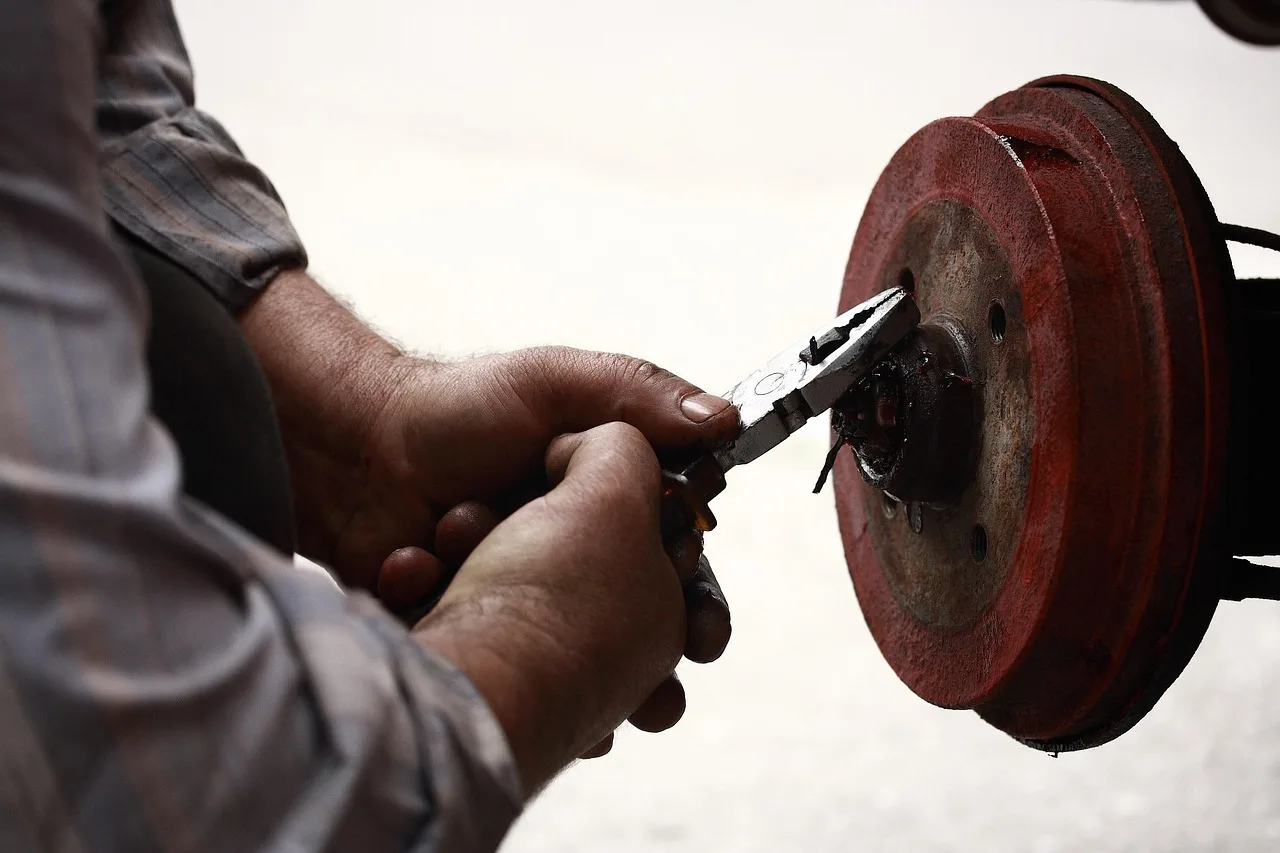
Use the symptom first, then match it to the right shop type. A general repair shop is right for many common issues, but specialist diagnosis, dealer equipment, mobile help, or towing can be the safer route when the symptom points to a deeper fault or an unsafe condition.
| Symptom | Best mechanic type | Urgency | Likely diagnostic tools | Red flags |
|---|---|---|---|---|
| Brake noise | General auto mechanic | High; inspect soon | Lift inspection, brake gauge, road test | Grinding ignored, no inspection before parts quote |
| Check engine light | General mechanic or certified technician | Medium; sooner if drivability changes | Scan tool, live data, smoke test | Guessing from the light alone |
| Overheating | Tow to general shop or specialist | Critical | Cooling-system pressure test, scan data, infrared temperature check | Driving after steam, coolant loss, or temperature warning |
| No-start | General mechanic, mobile mechanic, or tow to shop | High | Battery tester, scan tool, voltage-drop test | Replacing a battery without confirming the cause |
| Tire damage | Tire service shop or roadside assistance | High if the tire is flat or cut | Pressure gauge, tread inspection, balancing equipment | Sidewall cuts, bulges, or repeated pressure loss |
| Transmission grinding | Transmission specialist | Critical | Scan tool, fluid inspection, road test, lift inspection | Driving until the noise gets louder |
| A/C failure | General auto mechanic | Low to medium | Manifold gauges, leak detection, scan tool | Adding refrigerant without leak testing |
| Suspension clunk | General mechanic or suspension specialist | Medium; sooner if steering is loose | Lift inspection, pry bar test, alignment check | Loose steering, tire wear, or knocking over bumps |
| Battery drain | Certified technician or electrical specialist | Medium | Parasitic draw test, battery tester, scan data | Random parts replacement without a draw test |
| Fleet downtime | Fleet shop | High for business use | Scheduled inspection, scan tool, maintenance records | Ignoring recurring faults that cut uptime |
How should you read common repair quotes?
A fair repair quote explains the complaint, the diagnosis, the needed parts, and the labor to install them. If the quote skips the diagnostic step, replaces parts before confirming the fault, or hides what testing was done, ask for more detail before approving work.
What a fair diagnostic visit includes
For a check engine light, the shop should read codes, check live data, and test the system tied to the complaint. For brakes, the quote should note pad thickness, rotor condition, hardware wear, and whether the issue is noise, vibration, or fluid loss. For overheating, it should include cooling-system checks before any major replacement.
When replacement parts should wait for proof
A brake job should not start with pads alone if the rotor is warped, a caliper is sticking, or a fluid leak is present. A no-start should not become a starter replacement until battery condition, charging output, and voltage drop are checked. A transmission repair should not begin with a rebuild unless the diagnosis supports it.
Suppose a hatchback comes in with a battery drain after sitting overnight. A careful shop tests parasitic draw first. A careless one swaps the battery, then the alternator, then the radio, and the complaint never changes.
Can AI repair advice replace a mechanic?
AI repair advice can help you sort symptoms and decide whether the car is safe to drive, but it should not be the final diagnosis. It may point you toward common causes, and that is useful. It cannot verify wiring, fluid condition, sensor data, or mechanical wear on its own.
Where AI can help
AI can suggest likely causes for a warning light, describe common no-start checks, and help you prepare better questions for the shop. It can also help you decide whether the first step is a scan, a tire inspection, or a tow. That is a starting point, not a repair order.
Where AI should stop
AI should stop where the car needs live testing, visual inspection, or disassembly. A one-line answer about a transmission grind or overheating issue is not enough to approve major work. A real mechanic should confirm the fault before money changes hands.
FixMyCar says 16% of drivers used AI to look up a car problem, one in five people claim to use ChatGPT, and one in five drivers believe they can fully trust ChatGPT for car repairs. Those numbers explain the appeal. They do not make the advice a diagnosis.
Frequently asked questions
Who fixes cars if I don’t know what’s wrong?
Start with a general auto mechanic or a certified technician. They can scan codes, inspect common failure points, and decide whether the problem stays with a general shop or needs a specialist, dealer, or tow. If the car is unsafe to drive, roadside help or towing comes first.
How do I find a mechanic I can trust?
Look for written estimates, a clear diagnostic policy, training or certification, and a willingness to explain the test results. Ask how warranty coverage works and whether old parts are available after the repair. A good shop answers those questions without pressure or vague promises.
What kind of mechanic should I take my car to?
For brakes, oil changes, A/C, tires, and many warning lights, a general repair shop is the right choice. For transmission problems, complex electrical faults, or brand-specific programming, choose a specialist or dealer. If the car is unsafe to drive, do not choose a shop first; choose towing.
How do I know if a mechanic is honest?
Honesty shows up in the process. The shop should explain what was tested, what failed, what can wait, and what cannot. It should not push replacement parts before a diagnosis, hide fees, or refuse to show the old parts after the repair is finished.
Should I trust AI car repair advice or a real mechanic?
Use AI as a sorting tool, not a final answer. It can help narrow the likely cause of a symptom, but it cannot inspect a brake rotor, pressure-test a cooling system, or verify a parasitic draw. A mechanic should make the final call after an actual inspection.
What services do auto mechanics usually handle?
Most auto mechanics handle brakes, oil changes, battery and starter work, tires, A/C service, suspension checks, and many check engine light complaints. Some shops also handle diesel repair, alignment, and fleet maintenance. The question is not whether they do “everything,” but whether they have the right tools for your fault.
When should I choose a specialist over a general mechanic?
Choose a specialist when the problem points to transmission repair, advanced electrical diagnosis, brand-specific software, or repeat failure after a normal repair. Special tools and deeper experience matter when the first diagnosis must be exact. That is where the extra cost can save money and time.
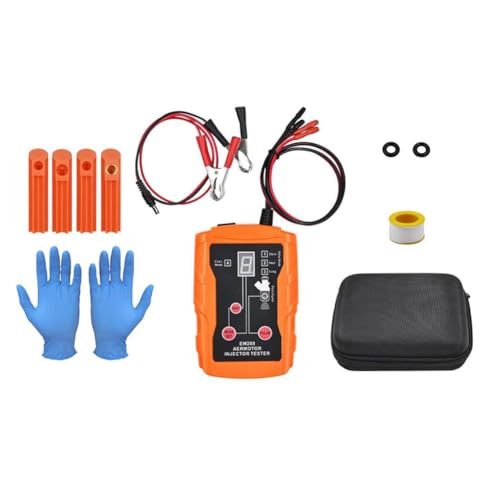
Products related to this article
Sponsored / affiliate links. As an Amazon Associate I earn from qualifying purchases. I may earn additional commission from eligible campaigns.