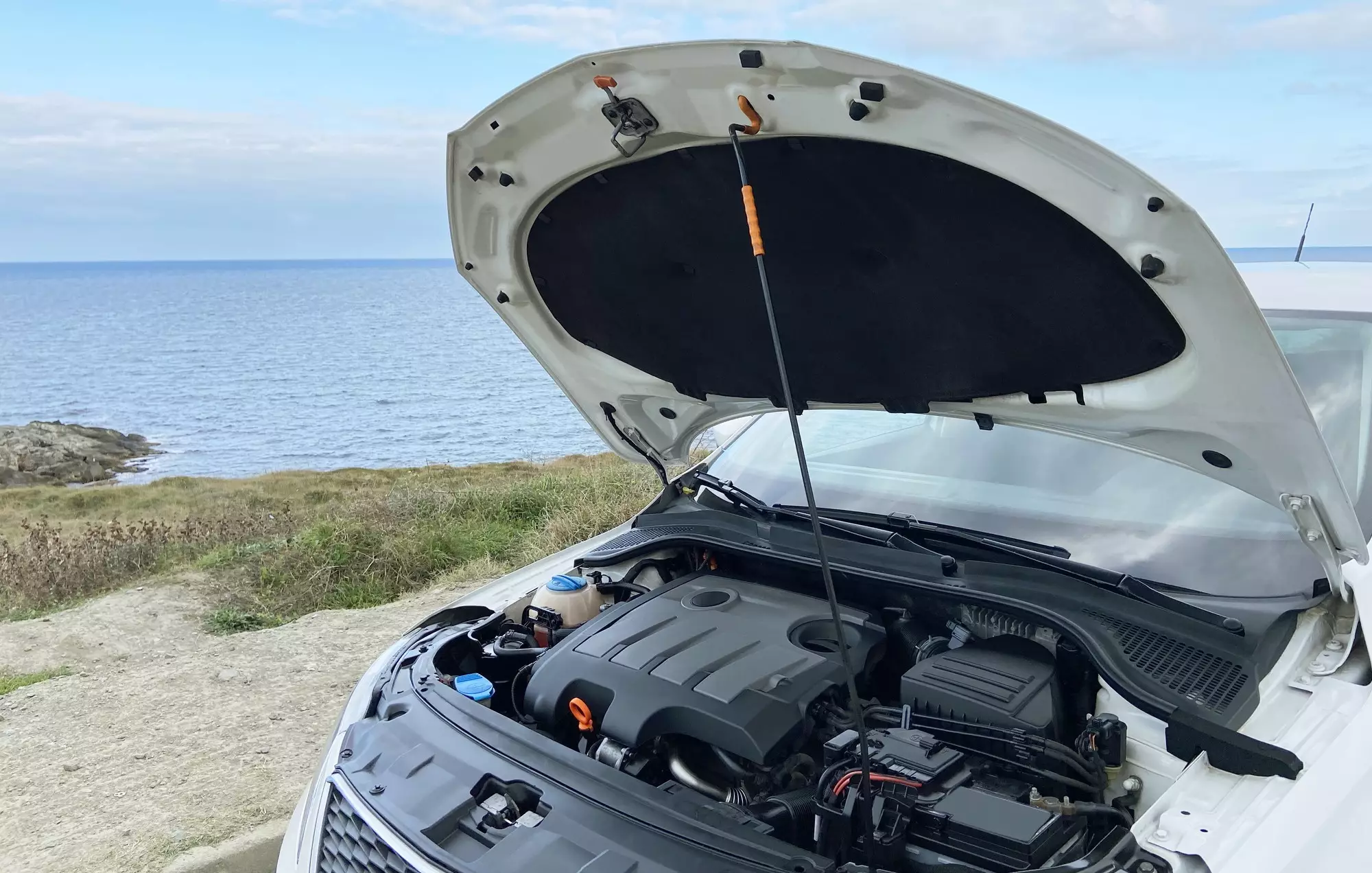
How to Lift the Hood of a Car: Release Lever, Latch & Prop Rod
Pull the interior release lever below the dashboard, then reach under the hood’s front edge and release the secondary safety latch by hand — the hood won’t lift past an inch until you do. Federal standard FMVSS 113 has required this two-stage system on every U.S. car since 1969, specifically to stop hoods from flying open at highway speed. This guide covers both releases, prop rods vs. hydraulic struts, and how to fix a hood release that’s stuck.
Affiliate disclosure: This post contains Amazon affiliate links. As an Amazon Associate, we earn from qualifying purchases at no extra cost to you.

What You’ll Need
Most cars need nothing more than your hands to open the hood. Keep these on hand for a stuck release or a first-time check:
- A flashlight, to see the secondary latch in a dark garage or at night
- A small flathead screwdriver or plastic trim tool, to free a stuck or rusted latch
- Silicone or light machine oil spray, to lubricate a stiff release cable
- A working hood prop rod or hydraulic struts, to hold the hood open safely while you work
Safety Steps Before You Open the Hood
Two quick checks before you touch the release lever prevent almost every hood-related injury. Set the parking brake so the car can’t roll while you’re standing in front of it, and if the engine has been running, give it a few minutes to cool — the metal surfaces and radiator cap under the hood can cause serious burns while hot.
Never try to lift the hood itself from inside the car. The interior lever only trips the primary latch; the hood is designed to stay down until you release the secondary latch by hand at the front of the vehicle.
Locate The Hood Release
The hood release is usually found inside the car. Most often, it is near the driver’s seat. Look under the dashboard or near the door on the left side.
Common places to find the hood release include:
- Below the steering column on the left
- Near the driver’s door frame
- Under the dashboard on the lower side
The release is often a small lever or button. It usually has a small icon of a car with an open hood, or the word “Hood.” Pull or press it gently. You will usually hear a click sound.
Pull The Hood Release Lever
Find the hood release lever inside the car, usually near the driver’s side. It looks like a small handle or a latch. Pull the lever firmly but gently. Use a steady motion to avoid breaking it.
Applying the right force is key. Too soft, and it won’t move. Too hard, and it might snap. A quick, firm pull usually works best.
After pulling the lever, listen for a soft “pop” sound. This means the primary latch is released. You can now go to the front of the car.
Try to lift the hood gently. It should open a little — usually about an inch. If it stays fully closed, you haven’t released the safety latch yet. That’s the next step.
Find The Secondary Hood Latch
After pulling the hood release inside the car, the hood will pop up slightly. The secondary hood latch keeps the hood from opening fully on its own. This latch is usually found under the front edge of the hood, near the center or slightly to one side.
To find the latch, reach your hand under the raised hood edge. Feel for a small lever or tab that you can push or slide. This secondary latch is designed to release with a simple motion.
The latch works as a safety lock. It’s the exact feature required by FMVSS 113 (see the data point below) to prevent the hood from opening while driving. You must push or lift this latch to open the hood fully. Once released, the hood can be lifted up and secured with the hood prop rod or support struts.
📊 Federal law has required this exact two-stage latch system on every U.S. passenger car since January 1, 1969, specifically because a hood that pops open at speed blocks the driver’s forward view through the windshield. Source: 49 CFR § 571.113 (FMVSS 113), Cornell Law School Legal Information Institute
Lift The Hood Safely
Lift the hood by first finding the release lever inside the car. Pull it until you hear a click. Go to the front of the car and find the safety catch under the hood. Push or lift this catch to open the hood fully.
Some cars have a prop rod to hold the hood up. Find the rod, then lift it and place it into the slot on the hood. Make sure it is secure before you work.
Other cars have hydraulic hood supports. These supports hold the hood up automatically. No need to use a prop rod. Just open the hood gently. The supports will keep it open safely.
Prop Rod vs. Hydraulic Struts: Which Does Your Car Have?
A hood prop rod is a metal or plastic rod that has no moving parts to wear out, so it essentially never fails on its own — but you have to remember to seat it correctly every time. Hydraulic hood struts hold the hood up automatically with no extra step, but the gas charge inside them weakens over years of use.
| Feature | Prop Rod | Hydraulic Struts | Best For |
|---|---|---|---|
| How it holds the hood | Manual — you position the rod | Automatic gas-charged support | — |
| Typical lifespan | Doesn’t wear out | ~5 years or 60,000 miles | Prop rod: older or budget vehicles |
| Replacement cost | $15–$25 for a universal rod | ~$150 per strut, installed | Struts: daily convenience |
| Failure mode | Slips if not seated in the slot | Sags slowly, then won’t hold the hood at all | — |
Best Hood Prop Rod Pick
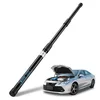
Greeily Telescopic Hood Prop Rod
A telescoping 29–40 inch rod that fits almost any hood or trunk opening, so it works as a backup even if your car normally uses hydraulic struts.
- Best for: keeping a lightweight backup in the trunk for when struts eventually sag
- Why we picked it: adjustable length fits most makes and models without cutting or trimming
- Main drawback: stainless rod can dent light-gauge sheet metal if seated carelessly
Compare more hood prop rod options
 Option 1 OEMTOOLS 24211 Universal Hood Prop Rod
|
 Option 2 Lisle 45900 Hood Prop
|
 Option 3 ARANA Universal Telescoping Hood Prop Rod
|
As an Amazon Associate we earn from qualifying purchases.
Common Mistakes to Avoid
- Forcing the hood up before the secondary latch releases — this bends the hood’s edge or snaps the latch tab instead of opening anything.
- Letting the hood slam shut without a prop rod or working struts — it can come down on your hands or head.
- Skipping the parking brake — a car that rolls while you’re leaning over the front bumper is a real hazard, not a remote one.
- Ignoring a hood that feels loose at highway speed — that’s the secondary latch not fully catching, and it should be checked before your next drive, not after.
Troubleshooting Common Issues
Stuck hood release can happen if the cable inside is tight or broken. Try pulling the lever gently several times. Sometimes, spray a little lubricant near the release handle to help it move freely. If the cable is snapped, it needs replacement rather than more lubricant — our full guide to opening a hood with a broken cable covers 4 workaround methods and typical repair cost.
Damaged latch mechanism stops the hood from opening even if the release works. The latch might be rusty or bent. Use a flashlight to look inside the latch area. Try pushing the latch with a screwdriver while pulling the release lever. For a full diagnosis-and-repair walkthrough, see our guide on opening a car hood with a broken latch or fixing the hood latch itself if it needs replacing.
If you don’t have interior access at all — a dead key fob, a lockout, or you’re inspecting a used car without a key — the steps above won’t apply. See our dedicated guide on opening a car hood from outside with no interior access instead.
Frequently Asked Questions
How do I find the hood release lever?
Look under the dashboard on the driver’s side. The lever usually has a small car icon or says “Hood.” Pull it gently to release the primary hood latch, then go to the front of the car to release the secondary latch by hand.
What if the hood won’t open?
Check that the hood release lever is pulled all the way. If it’s stuck, gently press down on the hood while pulling the lever again to take pressure off the latch. If it still won’t budge, the release cable may be frayed or snapped and needs a mechanic’s repair rather than more force.
How do I safely lift the hood?
After releasing the secondary latch, lift the hood slowly with both hands near the corners. Stop as soon as the hydraulic struts (if your car has them) hold it in place, or insert the metal prop rod into its slot near the front of the engine bay before letting go.
Can I open the hood from outside the car without going inside first?
On almost every car built since 1969, no — federal law (FMVSS 113) requires the primary release to be inside the cabin, so you must pull that lever before the secondary latch under the hood will let go. If you’re locked out or have no interior access at all, see our guide on opening a car hood from outside.
Why won’t my hood release even though I pulled the lever firmly?
A stuck release is almost always one of three things: a frayed or snapped cable, a rusted or bent latch mechanism, or a hood that’s slightly misaligned with the latch. Spraying light lubricant into the release cable housing fixes many stuck releases; if the cable has actually snapped, it needs replacement rather than lubrication.
Is it safe to drive with the hood not fully latched?
No. If only the primary latch is engaged and the secondary latch hasn’t caught, the hood can fly open at speed and block your entire view through the windshield — the exact failure mode FMVSS 113 was written to prevent. Always confirm both latches are engaged by tugging on the front corners of the hood before driving.
Do hood struts need to be replaced eventually, or do they last forever?
Hydraulic hood struts wear out. Most manufacturers rate them for around 5 years or 60,000 miles before they stop holding the hood up on their own. A basic prop rod has no hydraulic fluid to lose and essentially never wears out, which is why some drivers keep one as a backup even on cars with working struts.
Conclusion
Knowing how to lift your car’s hood helps with basic checks and fixes. Always find the hood release inside your car first. Then, locate the safety latch under the hood and release it by hand — that second latch has been federally required since 1969 for exactly this two-step reason. Lift the hood carefully and use the support rod or hydraulic struts to hold it open.
This simple skill saves time and hassle. Practice it a few times and it becomes second nature — and if your release or latch ever gets stuck, our dedicated guides above walk through the fix step by step.
Products related to this article
Sponsored / affiliate links. As an Amazon Associate I earn from qualifying purchases. I may earn additional commission from eligible campaigns.