How To Get Locked Keys Out Of A Car Fast (Easy Methods)
Oh no, that sinking feeling. You’ve shut the car door, and suddenly you remember. Your keys are still inside.
It happens to the best of us. Panic might set in, but take a deep breath. There are smart ways to solve this.
We’ll walk through simple steps. You can often get them out yourself. This saves you time and money.
If your keys are locked inside your car, you can try using a coat hanger or a long, thin object to reach the unlock button. Alternatively, you can use a shoelace or other strong string to create a slipknot and pull up the lock. For newer cars, a spare key or roadside assistance might be your best bet — see our related guide, How Can I Unlock My Chevy Truck Without Keys?.
Understanding the Locked-Out Situation
It’s incredibly frustrating to lock your keys in your car. This common problem can happen at any time. You might be in a rush.
You might be distracted by kids or shopping bags. Your car is your lifeline. Being locked out feels like a big setback.
But don’t worry, this article will help. We cover common car types and easy tricks.
My Own Locked-Out Nightmare
I remember one sweltering summer afternoon. I was just grabbing a quick drink from my car. The car was running because the AC was a lifesaver.
I closed the door for just a second to wave at a neighbor. Click. The doors locked automatically.
My keys were on the passenger seat, mocking me. My heart sank. I felt so silly.
It was so hot, and I had nowhere to go. I tried jiggling the handle. Nothing worked.
I started to feel a bit panicked.
I stood there for a minute, feeling the heat rise. Then, I thought about my dad. He always had a trick for everything.
He used to tell me to stay calm and think. I looked around and saw a clothesline pole lying on the ground. It was long and thin.
It gave me an idea. I took it and carefully slid it between the top of the door and the car frame. It took some wiggling.
I had to be gentle not to scratch the paint. I was aiming for the unlock button. After a few tries, I managed to hit it just right.
Click! The doors unlocked. I almost cried with relief.
That day taught me a lot. It showed me that simple tools can work. It also showed me that staying calm is key.
Since then, I’ve learned other methods. Some work better for different cars. We’ll explore those now.
Common Reasons for Locked Keys
Distraction: This is the most frequent cause. A moment of not paying attention can lead to the mistake. Many car doors auto-lock after a short period if not opened.
Automatic Locking: Some cars are programmed to lock automatically. This happens when you close all doors. It’s a security feature that can backfire.
Child Lockout: If you have children, they might press the lock button. They might not realize the keys are still inside.
Key Fob Malfunction: Less common, but sometimes the key fob itself can cause issues. It might not detect the key leaving the vehicle.
Method 1: The Coat Hanger or Wire Trick
This is a classic. It works best on older cars. These cars have simpler lock mechanisms.
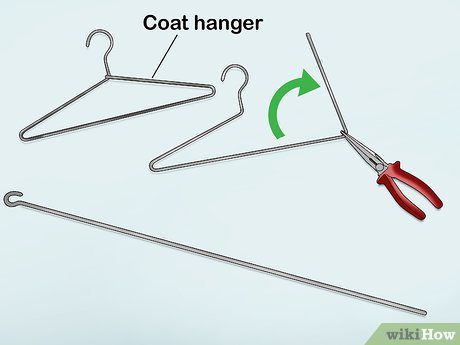
You need a wire coat hanger. It needs to be a sturdy one. Take the hanger and straighten it out.
You want a long, straight piece of wire. Then, make a small hook at one end. This hook is your main tool.
Carefully insert the hooked end into the top of the door frame. You want to go between the glass and the rubber seal. Gently push it in.
You are trying to reach the inside lock lever or the unlock button. This takes patience. You might need to feel around a bit.
Once you feel the lock lever, try to hook it. Pull it upwards. If you’re aiming for a button, try to press it down.
Tip: Use a rag or towel. Wedge it into the top of the door frame first. This creates a small gap.
It also protects your car’s paint. It makes it easier to slide the hanger in. Be very gentle.
You don’t want to damage the weather stripping. You also don’t want to scratch the window.
This method requires a bit of finesse. It’s not always easy to get the angle right. If it’s a very tight seal, this might not work.
For cars with electronic locks, this is usually not effective. You’re unlikely to find a physical lever to pull.
Pros and Cons of Wire Hanger Method
Pros:
- Free if you have a hanger.
- Works on many older car models.
- Doesn’t require special tools.
Cons:
- Can scratch paint or damage weather stripping.
- Difficult on cars with tight seals.
- Ineffective on most modern cars with electronic locks.
- Requires patience and a delicate touch.
Method 2: The Shoelace or String Technique
This method uses a shoelace or a similar strong string. It’s another trick for cars with vertical lock posts. These are the little posts that stick up from the door panel.
You pull them to unlock. This method is often called the “Chinese finger trap” method, but it’s simpler than that.
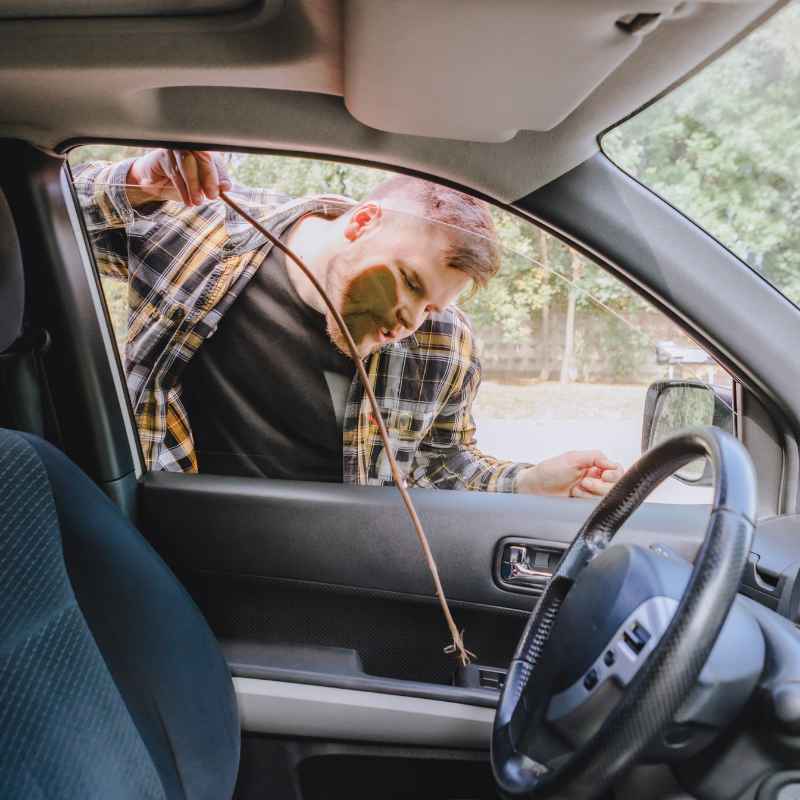
Take a shoelace. Make a slipknot in the middle. A slipknot is key.
It needs to be able to tighten. You’ll need to create a small gap in the door frame again. Use a wedge or a thin, flat tool.
Gently pry open the top of the door. You want just enough space to slide the knotted loop through.
Carefully slide the shoelace into the car. Guide the loop down over the lock post. Once the loop is around the post, pull both ends of the shoelace.
Pull them upwards. This tightens the loop around the post. Keep pulling.
The lock post should rise. This unlocks the door. This takes practice.
Getting the loop over the post is the hardest part.
Experience Note: I tried this on a friend’s older sedan. The lock post was small. It took me several tries to get the loop over it.
Once it was on, though, a firm tug worked instantly. My friend was amazed. He thought he’d have to call a locksmith for sure.
It felt like a small victory.
Steps for the Shoelace Method
1. Get a Shoelace: Use a strong, thin shoelace or string.
2. Make a Slipknot: Create a loop that tightens when pulled.
3. Create a Door Gap: Gently wedge the top of the door open a bit.
4. Insert the Loop: Slide the shoelace into the car and over the lock post.
5. Tighten and Pull: Pull both ends of the shoelace to tighten the knot and lift the lock post.
Method 3: The Wedge and Rod/Slim Jim Approach
This is what locksmiths often use. It’s more advanced. It requires a bit more equipment.
You’ll need a car door wedge and a long, thin rod. Sometimes, this rod is called a “slim jim.” The wedge is usually inflatable or made of hard plastic. It creates a gap between the car door and the frame.
First, place the wedge near the top corner of the door. You’ll need to inflate it or push it in to create a small opening. This gap is usually just enough to slip your tool in.
The rod or slim jim is then inserted through this gap.
The goal is to maneuver the rod to reach the internal door handle or the lock mechanism. You can then pull the door handle to open the door. Or, you can manipulate the lock mechanism directly.
This method requires knowing where the lock components are inside your car’s door. It’s easy to damage things if you don’t know what you’re doing.
Caution: This method carries a higher risk. If done incorrectly, you can damage the car’s electronics, window seals, or paint. Many modern cars have complex internal systems.
Trying this without knowledge can cause expensive repairs. It’s best to use this method only if you’re confident or have watched many tutorials specific to your car model.
Important Considerations for Wedge and Rod
Car Model Specifics: Lock mechanisms vary greatly between car makes and models.
Risk of Damage: Improper use can damage wiring, airbags, or door components.
Professional Tools: True slim jims are specialized tools designed for this purpose.
Electronic Locks: Less effective on cars with fully electronic locking systems and no manual levers.
Method 4: Using a Tennis Ball (Myth or Reality?)
You might have heard of the tennis ball trick. This method claims you can force air into the car. You cut a hole in a tennis ball.
You place the ball over the keyhole. Then, you squeeze the ball. The air pressure is supposed to pop the lock.
This is largely a myth for most modern cars.
While it might have worked on some very old cars with simple spring-loaded locks, it’s highly unlikely to work on today’s vehicles. Modern car doors are sealed tightly. They have complex locking mechanisms.
Trying to force air into them usually just doesn’t create enough pressure. You’re more likely to just make a mess or damage the ball.
Reality Check: Experts and experienced mechanics generally dismiss this method. It’s often shown in viral videos. But in real-world situations, it rarely succeeds.
It’s better to stick to proven methods.
The Tennis Ball Method: Fact vs. Fiction
Claim: Squeezing air into the keyhole via a cut tennis ball pops the lock.
Reality: Mostly ineffective on modern cars.
Why it Fails: Insufficient air pressure, tight door seals, complex lock systems.
Recommendation: Save your tennis ball for the game.
Method 5: Checking for Other Entry Points
Before you start prying or wiggling, take a step back. Are there any other ways into your car? Most cars have multiple entry points.
Think about these:
The Trunk: Some cars have an internal trunk release. If your back seats fold down, you might be able to climb into the trunk. Then, you can reach the interior of the car.
Check your car’s manual for this. Look for a lever or a pull cord.
Passenger Doors: You might have already tried the driver’s door. Did you try the passenger side? Sometimes, one door might have a slightly looser seal or a different lock mechanism that’s easier to manipulate.
Windows: Is any window slightly cracked open? Even a small gap can sometimes be enough. You might be able to slide a thin tool through.
You could try to hook the keys or unlock the door from the inside. I’ve heard stories of people using a strong ruler or a piece of cardboard.
Alternative Entry Points Checklist
- Foldable Rear Seats: Can you access the car’s interior from the trunk?
- Passenger Doors: Have you tried all other doors?
- Slightly Open Windows: Is there any small gap to insert a tool?
- Sunroof/Moonroof: While rare, some may offer a slim entry possibility.
What About Newer Cars with Smart Keys?
Modern cars are different. Many don’t have traditional lock posts. They rely on electronic key fobs and push-button starts.
This makes the old tricks much harder, if not impossible.
Key Fob Signal: Sometimes, the key fob might be too far away. Or, its battery might be low. This can confuse the car’s sensors.
It might lock the doors even if the keys are inside. In some rare cases, the fob itself might malfunction.
Automatic Lockout Features: Many newer cars have very sensitive auto-lock features. They are designed to prevent you from leaving the keys inside. But sometimes, they can lock you out unexpectedly.
For these cars, DIY methods are less likely to work. You’ll probably need external help. But don’t despair!
There are still options.
When to Call for Professional Help
If you’ve tried the simple methods, and they haven’t worked, it’s time to call in the pros. Don’t feel defeated. These situations happen.
They often require specialized tools and knowledge.
1. Roadside Assistance: If you have a membership with AAA or a similar service, call them. They often provide lockout services.
They can usually get into your car quickly. They have tools designed for this.
2. Automotive Locksmith: These are specialists. They are trained to open car doors.
They have a wide range of tools. They can usually do it without damage. They are often faster than a general locksmith.
They understand car security systems.
3. Dealership: Your car’s dealership can help. They can make you a new key.
They can also sometimes help with unlocking services. However, this is often the most expensive and time-consuming option. They might need to order parts or have your car towed.
Choosing the Right Professional Help
Roadside Assistance: (e.g., AAA) Best for basic lockout needs. Often included with membership.
Automotive Locksmith: Specialist for car locks. Can often come to you quickly.
Car Dealership: Most expensive. Best if you need a new key programmed or have a complex electronic issue.
Always Ask for a Quote: Before they come, get an estimate of the cost.
Real-World Scenarios and Solutions
Let’s look at a few scenarios. This will show how different methods might apply. We’ll consider common car types.
Scenario 1: A 2005 Honda Civic
This car has a physical lock post on the door. It also has a manual door handle inside. The keys are on the driver’s seat.
The doors locked automatically when the driver stepped out. For this car, the shoelace method or the coat hanger method would be good first tries. The key fob might also work if the battery is strong and it’s close enough.
Scenario 2: A 2018 Toyota Camry
This car has a push-button start. It uses a smart key fob. It has electronic locks.
There are no visible lock posts. The keys are on the passenger seat. The doors auto-locked.
In this case, DIY methods are unlikely to work. You’d need to call roadside assistance or an automotive locksmith. They have tools that can interface with the car’s electronic lock system.
Scenario 3: A 1999 Ford F-150 Pickup Truck
This truck has manual door locks. It has a physical keyhole. The keys are inside.
The doors have locked. The coat hanger method is a strong possibility here. You’d aim for the manual lock lever.
The shoelace method could also work if there’s a suitable lock post. The wedge and rod method is also feasible if you know the internal layout.
I recall a time when my neighbor locked his keys in his older pickup. He was about to break a window. I suggested the coat hanger trick.
We found one in his garage. It took maybe ten minutes. We were able to hook the lock lever.
He was so relieved. He said he learned to always check his pockets first!
Car Type vs. Method Suitability
| Car Type | Likely DIY Methods | Likely Professional Help Needed |
|---|---|---|
| Older Cars (pre-2000) with manual locks | Coat Hanger, Shoelace, Wedge/Rod | Rarely, unless damaged |
| Mid-2000s Sedans with physical lock posts | Shoelace, Coat Hanger (if accessible) | Roadside Assistance, Locksmith |
| Modern Cars with Smart Keys & Electronic Locks | Very unlikely to succeed | Roadside Assistance, Locksmith, Dealership |
Preventing Future Lockouts
The best way to deal with locked keys is to not let it happen. Here are some simple habits:
1. The “Keys Out” Rule: Always take your keys with you. Make it a habit.
Before you close the door, pat your pockets or check your hands.
2. Spare Key: Keep a spare key in your wallet or a secure place at home. Some people even keep a spare hidden in a magnetic box on their car’s frame.
But be cautious with hidden keys; they can be found by thieves.
3. Keyless Entry Apps: Many car manufacturers offer smartphone apps. These apps can lock and unlock your car.
They can also start the engine. This is a great backup if your keys are locked inside.
4. Second Fob: If your car came with two fobs, keep one in a safe place at home. Don’t store it in the car!
5. Child Safety: If you have young children, teach them not to play with the door locks. Ensure the child lock feature is used correctly.
I once saw a woman frantically digging through her purse. She had locked her keys inside her grocery-laden car. She finally found a small, old-fashioned spare key she kept for emergencies.
It was a lifesaver. It reminded me how important those simple backups are.
Smart Habits to Prevent Lockouts
Always Take Keys: A simple but effective habit.
Spare Key Location: Keep one at home, or with a trusted person.
Mobile Apps: Utilize your car’s app for remote access.
Second Key Fob: Store it securely away from the vehicle.
When is It Safe to Try These Methods?
The methods discussed are generally safe if done with care. However, there are times when you should avoid them.
1. You’re Rushing: If you’re extremely stressed or in a hurry, you’re more likely to make a mistake. Take a moment to calm down.
2. Damaged Door/Lock: If your car’s door or lock mechanism is already damaged, trying these tricks could make it worse.
3. Very Expensive or Classic Cars: For high-value vehicles, it’s often best to call a professional. The risk of minor cosmetic damage might not be worth the savings.
4. Unfamiliar Car: If it’s a car you’ve never worked with before, and you’re unsure of the lock system, err on the side of caution. A quick call to a locksmith can save you a lot of potential trouble.
My friend tried the coat hanger on his brand new sports car. He ended up scratching the paint. He was so upset.
He then had to pay for a paint touch-up. That was more than a locksmith would have cost. It’s a tough lesson to learn.
When NOT to Attempt DIY Lockout Solutions
High-Stress Situations: When you’re panicked or rushed.
Pre-existing Damage: If the car door or lock is already broken.
Luxury or Classic Cars: When the risk of damage outweighs potential savings.
Uncertainty: If you don’t understand your car’s specific locking mechanism.
Frequent Questions About Locked Car Keys
What is the fastest way to get keys out of a locked car?
The fastest way depends on your car. For older cars with manual locks, a coat hanger or shoelace can be quick if you’re skilled. For newer cars, calling a professional like a roadside assistance provider or locksmith is usually the fastest, safest method.
Can I break my car window to get my keys?
While you can break a car window, it’s generally not recommended as a first step. It’s expensive to replace and can be dangerous. Only consider this in an extreme emergency, like if a child or pet is locked inside in hot weather.
Use a specialized window breaker tool if you must.
How much does a locksmith charge to open a locked car?
Costs vary widely. Expect to pay anywhere from $50 to $200 or more. Factors include the time of day (late night is more), your location, and the complexity of the lock.
Roadside assistance plans often cover this service.
Will a slim jim damage my car door?
A slim jim, when used by a trained professional, should not damage your car. However, if used incorrectly, it can damage window seals, weather stripping, wiring, or even the paint. DIY attempts with slim jims carry a higher risk.
What if my car has no physical keyhole and only a push button start?
Cars with push-button start and no traditional keyhole typically rely on smart keys. DIY methods are usually not effective. Your best bet is to call roadside assistance or an automotive locksmith.
They have specialized tools to bypass electronic locks or can help you if your key fob battery is dead.
Can I use a remote car starter to unlock my doors?
Some remote starter systems have a bypass feature. You might be able to use a secondary remote or even a smartphone app linked to the starter system to unlock the doors. Check your system’s manual or the manufacturer’s website.
This is not a universal solution.
Final Thoughts on Locked Keys
Locking your keys in your car is a common headache. It can be stressful, but it’s usually solvable. For older cars, simple tools like hangers or shoelaces can often do the trick.
Just remember to be gentle. For newer, electronic cars, professional help is often the easiest and safest route. Keeping a spare key handy or using your car’s app can save you a lot of trouble.
Stay calm, assess your car, and choose the best method for your situation.
Products related to this article
Sponsored / affiliate links. As an Amazon Associate I earn from qualifying purchases. I may earn additional commission from eligible campaigns.