What Amp to Charge a Car Battery: 2A vs 10A Guide with Charging Times
The safest amperage to charge a car battery is 10% of its amp-hour (Ah) rating — typically 4–6 amps for a standard 40–60Ah car battery. Charging at too high an amperage generates excess heat that degrades battery plates and can cause swelling or failure. Too low, and the charge takes impractically long. This guide explains what amperage to use based on battery size, how long each setting takes, when to use a trickle charger versus a fast charger, and how to know when the battery is fully charged.
Charge a standard car battery (40–60Ah) at 4–6 amps for a safe, full charge in 8–12 hours. Use 2 amps for an overnight trickle or long-term maintenance. Use 10 amps when you need the car running within a few hours. Do not exceed 20 amps without a smart charger that cuts off automatically. A fully charged 12V battery reads 12.6–12.8 volts at rest.
Understanding Car Battery Charging Basics
A car battery is a 12-volt lead-acid unit that stores electrical energy to start the engine and power accessories. Amperage (amps) refers to the rate at which electrical current flows into the battery during charging. A higher amperage charges faster but generates more heat; a lower amperage is slower but gentler on the battery’s internal plates.
Most car batteries have a capacity of 40–80 amp-hours (Ah) — a number printed on the battery label. The Ah rating tells you how much total charge the battery can hold. Matching the charger’s amperage to the battery’s capacity is the key to safe, effective charging. A general rule: charge at 10% of the battery’s Ah rating for a slow, safe charge (e.g., 5 amps for a 50Ah battery).
2 Amp vs 10 Amp: Which Should You Use?
The most common choice drivers face is whether to charge at 2 amps or 10 amps. The right answer depends entirely on how much time you have and the battery’s condition.
| Setting | Best For | Time to Charge 50Ah Battery | Risk Level |
|---|---|---|---|
| 1–2 amps (trickle) | Long-term maintenance, storage, motorcycle/small batteries | 24–36 hours | Very low — safest option |
| 4–6 amps (standard) | Overnight charge, routine maintenance | 8–12 hours | Low — recommended for most drivers |
| 6–10 amps (medium-fast) | Same-day charge when you need the car in 4–6 hours | 4–8 hours | Low-medium — safe with monitoring |
| 10–20 amps (fast) | Emergency — car needed within 1–2 hours | 2–5 hours | Medium — monitor for heat; not for old/weak batteries |
| 20–50 amps (boost) | Jump-starting only, not sustained charging | Minutes (partial) | High — damages battery if sustained; smart charger required |
Rule of thumb: Never charge at more than 20 amps using a manual charger without automatic cutoff. High-amperage charging above 20 amps should only be done with a smart charger that monitors battery state and reduces current as the battery fills.
Why Amperage Matters When Charging a Car Battery
The amperage setting determines both charging speed and battery health impact. Too high an amperage causes the battery’s internal temperature to rise, which can warp lead plates, boil electrolyte fluid, cause gassing (hydrogen release), or in extreme cases cause the battery case to swell or rupture. Too low an amperage is safe but may be impractically slow for a deeply discharged battery.
Most car battery chargers offer settings ranging from 2 amps to 50 amps or more. The right setting depends on the battery’s capacity (Ah rating) and current state of charge. A deeply discharged battery needs more time at lower amps; a partially discharged battery can handle higher amps more safely.
Types of Car Battery Chargers and Their Amp Settings
There are four main charger types, each suited to different situations:
- Trickle chargers (1–2 amps): Low-current chargers designed for long-term battery maintenance. Ideal for vehicles in storage, seasonal equipment, or supplemental charging on a car that sits for weeks. They will not damage the battery even if left connected for extended periods — many include a float mode that activates automatically once the battery is full.
- Standard chargers (2–10 amps): The most versatile option for home use. A 4–6 amp setting provides a safe, complete charge overnight. A 6–10 amp setting speeds things up for same-day charging while remaining safe for most batteries.
- Fast chargers (10–50 amps): Designed for quick charging or jump-starting. Useful in an emergency but should not be used for routine charging — repeated fast charging degrades battery plate structure over time. Never use sustained fast charging on an old, weak, or damaged battery.
- Smart chargers (1–15 amps, automatic): The best option for most drivers. Smart chargers detect the battery’s state and automatically adjust current throughout the charge cycle — starting high when the battery is depleted and tapering to a trickle as it approaches full charge. They cut off automatically to prevent overcharging.
Key point: knowing the right charger type for the situation removes the guesswork from amperage selection.
How to Choose the Right Amperage for Your Car Battery
- Check your battery’s Ah rating: Find the amp-hour (Ah) number on the battery label. Most passenger car batteries are 40–60Ah; trucks and SUVs often use 70–100Ah batteries.
- Apply the 10% rule: For a safe charge rate, use 10% of the Ah rating. A 50Ah battery = 5 amps. This is the gold standard for battery longevity.
- Consider your time constraint: If you have 10+ hours, use 4–6 amps. If you need the car in 4 hours, use 8–10 amps. If you need it in under 2 hours, use a boost setting only with a smart charger.
- Factor in battery condition: Old batteries (4+ years), sulfated batteries, or batteries that have been deeply discharged repeatedly should always be charged at low amps (2–4). High amperage stresses already-weakened plates.
- Use a smart charger when in doubt: If you are unsure, a smart charger removes the decision entirely — it optimizes the charge rate automatically.
Amperage and Charging Time Reference Table
| Battery Capacity (Ah) | Recommended Amperage | Charging Time (Approx.) |
|---|---|---|
| 40 Ah | 2–4 amps | 10–20 hours |
| 50 Ah | 4–6 amps | 8–12 hours |
| 60 Ah | 6–8 amps | 7–10 hours |
| 80 Ah | 8–10 amps | 8–10 hours |
| 100 Ah | 10–12 amps | 8–10 hours |
Step-by-Step Guide to Charging a Car Battery
- Safety first: Wear gloves and safety glasses. Batteries can release hydrogen gas and contain sulfuric acid. Work in a well-ventilated area — never in a fully enclosed space.
- Turn off the car: Ensure the ignition is off and the key is removed before connecting any charger.
- Inspect the battery: If the battery is cracked, bulging, leaking, or emitting a sulfur smell, do not charge it. Take it to a shop for inspection or disposal.
- Clean the terminals: Wipe corrosion from the terminals using a wire brush and a paste of baking soda and water. Rinse and dry before connecting.
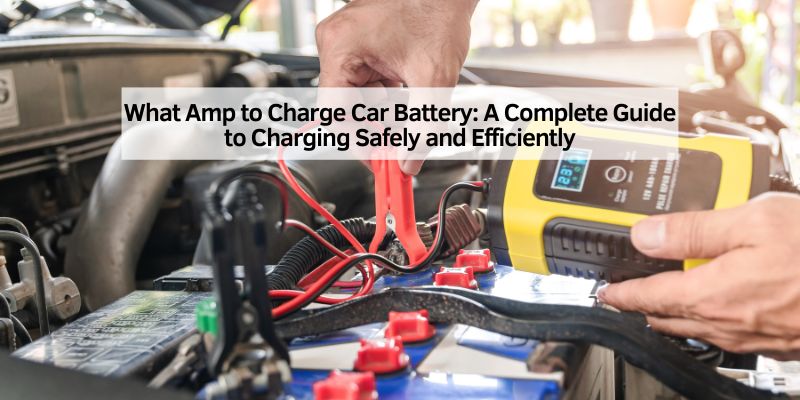
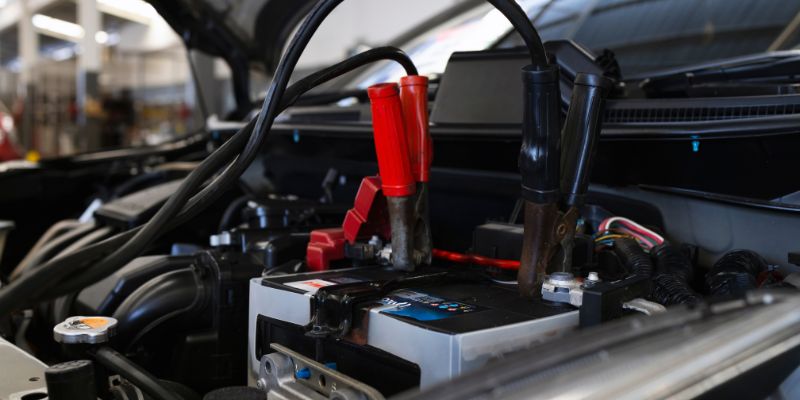
- Connect the charger: Attach the red (positive) clamp to the positive terminal (+) first, then the black (negative) clamp to the negative terminal (−). If charging in the vehicle, connect the negative clamp to an unpainted metal ground point on the car frame rather than the battery terminal — this minimizes spark risk near the battery.
- Set the correct amperage: Use the reference table above. For most drivers with a standard car battery and overnight time available, 4–6 amps is the right choice.
- Start charging: Plug in and turn on the charger. Smart chargers manage themselves. For manual chargers, check every 2–3 hours.
- Disconnect safely: Once fully charged, turn off the charger before disconnecting. Remove the negative clamp first, then the positive.
Common Mistakes to Avoid When Charging a Car Battery
- Using too high an amperage: Charging at 50 amps without automatic cutoff can overheat and destroy a battery within hours. Stick to the recommended rates.
- Leaving a manual charger on too long: Overcharging boils off electrolyte and degrades plates permanently. Use a smart charger or set a timer.
- Charging a visibly damaged battery: A cracked, bulging, or leaking battery should not be charged — it is a safety hazard. Replace it.
- Charging in an enclosed space: Batteries release hydrogen gas during charging. A spark in an enclosed garage can ignite it. Always charge with ventilation.
- Reversing the clamps: Connecting positive to negative causes a short circuit that can damage the battery, charger, or vehicle electronics. Always confirm polarity before connecting.
When to Use a Trickle Charger vs. a Fast Charger
Use a trickle charger (1–2 amps) when: the car is going into storage for weeks or months, you want to maintain a battery that is already mostly charged, or you are conditioning a weak battery slowly to minimize stress. Trickle chargers with float mode can remain connected indefinitely without risk.
Use a fast charger (10+ amps) only when: you need the car running quickly and do not have time for a slow charge. Always use a smart charger if going above 10 amps — the automatic cutoff prevents the overcharging that manual fast-charging risks. For routine maintenance, a standard 4–10 amp charge is always the better choice for battery longevity.
How to Know When Your Battery Is Fully Charged
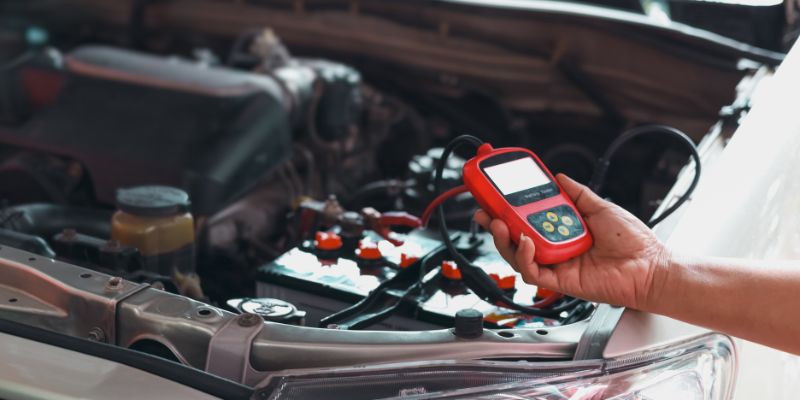
Smart chargers indicate full charge with a light or audible signal and switch to float/maintenance mode automatically. For manual chargers, use a multimeter to check voltage. A fully charged 12-volt lead-acid battery reads 12.6–12.8 volts at rest (measured at least 2 hours after disconnecting the charger to allow surface charge to dissipate). Readings below 12.4V indicate the battery is only partially charged. Below 12.0V indicates a deeply discharged or failing battery.
Stop charging immediately if the battery becomes hot to the touch, emits a sulfur smell, or the case begins to bulge. These are signs of overcharging or an internally damaged battery.
Maintaining Your Car Battery After Charging
- Test voltage regularly: Check with a multimeter every few months. If resting voltage is consistently below 12.4V, the battery may be failing.
- Keep terminals clean: Corrosion increases resistance and can prevent a full charge. Clean terminals each season with a wire brush.
- Avoid excessive short trips: The alternator needs about 20–30 minutes of driving to replenish what the starter uses. Frequent short trips prevent the battery from fully recharging.
- Use a trickle charger during storage: If the car sits for more than two weeks, connect a trickle charger or disconnect the battery to prevent self-discharge damage.
When to Replace Your Car Battery
Charging alone cannot save a battery that has reached end of life. Most car batteries last 3–5 years. Replace the battery if: it is 4+ years old and struggles to start the engine, it no longer holds a charge above 12.4V after a full charge, it shows physical damage (cracks, swelling, leaking), or it fails a load test at an auto parts store. Take old batteries to an auto shop or parts store for recycling — lead-acid batteries are legally required to be recycled in most states. For tips on assessing battery health before it fails, see our guide on why a car battery won’t charge.
Conclusion
For most drivers charging a standard 40–60Ah car battery, 4–6 amps overnight is the safest and most battery-friendly choice. Use 2 amps for long-term maintenance or storage, 10 amps when you need the car ready within a few hours, and never exceed 20 amps with a manual charger. A smart charger removes the guesswork entirely by adjusting amperage automatically and cutting off at full charge. Always disconnect the negative clamp first, work in a ventilated space, and replace any battery showing physical damage or consistent voltage below 12.4V after a full charge.
Frequently Asked Questions
What is the best amperage to charge a car battery?
For most standard car batteries (40–60Ah), 4–6 amps is the best all-around choice — it delivers a full charge in 8–12 hours without stressing the battery. If you have time and want to be extra gentle (especially for an older battery), 2–4 amps is even better. Use a smart charger if you want the optimal charge rate set automatically.
Can I charge my car battery with a high amperage?
Yes, but with caution. Charging above 10 amps generates more heat and can shorten battery life if done routinely. Charging above 20 amps with a manual charger risks overcharging and battery damage. High amperage charging (20+ amps) should only be done with a smart charger that automatically reduces current and cuts off at full charge.
How long does it take to charge a car battery?
A standard 50Ah battery takes approximately 8–12 hours at 4–6 amps, 4–8 hours at 6–10 amps, and 24–36 hours at 2 amps. Charging time also depends on how deeply discharged the battery is — a battery at 50% state of charge will take roughly half as long as a fully dead battery. Check the charger’s indicator or use a multimeter to confirm the battery is fully charged (12.6–12.8V at rest).
Can I leave my battery charging overnight?
Yes, with a smart charger — it automatically shuts off or switches to a maintenance trickle when the battery reaches full charge. With a manual charger, overnight charging at a low setting (2–4 amps) is generally safe but not recommended without monitoring. At higher amperage settings, leaving a manual charger unattended overnight risks overcharging.
What’s the difference between a trickle charger and a fast charger?
A trickle charger delivers 1–2 amps continuously for slow, gentle charging — ideal for battery maintenance during storage or for keeping a seldom-used vehicle’s battery topped up. A fast charger delivers 10–50 amps for rapid charging in an emergency. Trickle chargers are safer for battery longevity; fast chargers are faster but generate more heat and should not be used routinely on the same battery.
How do I know when my car battery is fully charged?
A smart charger’s indicator light or display will show “full” and switch to float mode. For manual chargers, use a multimeter: a fully charged 12V battery reads 12.6–12.8 volts at rest, measured at least 2 hours after disconnecting the charger. Readings below 12.4V mean the battery needs more charging time or may be failing.
Is it bad to charge a car battery at 10 amps?
Charging at 10 amps is generally safe for most healthy car batteries and is a common setting for same-day charging. It is not the best choice for old, weak, or previously damaged batteries — those should be charged at 2–4 amps to reduce stress. For routine maintenance charging on a healthy battery, 10 amps is acceptable with monitoring; for regular use, 4–6 amps is gentler and extends battery life.
Products related to this article
Sponsored / affiliate links. As an Amazon Associate I earn from qualifying purchases. I may earn additional commission from eligible campaigns.