How to Keep Car Floor Mats from Slipping
It’s a common problem. Your car floor mats bunch up or slide around. This can be annoying and even unsafe.
Beginners might wonder how to keep car floor mats from slipping. Don’t worry! It’s easier than you think to fix this.
We’ll walk you through simple steps. Get ready to make your car’s interior safe and tidy.
Secure Your Car Floor Mats For Safety
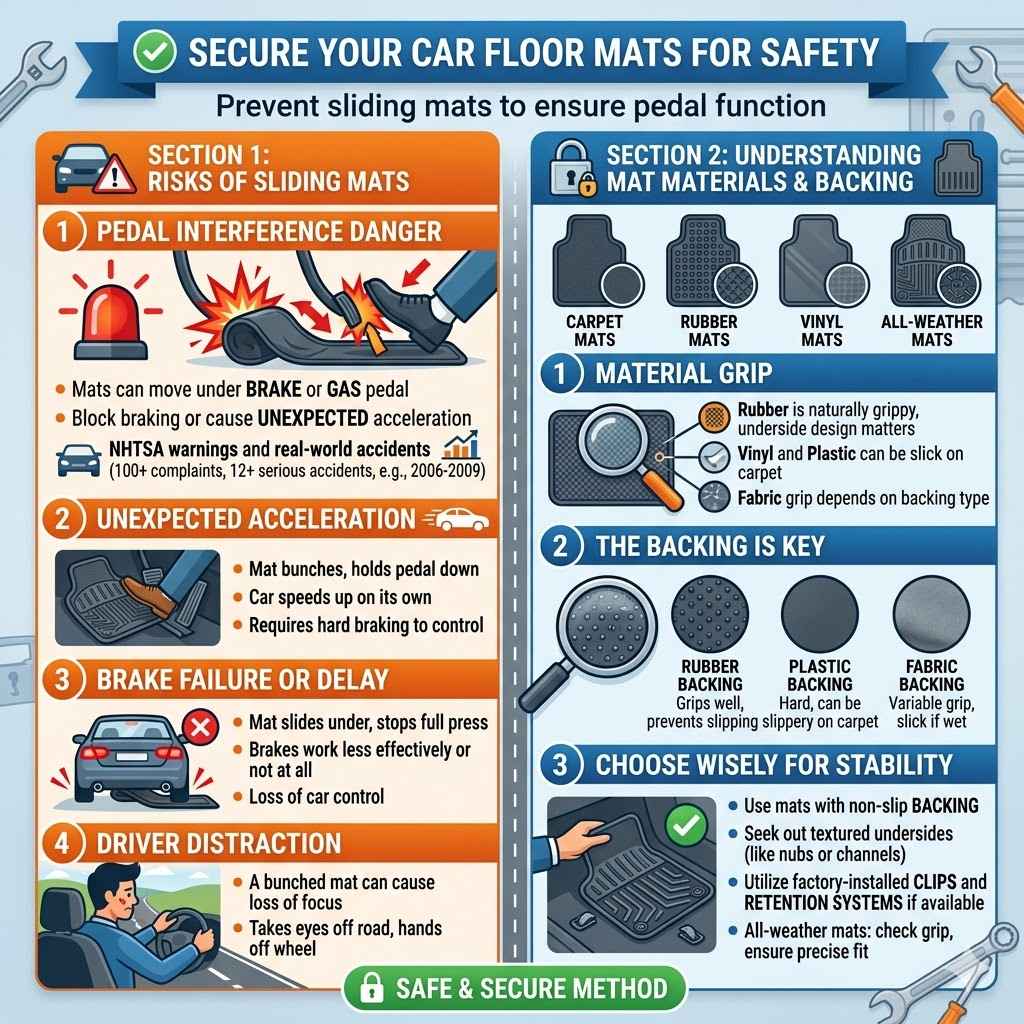
Loose car floor mats are more than just a nuisance. They pose a real safety risk. When mats shift, they can get under the pedals.
This makes it hard to press the brake or gas. Imagine trying to stop quickly and your mat gets in the way. It’s a scary thought.
Keeping your mats in place is a key part of safe driving. This section will explain why this is important and what can happen. We will cover the risks and the simple ways to avoid them.
The Dangers of Sliding Mats
When a floor mat slides, it can move forward. This can block your brake pedal. It can also block your gas pedal.
If your foot is on the brake and the mat slides forward, you might not be able to lift your foot off it. This could cause you to go too fast when you don’t mean to. Likewise, if the mat slides forward and bunches up, it could press the gas pedal.
This could make your car speed up unexpectedly.
These situations are rare but very serious. The National Highway Traffic Safety Administration (NHTSA) has warned drivers about this problem for years. They have even recalled vehicles because of issues with floor mat retention systems.
One report showed that between 2006 and 2009, there were over 100 complaints and at least a dozen serious accidents linked to floor mats interfering with pedals. These statistics highlight the real-world danger.
The problem is often worse with all-weather mats. These are great for keeping your car clean. But, they can be slick.
They don’t always grip the car’s carpet well. Factory-installed mats sometimes have special clips. Aftermarket mats might not.
This is why knowing How to Keep Car Floor Mats from Slipping is so important for everyone.
Pedal Interference Risks
Pedal interference means the floor mat is in the way of your pedals. This is the main safety worry. When a mat slides forward, it can get trapped under the accelerator pedal or the brake pedal.
- Accelerating unexpectedly A floor mat that slides under the gas pedal can hold it down. This makes the car speed up by itself. You might have to push harder on the brake to control it.
- Brake failure or delay If a mat slides under the brake pedal, it can stop you from pushing it down fully. This means your brakes might not work as well as they should. It could also mean you can’t push the brake pedal at all.
Driver Distraction and Loss of Control
Even if a mat doesn’t directly hit the pedals, it can still cause problems. If a mat bunches up and you feel it under your feet, it can distract you. A moment of distraction while driving can lead to an accident.
You might take your eyes off the road or your hands off the wheel. This loss of focus is dangerous.
Understanding Mat Materials
The material of your car floor mats plays a big role in whether they slip. Different materials have different textures and grip levels. Knowing about these can help you choose mats that stay put.
- Carpet Mats These are often the standard mats that come with a car. They are usually made of woven fabric. Their grip depends on the backing material. Some have rubber or plastic dots. Others have a fabric backing that can grip the car’s carpet.
- Rubber Mats These are very popular. They are good for protecting your car from mud and snow. Rubber is naturally grippy. However, the underside of the mat is also important. If it’s smooth, it might slide on carpet. Many rubber mats have designs on the bottom to help them grip.
- Vinyl Mats Vinyl is similar to rubber. It’s durable and easy to clean. Like rubber, its grip depends on the backing. Some vinyl mats are quite slick.
- All-Weather Mats These are often made of a mix of rubber and plastic. They are designed to be tough and easy to clean. Their shape and backing are key to how well they stay in place. Some have deep channels to catch water and dirt.
Backing Matters Most
The most critical part of a floor mat is its backing. This is the side that touches the car’s carpet.
- Rubber backing Rubber is often used because it grips well. Small rubber nubs or a textured rubber layer can prevent slipping.
- Plastic backing Some mats have a hard plastic backing. This can be slippery on carpet. It might work better if the car has a smooth plastic floor.
- Fabric backing Some mats have a fabric backing. This might grip carpet better than hard plastic. But, if the fabric gets wet or dirty, it can become slick.
- Vinyl backing Similar to plastic, vinyl can be slick. Some mats might use a rougher vinyl to improve grip.
How to Keep Car Floor Mats from Slipping Solutions
Now let’s get to the good stuff. We will look at practical ways to stop your car floor mats from sliding. These methods are simple and most people can do them easily.
They involve adding grip to the mats or using the car’s existing features.
Using Mat Gripping Products
There are special products designed to add grip to your floor mats. These are often the easiest and quickest solutions. They are usually affordable too.
- Anti-Slip Spray This spray contains special chemicals. When sprayed on the backing of the mat, it creates a sticky or rubbery surface. You apply it to the bottom of the mat. After it dries, it helps the mat stick to the car’s carpet. Always test a small, hidden area first to make sure it doesn’t stain your mat or carpet.
- Grip Pads or Strips You can buy adhesive grip pads or strips. These are like double-sided tape but with a grippy texture. You stick them to the bottom of your mats. They add extra friction. Make sure to place them in areas that will press firmly against the car floor.
- Rubber Underlayment Some people use a separate piece of rubber matting under their main floor mat. This adds an extra layer of rubber. It can help absorb movement and provide more grip.
How to Apply Anti-Slip Spray
Applying spray is simple. First, take your floor mats out of the car. Make sure they are clean and dry.
- Shake the can well.
- Spray an even coat on the underside of the mat. Focus on the edges and the center.
- Let it dry completely. This can take a few hours. Follow the product’s instructions.
- Put the mat back in your car.
Using Grip Tapes and Mats
Grip tapes and strips work by adding texture.
- Clean the back of your floor mats.
- Cut the tape or strips to size.
- Peel off the backing and stick them onto the mat. Place them where they will have good contact with the car floor.
- Press down firmly to ensure they stick well.
For rubber underlayment, just place it on the car floor and then put your regular mat on top.
Utilizing Factory Clips and Anchors
Many cars come with built-in systems to keep mats in place. These are called retention clips or anchor systems. They are often the best way to secure your mats if your car has them.
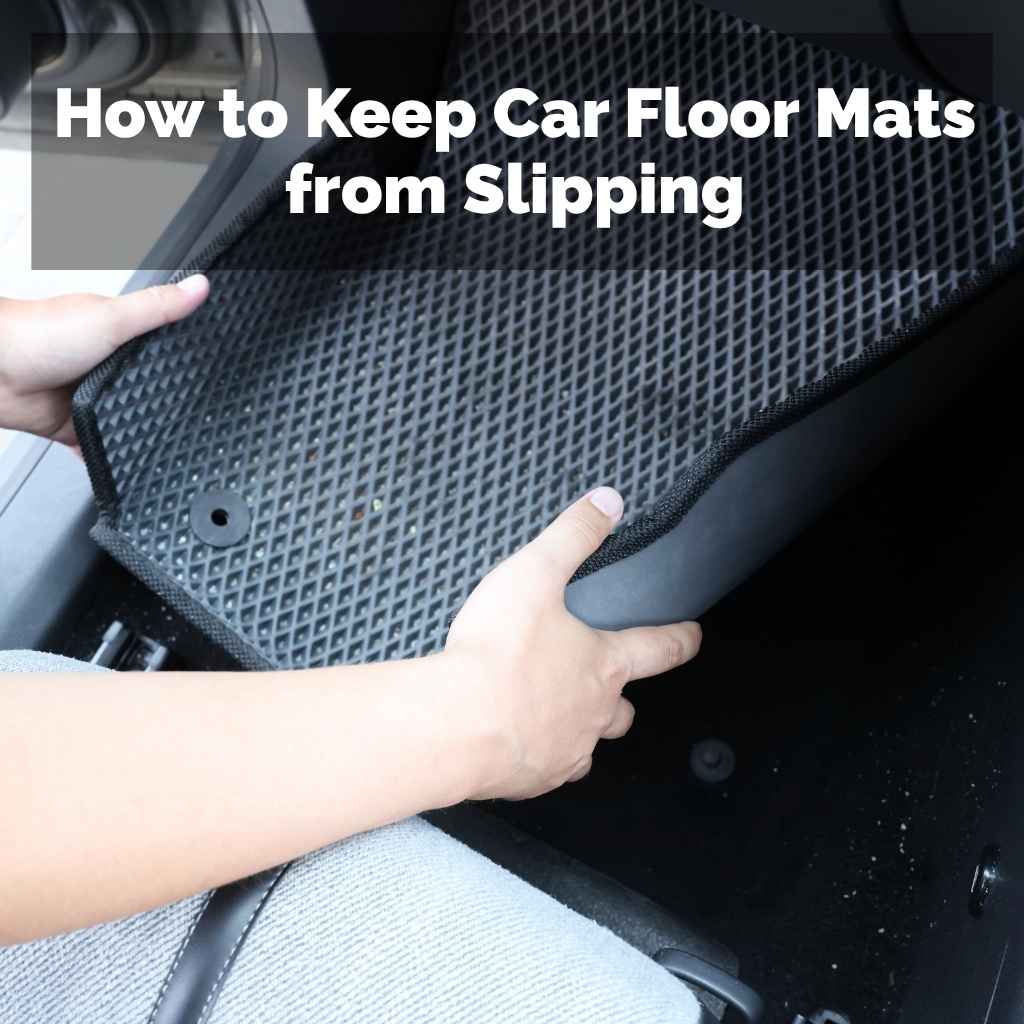
- Clip Systems Some cars have small plastic clips. You push the mat down onto these clips. The clips go through holes in the mat. They stop the mat from moving forward or sideways.
- Hook and Loop Fasteners Some systems use a hook and loop system. Your car might have a rough loop side on the floor. Your floor mat then has a hook side. When you press the mat down, they stick together.
- Post Anchors Some cars have posts that stick up from the floor. The floor mats have holes that fit over these posts. This is a very secure way to hold mats in place.
Checking for Factory Anchors
Look carefully at your car’s floor. You might find these systems already there.
- Remove your current floor mats.
- Examine the car’s carpet. Look for small plastic posts, clips, or rough patches. They are usually near the edges or in the center.
- Check your original floor mats. Do they have holes or specific shapes that match these anchors?
Modifying Mats for Anchors
If your new mats don’t have holes but your car does, you can add them.
- Place the mat on the floor.
- Note where the car’s anchors are. You can mark these spots on the mat.
- Use a sharp craft knife or a hole punch to carefully make holes in the mat. Make sure the holes are the right size for the anchors.
- Test to see if the mat fits securely over the anchors.
Adding Hook and Loop Fasteners
Hook and loop fasteners, like Velcro, can be a great solution. You can add them to your mats and your car’s carpet.
- Adhesive-backed Hook and Loop This is the easiest type to use. It has a sticky side. You attach one side to the bottom of your floor mat and the other side to the car’s carpet.
- Sew-on Hook and Loop This is more durable. You can sew it onto the mats. For the car’s carpet, you might need to use a strong adhesive to attach the loop side.
Installation Steps for Hook and Loop
Make sure your car’s carpet and mat backing are clean and dry before starting.
- Cut the hook and loop strips to the desired length.
- For adhesive-backed, peel off the backing and attach one part to the bottom of your floor mat. Place it where it will touch the car’s carpet.
- Then, attach the other part to your car’s carpet. Choose a spot that aligns with the mat. Press firmly.
- Place the mat in the car. The hook and loop will engage and hold the mat in place.
DIY Solutions for Mat Security
Sometimes, you might need to get creative. Here are some do-it-yourself ideas to keep your mats from moving.
- Silicone Caulk A bead of silicone caulk applied to the underside of the mat can create a non-slip surface. Let it cure completely before putting the mat back. This method works well on rubber mats.
- Spray Paint Grip Many people use a spray paint with a rubberized finish. You can apply this to the back of your mats. It adds texture and grip. Several light coats are better than one heavy coat.
- Fabric Paint Similar to spray paint, fabric paint can add grip. It’s often less harsh and more flexible. Apply it in a pattern on the back of the mat.
Using Silicone Caulk
This is a simple yet effective method.
- Clean the back of your floor mat thoroughly. Ensure it’s completely dry.
- Apply a thin bead of silicone caulk around the edges and in a few lines across the middle of the mat’s backing.
- Allow the caulk to dry and cure completely. This usually takes 24 hours, but check the product instructions.
- Once dry, the caulk creates a rubbery texture that grips the carpet.
Spray Paint for Grip
This is a popular DIY trick for adding grip.
- Take your mats outside. Ensure good ventilation.
- Clean and dry the mats.
- Apply a light, even coat of rubberized spray paint to the underside of the mats. Let it dry.
- Apply a second light coat if needed. Allow it to dry thoroughly for at least 12-24 hours before putting the mats back in the car.
Choosing the Right Type of Mats
Sometimes, the problem isn’t just how to secure them, but the mats themselves. Choosing the right type of mat can prevent slipping from the start.
- Deep-Dish All-Weather Mats These mats are designed with raised edges. They are great for trapping dirt and water. Their design often includes a textured or rubberized backing that grips the car floor well.
- Custom-Fit Mats These mats are made specifically for your car’s make and model. They are shaped to fit perfectly. This means they are less likely to shift. Many custom-fit mats also come with their own anchoring systems.
- Mats with Built-In Grip Many manufacturers now produce mats with advanced anti-slip backings. These might have special patterns or materials that are highly resistant to sliding. Always check product descriptions for features like “non-slip backing” or “carpet grip.”
Benefits of Custom-Fit Mats
Custom-fit mats offer superior performance. They are designed to be a perfect match for your vehicle’s interior.
- Exact Fit A custom-fit mat is molded to the contours of your car’s floor. This means there are no gaps or loose edges that can catch on pedals or slide around.
- Integrated Anchors Many custom-fit mats include provisions for your car’s original anchor points. This ensures they lock into place just like the factory mats.
- Enhanced Protection Because they fit so well, custom mats provide better coverage. They protect more of your original carpet from wear and tear.
Looking for Smart Backing Technology
Manufacturers are constantly improving mat technology.
- Look for mats with a high-friction backing. This can be a rough rubber texture or a proprietary material designed to grab carpet.
- Some mats use a combination of materials. They might have rubber nibs interspersed with fabric for better grip and comfort.
- Read reviews from other car owners. They often mention if a mat tends to slip or stay put.
When Mats Still Slip What to Do
Even after trying these methods, you might find your mats still move. This can be frustrating. Let’s look at what else you can do.
It might be a combination of things.
Cleaning Your Carpet and Mats
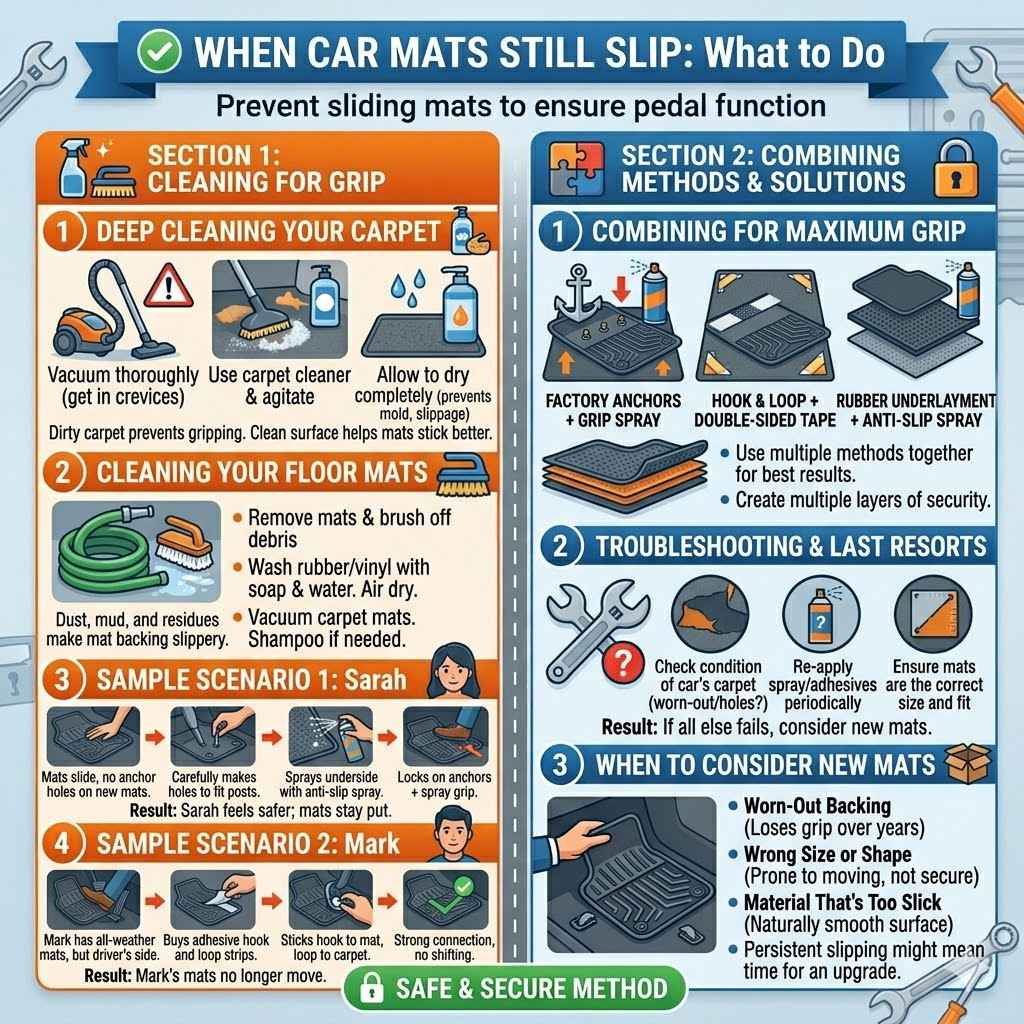
Dirt and debris can prevent mats from gripping properly. A clean surface helps everything stick better.
- Carpet Condition The car’s carpet needs to be in good shape. If the carpet is worn out or has holes, it’s harder for anything to grip it.
- Mat Cleanliness The underside of your mats also needs to be clean. Dust, mud, and old residues can make them slippery.
Deep Cleaning Your Car Carpet
A clean carpet is the foundation for non-slip mats.
- Vacuum your car’s floor thoroughly. Get into all the nooks and crannies.
- For deeper cleaning, use a carpet cleaner. Follow the product’s instructions carefully.
- Allow the carpet to dry completely before placing mats back. Wet carpet can lead to mold and also makes mats slippery.
Cleaning Your Floor Mats
The back of your mats needs attention too.
- Remove mats from the car.
- Brush off loose dirt and debris.
- Wash rubber or vinyl mats with soap and water. Rinse well and let them air dry completely.
- For carpet mats, vacuum them thoroughly. If they are very dirty, you might need to shampoo them.
Combining Methods for Maximum Grip
Don’t be afraid to use more than one solution. Combining methods can give you the best results.
- Factory Anchors Plus Grip Spray If your car has anchors, use them! Then, add some anti-slip spray to the edges of the mat for extra security.
- Hook and Loop Plus Double-Sided Tape Attach hook and loop fasteners to the main area of the mat. Then, add small pieces of heavy-duty double-sided tape to the corners for a very secure hold.
- Rubber Underlayment Plus Anti-Slip Spray Place a rubber mat underlayment on the floor. Then, put your main mat on top and use anti-slip spray on the back of your main mat. This creates multiple layers of grip.
Sample Scenario 1
Sarah’s car floor mats, especially the driver’s side, kept sliding forward. She tried just cleaning them, but it only helped a little. Her car had anchor posts.
Her new mats didn’t have the right holes.
- Sarah carefully made holes in her driver’s side mat to fit the anchor posts.
- She then sprayed the underside of the mat with an anti-slip spray, focusing on the areas that didn’t quite reach the anchors.
- Finally, she placed the mat in her car, ensuring it locked onto the anchors and had the extra grip from the spray.
The mats stayed put after these steps. She felt much safer driving.
Sample Scenario 2
Mark had all-weather rubber mats. They were great for snow, but the driver’s side would slide. His car didn’t have factory anchors.
- Mark bought adhesive hook and loop strips.
- He cleaned the bottom of his driver’s side mat.
- He stuck the hook side of the strips to the mat.
- Then, he stuck the loop side of the strips to his car’s carpet in the right spots.
This provided a strong connection. His mats no longer shifted.
When to Consider New Mats
If you’ve tried everything and your mats still slip, it might be time for new ones.
- Worn-Out Backing The backing on your current mats might be worn out. After years of use, it loses its grip.
- Wrong Size or Shape The mats might simply be the wrong size for your car. This makes them prone to moving.
- Material That’s Too Slick Some mat materials are just naturally more slippery than others. If yours are very smooth, they might not work well even with added grip.
Frequently Asked Questions
Question: How often should I check my car floor mats for slipping
Answer: It is a good idea to check your car floor mats every few weeks or after heavy use like during bad weather. You can also check them whenever you are cleaning your car’s interior.
Question: Can slippery mats damage my car’s pedals
Answer: Slippery mats themselves do not damage pedals. However, if a mat gets stuck under a pedal, it can prevent the pedal from returning to its normal position. This could cause unintended acceleration or braking issues.
Question: Are all-weather mats more likely to slip
Answer: All-weather mats can sometimes slip more than carpet mats if they have a smooth backing. However, many modern all-weather mats are designed with special grippy textures on the bottom to prevent this.
Question: What is the best DIY solution for keeping mats from slipping
Answer: Many people find success with rubberized spray paint or silicone caulk applied to the underside of the mat. These add texture and grip to the backing.
Question: Should I use adhesive tape on my car’s carpet
Answer: If you use adhesive-backed hook and loop or double-sided tape, clean the carpet well first. Always test a small area to ensure the adhesive doesn’t damage or leave residue on your carpet.
Summary
Stopping your car floor mats from slipping is an important safety step. You can use special products or simple DIY methods. Cleaning your mats and car carpet helps them grip better.
If your car has factory anchors, use them. Combining different techniques often works best. If your mats are old or the wrong size, consider buying new ones designed to stay in place.