How To Register a Car With Unpaid Tickets: Essential Guide
You can often register a car with unpaid tickets by paying the outstanding fines, clearing any warrants, and then proceeding with the standard registration process at your local DMV or equivalent agency. While it’s not always straightforward, resolving the tickets is the key step to getting your car legally on the road. This guide will walk you through the common procedures and potential hurdles.
Dealing with unpaid tickets can feel like a roadblock, especially when you need to register your car. It’s a common situation that can leave you feeling stressed and unsure of what to do next. Many drivers worry that unpaid fines will permanently prevent them from registering their vehicle. But don’t worry, this is usually a solvable problem! With a clear plan, you can navigate the process and get your registration sorted out. We’ll break down exactly what you need to do, step by step.
Understanding Why Unpaid Tickets Affect Registration
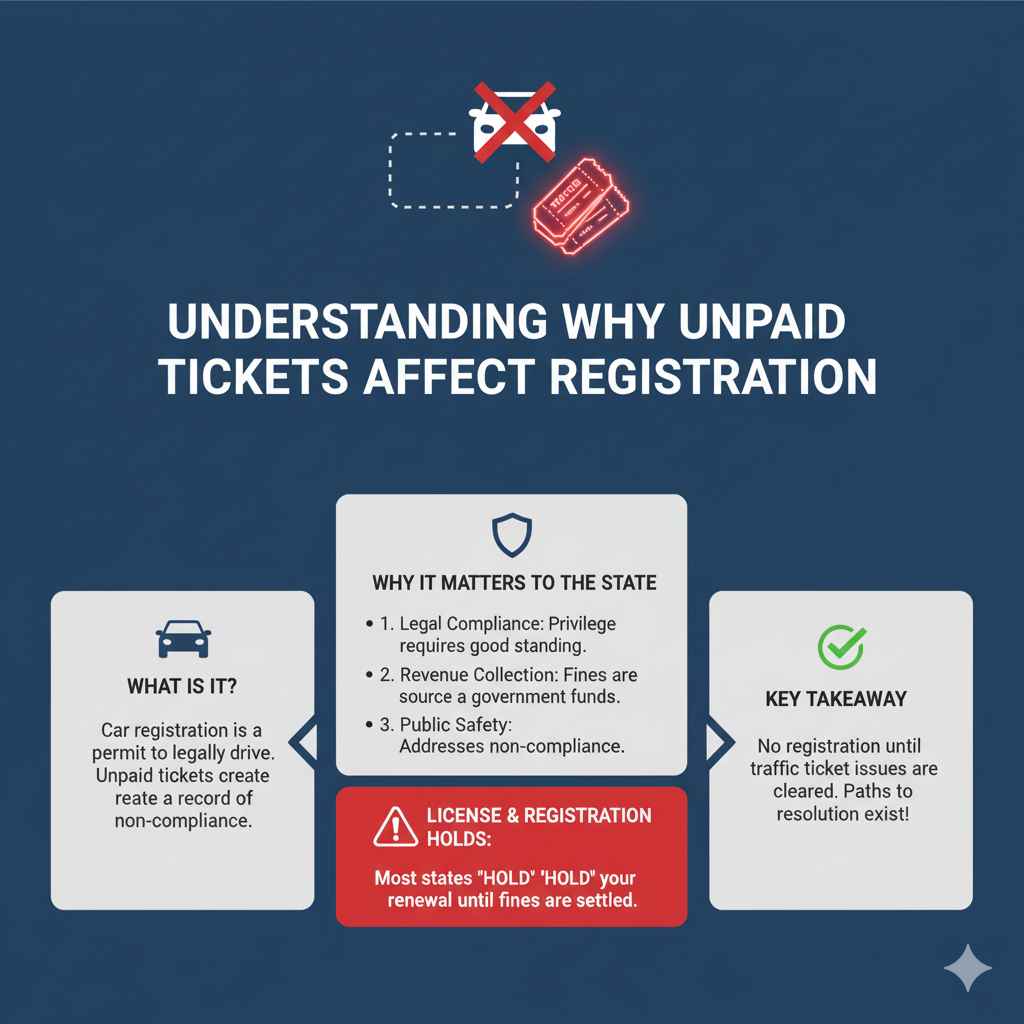
Your car registration is essentially a permit that allows you to legally drive your vehicle on public roads. This permit is issued by your state’s Department of Motor Vehicles (DMV) or a similar agency. When you accumulate unpaid parking tickets or moving violations, this creates a record of non-compliance with traffic laws.
Most states view unpaid tickets as a serious issue that needs to be addressed before they will grant you a new registration. Think of it this way: the state wants to ensure that drivers are responsible and abiding by the rules. Allowing someone with outstanding fines to continue driving without resolving those issues could be seen as enabling non-compliance.
Here’s a breakdown of why this connection exists:
- Legal Compliance: Registering a vehicle is a privilege granted by the state. This privilege typically requires you to be in good standing with traffic laws.
- Revenue Collection: Fines are a form of penalty and a way for the government to collect revenue. Resolving tickets ensures these fines are paid.
- Public Safety: In some cases, especially with warrants stemming from unpaid tickets, addressing them is crucial for ongoing public safety.
- License and Registration Holds: Many states place a “hold” on your vehicle registration or driver’s license until outstanding fines are settled. This prevents you from renewing or obtaining new registration documents.
The specific rules vary from state to state, but the general principle remains the same: you usually can’t get your car registered until your traffic ticket issues are cleared up. Fortunately, there are usually clear paths to doing so.
Step-by-Step Guide: How To Register a Car With Unpaid Tickets
Navigating the process of registering a car when you have unpaid tickets primarily involves getting those tickets resolved. Once that’s done, the registration itself is usually a standard procedure. Here’s how to approach it:
Step 1: Identify All Outstanding Tickets and Fines
The first and most crucial step is to find out exactly what you owe and where. Tickets can come from various sources: local police, county sheriff’s departments, or state highway patrols. Sometimes, tickets can go unnoticed, especially if they were mailed and not received.
Here’s how to track them down:
- Check Your Driver’s License Record: Most state DMVs offer an online portal where you can check your driving record. This will often list outstanding tickets, points on your license, and any associated fines. You can usually request a copy of your official driving record for a small fee.
- Contact Your Local Court Clerk: If you know the jurisdiction where you received a ticket, contacting the local court clerk’s office is a good idea. They can search their records for any pending cases or fines associated with your name or vehicle.
- Look for Official Mail: Keep an eye out for any certified letters or official notices from courts or the DMV. These often contain important information about unpaid fines.
- Online Ticket Portals: Many cities and counties have their own websites where you can search for tickets using your license plate number or citation number.
It’s important to be thorough here. Missing even one ticket could lead to further complications or prevent your registration from going through.
Step 2: Understand the Consequences of Unpaid Tickets
Before you pay, it’s wise to understand what happens if you don’t pay. These consequences can escalate over time and make your situation more difficult.
Common consequences include:
- Late Fees and Penalties: The original fine amount often increases significantly due to late fees.
- Warrants for Arrest: For serious moving violations or failure to appear in court, a bench warrant might be issued. This could lead to your arrest during a traffic stop or even when you try to resolve the ticket.
- License Suspension: Many states will suspend your driver’s license for unpaid tickets or failure to appear. Driving with a suspended license carries severe penalties.
- Vehicle Impoundment: If you are pulled over with an active warrant or a suspended license due to unpaid tickets, your vehicle could be towed and impounded.
- Increased Insurance Premiums: Outstanding tickets and license suspensions can lead to higher car insurance rates.
Knowing these potential repercussions should motivate you to resolve the issues promptly.
Step 3: Resolve the Outstanding Tickets
This is the core of the process. How you resolve tickets depends on the type of violation and your state’s laws.
a) Paying the Fines:
For many parking tickets and minor violations, the simplest solution is to pay the fines. You can usually do this online, by mail, or in person at the court or issuing agency.
- Online Payment: Many jurisdictions offer online payment options through their official court or city website.
- Mail Payment: You can often mail a check or money order for the exact amount due.
- In-Person Payment: Visiting the court clerk’s office allows you to pay with cash, check, money order, or sometimes a credit card.
b) Contesting the Tickets:
If you believe a ticket was issued in error, you have the right to contest it. This usually involves requesting a court hearing. The process and requirements for contesting tickets vary by jurisdiction. You may need to:
- Notify the Court: Inform the court clerk within a specified timeframe that you wish to contest the ticket.
- Gather Evidence: Collect any proof that supports your case (photos, witness statements, dashcam footage).
- Attend the Hearing: Present your case to a judge or hearing officer.
c) Arranging a Payment Plan:
If the total amount of fines is overwhelming, don’t despair. Many courts and jurisdictions allow you to set up a payment plan. This means you can pay the fines in smaller, manageable installments rather than all at once.
- Contact the Court: Reach out to the relevant court or issuing agency to inquire about payment plan options. Be prepared to provide financial information.
- Adhere to the Plan: It’s critical to make all payments on time. Defaulting on a payment plan can lead to renewed penalties or warrants.
d) Addressing Warrants:
If there’s an active warrant for your arrest due to unpaid tickets or failure to appear, this requires immediate attention. You cannot simply pay the fines online in many cases. You may need to:
- Contact the Court or Sheriff’s Department: Speak with the issuing agency about how to “clear your warrant.”
- Consider a “Walk-In” or “Sua Sponte” Appearance: In some areas, you can turn yourself in voluntarily at the courthouse during business hours. This is often preferable to being arrested during a traffic stop, as it can lead to a swifter court appearance and potential release.
- Hire an Attorney: For complex warrant situations, consulting a traffic attorney can be highly beneficial. They can often negotiate with the court on your behalf.
You can find information on clearing warrants from the American Investigation & Credit Control (AI&CC), which provides general guidance on warrant searches, though direct state-specific links will be more effective.
Step 4: Obtain Proof of Resolution
Once you’ve paid your fines, set up a payment plan, or resolved a warrant, make sure you get official documentation. This proof is essential for the DMV.
- Receipts: Keep all payment receipts, whether printed or digital.
- Court Orders: If you appeared in court, ensure you have a copy of the judge’s order or any dismissal papers.
- Clearance Letters: Some jurisdictions issue a “clearance letter” or confirmation that all outstanding matters have been settled.
This documentation serves as your evidence that you have met your obligations.
Step 5: Proceed with Car Registration
With your tickets resolved and proof of resolution in hand, you can now proceed with registering your vehicle. The process is largely the same as if you had no outstanding tickets.
Generally, you will need:
- Proof of Identity: Usually a valid driver’s license or state ID.
- Proof of Ownership: This includes the vehicle’s title, a bill of sale, or other ownership documents.
- Proof of Insurance: You must have current auto insurance that meets your state’s minimum requirements.
- emissions test/Safety Inspection: Many states require your vehicle to pass an emissions test or safety inspection before registration.
- Proof of Resolution for Tickets: Be prepared to show the documentation you received in Step 4. The DMV might also electronically verify that your tickets are cleared through state databases.
- Payment for Registration Fees: There will be fees associated with the registration and license plates.
Visit your local DMV or Secretary of State’s office. Many states offer online options for registration renewal, but if you’re registering a vehicle for the first time or dealing with a previously unresolved issue, an in-person visit might be necessary.
You can find your state’s specific DMV website by searching for “[Your State] DMV” online. For example, the California DMV website provides comprehensive information about vehicle registration and related services.
Common Scenarios and Potential Challenges
Even with the best intentions, you might encounter specific situations or challenges when trying to register a car with unpaid tickets.
Scenario: Ticket Issued in Another State
If you received a ticket in a state other than the one you’re trying to register your car in, it can be more complicated. Most states share driver and vehicle information, but resolving an out-of-state ticket might require you to:
- Contact the specific court or agency in the state where the ticket was issued.
- Pay the fines directly to that jurisdiction.
- Obtain proof of resolution from that state.
Some states may not place registration holds for out-of-state tickets, but others do. It’s best to check with your local DMV and the issuing state’s traffic court.
Scenario: Expired Registration and Unpaid Tickets
If your registration has already expired and you also have unpaid tickets, you’ll need to address both. The process of clearing the tickets will usually come first. Once that’s done, you’ll need to pay any back registration fees and penalties, along with the current registration fees.
Scenario: Difficulty Proving Tickets Are Paid
Occasionally, a payment may not be processed correctly in the system, or there might be a delay in updating records. If the DMV claims you still have outstanding tickets, but you have proof of payment:
- Provide them with your payment receipts and any clearance letters.
- Ask for a direct contact person or department at the DMV that can help resolve the record discrepancy.
- If necessary, contact the court or agency where you paid to confirm their records are accurate and request they update the state database.
Scenario: Vehicle Sold or Towed While Tickets Were Unpaid
If your car was sold or impounded due to unpaid tickets, you’ll need to focus on resolving the legal issues before you can register another vehicle or re-register the towed one. The process of clearing warrants or fines remains the same.
What If You Can’t Afford to Pay?
This is a common and understandable concern. The good news is that you often have options beyond immediate lump-sum payment.
1. Payment Plans: As mentioned earlier, most municipal and county courts offer payment plans. These allow you to spread the cost over several months or even years. You’ll need to go to court or contact the court clerk to set this up. Be honest about your financial situation; they often want to work with you.
2. Community Service: In some jurisdictions, and for certain types of offenses, you may be able to perform community service instead of paying a fine. This involves volunteering your time for a public service organization. Inquire with the court about this possibility. It’s a way to work off your debt without spending money.
3. Financial Hardship Hearings: If you can demonstrate extreme financial hardship, you may be able to petition the court for a reduction in your fines or an alternative resolution. This typically requires providing detailed financial documentation, such as proof of income, bank statements, and a list of expenses.
4. Seek Legal Aid: If you’re struggling financially and facing significant fines or potential jail time, consider reaching out to a legal aid society or a pro bono attorney. They may be able to offer free or low-cost legal assistance to help you navigate your case and explore options.
It’s crucial to communicate with the court or issuing authority. Ignoring the problem will only lead to higher costs and more severe penalties.
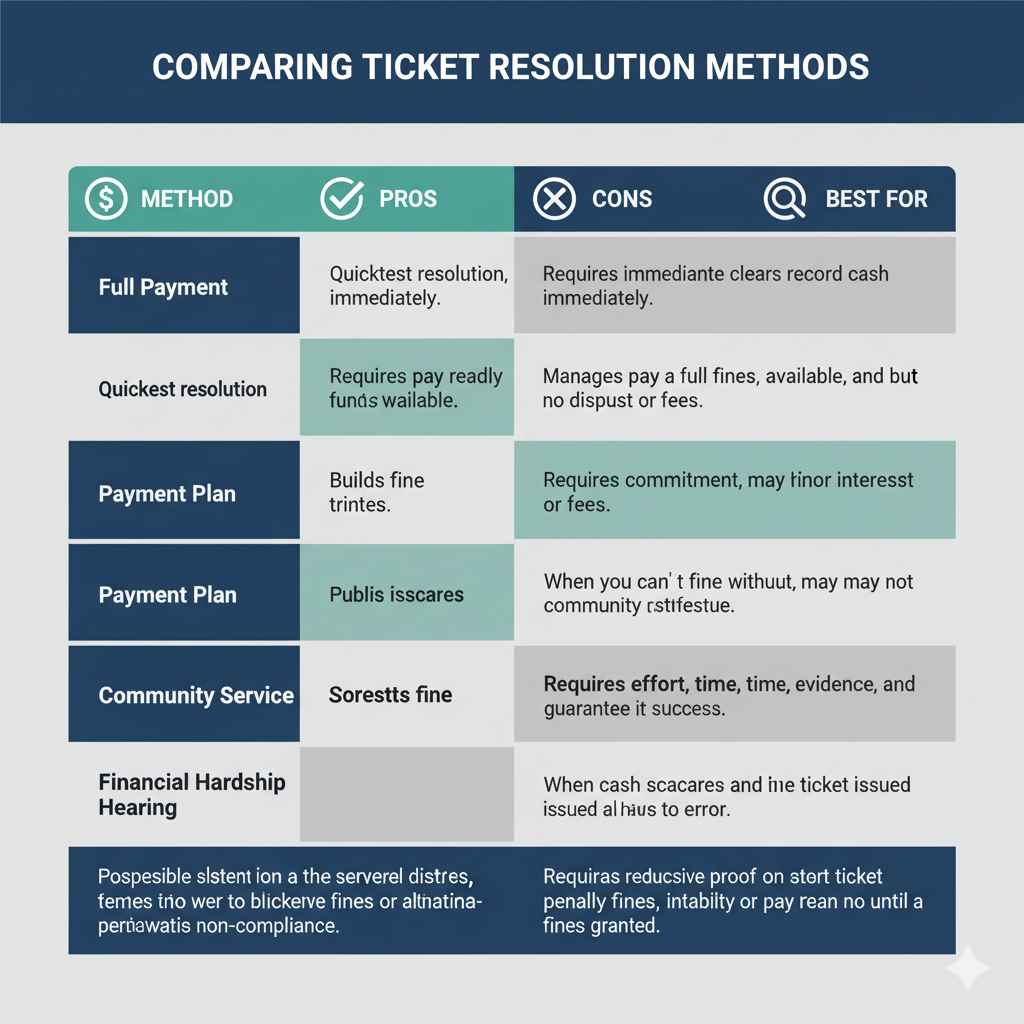
Table: Comparing Ticket Resolution Methods
Here’s a look at different ways to handle your tickets and their typical outcomes:
| Method | Pros | Cons | Best For |
|---|---|---|---|
| Full Payment | Quickest resolution, clears record immediately. | Requires immediate funds, can be a large sum. | When funds are readily available and no dispute exists. |
| Payment Plan | Manages large fines, makes payments affordable. | Requires commitment, may accrue minor interest or fees. | When you can’t pay the full amount at once but can afford installments. |
| Community Service | “Earns” the fine without cash, builds community ties. | Time-consuming, may not be available for all offenses. | When cash is scarce and you have free time. |
| Contesting Ticket | Potential to have ticket dismissed, avoid fine entirely. | Requires effort, time, and evidence; no guarantee of success. | When you genuinely believe the ticket was issued in error. |
| Financial Hardship Hearing | Possible reduction in fines or alternative penalties. | Requires extensive proof of inability to pay, may not be granted. | For individuals facing severe financial distress. |
Frequently Asked Questions (FAQ)
Q1: Can I register my car if I have unpaid parking tickets?
A: In most states, yes, but you will likely need to pay all outstanding parking tickets and any associated penalties before your vehicle registration can be processed. Many DMVs or state motor vehicle departments have systems that flag unpaid tickets.
Q2: What happens if I ignore unpaid tickets and try to register my car?
A: If you attempt to register your car with unpaid tickets, the DMV will likely deny your registration application. They may also alert you to the outstanding fines and inform you that you must resolve them to proceed. Continued non-payment can lead to further penalties, license suspension, or even vehicle impoundment.
Q3: Do I need to pay tickets issued in a different state before registering my car in my home state?
A: This depends on your state’s laws and any reciprocal agreements with other states. Many states will place a hold on your registration if you have outstanding tickets or unresolved violations in another state, especially if there is a corresponding driver’s license suspension. It’s best to check with your local DMV and try to resolve the out-of-state ticket directly.