Car Safety Checklist: 10 Things to Check Before a Trip
A pre-trip car safety checklist covers 10 checks: tire pressure and tread, oil and coolant levels, brake feel, lights, wipers, battery health, seatbelts and mirrors, and a packed emergency kit.
Most roadside breakdowns trace back to one of these being skipped, not a random mechanical surprise. Running through the list below takes about 15 minutes in your driveway, and it is the difference between a smooth drive and a call to roadside assistance from the side of a highway.
The 10-Point Pre-Trip Car Safety Checklist
BEST FOR ROADSIDE BREAKDOWNS
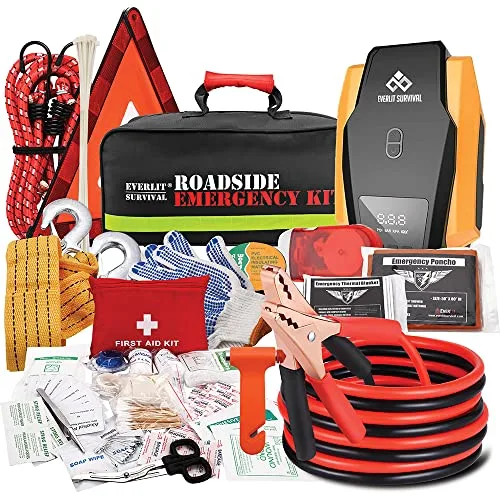 |
Everlit Survival Roadside Emergency Kit – $69.95 Covers the last item on this checklist in one bag: a warning triangle, jumper cables, a first aid kit, and a 12V tire inflator for your trunk.
|
Go through these in order before any drive longer than an hour, and at least once a month even if you are not going anywhere. Most of them take less than two minutes each.
1. Check Tire Pressure and Tread Depth
Check pressure when the tires are cold, before you have driven more than a mile or two, since driving heats the air inside and inflates the reading. The correct number is printed on the placard inside the driver’s door jamb, not the number molded into the tire’s sidewall. That sidewall number is the tire’s maximum rated pressure, not your car’s recommended setting, and using it will often overinflate the tire. For tread, push a penny into a groove head-first: if you can see all of Lincoln’s head, the tread is worn down and it is time to check whether a patch will hold or the tire needs replacing.
2. Check the Spare Tire and Jack
A spare that has sat in the trunk for years can lose pressure just like any other tire, so check it too. Confirm the jack and lug wrench are actually in the car (they get borrowed and never returned more often than you would expect) and that you know where the jack points are on your specific car before you need them on the shoulder of a highway.
3. Check Engine Oil Level and Color
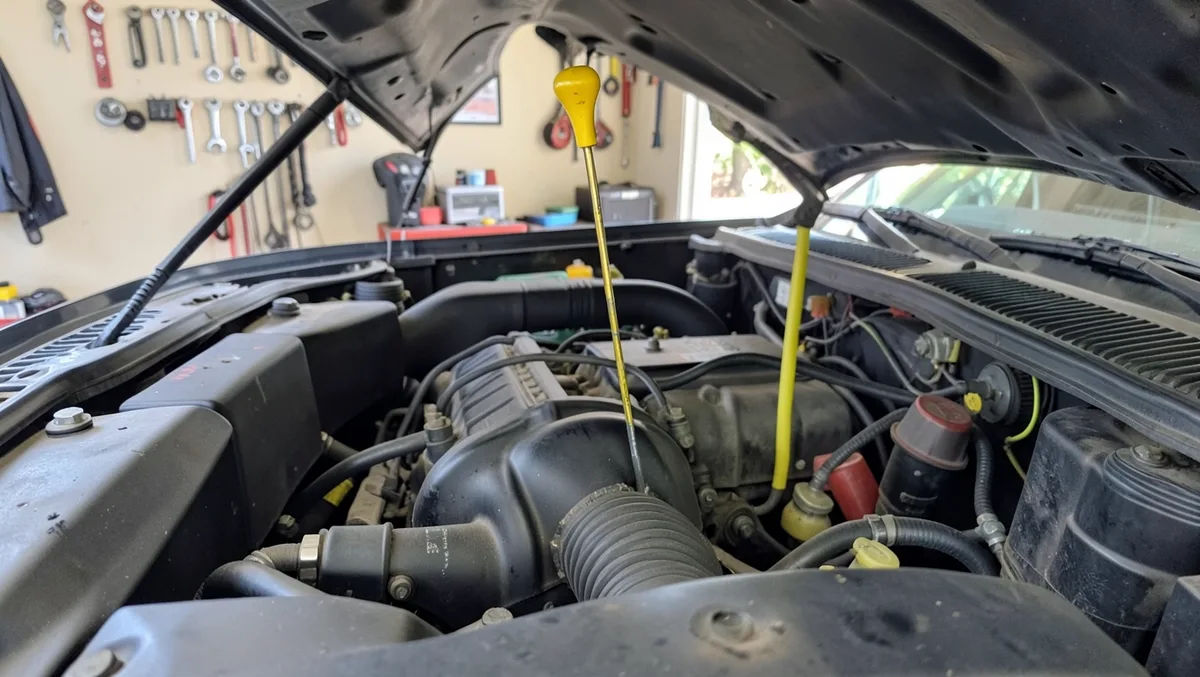
With the engine off and the car on level ground, pull the dipstick, wipe it clean, push it all the way back in, then pull it again to read the level. It should sit between the two marks near the tip. Fresh oil is amber and translucent; oil that looks black and gritty, or that smells burnt, means it is past due. If you are not sure when it was last changed, check how long your oil is actually good for before you commit to a long drive on it.
4. Check the Coolant Level
Look at the translucent coolant reservoir tank under the hood, not the radiator cap itself, and confirm the level sits between the “low” and “full” lines while the engine is cold. Never open a radiator cap on a hot engine; pressurized coolant can cause serious burns. If the reservoir is regularly low, that usually points to a slow leak worth having a mechanic look at before a long trip, not just topping it off and hoping.
5. Check Brake Fluid and How the Pedal Feels
Check the brake fluid reservoir under the hood for the fluid level, and pay attention to how the pedal itself behaves. A pedal that feels spongy, sinks lower than usual, or needs to be pumped is a sign the brake system needs attention now, not after the trip. Any squealing, grinding, or pulling to one side under braking is worth a shop visit before you leave.
6. Check Windshield Washer Fluid and Wiper Blades
Top off the washer fluid reservoir; running out mid-trip on a bug-splattered or dusty windshield is a real visibility hazard, and filling it correctly takes under a minute. Run the wipers on a dry windshield for a moment and look for skipping, streaking, or a chattering sound, all signs the rubber blades are cracked or hardened and need replacing before rain catches you on the road.
7. Test All Your Lights
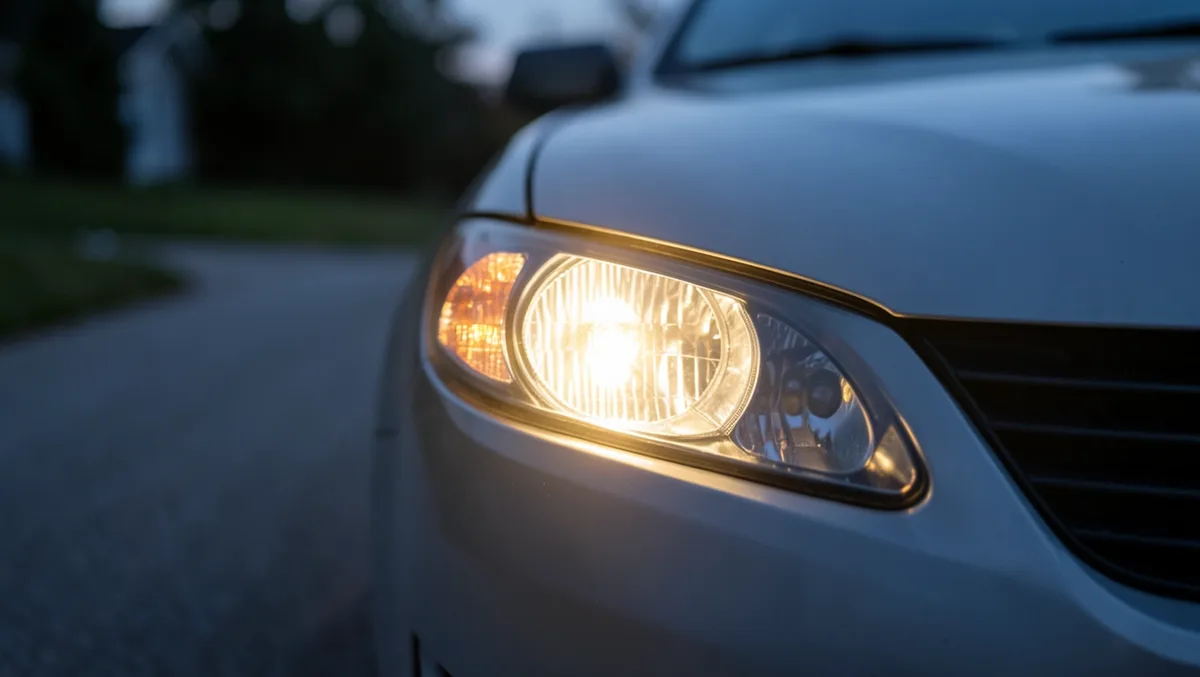
Turn on the headlights, high beams, hazards, and each turn signal, and walk around the car to confirm every bulb lights up, including the brake lights, which you usually need someone else to check while you press the pedal (or back up to a reflective window or garage door to check them yourself). A single burned-out bulb is an easy fix at home, but it is also the reason a lot of drivers get pulled over on a road trip through an unfamiliar state.
8. Check the Battery Terminals and Age
Look for white or greenish corrosion buildup on the battery terminals, which can weaken the connection and cause hard starts. Most car batteries last roughly three to five years, so if yours is older than that, or if the engine has been cranking slower than usual lately, get it load-tested at an auto parts store before you rely on it for a long trip. If your car uses an AGM battery, the maintenance and warning signs are a little different from a standard flooded battery.
9. Check Seatbelts and Mirrors
Pull sharply on each seatbelt to confirm it locks, and check the webbing for fraying or cuts, since a damaged belt will not protect the way it should in a crash. Adjust your mirrors so you are actually minimizing blind spots rather than just seeing what you are used to seeing, especially if someone else drove the car last.
10. Pack a Roadside Emergency Kit
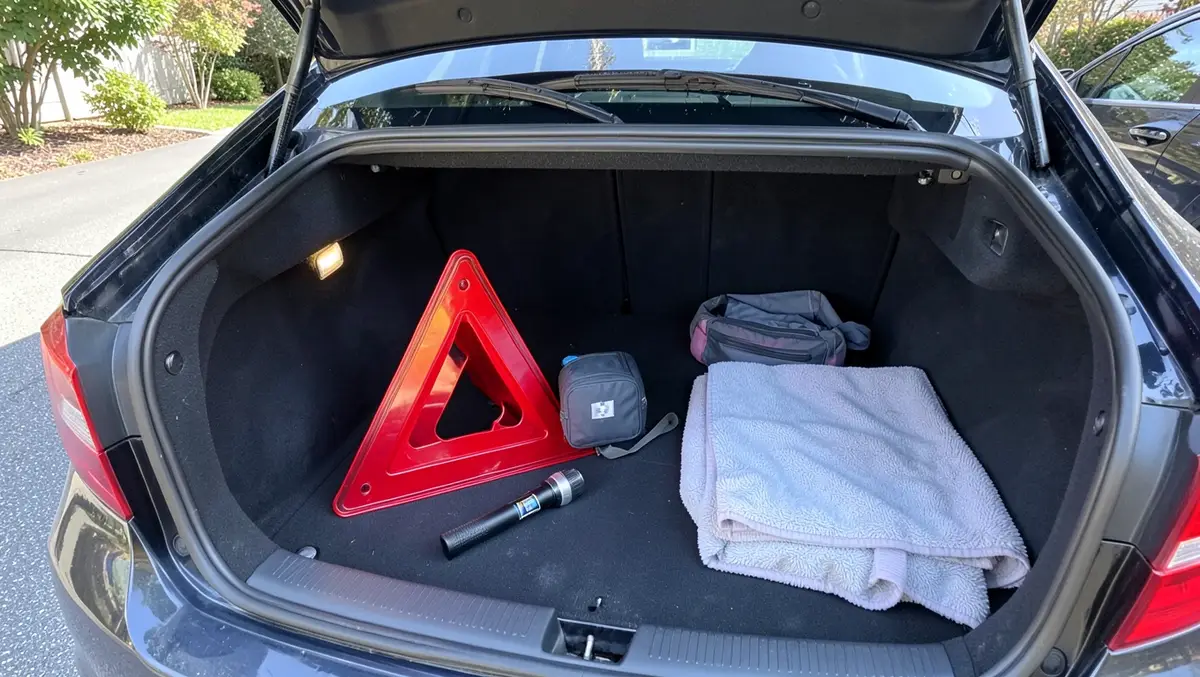
Even a car in perfect mechanical shape can get a flat tire or a dead battery from something outside your control. A reflective warning triangle, a first aid kit, jumper cables, a flashlight, water, and a phone charger cover the situations that actually happen on the side of the road, and having them packed before you leave means you are not scrambling for a gas station at 11 p.m.
Frequently Asked Questions
How Often Should You Do a Car Safety Check?
Run through the full checklist once a month and again before any drive longer than an hour or two. Tire pressure and fluid levels are worth a quick glance even more often, since temperature swings and small leaks show up gradually rather than all at once.
What Is the Correct Tire Pressure for My Car?
Use the number on the placard inside the driver’s door jamb, not the number stamped on the tire’s sidewall. The sidewall figure is the tire’s maximum pressure rating, not the pressure your specific car is designed to run.
How Do I Know If My Car Battery Is About to Die?
Warning signs include a slower than normal engine crank, dashboard lights that dim when you start the car, and a battery older than three to five years. Corrosion on the terminals can also weaken the connection long before the battery itself is fully dead.
What Should Be in a Car Emergency Kit?
A reflective warning triangle, a first aid kit, jumper cables, a flashlight, bottled water, a phone charger, and gloves cover most roadside situations. A kit that bundles a tire inflator and jumper cables in one case, like the one above, saves you from buying each item separately.
How Do I Know If My Brake Fluid Is Low?
Check the translucent reservoir under the hood against its “min” and “max” markings. A pedal that feels spongy, sinks toward the floor, or needs to be pumped before it grabs is a more urgent sign than the fluid level alone, and it is worth a shop visit before a long trip.
Is It Safe to Drive Long Distance With a Dashboard Warning Light On?
It depends on the light. A red warning light, such as for oil pressure, brakes, or temperature, means stop and have the car checked before driving further. An amber light, like a general check engine light, usually means get it looked at soon, but is less likely to mean immediate danger. Either way, do not start a long trip with a warning light you have not had diagnosed.
Conclusion
None of these 10 checks require a mechanic or special tools, just a driveway, a flashlight, and about 15 minutes. Doing them before a trip catches the small problems, a low tire, a worn wiper blade, a battery on its last year, before they turn into a breakdown on the side of the road.
Products related to this article
Sponsored / affiliate links. As an Amazon Associate I earn from qualifying purchases. I may earn additional commission from eligible campaigns.